REVIEW · SEOUL
Bukhansan National Park: The Summit Course
Book on Viator →Operated by Sam LEE · Bookable on Viator
Hiking to a summit above the city is a rare treat. This Bukhansan National Park Summit Course is built for you if you want the big view without the usual time sink, with a quicker route to the top of Seoul’s Baek-un-dae (836 m). Two things I like right away: the focus on a safe, well-planned trail, and the small-group pace that helps you keep moving without feeling rushed.
The main consideration is the fitness and footing. You’re looking at a steep climb with an elevation gain that can hit 600 meters over a short distance, plus a rope-aided section near the peak. It’s not a good match if you have knee issues, and you’ll want to be in moderate shape to finish feeling like yourself.
In This Review
- Key things that make this hike worth your morning
- Why Hike Bukhansan’s Summit Course instead of the usual 6-hour route?
- Meeting at Bukhansan UiSeoul at 8:00 am: the part that sets the tone
- Climb math: 600 m elevation gain over 2.1 km and how to pace it
- Baek-un-dae peak: the 25–45 degree rope section (and your options)
- Koa and Sam’s safety-first style: what you’re actually paying for
- Poles, knees, and comfort: what to bring and what to rent
- Optional tofu lunch after the hike: costs and what it’s like
- Price and value: is $64.89 a fair deal for 4 hours on a mountain?
- Weather, tickets, and plan changes: the stuff that can make or break your day
- Who should book this Summit Course in Bukhansan (and who shouldn’t)
- Bottom line: should you book it?
- FAQ
- How long is the Summit Course hike?
- Where does the hike start and end?
- What time does the tour start?
- How fit do I need to be to do this hike?
- Is this hike recommended if I have knee problems?
- What’s the highest point you’ll reach?
- Is there a challenging part near the summit?
- Can I rent hiking poles?
- What happens if the weather is bad?
Key things that make this hike worth your morning
- Faster summit plan: you aim for about 4 hours to the top instead of the more typical 6-hour trek
- Real altitude work, not a casual stroll: 600 m of climbing over just 2.1 km
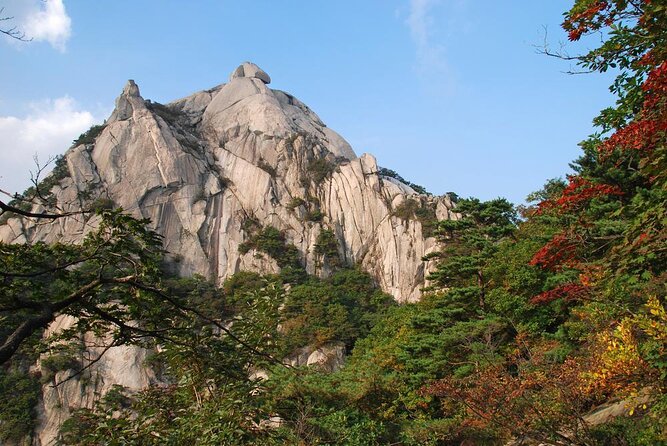
- Rope-assisted peak segment: a steeper Baek-un-dae part (about 25–45 degrees) where ropes help you
- Small group energy: capped at 20 people, so you get easier guidance
- Safety-first guidance from Koa and Sam: clear pacing and constant focus on staying safe
Why Hike Bukhansan’s Summit Course instead of the usual 6-hour route?
Let’s be honest: people come to Bukhansan because it’s iconic, close to Seoul, and stunning when the seasons change. But “iconic” can also mean crowded, chaotic, and way too slow for your vacation schedule. This course is designed around one simple goal: help you reach the highest peak in Seoul without spending half your day grinding uphill.
The big idea here is the research-backed route. Instead of the common 6-hour total hike time you might see elsewhere, this plan targets roughly 4 hours for the summit portion, while still getting you to Baek-un-dae. That speed matters because it keeps the morning efficient, gives you more time for Seoul afterward, and reduces the odds you’ll be slogging when legs get tired.
One more thing I appreciate: the hike doesn’t pretend Bukhansan is harmless. The mountain sees hundreds of rescues every year, so you’re not just buying scenic views. You’re buying a smarter decision about safety and route choice.
You can also read our reviews of more tours and experiences in Seoul.

Meeting at Bukhansan UiSeoul at 8:00 am: the part that sets the tone
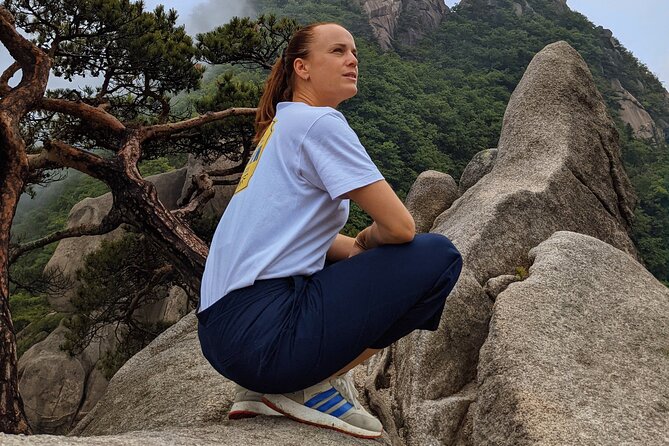
You start at Bukhansan UiSeoul at 8:00 am, and it finishes back at the same meeting point. That back-to-start structure is underrated. It means less scrambling, less guessing where you end up, and more control over your day.
The tour is also sized for easier management: a maximum of 20 people. That matters on a mountain like this, because when groups are large, you often end up “touring” by accordion—stop, start, and squeeze. A smaller group usually means the guide can keep an eye on pacing and footing, especially when the trail turns steep.
Also, the meeting location is near public transportation. If you’re traveling without a car (and most of us are), that’s a relief. You don’t want your hike day to start with a stress test before you even put on your shoes.
Climb math: 600 m elevation gain over 2.1 km and how to pace it
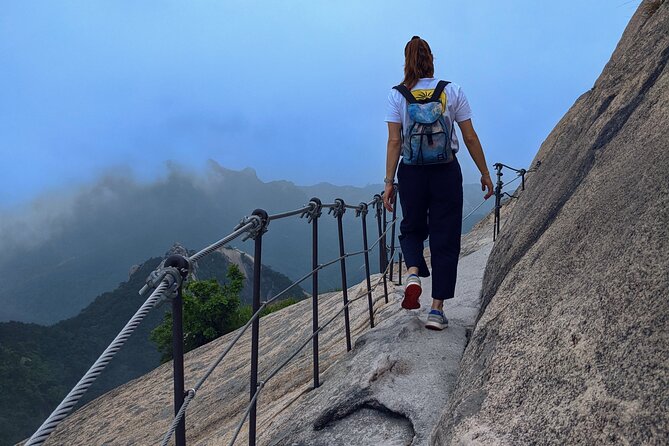
Here’s the climb reality in plain terms. The ascending portion includes about 600 meters of elevation gain within 2.1 km (roughly 2,000 feet in about 1.3 miles). The climb segment usually takes 100–120 minutes, which the tour explains in a helpful way: imagine going up-and-down around 200 floors of stairs.
So what does that mean for you?
- You don’t need to be a mountain athlete, but you do need consistent stamina.
- You should plan to move steadily rather than sprint early.
- If you’re the type who starts too fast because the view looks close, this route will humble you quickly—in a useful way.
Moderate fitness is the standard here. If you’re used to walking a lot and you can handle a long uphill, you’ll probably be fine. If you’re currently in “I mostly sit on planes and eat dumplings” mode, give yourself a few warm-up days before this one, or be ready to slow down and stick to the guide’s pacing.
And remember: faster doesn’t mean easy. It just means the plan aims to remove wasted time.
Baek-un-dae peak: the 25–45 degree rope section (and your options)
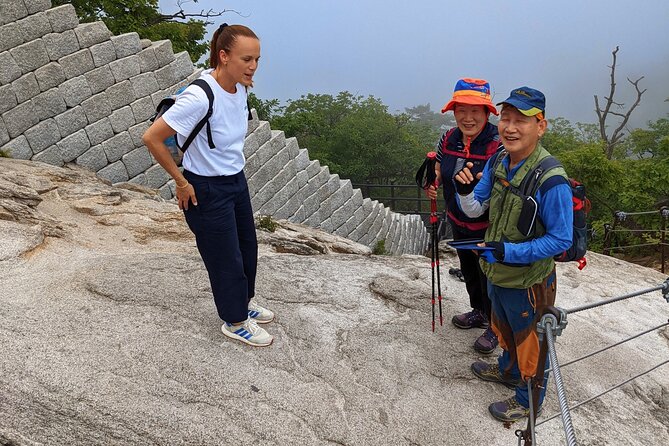
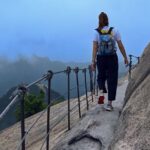
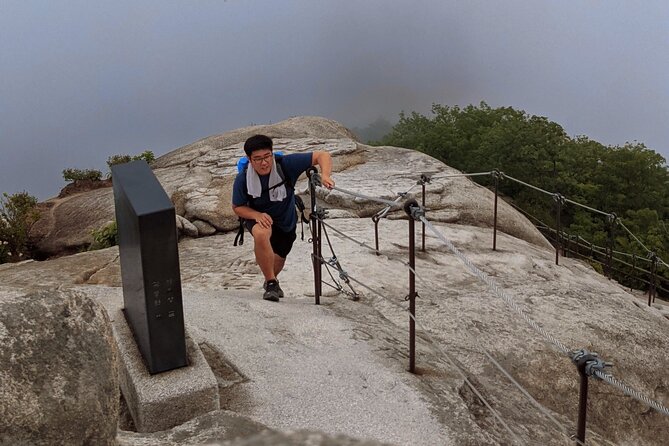
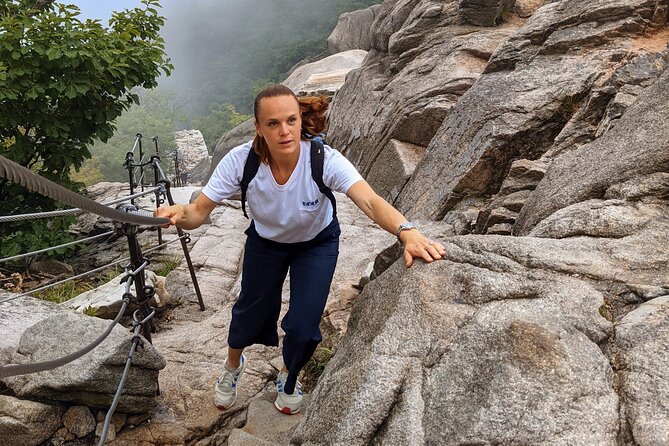
The highlight is Baek-un-dae. The tough part isn’t the summit sign—it’s the approach. You’ll hit a steeper climbing segment described at about 25–45 degrees, and it’s always aided by ropes.
This is where your comfort level matters. If you have a fear of heights, the tour note is encouraging: the angled section can be avoided by having a break. The important practical takeaway is this: talk with the guide before you get there. Don’t wait until your heart is already racing. A good guide can help you decide what feels safe for you and adjust the moment.
Also, keep your focus simple. The key skills here are basic: keep three points of contact when you’re using the rope area, don’t rush, and avoid looking too far down. The guide’s job is to help you keep moving safely through the sketchier terrain.
This section is also why the view is so satisfying. You’re earning it. Even if you take your time, the climb-to-reward rhythm is real.
Koa and Sam’s safety-first style: what you’re actually paying for
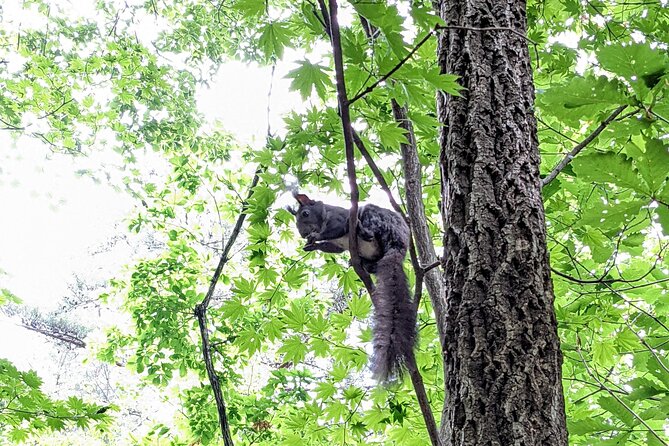
The tour is led by Koa and Sam, and the provider is listed as Sam LEE. The difference a good mountain guide makes is usually invisible—until something goes wrong. Here, the emphasis is on staying safe first while still keeping the experience enjoyable.
From the vibe of the guidance, a few things seem consistent:
- The route is planned so you’re not improvising on a steep mountain.
- The guide works with the group in a way that helps people move at a reasonable pace.
- There’s an active focus on keeping participants safe without turning the hike into a boot camp.
One of the strongest praises you’ll see is about organization and group handling, especially with small groups. That’s exactly what you want during rope-assisted terrain and steep climbs. When a guide communicates well, you waste less energy on uncertainty.
I also like the “flexible” part of their style. Mountains rarely care about schedules, so being able to adjust—within safe limits—matters. The goal is not just getting you to the top. The goal is getting you there without turning the hike into a stress spiral.

Poles, knees, and comfort: what to bring and what to rent
The tour includes the option to rent hiking poles, but with a catch: poles are only available if you inform in advance. They’re not really necessary for most people, unless you have bad knees.
That’s good advice, because poles can help you manage the downhill impact, but they can also be a nuisance if you’re not used to them. So match your decision to your body:
- If your knees complain on descents, poles can be a smart support.
- If your knees are fine, you can skip the extra gear and keep your pack lighter.
Footwear matters here, too, even if it’s not spelled out in the details you were given. On a steep, rope-assisted day, you want grip and stability more than fashion.
If you do have knee issues, take the warning seriously. This hike is not recommended for people with knee problems. That’s not “mild caution.” That’s a “choose wisely” flag.
Optional tofu lunch after the hike: costs and what it’s like
You have the option for lunch afterward, and it’s not a random convenience stop. You’ll eat at a place specializing in tofu, with everything made from scratch. The menu includes meat too, so it isn’t strictly vegetarian food.
Costs are listed as 9,000–15,000 KRW, paid by individuals. The tour also notes it’s vegan/vegetarian friendly, which makes this a nice option if your group has mixed diets. You’ll usually feel better with a real meal after a steep climb, and tofu-focused spots are often good value for post-hike recovery.
One practical tip: since lunch is optional and costs extra, decide early if you’re treating this as a half-day hike or a full morning-to-meal plan. Starting at 8:00 am means you might be hungry sooner than you expect once the descent hits.
Price and value: is $64.89 a fair deal for 4 hours on a mountain?
At $64.89 per person, this is not a bargain-basement activity. But the value comes from what’s included in the real work of hiking: safety planning, route choice, group handling, and guidance through the steeper segments.
A few ways this price can make sense:
- You’re not just hiking. You’re hiking with a route designed to reduce time while aiming for the summit.
- The guided experience is built around steep elevation gain and rope-assisted terrain, where wrong decisions cost energy—or worse.
- The group cap of 20 can reduce the “everyone for themselves” feeling.
What’s not included matters, too. Lunch is optional, hiking poles may cost extra, and you’ll still need to bring your own basics like proper shoes. So think of the price as paying for expert direction and a safer path up and down, not for transportation or a restaurant meal.
If you’ve ever tried to navigate steep trails on your own in a popular area, you already understand the hidden cost: mental load and wasted time. This course aims to lower both.
Weather, tickets, and plan changes: the stuff that can make or break your day
This experience is weather-dependent, and that’s the big operational reality for any mountain hike. If it’s canceled due to poor weather, you’ll be offered another date or a full refund.
Otherwise, the policy is firm: it’s non-refundable and cannot be changed for any reason. That means you should only book if you’re confident you’ll be able to make it that day, and you’ve got flexibility for weather swings.
Good news: you’ll get a mobile ticket, and confirmation is received at the time of booking. Also, the meeting point is near public transportation, which reduces the number of moving parts on your hike day.
So my advice is simple: check forecasts the day before and again that morning. If conditions are sketchy, safety wins.
Who should book this Summit Course in Bukhansan (and who shouldn’t)
This hike fits best if you:
- are moderately fit
- enjoy challenging uphill effort
- want summit views above Seoul without a long, slow day
- prefer a small-group guide who keeps safety front and center
It’s also a great fit for people who want to experience the seasonal feel of Bukhansan. The park is known for visible seasonal changes, and this route gives you a fast way to reach a high point where those changes feel dramatic.
Skip it or choose a different option if you:
- have knee issues (the tour explicitly says it’s not recommended)
- are unwilling to deal with a steep, rope-assisted climb segment
And if you have a fear of heights, don’t assume you’re automatically out. The tour notes the steeper angled part can be avoided by taking a break, so it may be workable with the right mindset and guide support. Just be honest early.
Bottom line: should you book it?
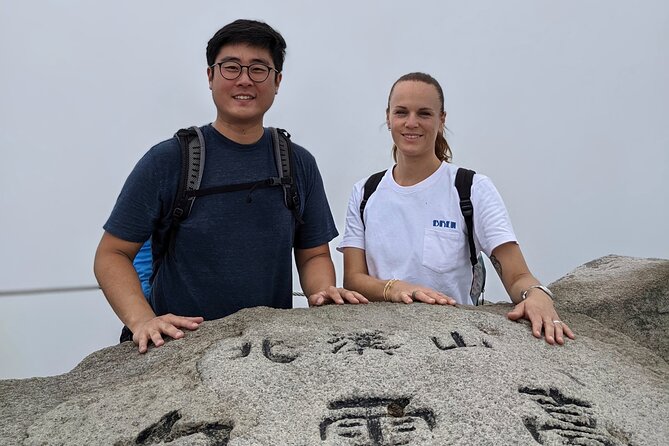
If you want the highest peak in Seoul and you like a guided plan that focuses on safety, this Summit Course is a smart choice. The biggest selling point for me is the combination of time-saving route design and guidance through the steep, rope-aided Baek-un-dae section—exactly where most people need help.
But book it only if you’re ready for real climbing. This isn’t a casual city hike dressed up as adventure. It’s a focused morning workout with a payoff at the top.
If that sounds like your kind of Seoul day, then yes—this is worth booking.
FAQ
How long is the Summit Course hike?
The duration is about 4 hours 30 minutes.
Where does the hike start and end?
It starts at Bukhansan UiSeoul and ends back at the same meeting point.
What time does the tour start?
The start time is 8:00 am.
How fit do I need to be to do this hike?
You should have moderate physical fitness to finish comfortably.
Is this hike recommended if I have knee problems?
No. It is not recommended for people with knee issues.
What’s the highest point you’ll reach?
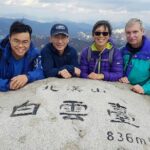
You’ll hike to Baek-un-dae peak, the highest peak in Seoul at 836 m / 2743 ft.
Is there a challenging part near the summit?
Yes. Baek-un-dae includes a steeper climbing segment (about 25–45 degrees) that is aided by ropes for safety.
Can I rent hiking poles?
Yes, hiking poles can be rented out at an extra cost, but you must inform in advance. They’re not really necessary unless you have bad knees.
What happens if the weather is bad?
The experience requires good weather. If it’s canceled due to poor weather, you’ll be offered a different date or a full refund.