REVIEW · SEOUL
Bukhansan National Park- The Summit Course
Book on GetYourGuide →Operated by environment design lab · Bookable on GetYourGuide
Seoul has a mountain that feels far away. This Bukhansan National Park “Summit Course” takes you up to the highest peak in Seoul, 836 m, and does it with smart pacing and logistics led by guide Koa. I like the early start that helps you dodge the late-day crush, and I really like how the guide handles the steep, rope-aided Baekun-dae section with safety-first guidance. One drawback to plan for: it’s called moderate, but the climb packs a lot of steep effort fast, so bad knees or a low fitness baseline may make it tough.
Here’s the other thing I appreciate: you get a plan that aims for about 4.5 hours total, not a half-day of aimless hiking. You’ll also have an easy optional add-on—tofu-specialty lunch after the summit—without turning the day into a food tour that eats up your energy. The consideration: lunch costs extra (paid individually), and the final rope section can be intimidating if you don’t like heights, though there’s a way to avoid that segment with a break.
If you want a high-reward hike that feels organized and not chaotic, this works well. Just show up prepared, because hundreds of rescues happen on this mountain each year, and this is the kind of route where “easy mode” means following your guide’s lead and not improvising.
In This Review
- Key things that make this hike worth your time
- Why Bukhansan’s Summit Course feels different from a random hike
- Meet Koa at the right station exit and start smart
- The core climb: 600 meters up in 2.1 km (and what that means)
- Baekun-dae’s rope-aided summit segment: scary for some, avoidable for others
- How the included gear helps you avoid small problems turning big
- Small group energy: why Koa’s leadership changes the day
- Timing and pacing: what the 4.5 hours really feels like
- The optional lunch: a tofu meal that’s worth planning for
- Value check: $67 for a guided summit that keeps it safe
- Who should book this (and who should think twice)
- Should you book the Bukhansan Summit Course? My take
- FAQ
- Where do we meet for the Bukhansan Summit Course?
- What time does the tour start?
- How long is the hike?
- What difficulty level should I expect?
- Is the summit rope section required?
- What is included, and is lunch available?
Key things that make this hike worth your time
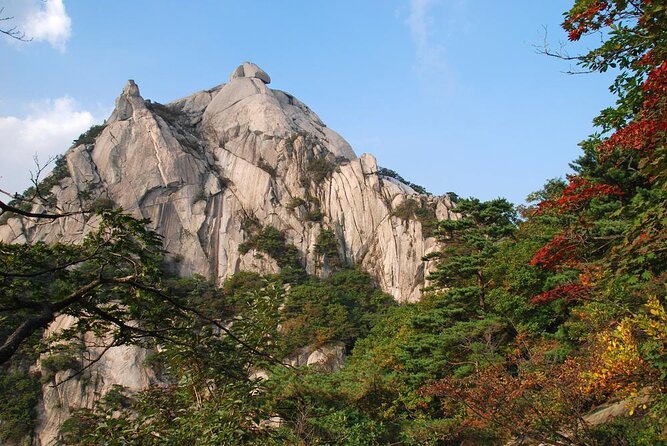
- Highest peak in Seoul: 836 m at Baekun-dae is the main goal, and it’s a real summit, not a viewpoint stop.
- Fast-but-not-rushed format: about 4.5 hours total, including the core hiking time.
- Steep section with ropes: a 25–45 degree climb near the top, aided by ropes for traction and confidence.
- Guide-led safety and pacing: Koa keeps the group moving and watches for comfort and risk, especially on rocky stretches.
- Optional tofu lunch after you earn it: a paid option (9,000–15,000 KRW) at a tofu-focused place that also includes meat, and it’s vegan/vegetarian friendly.
- Gear support included: bug spray, first aid kit, and a rain coat if needed; crampons and poles can be borrowed at the 1/3 point.
Why Bukhansan’s Summit Course feels different from a random hike
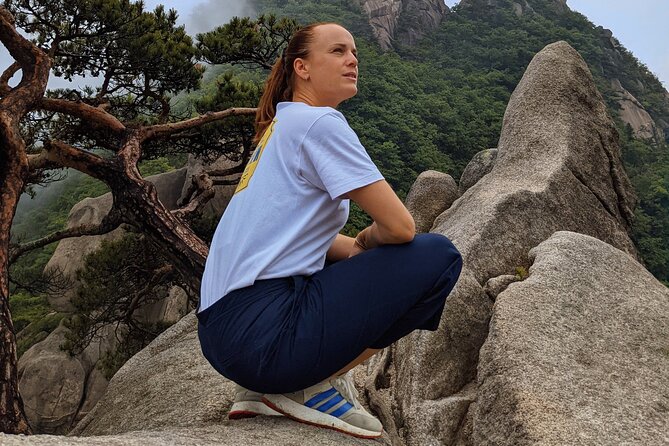
Bukhansan National Park sits right on Seoul’s edge, so it’s the rare mountain where the “getting there” part doesn’t steal your day. You’re hiking in a place that’s iconic for Korea, but you’re also doing it with structure—when to start, how to manage steep sections, and how to keep the day from dragging.
The big selling point is that you’re aiming for the top without turning it into a 6-hour endurance test. The ascent is steep and concentrated: about 600 meters of elevation gain over 2.1 km. That’s roughly 100–120 minutes for the uphill portion on typical timing. The guide route keeps the experience efficient while still giving you a chance to make the summit and come back down safely.
And yes, the mountain can be serious. You’re told bluntly that hundreds of people need rescue here each year. That isn’t meant to scare you away—it’s meant to make you treat this like a “follow-the-plan” activity, not a freestyle adventure.
You can also read our reviews of more tours and experiences in Seoul.

Meet Koa at the right station exit and start smart
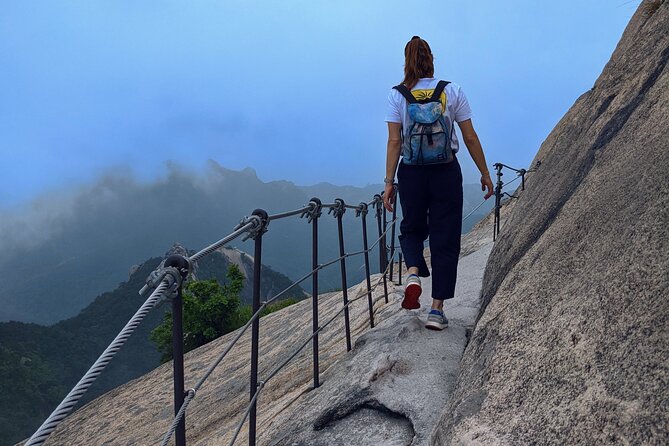
Your day begins in the morning, and the schedule matters. You meet Koa outside Exit 2 of Bukhansan Ui station. Don’t mix this up with Bukhansan Bogungmun station. It’s an easy mistake to make if you’re checking too late or trusting autopilot.
The group leaves at 8:15 am sharp, and the group waits for late comers for only 15 minutes. That means your best move is to plan your route the night before using Naver map and get there early enough to calm your nerves.
This matters more than you might think. Starting early helps with crowd levels later and gives you more control over how your body handles the steep sections. When you’re hiking in a rocky park environment, “being late” doesn’t just risk missing the start—it can also mean less comfortable timing for breaks.
The core climb: 600 meters up in 2.1 km (and what that means)
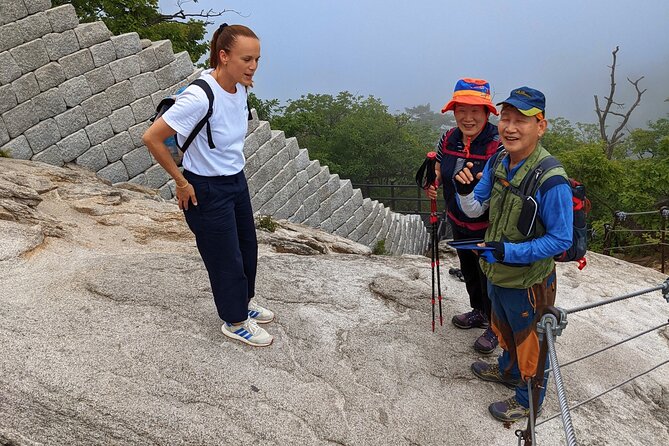
The uphill is the main workout. The route’s most demanding part is that concentration of elevation: 600 meters gained over 1.3 miles. It’s not just longer stairs; it’s stairs plus uneven footing plus a steep grade that asks your legs to work hard in a short distance.
You’ll need a moderate fitness level to finish comfortably. The tour description even frames it with a stair comparison—think going up and down about 200 floors. That’s not an exact equation for everyone, but it’s a useful mental model: you’re not doing a gentle stroll, and you’ll feel it in your calves and lungs.
One practical plus here: you’re coming back down the same way. The guide can also help you adjust if you need a breather. If you choose to stop during the climb, the plan includes that the guide can pick you up on the way back. That makes it less “sink or swim” than self-guided routes where you’re waiting alone.
Baekun-dae’s rope-aided summit segment: scary for some, avoidable for others
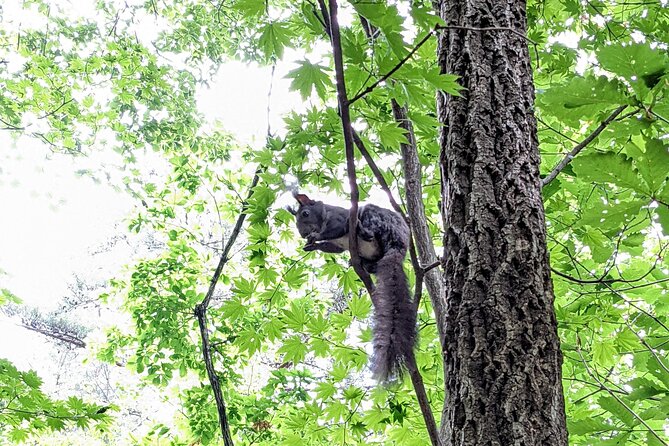
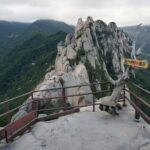
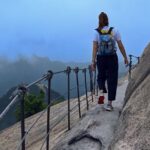
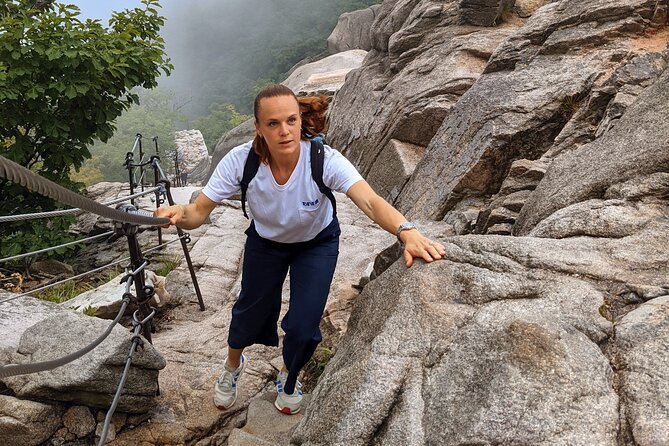
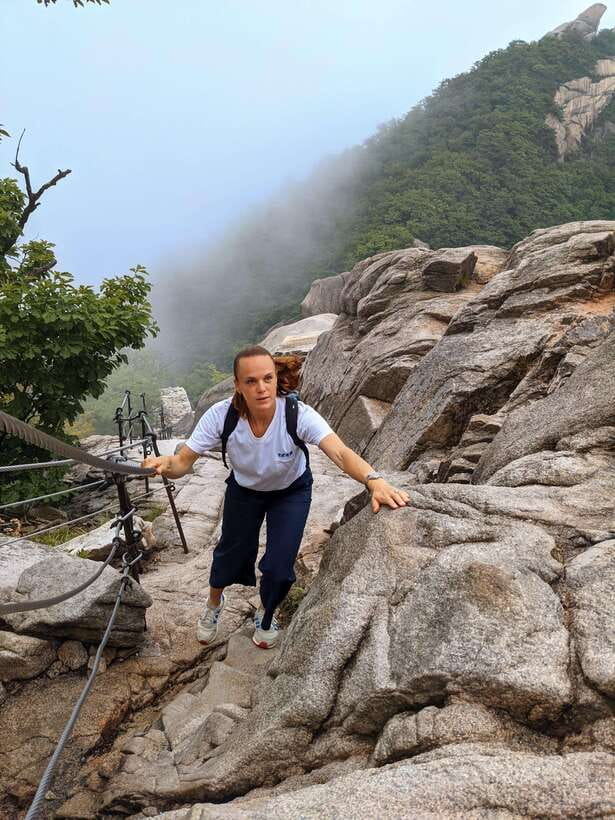
The highlight is Baekun-dae peak, and the final approach includes a steep climb section. Expect an angle in the 25–45 degree range, and it’s aided by ropes. This is where good footing, careful movement, and listening to the guide really matter.
If you have a fear of heights, you’re given an option: this 20–30 minute segment can be avoided by taking a break. That’s a big deal. It means you’re not forced to “power through” if the mental discomfort is worse than the physical challenge.
What to do with this info? Be honest with yourself before you go. If heights bother you, plan to use the option rather than pretending it won’t. The safest hikers aren’t the bravest—they’re the ones who match the route to their comfort level.
How the included gear helps you avoid small problems turning big
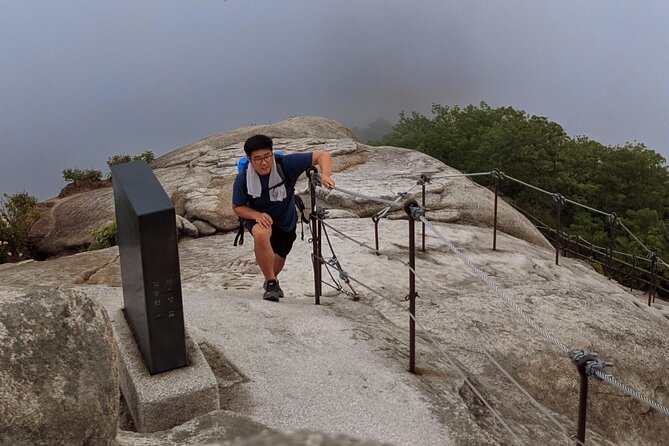
This tour doesn’t throw you into the woods with zero support. Included with the experience are:
- Bug spray
- A first aid kit
- A rain coat if you need it
And at about the 1/3 point, you can borrow crampons and hiking poles. That’s not a random perk. It’s a real value item because footing can get tricky on rocky terrain, and poles can reduce strain on your knees—especially when you’re descending.
Also, you can buy water at the beginning at a convenience store. That’s important because starting the hike hydrated is easier than trying to solve dehydration halfway up. Bring your own mindset here: don’t treat hydration like an afterthought.
Small group energy: why Koa’s leadership changes the day
A summit hike can be stressful when everyone is scattered and nobody knows what’s next. That’s why a good guide matters here, not as a “nice-to-have,” but as a day-saving layer.
Koa is described as energetic, funny, and strongly focused on group safety. You’ll also find that he’s good at engaging people—keeping conversations going, remembering names, and checking in at different points rather than just marching forward.
One practical benefit from the guide’s approach: you may take a different trail at times to keep the hike more interesting. That matters because on a mountain, repetition can wear you down mentally as much as physically. A small change in scenery or approach can make the effort feel less punishing.
This tour also tends to build friendships fast because it’s not huge. If you like meeting people while moving, you’ll probably enjoy the shared rhythm and the casual support when someone needs a moment.
Timing and pacing: what the 4.5 hours really feels like
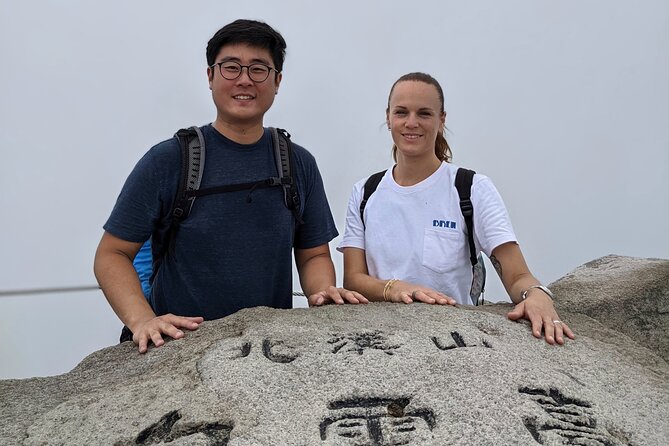
The total duration is about 4.5 hours. That doesn’t mean you’ll be “moving nonstop.” It means the tour is set up so you’re not stuck out there all day.
Your uphill portion is estimated around 100–120 minutes under typical conditions, based on that steep, 600 m gain over a short distance. After that, you still have time to handle the rope-aided segment and manage your descent.
Here’s the pacing philosophy that helps you succeed: slow the top part, protect your energy on the descent, and use breaks before you hit exhaustion. The description notes the guide will help you with timing and can pick you up on the way back if you stop. That’s useful because fatigue can make even familiar steps feel unpredictable.
The optional lunch: a tofu meal that’s worth planning for
After the hike, you have an optional lunch. It’s paid individually, typically 9,000–15,000 KRW, and the meal is at a place that specializes in tofu dishes. The food is described as made from scratch, and it can change how you think about tofu—less “health food apology,” more actual comfort food.
Important practical note: it isn’t vegan-only. The description says they have meat too, while still being vegan/vegetarian friendly. So you don’t have to worry about the meal being only one dietary style.
Is lunch required? No. But if your timing allows, I think this is part of the value. A summit hike drains you, and this gives you a satisfying payoff that’s local, simple, and tied to the area rather than a generic tourist meal.
Value check: $67 for a guided summit that keeps it safe
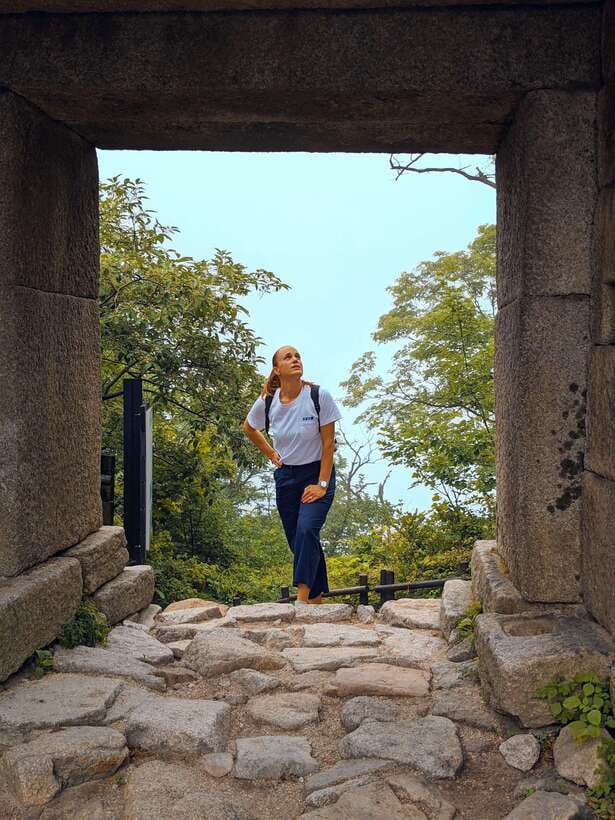
At $67 per person, you’re paying for more than “someone to lead the way.” You’re paying for:
- English-speaking guidance
- Safety supports (first aid kit, rain coat, bug spray)
- Borrowable gear at a key point (crampons, poles)
- A route design that aims for the summit without the usual longer marathon timing
For many people, the biggest cost of a hike is mistakes—wrong pace, poor footwear, bad timing, or letting fear make you rush. A guided summit course reduces those risks and can prevent the day from turning into a stressful scramble.
That said, you should still self-screen. If you have serious knee issues, mobility limits, or you know steep exposed sections trigger panic, this might not be the right match. Even with ropes and options to avoid parts, it’s still a mountain hike with real elevation gain.
Who should book this (and who should think twice)
This tour fits well if you want:
- A structured summit hike near Seoul
- An English guide who keeps things upbeat and safety-focused
- A realistic way to attempt the highest peak in Seoul without an all-day trek
- The option to add a tofu lunch afterward
It may not be ideal if you:
- Have significant trouble with steep grades or rocky footing
- Have a strong fear of heights and you don’t feel comfortable using the option to avoid the rope section
- Want a super-relaxed walk with minimal physical strain
Should you book the Bukhansan Summit Course? My take
Book it if you’re excited by a real summit challenge and you want the day handled with clear leadership. Koa’s style—energetic, safety-minded, and good at group dynamics—looks like the difference between a scary “fight for your life” hike and a controlled, memorable one.
Skip (or consider a gentler option) if your knees aren’t ready for repeated uphill/downhill stair-like effort or if heights make you lose focus. This course can include a rope-aided climb, even if an avoidance option exists.
If you do book, bring the right attitude: go early, follow your guide, and don’t treat the steep parts like they’re optional challenges you can ignore. With that approach, you’re in for a high-reward day that feels both local and efficiently planned.
FAQ
Where do we meet for the Bukhansan Summit Course?
You meet Koa outside Exit 2 of Bukhansan Ui station. The guide group does not meet at Bukhansan Bogungmun station, so double-check your station before you arrive.
What time does the tour start?
The group leaves at 8:15 am sharp. The group can wait for late comers for only 15 minutes, so arrive early.
How long is the hike?
The duration is listed as about 4.5 hours total, with starting times shown by availability.
What difficulty level should I expect?
The description says you’ll need moderate fitness. The main ascent involves about 600 meters of elevation gain in 2.1 km, which is typically around 100–120 minutes uphill. The summit area includes a steep rope-aided section.
Is the summit rope section required?
A steep part of the climb near Baekun-dae is aided by ropes and lasts about 20–30 minutes. If you have a fear of heights, the description says this segment can be avoided by taking a break.
What is included, and is lunch available?
Included items are bug spray, a first aid kit, and a rain coat if needed. You can borrow crampons and hiking poles at the 1/3 point. Lunch is optional and paid separately at a tofu-specialty restaurant, typically 9,000–15,000 KRW. Water can be purchased at the convenience store at the beginning.