REVIEW · SPRINGDALE
Winter in Zion: The Famous Narrows River Hike
Book on GetYourGuide →Operated by Green Valley Hiking · Bookable on GetYourGuide
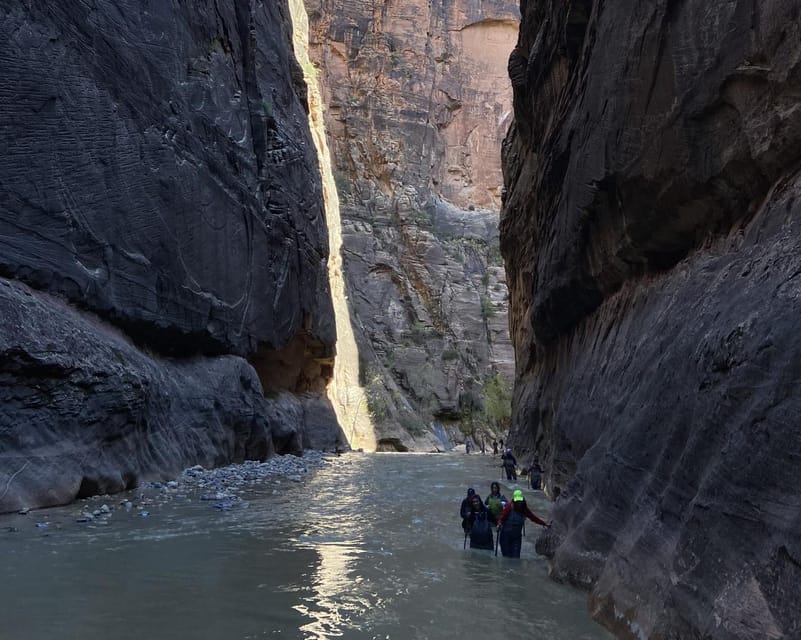
Canyons in winter feel like a slow movie. This guided Narrows River hike lets you wade Zion’s Virgin River past towering red-and-white cliffs, often with fewer people and snow-topped views. I love the winter timing for the calmer trail, and I love that you still get real river action—wading upstream 1–2 miles with the canyon squeezing tighter on both sides. The main drawback: winter can mean cold water and extra costs for waders/boots, plus proper layering.
I also like the way this trip handles the logistics for you. You meet near the Visitors’ Center in Springdale, catch the shuttle, and spend your energy on the canyon instead of figuring out schedules. With a guide who’s spent decades in Zion and nearby parks, you get practical history, geology, and wildlife talk without turning the hike into a lecture.
One more consideration: this is not a casual, flip-flop stroll. The Narrows includes wading in moving water, it’s not suitable for children under 12 or pregnant women, and the route can be adjusted if conditions require it.
In This Review
- Key things that make this Narrows hike worth it
- Why the Narrows feel different in winter
- The morning setup at Springdale and the shuttle to the start
- Riverside Trail: a shady warm-up before the water
- Wading into The Narrows: 2,000-foot walls and a steady upstream pace
- The Wall Street break and the snack break that changes the mood
- Why the return trip hits different
- Gear that matters most for winter: waders, boots, socks, and layers
- Price and value: $750 per group up to 10, plus the park fee and rentals
- When Zion closes the Narrows: flow limits and alternate routes
- Who this hike suits (and who should pass)
- Should you book this winter Narrows hike?
- FAQ
- How long is the Winter in Zion: The Famous Narrows River Hike?
- Where do we meet for the hike?
- How much does it cost, and what extra fees should I expect?
- Do I need water shoes or rentals in winter?
- How far will we wade upstream?
- What happens if The Narrows is closed due to water flow?
- Is this hike suitable for kids or pregnant travelers?
Key things that make this Narrows hike worth it
- Winter-friendly views with lower crowds while still getting the iconic canyon experience
- Upstream wading matched to your fitness, typically about 1–2 miles
- A safety-first guide approach, with real humor and clear instruction (I’ve heard guides like Kim, Megan, and William are great at this)
- A break at Wall Street with snacks like mandarin oranges, granola bars, and chips
- Backup plans if Zion limits the hike when river flow gets too high
- Winter gear coaching so you don’t spend the trip fighting cold water and gear problems
Why the Narrows feel different in winter
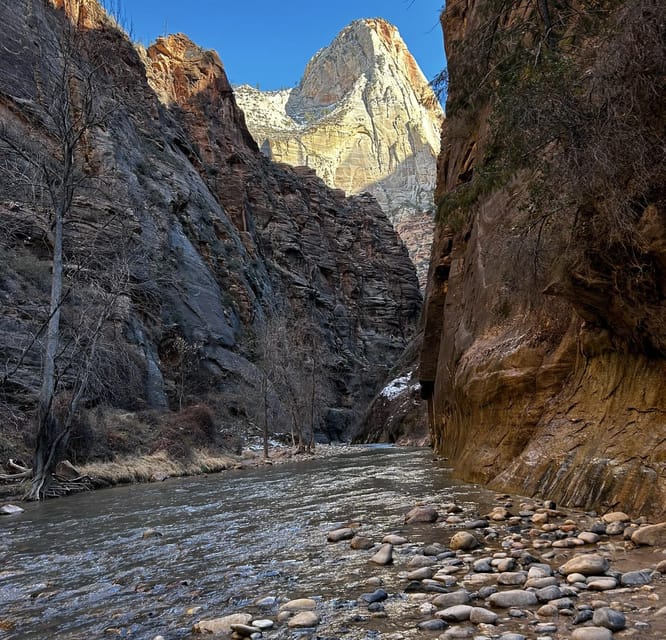
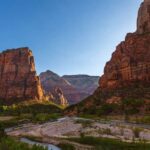
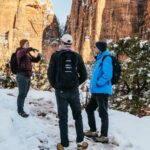
The Narrows is famous for a reason: it’s one of the most dramatic ways to experience Zion’s canyon country. In winter, the big visual shift is snow on distant peaks above the red rock. Instead of heat shimmer and packed summer routes, you get sharper contrast—white mountains over pale canyon walls—and a quieter pace right when you’d want it most.
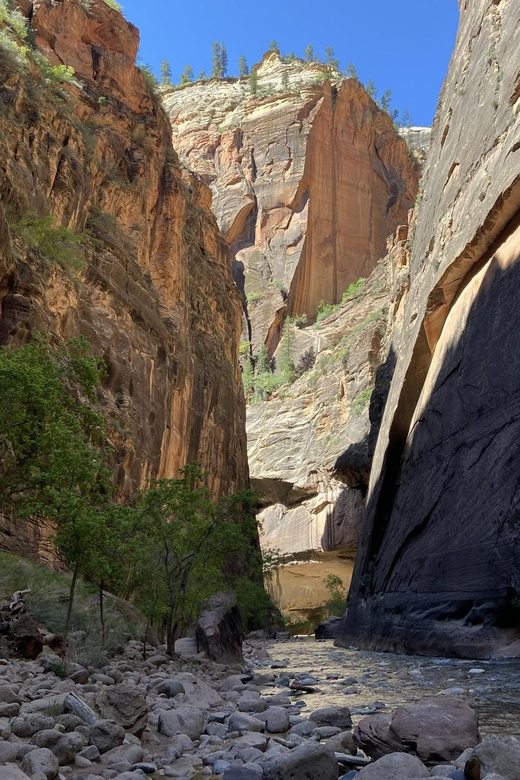
The other winter difference is that the experience is still about the river, not just the view. You’ll wade upstream and feel how the canyon changes around you: the cliffs rise high on both sides (about 2,000 feet), and the corridor gets narrower as you go. That tightening effect is part of what makes the Narrows stick in your memory.
Summer hikers talk about shade and cooler water. Winter hikers benefit from the same core reality, just with a different body challenge. The water is still cold, and the air can feel biting—so the “all-weather” promise really means you get guided help with gear and comfort, not magic warm feet.
You can also read our reviews of more hiking tours in Springdale
The morning setup at Springdale and the shuttle to the start
Plan to start early. You meet at 7:00 a.m. at the open area in front of the public restrooms next to the Visitors’ Center in Springdale (just past the South Entrance). The guide will be easy to spot in a bright yellow windbreaker. If you like using GPS, the coordinates are 37.200043, -112.987622.
From there, you take the shuttle to the Riverside Trail area. This part matters more than it sounds. The Narrows is popular, and early timing helps you get moving while the day is still settling in. Plus, using the shuttle keeps you from doing extra driving, extra parking stress, and extra backtracking.
At the Temple of Sinawava area, you’ll have that quick transition from flat park access to the canyon route. It’s also where the day clicks into place: you stop thinking about logistics and start thinking about water, footing, and what the canyon will look like as it funnels inward.
Riverside Trail: a shady warm-up before the water
Before you step into the classic Narrows scenery, you’ll walk the Riverside Trail. It’s about 2 miles round trip, and the point is simple: it gets you to the beginning of the Narrows Trail without throwing you into wading right away.
This stretch is also about vibe. The Riverside Trail is beautiful and shady, and in winter that’s a real comfort factor. You can use this time to get your balance, check your layers, and make sure your footing feels solid before the river becomes the main event.
If you’re bringing phone gear, this is a smart moment to sort it out. The guide brings zip-lock bags for protection, which is helpful because in the Narrows you’re not just sightseeing—you’re carrying items through wet conditions. (And yes, closed-toe shoes matter here. Sandals and bare feet are a hard no.)
Wading into The Narrows: 2,000-foot walls and a steady upstream pace
Now you get the part people fly across the country to see.
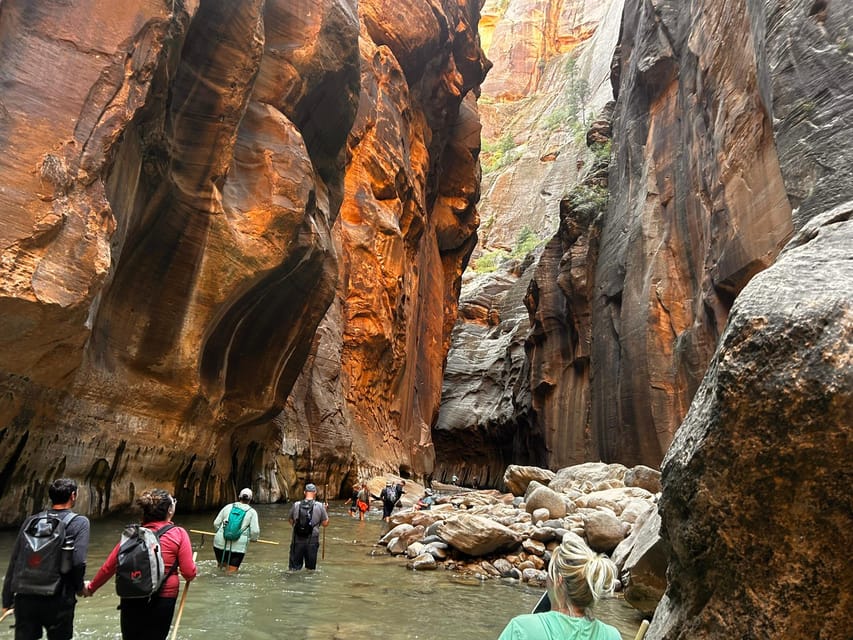
Once you start the Narrows Trail, you’ll wade upstream in the Virgin River for about one or two miles, depending on fitness level. The river isn’t a gentle pond. It’s moving water, and wading means you’re constantly reading the bottom—rocks, current, and how deep water feels in your stride.
That’s why the guiding part matters. A good guide doesn’t just keep you on the route. They help you choose your pace, adjust your stance, and avoid turning the hike into a stumbly endurance test. You’ll also get interpretive stops on history, geology, plant and animal life—so you’re not only watching the canyon, you’re understanding what you’re walking through.
About the scenery: the canyon walls rise to about 2,000 feet, and the canyon corridor becomes tighter as you go. That tightening effect can look almost unreal, like the canyon is closing in on you from both sides. The guide will also point out features along the way, and it’s a lot easier to catch those details when you’re not trying to navigate and film at the same time.
The Wall Street break and the snack break that changes the mood
At the beginning of Wall Street, you’ll take a break and refuel. This is when the tour gives you more than effort—it gives you a little reset.
Snacks include mandarin oranges, granola bars, and chips. It’s a small thing, but it’s exactly the right size break: you’re not stopping so long that the cold drains your energy, and you’re not rushing through the only moment you get to pause mid-canyon.
There are also options if you want to add a twist. You may be able to explore Orderville Gulch, which is even narrower, or go further up the Virgin River if you have extra energy. The key is that your guide can match the plan to your group’s comfort.
Why the return trip hits different
Here’s a cool canyon reality: the views on the way out are not the same as the way in. The canyon bends and changes how light lands on the walls, so even when you’re walking back through the same general corridor, the experience feels fresh. This is one reason a guided turn-around point works well—you get to enjoy the best segments without exhausting yourself before the return.
Gear that matters most for winter: waders, boots, socks, and layers
This is where winter Narrows becomes either smooth—or miserable.
In winter months, it’s advisable to rent waterproof waders and boots. The recommendation is Zion Outfitters, just outside the Zion pedestrian entrance. If you’ve only done other hikes in Zion, you might be surprised by how much warmth and comfort depend on footwear choice here.
In summer, some people walk in regular shoes, and water shoes aren’t always necessary. In winter, you should plan for rentals and real insulation. Even with good rentals, you still need smart clothing: layers are essential because Zion winter weather can shift quickly.
Practical tips that you’ll appreciate once you’re there:
- Bring socks you don’t mind getting damp inside your waders/boots.
- Wear comfortable closed-toe shoes for the walking sections.
- Bring sunglasses, because brightness on canyon edges can be sharp.
- The guide provides protective zip-lock bags for your phone-camera gear.
- Walking staffs are recommended; the guide can provide a limited number free (about 6), and you can also rent them in Springdale.
Also note the comfort rules: no sandals or flip-flops, no alcohol or drugs, and no bare feet. It’s not about being strict—it’s about staying safe and warm while you wade.
Price and value: $750 per group up to 10, plus the park fee and rentals
Let’s talk money plainly.
The tour price is $750 per group up to 10 for about 5 hours. That makes the per-person cost depend entirely on how many people you bring:
- If you book for 10 people, that’s up to $75 per person.
- If you book for 4 people, it’s $187.50 per person.
So, the value comes from group size, yes—but also from what’s included. You’re getting private guiding (no strangers), expert instruction (history, geology, plant and animal life), snacks, and strong logistical help (including pickup and drop-off in St. George, Hurricane, and Springdale).
One important extra cost: Zion National Park entry. Plan on about $20 per person for park entry (not included).
Water gear is the other variable. If you need rentals in winter, it can run as much as $55–$70 per person. In summer, rentals may be unnecessary. This is one reason winter planning matters: you’ll get the best value when you budget for gear and arrive ready.
For me, this is the standout value logic: the hike is iconic, but the hard part isn’t the views. The hard part is staying comfortable, moving safely in water, and handling route changes if conditions require it. Paying for that guidance can be the difference between a memorable day and a miserable one spent fighting your feet and your timing.
When Zion closes the Narrows: flow limits and alternate routes
One of the most practical things about this tour is that it respects how water conditions can change.
Zion National Park closes the Narrows hike when volumetric flow exceeds 150 cubic feet per second. That usually happens only after extreme rainfall or snow runoff. High rainfall is infrequent, but runoff typically occurs each year from about April to June (sometimes March as well).
If high flow happens, your guide doesn’t just leave you stuck. They’ll find alternate trails for your enjoyment.
There’s also a flash flood consideration. Flash flood conditions are infrequent but not unknown, and in those conditions the plan includes alternate hikes as well. You’re not going to get the Narrows exactly as you pictured it, but you will still get a canyon experience that matches the day’s reality.
Who this hike suits (and who should pass)
This is a strong choice if you:
- Want the most famous Zion Narrows experience, but in winter timing
- Like guided explanations of geology and plants as you walk
- Appreciate a private group pace (and fewer people than peak season)
- Can handle about 5 hours with wading in moving water
It’s also a smart fit for families only in a very specific way. The tour is not suitable for children under 12. One parent-style detail I’d file under practical proof: guides have been praised for working well with teens in particular, staying patient and keeping the group moving forward.
And it’s not suitable for:
- Pregnant women
- Anyone expecting a no-water hike or a shoes-that-don’t-get-wet plan
Should you book this winter Narrows hike?

If your goal is the classic Narrows, but you want a winter feel—snowy peaks, fewer crowds, and a guide who keeps the day comfortable—this is a solid booking.
I’d book it if you’re willing to plan gear (especially winter waders/boots) and you’re comfortable wading in cold, moving water with a clear plan for turning around. The private guiding and strong safety/route logic are where your money goes, and it usually pays off fast when conditions shift.
I’d think twice if you’re on the fence about cold-water footing or if you’re traveling with someone who can’t do wading. In that case, you might still enjoy Zion, but the Narrows-style river challenge probably isn’t the best match.
FAQ
How long is the Winter in Zion: The Famous Narrows River Hike?
The tour lasts about 5 hours.
Where do we meet for the hike?
You meet at the open area in front of the public restrooms next to the Zion Visitors’ Center in Springdale, just past the South Entrance (coordinates: 37.200043, -112.987622). You’ll be able to identify the guide by a bright yellow windbreaker.
How much does it cost, and what extra fees should I expect?
The price is $750 per group up to 10 people. Zion National Park entry is not included and is approximately $20 per person. Winter water gear rentals (like waders and boots) can cost as much as $55–$70.
Do I need water shoes or rentals in winter?
In winter, it’s advisable to rent waterproof waders and boots. Water shoes can be rented in Springdale, but the info provided notes they are not necessary in summer.
How far will we wade upstream?
You’ll wade upstream in the Virgin River for about one or two miles, depending on your fitness level.
What happens if The Narrows is closed due to water flow?
Zion National Park closes the hike when the volumetric flow exceeds 150 cubic feet per second. When high flow occurs, the guide will find alternate trails. Alternate hikes are also offered in the case of flash flood conditions.
Is this hike suitable for kids or pregnant travelers?
It’s not suitable for children under 12, and it’s also not suitable for pregnant women.