REVIEW · INDONESIA
Mount Rinjani Climbing 2D/1N Summit Trek 3726M
Book on GetYourGuide →Operated by Rinjani Climbing Tours} · Bookable on GetYourGuide
Summit dreams start early. This 2D/1N climb up Mount Rinjani blends lake views at altitude with a real push to the top at 3726 m. I love how the plan builds in rests and hot food along the way, and I love that you camp at the Sembalun Crater Rim so you get big sunrise-and-sunset moments without rushing every hour. One thing to consider: it is a challenging trek with steep sections and cold temperatures at height, so it is not for casual walkers.
What makes this trek feel well run is the support system: you hike with an English-speaking guide and professional porters who handle the cooking gear and camp setup. You also get real fuel during the day, including meals and even fruit like banana and pineapple, plus a hot drink around Post 3.
The possible drawback is simple. Gear like trekking shoes, poles, and a warm jacket are not included, and the final hour toward the summit is described as very steep and difficult. If you show up under-prepared, you’ll feel it.
In This Review
- Key highlights worth your attention
- Rinjani in two days: what the 2D/1N plan really feels like
- Sembalun Crater Rim camping and your sunset-view setup
- Post 1 to Post 3: rests, hot drinks, and finding a climb rhythm
- The 3:00 AM summit push to 3726 m
- What you see from the top: Lombok, Bali, Tambora, and the lake
- Descent to Sembalun village: where your time actually goes
- Price and value: what $133 includes (and what it doesn’t)
- What to bring for cold mornings and steep hours
- Who this trek suits best (and who should skip it)
- Should you book this Rinjani 2D/1N summit trek?
- FAQ
- How long is the Mount Rinjani 2D/1N summit trek?
- Where do you camp overnight?
- What time do you start hiking on the second day?
- What meals and drinks are included?
- How much mineral water is included?
- Is the National Park Rinjani entry ticket included?
- What language is the guide?
- Who is the trek not suitable for?
Key highlights worth your attention
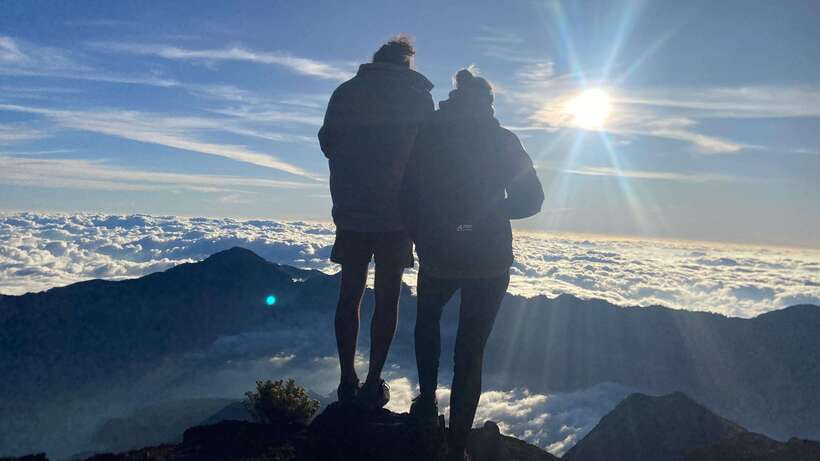
- Pre-dawn summit timing: wake at 2:30 AM and start hiking toward the top around 3:00 AM
- Post 3 break with hot drink: a long rest after lunch helps you reset before the rim
- Sembalun Crater Rim camping: sunset and sunrise views over Segara Anak and Lombok’s islands
- Clear summit panorama: Lombok, Bali, Mt Tambora in Sumbawa, and Segara Anak Lake
- Water and meals are built in: about 3 liters of mineral water per person per day plus 3 meals daily
Rinjani in two days: what the 2D/1N plan really feels like
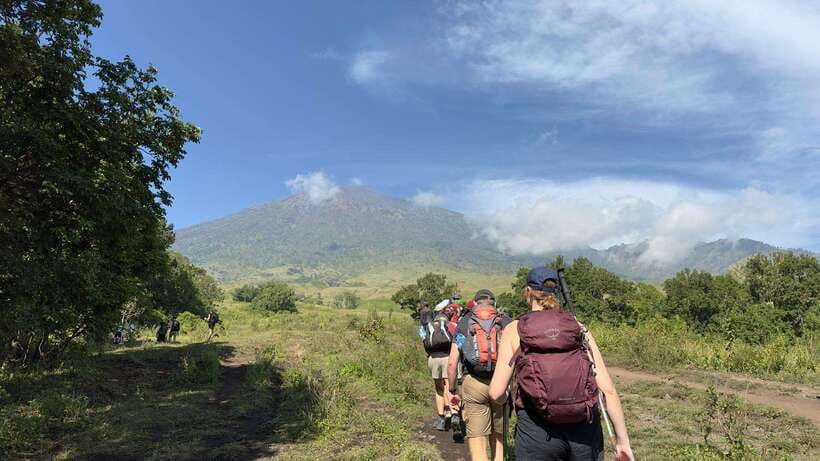
This trek is built around a tight rhythm: hike up to the rim on day 1, sleep close to the crater edge, then do the sunrise summit on day 2. The big idea is that you don’t just chase a view; you get multiple view chapters, from lake-country at altitude to the wide island panorama from the summit.
On paper, it’s only two days. In practice, you’ll spend a lot of time on your feet, and the day-2 schedule in particular is early and focused. That early start is why sunrise is not a maybe—it’s the point.
You also get a clear sense of pacing. Day 1 includes structured breaks at Posts, so you can conserve energy for the final approach to the rim. Day 2 has a staged climb: a moderate push first, then a longer walk, then a steep last hour when your legs will work.
Sembalun Crater Rim camping and your sunset-view setup
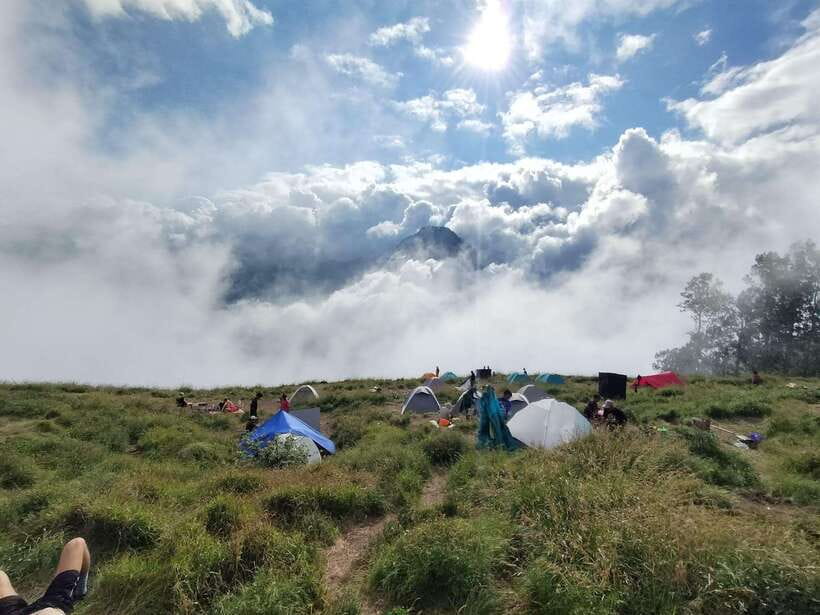
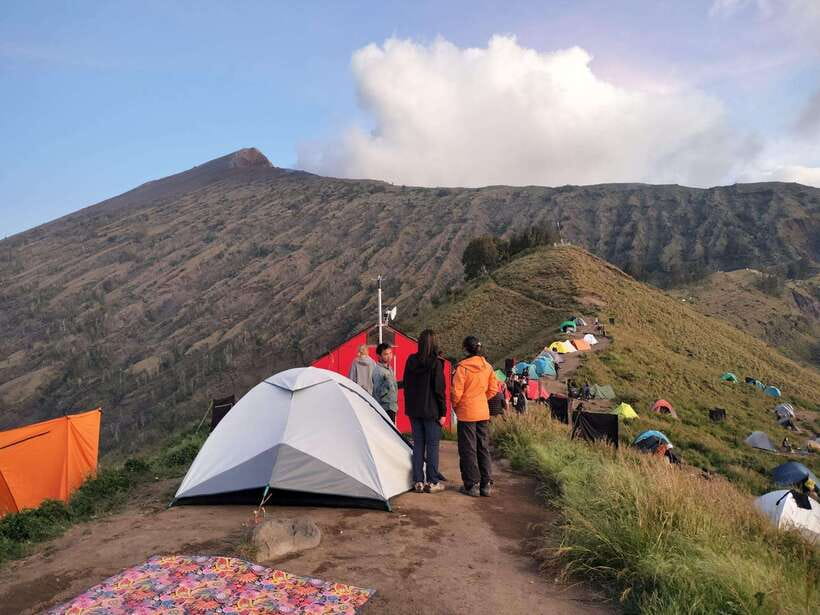
Your first major “wow” moment happens after you reach the camping area at the Sembalun Crater Rim. This is not a drive-by photo stop. You camp there overnight, which means you can take your time and watch the light change over Segara Anak Lake, Sembalun village, and views toward the summit.
Camping at the rim also changes how the air feels. Higher altitude nights can get cold, and that’s part of the experience, but it’s also why warm clothing is on your must-bring list. The tent, sleeping bag, and mat are included, so you’re not fighting logistics on the camping side—you’re fighting temperature and breathing.
You’ll likely feel the difference between day-1 hiking and day-1 “arriving.” Once you’re on the rim, the mood shifts. You’ll spend time looking out, eating, and resting, which makes day 2 more realistic.
Post 1 to Post 3: rests, hot drinks, and finding a climb rhythm
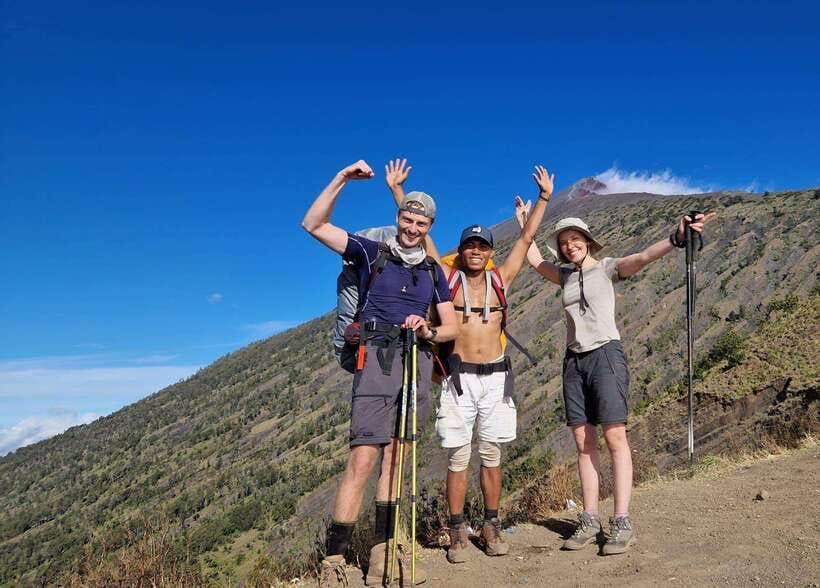
Day 1 starts with a transfer from the Senaru area by mountain car to Sembalun village. From there you go to the Rinjani Information Center area and begin hiking. You’ll hit Post 1, then continue to Post 2, and eventually Post 3, with rest points built into the schedule.
Here’s what I like about this structure: it’s not just “walk until you stop.” The plan includes a rest before continuing to Post 3 and then a longer break after lunch—described as around a two-hour rest. That matters because altitude fatigue and leg burn are both real, and the longer pause gives you a chance to reset.
One of the standout perks is that Post 3 includes a delicious lunch and a hot drink. Even if you’re not a hot-drink person, it’s a smart tool for cold air and tired bodies. You also get back to moving after lunch instead of scrambling for energy.
These Posts also help you pace mentally. If you’ve never hiked to altitude before, the first hours can feel like a shock. Having named checkpoints and expected breaks helps you avoid the mistake of going too fast early.
The 3:00 AM summit push to 3726 m
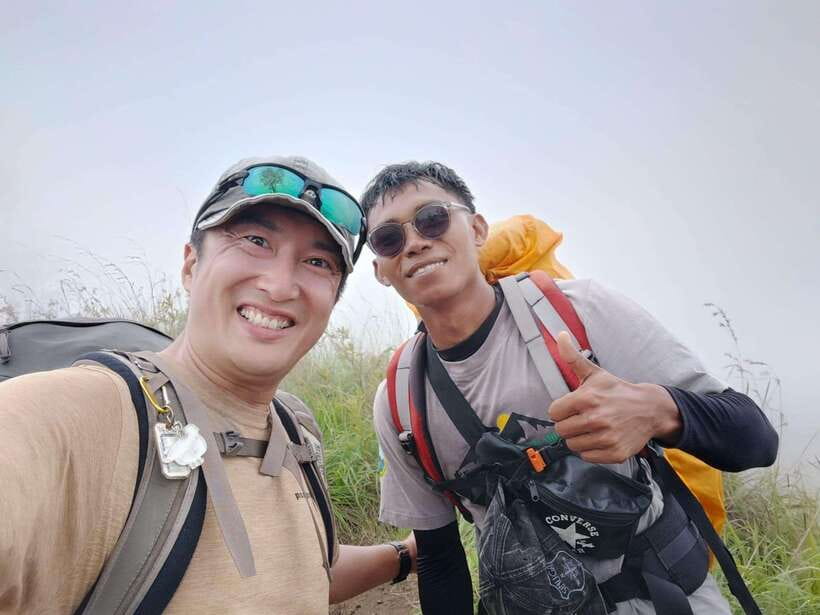
Day 2 begins at 2:30 AM with waking and a light breakfast. Then you start hiking toward the summit around 3:00 AM. You’ll be climbing in low light or darkness, and that’s another reason a good guide and porter team matters: they keep the flow steady so you don’t waste energy on confusion.
The summit climb is described in stages. The first stage is a moderate climb for about two hours. After that, the second stage is fairly easy but long—so the work becomes endurance rather than constant steepness. Then comes the final hour, which is described as very steep and difficult.
That last hour is the make-or-break section for many people. It’s short compared to the full hike, but it’s steep enough to spike effort fast. If you try to power through, you’ll likely burn out too early. If you go steady—small steps, controlled breathing—you’ll save enough energy to finish strong.
The best practical takeaway: treat day 2 like three hikes glued together. Moderate climb first, long walk second, steep finish third. That mental split makes the effort feel more manageable.
What you see from the top: Lombok, Bali, Tambora, and the lake
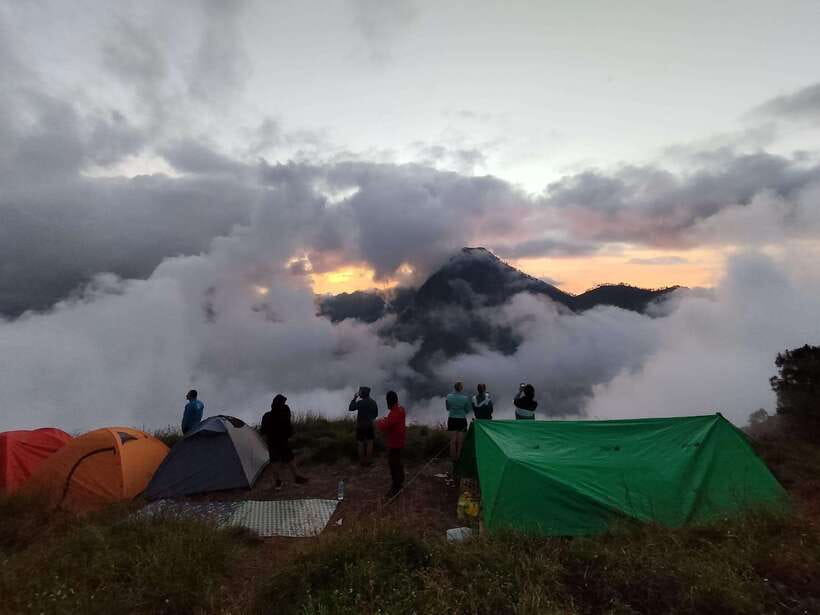
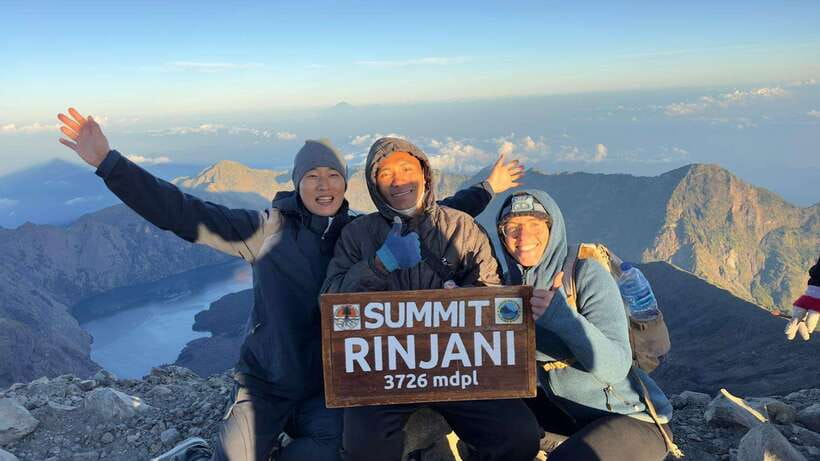
Once you reach the summit, the reward is immediate. You’re able to see all of Lombok island, Bali, and Mt Tambora in Sumbawa, plus the presence of Segara Anak Lake from above. That combination matters because Rinjani isn’t just “a peak.” It’s a viewpoint over multiple islands and the crater-lake system that makes this area special.
Then comes the timing payoff. You’re aiming for sunrise on day 2, and after sunrise you begin descending. That means you get the light shift you came for, but you also aren’t stuck at the top for ages. The schedule moves you along so the day remains doable.
From a comfort standpoint, you should still expect cold. Even when you feel warm moving uphill, sunrise at altitude can keep your hands and cheeks chilled. A camera or phone will drain faster in cold air too, so have your power plan ready.
Descent to Sembalun village: where your time actually goes
After sunrise, you head back down to the rim, where you have breakfast and a rest. That break is useful because the descent can be as tiring as the climb for your knees and feet. From the rim, you continue down to Sembalun village for about 4–5 hours.
Lunch is timed into the descent. You stop at Post 3 or Post 2 for lunch and then arrive in Sembalun village around noon. This is another part I like: you’re not left guessing when you’ll eat, and you have a clear endpoint so the day doesn’t stretch longer than expected.
Also, remember that downhill feels different on your body. Your pace might slow just from muscle fatigue. Bring snacks if you know you need extra calories, but at least you’re already covered with meals during the trek.
Price and value: what $133 includes (and what it doesn’t)
At about $133 per person, this trek is priced for a guided, supported climb with real logistics handled for you. That matters in Indonesia volcano trekking, where the difference between a bare-bones climb and a well-run trek shows up fast.
What you typically get for this price includes:
- Hiking guide and porters, including cooking utensils and camping equipment carried by porters
- 3 liters of mineral water per person per day (during the trek)
- Camping gear like tent, sleeping bag, and mat, plus toilet tent and toilet paper
- 3 meals a day, plus fruit like banana and pineapple
- Tea and coffee
- Trekking insurance
- Storage in the office for what you don’t need on the hike
- Pickup around Senaru and transportation to the starting point
What you should budget separately:
- Entry ticket to the National Park Rinjani is not included
- A one-night accommodation before the trek starts is not included
- Trekking shoes, poles, headgear, and a jacket are not included
- Extra tips for guide and porter are not included
- Extra costs tied to certain locations like Kuta Lombok, Tete Batu, or the airport are listed as not included
So is it good value? For me, yes—mostly because camp setup, meals, and water are built in, and those are the items that usually inflate cost when you have to solve them yourself. The “watch-outs” are the excluded gear and the national park entry ticket. If you already own solid hiking shoes and you plan your clothing layers, you’ll feel the value more clearly.
What to bring for cold mornings and steep hours
The tour’s own packing list is short, but the real-world needs are clear. Bring warm clothing and keep it layered. Even with sleeping gear provided, you’ll still be out at altitude in the early hours.
You’ll want:
- Warm clothing
- Hiking shoes
- A small daypack (the option to rent a small daypack is mentioned, but shoes and other gear are not included)
- Snacks if you like extra insurance between meals
- Camera
- Water handling basics (you’ll get 3 liters mineral water per day during the trek, but you still need a way to carry it comfortably)
Also note: smoking is not allowed. Easy rule, but it matters in a concentrated trekking group.
One more practical note: trekking poles are not included, and the last hour toward the summit is very steep. Poles help some people a lot on steep terrain, but you’ll need to provide them yourself if you want that advantage.
Who this trek suits best (and who should skip it)
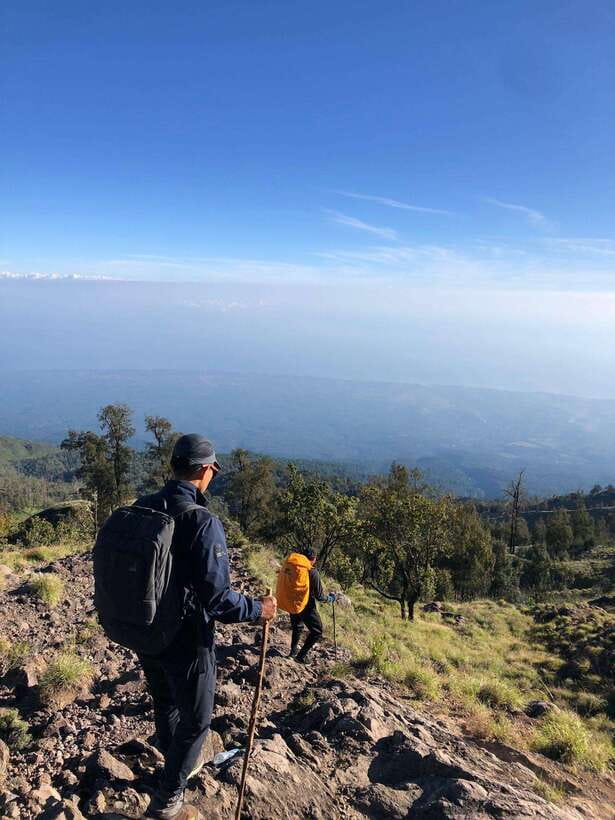
This is not a casual hike. The trek is described as challenging with steep climbs, and it’s also very early on day 2. If you’re someone who handles long walks and can keep a steady pace uphill, you’ll likely feel the route is demanding but manageable.
You should also match the health profile. The trek is not suitable for:
- Children under 10
- Pregnant women
- People with back problems
- People with heart problems
If any of those apply, choose a different activity in Lombok that still gives you mountain scenery without the summit strain.
If you’re a first-time trekker, don’t assume you can wing it. The schedule and steep finish mean preparation matters. Good footwear and a smart pace are non-negotiable.
Should you book this Rinjani 2D/1N summit trek?
Book it if you want a real summit experience with sunrise, not just a viewpoint. Camping at the Sembalun Crater Rim and the staging through Posts are practical touches that make the climb more sustainable, and the inclusion of meals, water, and camp gear helps you travel lighter.
I would hold off if you don’t have proper hiking shoes or warm layers, or if the idea of waking at 2:30 AM for a 3:00 AM climb sounds like punishment. Also consider booking a different option if steep climbs are a big concern for your body.
If you’re fit, warm-clothed, and ready for a structured challenge, this trek is the kind that earns its photos—because you’ll earn the view step by step.
FAQ
How long is the Mount Rinjani 2D/1N summit trek?
It’s a 2-day trek with one night camping.
Where do you camp overnight?
You camp at the Sembalun Crater Rim.
What time do you start hiking on the second day?
You wake up at 2:30 AM and start the summit trek at 3:00 AM.
What meals and drinks are included?
The trek includes 3 meals a day, plus tea and coffee, and fruit like pineapple and banana. Water is also provided during the trek.
How much mineral water is included?
You get 3 liters of mineral water per day per person during the trek.
Is the National Park Rinjani entry ticket included?
No, the National Park Rinjani entry ticket is not included.
What language is the guide?
The live tour guide speaks English and Indonesian.
Who is the trek not suitable for?
It’s not suitable for children under 10, pregnant women, and people with back problems or heart problems.