REVIEW · LANZAROTE
Lanzarote: Volcano Hike
Book on GetYourGuide →Operated by Canary Trekking · Bookable on GetYourGuide
Volcanes aren’t something you read about here—they’re something you walk through. In Lanzarote’s Volcanoes Natural Park, you’ll tackle a practical 3-hour trek through volcanic structures like craters and lava flows, with your guide turning the rock under your feet into an island history lesson.
What I like most is how the route mixes walking with real explanations, not just views. You’re also at the right distance to feel like a proper hike—around 8 km—without turning the day into a boot-sucking marathon.
One thing to consider: the terrain is loose in spots and conditions can be windy, so you’ll want the right shoes and sun protection. If you’re sensitive to heat or gusts, plan to move steadily and pack smart.
In This Review
- Key things to know before you go
- Volcanoes Natural Park: a moonscape you can actually hike
- What’s the hike like in real life (8 km, 3 hours, and your pace)
- The story the guide tells as you walk (and why it matters)
- Segment 1: crossing lava flows and reading the ground
- Segment 2: moving through calderas and crater areas
- Segment 3: lava tunnels and what remains of them
- Segment 4: cones, lava lakes, and the big-picture takeaway
- The service side: pickup, small-group feel, and guides who run the show
- Weather and comfort: what to pack so you enjoy the hike
- Value check: is $48 per person a fair deal?
- Who should book this hike—and who should skip it
- Tips to make the day go smoothly
- Should you book Volcano Hike with Canary Trekking?
Key things to know before you go
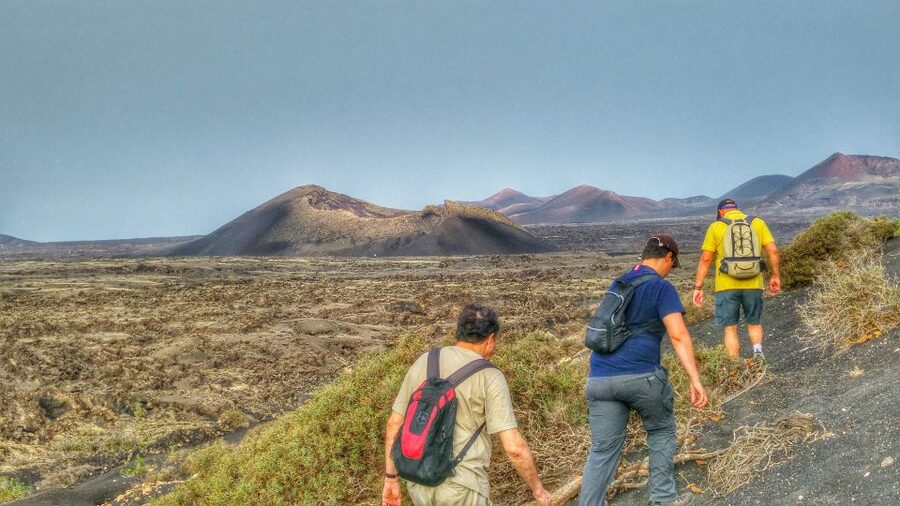
- A protected “open-air volcanology museum” shaped by eruptions and the island’s dry climate
- An ~8 km guided walk through calderas, craters, and the remains of lava tunnels
- Crater access on the route (you don’t just look from far away)
- Real island context from guides like Famara and Marcelo, not generic facts
- Wind and sun are part of the experience, so bring sunscreen and a windbreaker
Volcanoes Natural Park: a moonscape you can actually hike
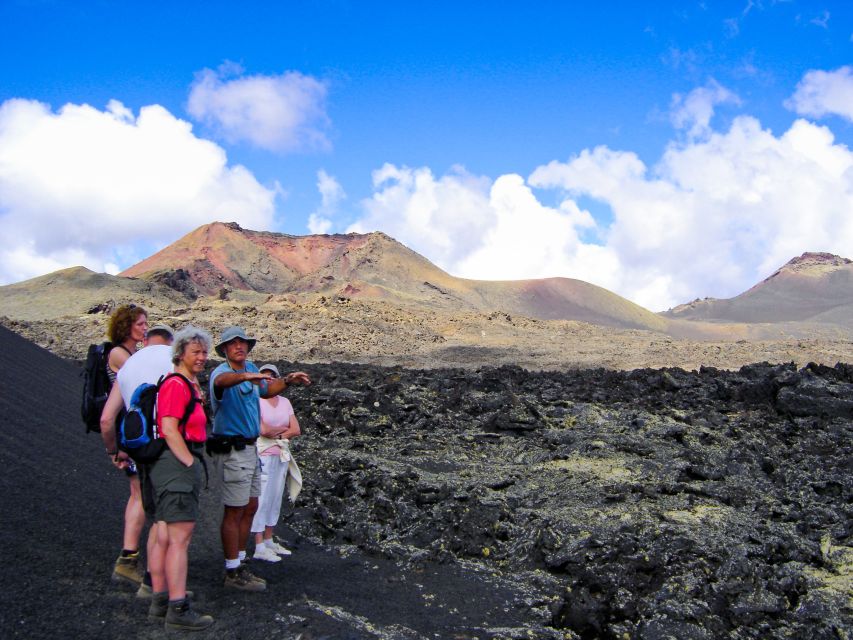
This walk takes you into the Volcanoes Natural Park in central-south Lanzarote—an area defined by relatively recent eruptions and a harsh, arid climate. Because vegetation grows slowly out here, the volcanic shapes stay readable. That’s why the park feels more like a giant geology lesson than a “pretty walk.”
The terrain is striking: you’ll cross lava fields and move past volcanic forms like calderas and craters. Your guide helps you connect what you see to what happened during eruptions, including eruptions that took place in 1730–1736 and again in 1824. It’s a simple idea, but it lands: you’re walking through the island’s physical timeline.
You can also read our reviews of more hiking tours in Lanzarote
What’s the hike like in real life (8 km, 3 hours, and your pace)
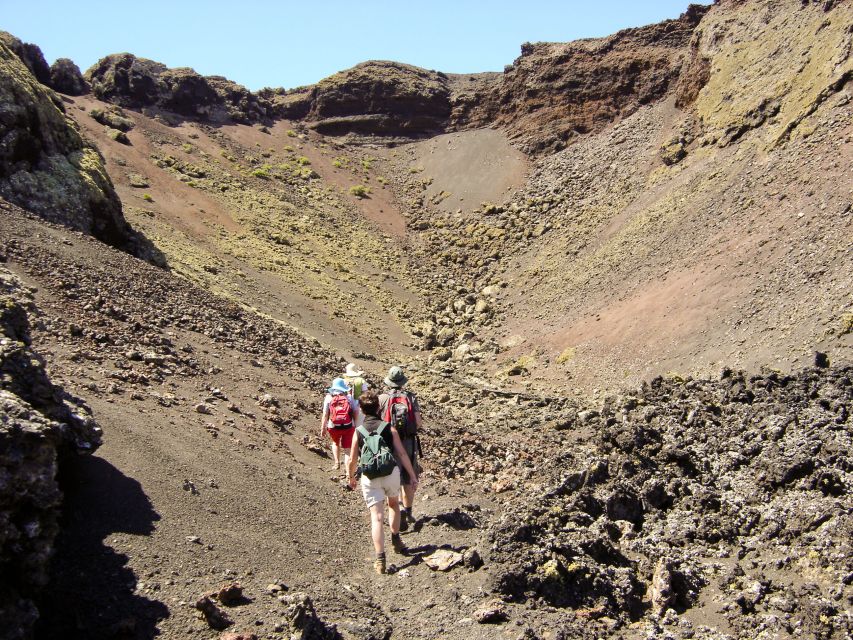
The hike runs about 3 hours and covers roughly 8 km. Some groups may feel closer to a brisk 8 km, while others end up a bit longer depending on pace and conditions. Either way, the aim is a steady walking route—not a slow stroll.
Terrain matters. You’ll be on volcanic ground that can be loose in places. One couple noted they used trainers but had to stop more often to clear small stones; if you’re using softer footwear, expect a bit of “micro-adjusting” during the hike.
The good news: most of it is manageable for an active traveler who can walk for a few hours. You’re not asked to scramble or do anything technical, but you do need secure, closed-toe shoes.
The story the guide tells as you walk (and why it matters)
This isn’t a hike where the guide talks at you from a distance. It’s guided walking with frequent explanation, so you can actually understand the terrain while you’re seeing it.
From what’s shared on the route, you’ll hear how Lanzarote’s volcanic structures formed and why the environment looks the way it does. The park covers recent and historical volcanism, and the island’s slow vegetation makes the geological features easier to spot and interpret. Your guide points out things like lava tunnels and lava lakes as part of the volcanic “map” you’re walking through—even when you’re not literally crawling inside everything.
And yes, the guides make a difference. People consistently highlight guide Famara (including Famara Espino) for being friendly and very well informed, and Marcelo for staying on top of the story even in rainy weather. In other words: you’re not just paying for movement. You’re paying for sense-making.
Segment 1: crossing lava flows and reading the ground
The hike starts at Camino Testeina, on a dirt road near Montaña Testeina, just off the main road LZ 30. If you’re meeting on your own, you’re looking for the small dirt-road entry and a place to park nearby.
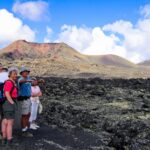
Right away, you’ll begin the part that makes this tour special: walking across lava surfaces that still look “fresh” in structure because the island is so dry. Lava flows can look chaotic, but a guide helps you see patterns—where flows spread, where volcanic activity shaped the ground, and how different features relate to one another.
Practical tip: take a moment at the start to settle into your stride. The ground is the teacher here. If you rush, you’ll miss the visual clues your guide uses.
Segment 2: moving through calderas and crater areas
As the route continues, you’ll pass volcanic structures like calderas and craters. These aren’t only photographed points; they’re part of the walking story. One of the big “yes” moments is that the route includes a chance to get close to crater areas, with at least one mention of walking into a crater.
This is one reason the hike is so memorable: craters change your perspective. From the edge, the world looks flat. Inside, the terrain becomes a bowl, and you understand size and shape in a more physical way.
Drawback to expect: crater areas can feel colder or more exposed depending on wind. If the day is breezy (and Lanzarote often is), that wind can make the hike feel longer than the clock says. Bring your windbreaker even if the morning looks calm.

Segment 3: lava tunnels and what remains of them
Volcanic tunnels are one of those features that sound abstract—until you see the evidence in the terrain. The hike includes remains of lava tunnels, and your guide helps you connect those remnants to how lava moved during past activity.
Even if you don’t go “tour-cavern deep,” the value here is interpretation. You’re learning how volcanic systems work: how lava travels, how it can leave behind hollow or channel-like traces, and how later geological change preserves (or reveals) those structures.
This is also where the tour earns its “island history” label. Lanzarote isn’t just a destination; it’s a process still frozen in time by aridity and slow plant recovery.
Segment 4: cones, lava lakes, and the big-picture takeaway
The route is designed to help you understand the volcanic mechanics of Lanzarote in a way that stays with you after the hike. Your guide may talk about volcanic cones and point out areas linked to craters, lava tunnels, and even lava lakes.
Here’s what I think makes this segment click: you start noticing that the park looks “otherworldly,” but it’s not random. The shapes are the result of inner forces and eruption patterns—so once you understand the logic, the scenery becomes a map.
It also changes how you see Lanzarote later. On other trips, you’ll spot volcanic hints with more confidence, instead of treating them like background decoration.
The service side: pickup, small-group feel, and guides who run the show
Pickup is optional. If you select it, you provide your hotel name and the operator confirms the exact pickup time and location after booking. Reported pickup timing falls between 9:00am and 9:40am depending on where you’re staying.
Once you arrive at the car park, the group is organized by language. That sounds like a small detail, but it matters. It keeps the walk calmer because everyone hears the guide in the language they actually use.
A note of realism: one past experience mentioned a slightly chaotic start while groups were sorted into vans. After that, things moved smoothly.
The guides are the main win here. People highlight how friendly and local the guides feel, and how they can keep the explanation clear even when weather turns rough.
Weather and comfort: what to pack so you enjoy the hike
This hike is outdoors and exposed. The park’s arid conditions can mean bright sun, and wind can arrive without much warning.
Bring:
- Comfortable, closed-toe shoes
- Windbreaker
- Sunglasses and sun hat
- Sunscreen
- Water
- Camera
Optional but smart: a light layer for breezy crater moments. Even when it’s warm, wind can change the feel fast on open volcanic ground.
Also, plan to drink steadily. Lava terrain isn’t humid and shade can be limited. If you wait until you feel thirsty, you’ll lose momentum.
Value check: is $48 per person a fair deal?
At $48 per person for a ~3-hour guided hike with pickup optional, the value depends on what you want from Lanzarote.
If you came for beaches only, this might feel like “extra walking.” But if you want to understand why the island looks like it does, you’re buying more than distance—you’re buying interpretation, route guidance, and access to crater areas you’d likely miss on your own.
Also, the operator includes guided hiking and (if you choose it) pickup/drop-off and transport. That reduces the friction factor, especially if you’re staying in a hotel far from the park’s best trailhead access.
And the guide quality seems consistent. People repeatedly point to guides like Famara and Marcelo as a big reason the experience works—meaning you aren’t stuck with generic facts.
Who should book this hike—and who should skip it
This fits best if you:
- Want an active, geology-focused morning in Lanzarote
- Enjoy learning while walking (not lectures in a museum room)
- Prefer small-group guidance over self-exploring with a phone map
It may not fit if you:
- Need wheelchair access or have mobility impairments (it’s not suitable)
- Are traveling with children under 7 years
- Want a fully flat, stroller-easy route (the ground can be loose)
If you can handle 8 km of walking and you’re comfortable outdoors in sun and wind, this is a solid match.
Tips to make the day go smoothly
- Wear proper closed-toe shoes. If your shoes are not grippy, loose volcanic surface will remind you.
- Bring sunscreen and protect your face and neck; the arid light can be sneaky.
- Plan to go at a steady pace. The experience is about seeing and understanding, not sprinting.
- Bring a windbreaker even if the forecast looks mild, especially if you’re hiking toward crater areas.
- If you have pickup, check your confirmation carefully and keep an eye on spam folders for updates.
Should you book Volcano Hike with Canary Trekking?
Book it if you want a guided connection between Lanzarote’s volcanic forms and the island’s history. The combination of lava-field walking, crater access, and strong guide storytelling turns a scenic outdoors outing into a real understanding of how these eruptions shaped what you see today.
Skip it if you hate uneven, loose volcanic ground or you’re looking for a minimal-effort tour. And if wind or heat stresses you, you’ll need to take the packing list seriously.
For most active travelers who want “real Lanzarote” beyond postcards, this is one of the best ways to get a hands-on sense of the park in just a few hours.