REVIEW · OUIRGANE
imlil valley atlas mountains guided walk & lunch with locals
Book on GetYourGuide →Operated by Get Excursion SARL · Bookable on GetYourGuide
The Atlas Mountains start before breakfast. This Imlil Valley day trip turns Marrakech into Berber village life and High Atlas hiking in one long, very human day. I love how the walk actually connects you to places like Aroumd and Aït Souka, and I love the small stop for argan/olive oil and mint tea at a women’s cooperative. One consideration: you’ll be on rocky, uneven paths, so pack real shoes and don’t expect a flat stroll.
What makes it special is the mix of Morocco you rarely get in a single day: gorges and mountain roads, a weekly market (when it lines up), and a lunch with a family on a terrace. If weather gets moody, you still get the rural story—just be ready to adjust what you see and shoot.
In This Review
- Key things that make this Imlil Valley day trip worth your time
- Getting out of Marrakech fast: how this day trip really works
- The road to the High Atlas: Azrou, Tahnaout, and Moulay Brahim Gorges
- The women’s cooperative stop: argan and olive oil with actual hospitality
- Asni weekly market on Saturday or Tuesday: what to expect
- The guided hike from Imlil to Aroumd: the part you should prepare for
- Aït Souka lunch: eating with a Berber family on a terrace
- When you might catch waterfalls and the best photo rules
- Price and value: what you’re paying for at $10 per person
- Who this Imlil Valley day trip suits best (and who should skip it)
- Practical tips so your day runs smoothly
- Should you book the Imlil Valley guided walk & lunch with locals?
- FAQ
- What time does the Imlil Valley trip start and how long is it?
- Is lunch included in the tour price?
- Do you visit a weekly market?
- What languages are the guide and driver available in?
- Where does pickup happen?
- What should I bring for the walk?
Key things that make this Imlil Valley day trip worth your time
- 09:00 departure from Marrakech means you reach the Valley before crowds and heat build up
- Weekly market in Asni happens when your day falls on Saturday or Tuesday
- Women’s cooperative visit for argan and olive oil, plus a proper cup of tea
- Guided hike from Imlil toward Aroumd (about 1.5 hours) with chances to pause for views
- Lunch with a Berber family in Aït Souka on a terrace, not a restaurant script
Getting out of Marrakech fast: how this day trip really works
This is one of those Marrakech excursions where time matters. You leave at 09:00 and you’re in the Atlas foothills by late morning, not stuck fighting traffic and waiting for the “good part” later. The total day runs about 7 hours, with pickup and drop-off in Marrakech (riads and hotels inside the city).
The route has a natural rhythm: drive, small cultural stops, then walking, then lunch with locals, then back to the van before evening. That pacing is exactly what you want when you’re using a limited number of days in Morocco. You’re not just collecting photos—you’re building a sense of how rural life hangs together: markets, cooperatives, terraces, and trekking routes.
Also, this tour isn’t built around extreme altitude claims or fancy staging. It’s built around people and places. The guides listed in the experience’s feedback—names like Majid, Mohamed, and Said/Sayed—show up because the job is part storytelling and part navigation. A good guide makes the hike feel shorter and the stops feel real.
The road to the High Atlas: Azrou, Tahnaout, and Moulay Brahim Gorges
The day starts with a 1h30 drive south-east from Marrakech (with a couple of practical stops along the way). One early stop is Azrou, described as an old village where you’ll pause for a bit of history and pictures. Even if you only stay briefly, it’s a helpful reset: you see a different rhythm from the Medina, and your brain starts switching from city time to mountain time.
Next comes Tahnaout for a photo stop plus a quick visit and tea (about 20 minutes). This isn’t the kind of tea stop that feels like a trap if you keep your expectations grounded. You’re there to slow down, look around, and get your bearings for the day. Think of it as the moment you stop rushing and start noticing details.
Then the route heads up toward Moulay Brahim Gorges, where the scenery turns dramatic and the roads get winding. You’re not hiking yet, but you are already in the Atlas mindset: cliffside views (weather permitting), sudden changes in vegetation, and that feeling that Morocco is bigger than the city you arrived from.
The women’s cooperative stop: argan and olive oil with actual hospitality
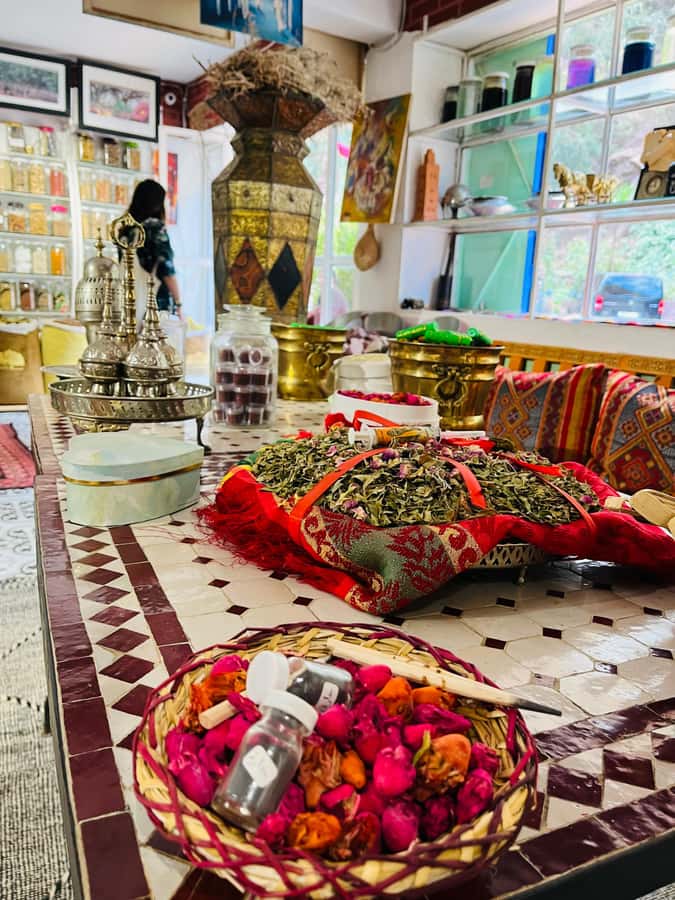
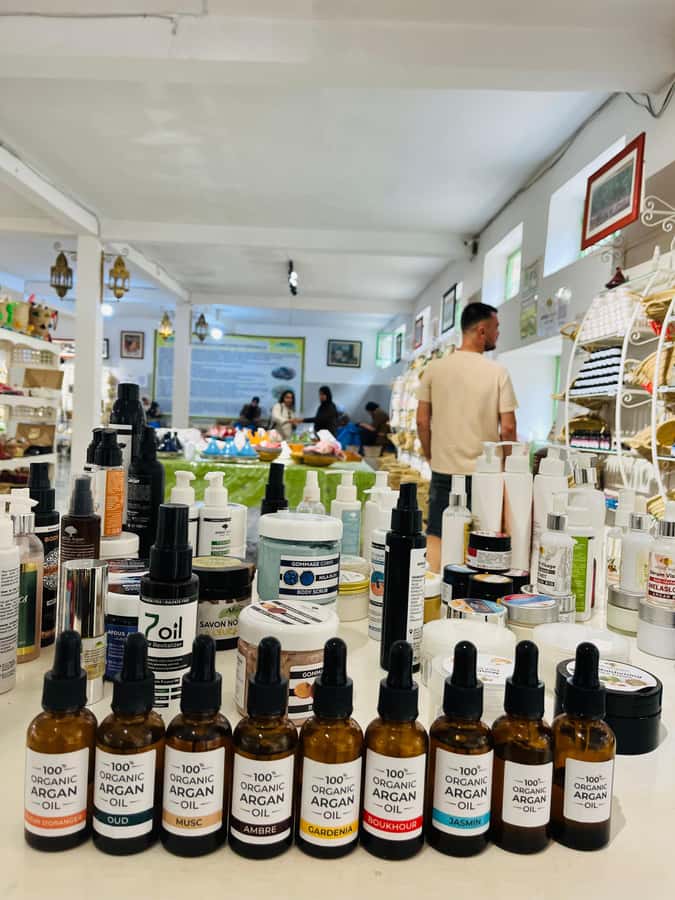
One of the best-value moments is the visit to the women’s cooperative producing local products—especially argan and olive oil—followed by a cup of mint tea. This is small, but it’s the kind of stop you’ll remember later because it connects taste and craft to real households.
What I like about cooperative visits when they’re done well is that you’re not just buying a souvenir. You’re learning the basic logic of how products travel from local work to global markets—through grinding, pressing, mixing, bottling, and selling. The tea part matters too. You’re not rushed. You get a moment where the day feels less like logistics and more like meeting people.
If you’re the type who always asks how things are made, this is where you’ll get more than a quick explanation. And if you’re mostly there for the scenery and the walk, you’ll still benefit because it gives context to what you see later in the villages.
Asni weekly market on Saturday or Tuesday: what to expect
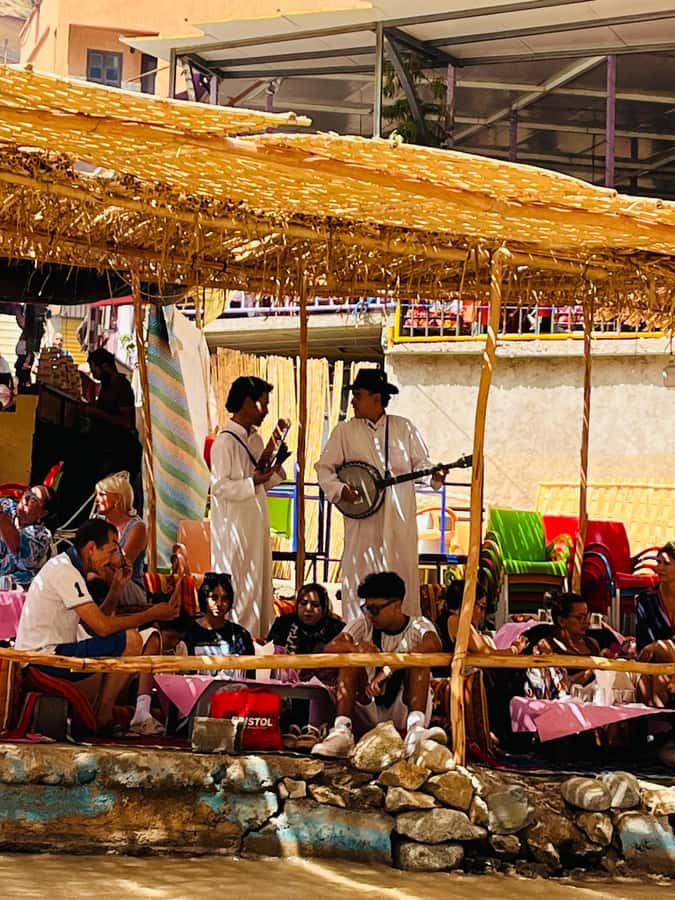
This tour can include the weekly market in Asni on Saturdays or Tuesdays. Markets are one of the fastest ways to understand how a rural area functions day-to-day. Even if you don’t plan to buy much, it’s where you see local clothing, food, tools, and the simple choreography of who’s trading with whom.
Practical advice: go with curiosity, not shopping pressure. You’ll likely pass stalls where people sell local goods, and it’s normal for sellers to talk. If you want to buy argan-based products or small handmade items, you’ll have the chance—but keep your head clear about what you’re paying and what you’re getting.
This market stop also breaks up the day nicely. After gorges and road time, you get people energy. After the walk, it’s a reminder that these mountain villages connect to wider networks.
The guided hike from Imlil to Aroumd: the part you should prepare for
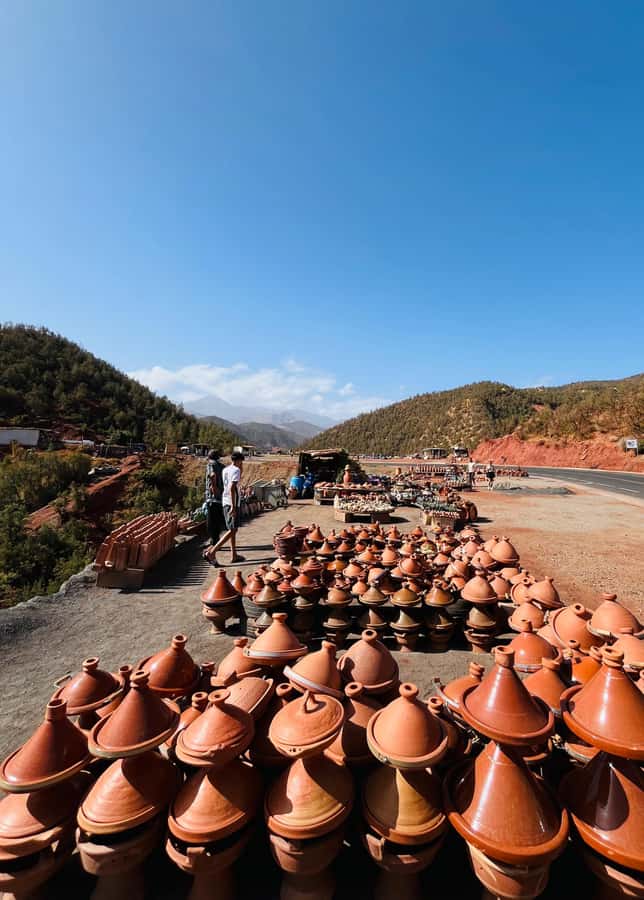
Arrival to Imlil, the foothills hub for treks (including routes tied to Mount Toubkal), is where the tour shifts from driving to walking. You leave the vehicle and start a hike that’s roughly 1 to 1.5 hours depending on pacing and the group.
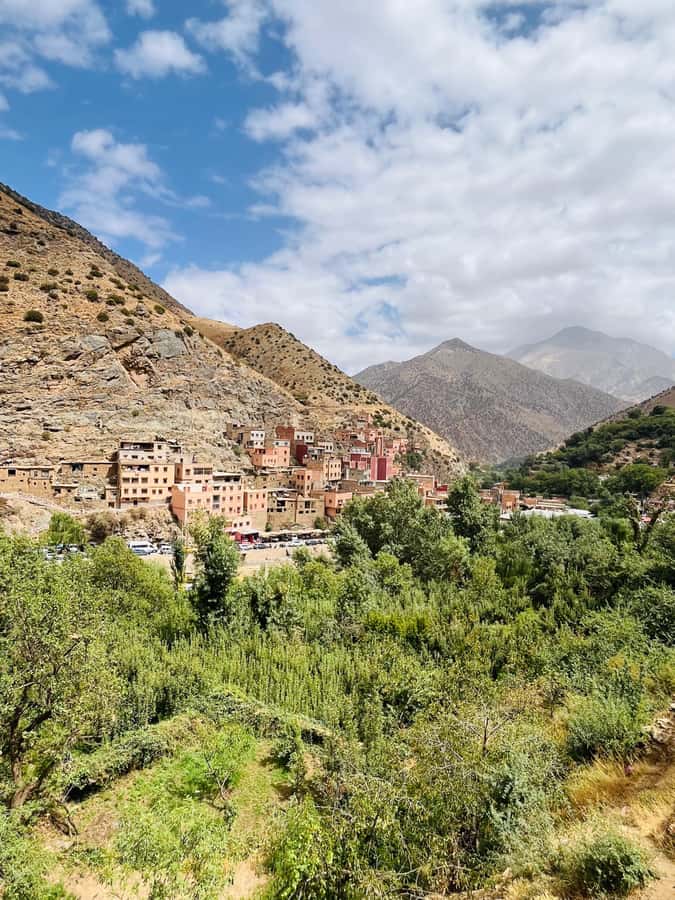
You hike toward Aroumd (Aremd) at 1843m, and the route passes small hamlets such as Aït Souka, Targa, and Imoula (you might notice these names on the trail as you go). Expect up-and-down walking on stark slopes and rocky ground. The day’s description is clear on one thing: there’s effort here, but it’s manageable if you wear proper shoes.
What makes the hike worth it is the geography. As you move, you’re treated to strong views of jagged peaks of the Toubkal Massif, with named mountains mentioned in the route narrative such as Jbel Aguelzim (3547m), Aksouâl (3847m), and the Adrar Adj (3122m). Even if clouds roll in, the drama is still there—you just shoot differently.
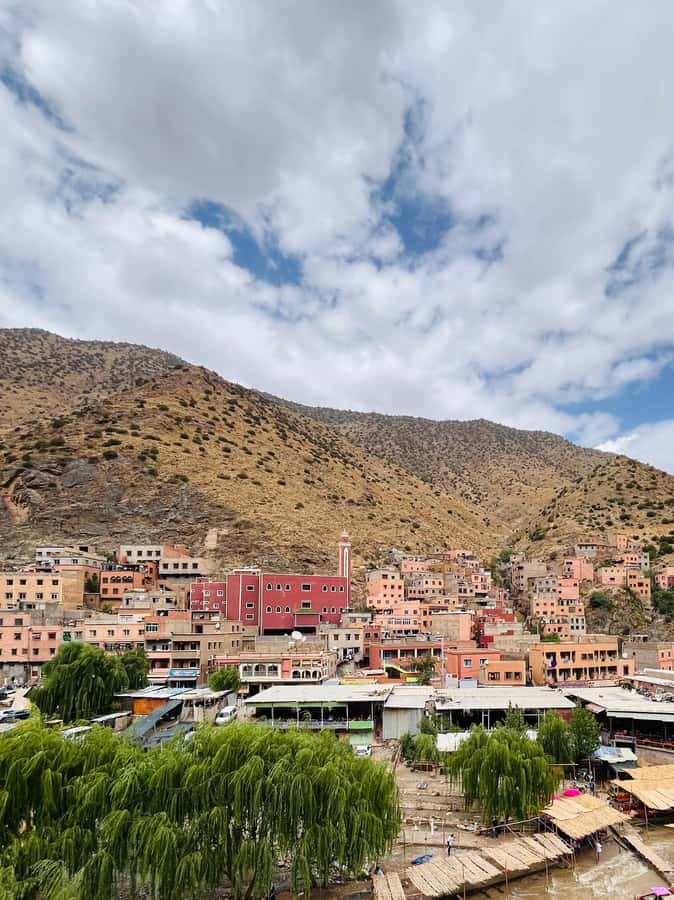
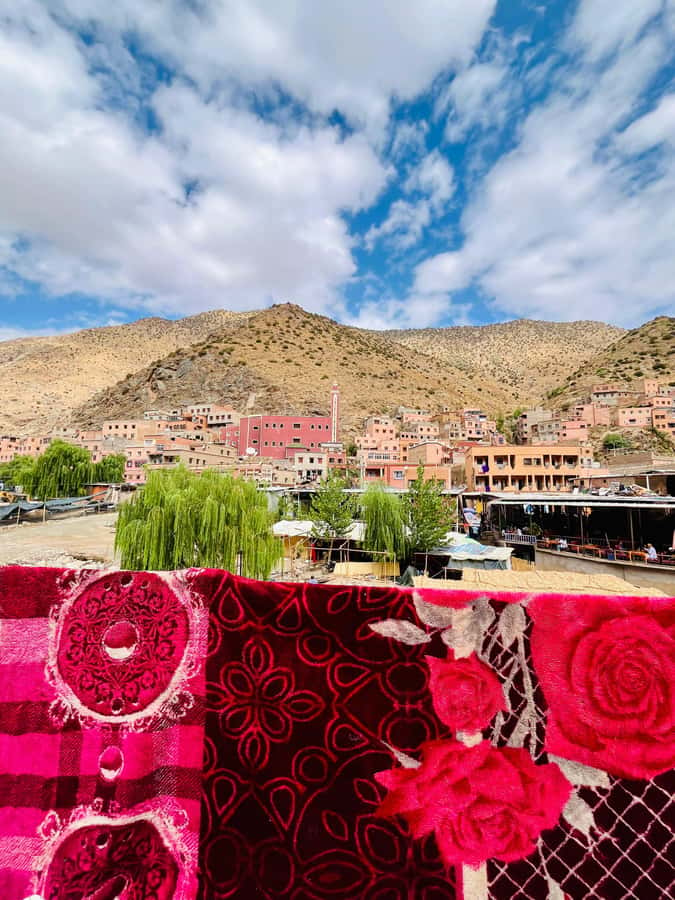
You also stop in Aroumd to visit a singular village built like stacked houses on a moraine spur, overlooking irrigated terrace fields of barley, corn, and vegetables, surrounded by almond and walnut trees. That’s a key difference from a generic nature walk. You’re not only walking through scenery—you’re walking through a working system.
From a comfort standpoint: if you hate slipping on rock, bring shoes with grip. In similar hikes from this same area, guides emphasized that footing can be slippery. If it’s rainy or even damp, take it slow on downhill sections. You’ll arrive fresher and happier.
Aït Souka lunch: eating with a Berber family on a terrace
After the village stop, you continue for about 30 minutes to Aït Souka for lunch. This is the part that turns your day trip into something warmer than sightseeing.
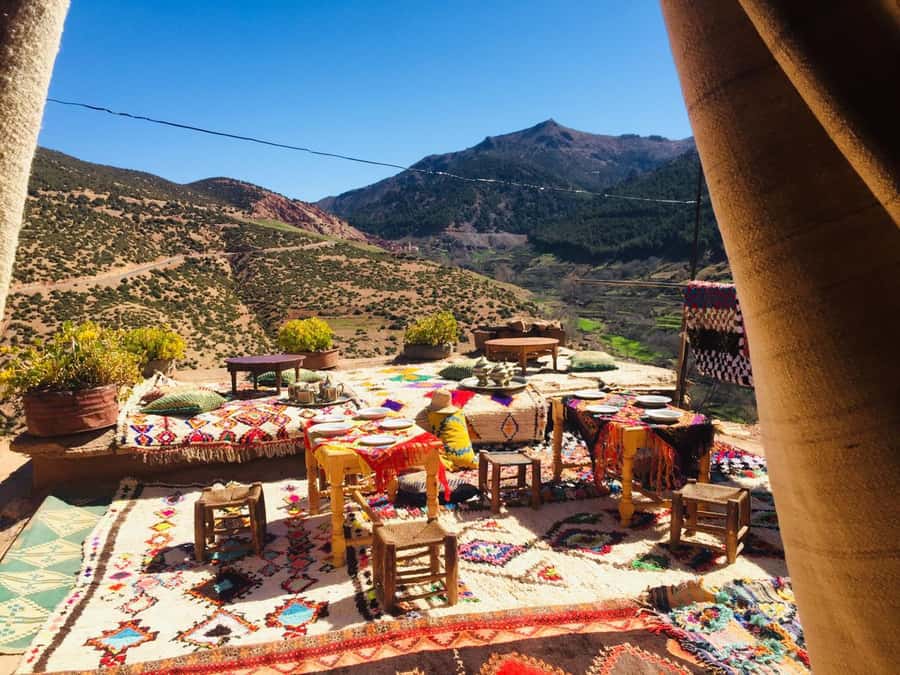
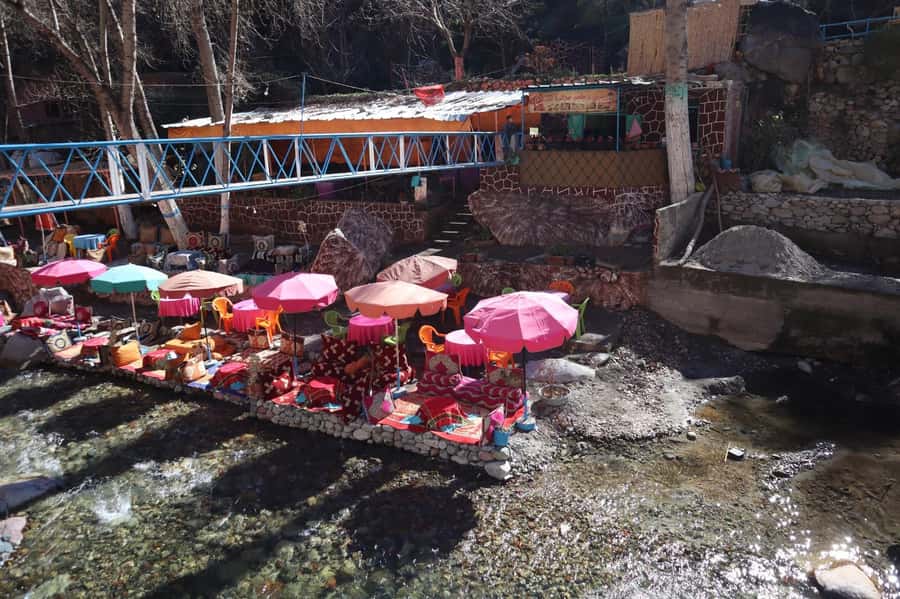
Lunch is served on a terrace among a Berber family in the village. The meal isn’t just about calories—it’s about atmosphere: being in the home space, seeing how the village operates, and letting the day slow down for a bit. Food in rural Morocco tends to be simple and honest, but the best part is you’re not eating in a tourist bubble.
Important cost note: lunch is not included. The day description states lunch costs 9€, paid directly to the family. That means the advertised $10 per person price is mainly the transport, guide, and key stops—not a full all-you-eat meal package. Still, I’d call it fair value because you’re buying access to people and place, not just a standard restaurant lunch.
Also, plan your expectations. Soft drinks are also listed as not included. If you want something specific to drink, you’ll need to handle it yourself.
When you might catch waterfalls and the best photo rules
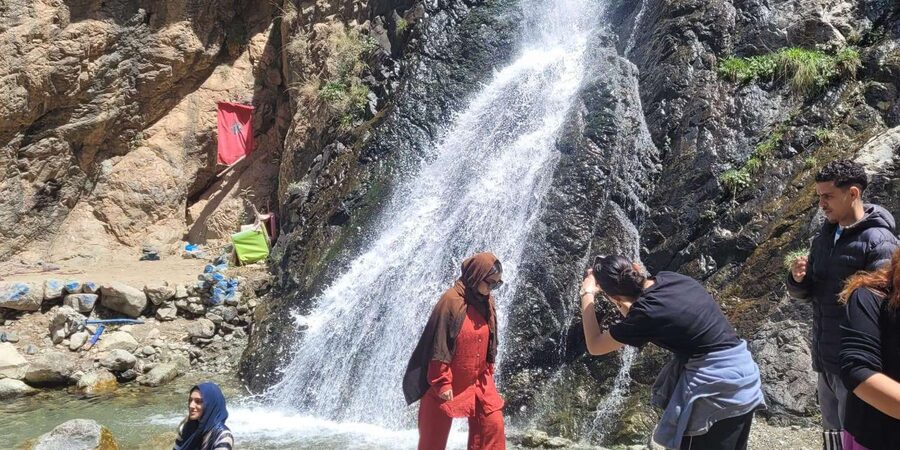
The experience highlights mention waterfalls, and some guiding descriptions for the broader area include hikes that reach waterfall scenery. Here’s the honest way to think about it: you’re in mountain terrain where conditions matter—season, rainfall, and how the route is paced.
So I treat waterfall expectations like this: you’re signing up for a hike where scenery changes fast, with a real chance to see water-related features if conditions allow. If it’s dry, you’ll still get mountain views, terraces, and village life. If it’s wet, the trails can be slick—so your shoe grip becomes the difference between enjoying it and rushing it.
Photo-wise, I suggest you pack a practical approach:
- camera ready at valley transitions and village viewpoints
- jacket accessible for road and wind changes
- leave a little room in your day for stopping when something surprises you
The best photos often come from those small pauses—when you crest a slope and the valley suddenly opens.
Price and value: what you’re paying for at $10 per person
At $10 per person for a 7-hour day trip, the value is about what’s included versus what’s optional. You get:
- Pickup and drop-off in Marrakech
- Comfortable transport by minibus/mini van
- English or French driver, plus a local guide
- Free visit to the Berber women’s cooperative
- A structured day with multiple scenic/cultural stops and a guided walk
What’s not included:
- Lunch (9€ paid directly to the family)
- Soft drinks
That lunch cost is the one extra line item that can surprise people. But if you compare this to the price of a normal guided countryside trip plus a separate market and cooperative visit, it still looks reasonable—because the lunch is part of the experience, not a detachable add-on from a brochure.
One more value detail: the reviews for guides in the region repeatedly praise punctual, friendly guidance and a hike paced for the group. You’re not just paying for a car ride. You’re paying for someone local to explain what you’re seeing and keep the day flowing.
Who this Imlil Valley day trip suits best (and who should skip it)
This tour fits you if you want:
- a real rural day out of Marrakech
- a guided walk without needing to plan your own route
- Berber culture stops that include cooperatives and family lunch
- a chance to match your day with the Asni market (Saturday or Tuesday)
It’s less ideal if:
- you struggle with uneven, uphill/downhill terrain
- you want a totally sedentary day
- you’re traveling with mobility needs that make uneven trails hard
The day description also says it’s not suitable for people over 95 years. And it notes you should bring comfortable shoes, a hat, camera, and a jacket. That’s your clue: you’re in mountain conditions, not a flat promenade.
Practical tips so your day runs smoothly
A few simple moves can make this day feel easy and enjoyable instead of tiring:
- Wear comfortable shoes with good grip. Rocky paths can be slippery.
- Bring a hat and jacket. Even when it’s warm in Marrakech, mountain weather can shift.
- Have your camera ready for village viewpoints and peaks.
- If you’re hoping for market time, remember it’s tied to Saturday or Tuesday days.
Behavior-wise, the tour data says alcohol and drugs are not allowed and alcoholic drinks aren’t allowed in the vehicle. Keep it simple and follow the rules—your guide will keep the mood friendly.
Should you book the Imlil Valley guided walk & lunch with locals?
If your goal is a single day that feels like it touched real Berber life—cooperative work, village terraces, and a guided walk with context—then yes, I think you should book it. The combination of transport, a local guide, and the family lunch setting is what makes it more than a bus-and-brochure outing.
Skip it only if you can’t handle rocky uphill/downhill hiking or you’re counting on lunch and drinks being fully included (lunch is extra at 9€, paid directly to the family). If you’re flexible and you pack good shoes, this is one of the more grounded Atlas day trips you can do from Marrakech.
FAQ
What time does the Imlil Valley trip start and how long is it?
Pickup starts from Marrakech in the morning with a stated 09:00 departure, and the whole experience is about 7 hours total.
Is lunch included in the tour price?
Lunch is not included. It’s described as costing 9€, paid directly to the family who hosts you.
Do you visit a weekly market?
Yes, the Asni weekly market visit happens if your day trip falls on Saturday or Tuesday.
What languages are the guide and driver available in?
You’ll have a live tour guide in English, French, and Arabic. The driver is listed as English or French.
Where does pickup happen?
Pickup and drop-off are included for hotels and riads in Marrakech. If your accommodation is in a narrow street not reachable by the vehicle, you’ll be directed to a nearby meeting point.
What should I bring for the walk?
Bring comfortable shoes, a hat, a camera, and a jacket. The hike involves uneven mountain paths.