REVIEW · JASPER
Full Day Guided Glacier Hike on The Athabasca with IceWalks
Book on Viator →Operated by IceWalks · Bookable on Viator
Ice you can walk on beats photos. I love how IceWalks stacks the hike with ACMG-certified guides and the right traction gear, so the Athabasca Glacier is a real walk among crevasses and meltwater, not a quick photo stop.
I also love the icefalls at the head of the Athabasca Glacier, plus the chance to pause for lunch with shattered ice and rock all around you. It’s the kind of view that sticks with you long after the hike ends.
The main consideration is that this is a 10 km roundtrip trek with a noticeable uphill stretch, and you’ll want to dress for cold/wet conditions and plan ahead since there are no bathrooms at the top.
In This Review
- Key things to know before you go
- Entering The Athabasca: why the full-day hike works
- Morning logistics on the Icefields Parkway
- Walking route and what the glacier portion is really like
- Icefalls, crevasses, mill wells, and meltwater: the features you’ll learn to spot
- What you should bring: warm layers and lunch on the ice
- Gear and safety: micro-spikes and footwear traction
- Pace, terrain, and the no-bathroom reality
- Price and value: is $154.23 fair?
- Weather and the day plan (and how to avoid disappointment)
- Who this Athabasca hike is best for
- Should you book this IceWalks full-day Athabasca glacier hike?
- FAQ
- How long is the IceWalks full-day Athabasca Glacier hike?
- How far do you hike on the glacier?
- What time does the tour start?
- Where do we meet the guide?
- Is traction gear included?
- Do I need to bring lunch and warm layers?
- What happens if weather is poor or I need to cancel?
Key things to know before you go
- Small-group pace (max 12) that feels controlled and safe on uneven ice.
- Micro-spikes provided, with extra gear available if you show up unprepared.
- Icefalls are the payoff, reached after walking further than you might expect.
- Glacier features you’ll learn to spot: crevasses, meltwater streams, and mill wells.
- Lunch on the ice (bring your own) right against the glacier’s dramatic formations.
- Weather matters since the tour requires good conditions to run.
Entering The Athabasca: why the full-day hike works
The Athabasca Glacier is one of the few glaciers in the Canadian Rockies that you can actually walk on with a guide. That matters. A glacier is dangerous and fragile, and the whole point of doing it right is understanding what you’re stepping on and why the rules exist.
This full-day version (about 6 hours) gives you enough time to get past the “getting there” stage and reach the real jaw-dropping part: the icefalls at the head of the glacier. If you’re doing this for your first glacier experience, the extra time pays off. You’ll see more of the glacier’s structure than you would on a shorter outing, and the walk feels more like a guided observation hike than a sprint.
One honest note: the most intense ice features can be a bit farther into the hike than you’d get on some faster-moving glacier tours. That means you’re earning the best views. For me, that’s a fair trade when the goal is to actually understand the place and not rush through it.
You can also read our reviews of more guided tours in Jasper
Morning logistics on the Icefields Parkway
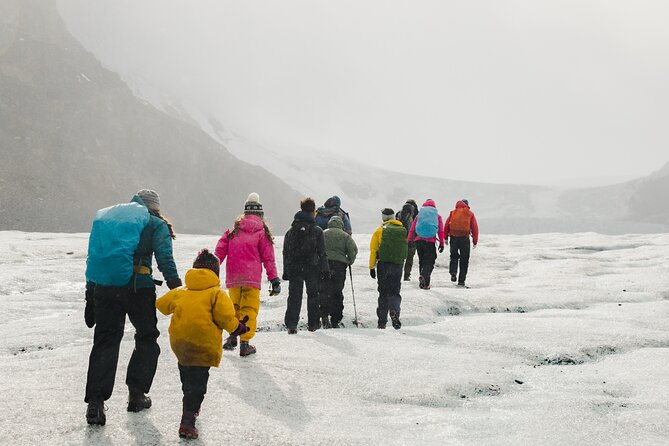
You meet your IceWalks guide at the Columbia Icefield Discovery Centre parking lot area. From there, you’re geared up and then shuttled a short distance to the trailhead. The start time is listed as 10:15 am, and the tour returns you back to the meeting point.
Because the group is capped at 12 travelers, you’re not fighting a crowd on slippery ground. You’ll move as a unit, and that’s a big deal when you’re on glacier ice where spacing and footing matter.
You’ll also have a mobile ticket, which makes the check-in part easier than hunting for printed paperwork in a jacket pocket.
Walking route and what the glacier portion is really like
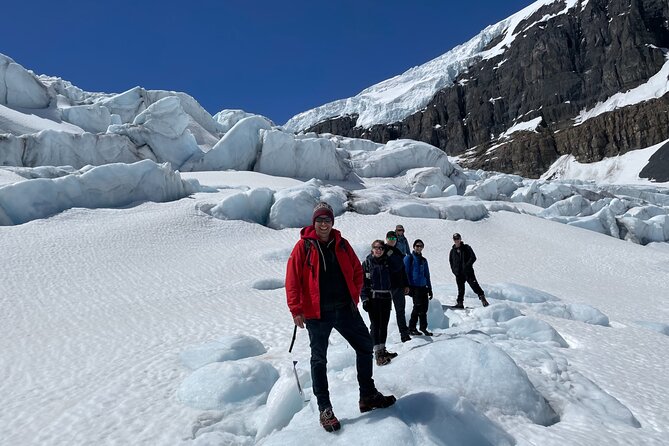
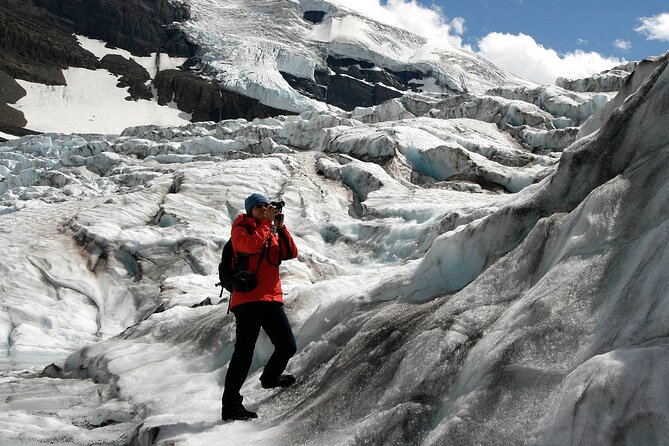
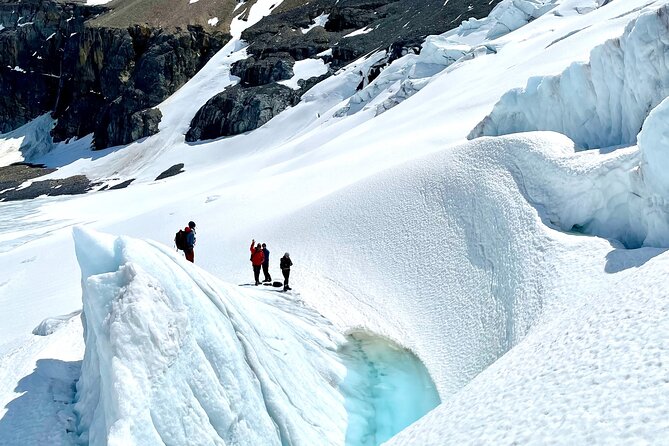
The core of the tour is a 10 km roundtrip walking tour on glacier terrain. The route is designed to take you to the icefalls and major formations near the head of the Athabasca Glacier. Along the way, you’re not just “strolling on ice.” You’re learning how the glacier works, which changes the way you look at everything around you.
At the turnaround point near the icefalls, you get a lunch break (you bring your own) set against shattered ice and rock. The guides frame what you’re seeing with natural history and local conservation efforts, so it doesn’t feel like a sightseeing line. It feels like a place you’re being taught to read.
Expect uneven ground and constant attention to your steps. Even if the pace is manageable, the surface can be slick, and crampon-style traction is what keeps it from feeling sketchy.
Icefalls, crevasses, mill wells, and meltwater: the features you’ll learn to spot
The best part of glacier hiking is that the glacier is never flat and boring. It’s a whole system of ice shapes, water movement, and fractures.
On this hike, the guide helps you identify key features, including:
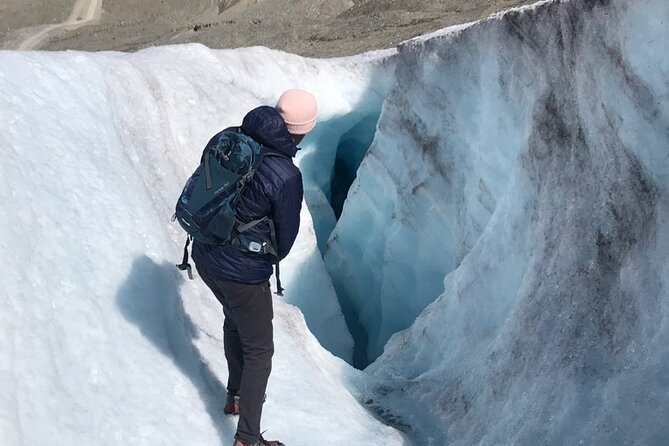
- Crevasses, which are deep cracks in the glacier
- Mill wells, also described as water waterfalls dropping into the depths of the ice
- Meltwater streams, showing how water travels across and through the ice
- Icefalls, where ice breaks and flows in dramatic steps
You’ll likely notice the glacier changing texture as you go—sometimes smoother and glassy-looking, sometimes fractured and broken. A guide’s job here is to translate what your eyes see into what the glacier is doing right now.
There are also plenty of moments where the glacier wall at the end of the hike is the “wow” factor. And yes, you’ll get that blue-ice look at certain angles and conditions. In short: this is more than one frozen wall. It’s a whole set of glacier stories in ice.
What you should bring: warm layers and lunch on the ice
Ice Walks provides certain gear, but you still need to show up ready for cold, wind, and wet surfaces. The tour does not include warm insulating layers, so if you’re coming in light, you’ll feel it once you’re out on the ice.
Here’s the practical approach that works:
- Bring warm layers (think insulation, not just a thin jacket)
- Bring lunch from home, since you’ll eat at the glacier backdrop
- Wear hiking boots if you have them (they can also provide boots if you don’t)
- Use gloves if you have your own; if not, plan on being equipped
One real-world note from past groups: the day can start cold and rainy, and that’s when your clothing matters most. The upside is the guides have experience with this and can help you stay comfortable with additional rain gear and extra glove layers when needed.
You can also read our reviews of more hiking tours in Jasper
Gear and safety: micro-spikes and footwear traction
You’re provided micro-spikes (crampons-style traction) for added grip on the ice. If you don’t have your own gear, you may also be provided items like rain gear, hiking boots, gloves, and a hat. That’s a big value point because good glacier traction is not something most people casually own.
Just as important, the guides are there to manage how you move:
- where you step
- how close you walk together
- how you handle uneven footing
- how you react if conditions shift
Names like Nick, Troy, Kental, Jason, Mike, Adam, and Mel appear in guide stories people share, and the common thread is that the guide does more than point. They explain what you’re looking at and keep the group coordinated.
Pace, terrain, and the no-bathroom reality
This is not described as a high-intensity mountain climb, but it is still a hike with real effort. Reviews and tour notes align on the idea that you’ll be walking up a stretch (often described as a few kilometers uphill) and that you’ll feel it—especially if you’re not used to long walks on uneven ground.
A practical heads-up: there are no bathrooms at the top. Plan for that before you start, and treat the experience like a backcountry hike—use discretion outdoors.
On the fun side, the ice and snow around the lunch area can be slippery enough to make for at least one accidental “slide.” If you’ve ever had that happen on a winter hike, you’ll understand. The key is that the guide’s safety rules come first, so don’t try to turn it into an ice park.
Price and value: is $154.23 fair?
At $154.23 per person, this isn’t cheap, but glacier tours usually aren’t. What helps the value here is the mix of:
- a full-day duration (about 6 hours)
- ACMG-certified guiding
- included traction gear (micro-spikes)
- the chance to see major formations, not just one viewpoint
- equipment help if you lack essentials like rain gear, boots, gloves, or a hat
Also, it’s a small-group experience with a max of 12 travelers, which reduces the “herded” feeling and helps keep everyone moving safely.
One more value factor: glacier access is limited by conditions. When it runs, it’s the kind of “only-available-if-you-do-it” activity. Paying more than a normal sightseeing tour can make sense if it gives you a once-in-a-lifetime view and instruction.
Weather and the day plan (and how to avoid disappointment)
Glacier hiking is weather-dependent. The tour requires good weather, and if it’s canceled due to poor conditions, you’re offered either a different date or a full refund.
In real life, that means you should show up ready for wind and shifting skies. Some past days start rainy and cold and then improve, and the guides typically respond by handing out extra rain protection and added glove layers when needed.
Your best protection is your clothing:
- waterproof outer layer
- warm insulating layer underneath
- gloves you can move in
- footwear with good grip for wet, icy surfaces
If you’re the type who checks conditions and adjusts your plan fast, you’ll do fine here.
Who this Athabasca hike is best for
This tour is a strong match if you:
- want a first-time glacier walk that teaches you what you’re seeing
- can handle a moderate hike (about 10 km roundtrip with some uphill)
- prefer guided safety and interpretation over wandering on your own
- like learning about conservation, not just taking pictures
It can also work for families with teens, as long as everyone can keep up with long glacier walking. If your group is made of older kids who hike regularly, the pace is usually manageable.
If you have limits around long walking days, slippery footing, or you’re counting on bathroom facilities on-site, you’ll probably feel stressed here. This is a nature outing with outdoor logistics, not a comfort-first stroll.
Should you book this IceWalks full-day Athabasca glacier hike?
I’d book it if you want the most complete Athabasca experience you can reasonably fit into one day. The full-day timing gives you time to reach the icefalls, learn the glacier features like crevasses and mill wells, and eat lunch in one of the most dramatic settings in the Rockies.
Skip it only if your “moderate fitness” is more of a preference than a reality—because the 10 km roundtrip on ice will ask something of your legs. Also, if you can’t handle cold or wet conditions and don’t want to dress for it, you’ll be happier with a less weather-sensitive activity.
If you’re choosing between shorter and longer options, I’d lean full day when available. More time means less rushing and more chance to experience the glacier’s most interesting parts without feeling like you’re sprinting to the highlight.
FAQ
How long is the IceWalks full-day Athabasca Glacier hike?
The tour runs for about 6 hours (approx.).
How far do you hike on the glacier?
It’s a 10 km roundtrip walking tour.
What time does the tour start?
The start time is 10:15 am.
Where do we meet the guide?
You meet at the Columbia Icefield Discovery Centre parking lot area (meeting point listed as 95446QCC+4Q).
Is traction gear included?
Yes. You’ll be provided micro-spikes for added traction. If you don’t have your own, you can also be provided rain gear, hiking boots, gloves, and a hat.
Do I need to bring lunch and warm layers?
You need to bring your own lunch. Warm layers are not included, so you should pack insulating clothing.
What happens if weather is poor or I need to cancel?
The experience requires good weather. If it’s canceled due to poor weather, you’ll be offered a different date or a full refund. You can cancel for a full refund up to 24 hours before the experience’s start time.