REVIEW · DENALI NATIONAL PARK
Denali Alaska Range 5hr Mountain Hike w/Views & Naturalist Guide
Book on Viator →Operated by Northern Epics · Bookable on Viator
Denali’s mountains are quiet, but this hike is not. You’ll get a 5-hour day in Denali National Park built around a mountain-ridge climb, guided by a naturalist who points out the plants, ecosystems, and small wildlife details most visitors miss. I like that the focus stays practical: you’re moving steadily, stopping often to learn, and staying oriented on what you’re actually looking at.
Two things I especially like are the small-group feel (up to 12 people) and the guide-led pacing. Hikers in the group have shared how guides like Adrian and Jordan keep breaks frequent and make the steep parts feel manageable, without rushing the learning.
One possible drawback: this is not a casual stroll. You should be able to hike uphill for 3 hours or more, and you’ll want real traction in your shoes because the terrain can be rough and slick.
In This Review
- Key highlights to know before you go
- The core idea: a guided ridge climb that teaches while you hike
- Pickup and getting set up: why the start matters
- The climb into alpine country: what you’ll notice as you gain elevation
- Views that earn their keep: ridge panoramas and cloud reality
- Wildlife spotting: small signs, big payoffs
- Gear and food: what’s included and what you should bring
- Trekking with a naturalist: berries, plants, fungi, and safe stories
- Pacing and difficulty: what strong legs mean here
- Group size and the small-group advantage (up to 12)
- Price and value: $199 for a guided Denali mountain day
- Weather and trail reality: how to plan your expectations
- Should you book this Denali mountain hike with Northern Epics?
- FAQ
- How long is the Denali Alaska Range hike?
- Where does pickup happen?
- Where is the meeting point?
- What’s included in the price?
- What should I bring for food?
- What’s the hiking difficulty like?
- What’s the maximum group size?
- Is the tour language English?
- Are service animals allowed?
- What’s the cancellation policy?
Key highlights to know before you go
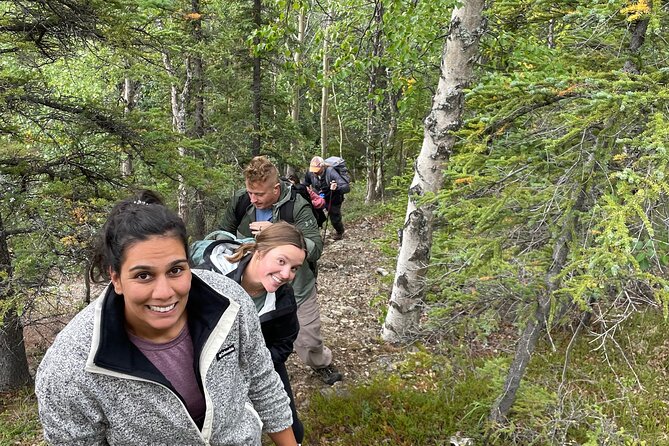
- Naturalist guidance on alpine tundra: expect stop-and-learn moments as you gain elevation and shift ecosystems.
- Real help with gear: trekking poles and rain jackets are included, which matters more in Denali than you’d think.
- Views that come from work: the hike rewards effort with ridge and high-elevation panoramas, even with partial clouds.
- Hands-on learning (with boundaries): guides may talk about edible plants and safe vs unsafe options, plus stories about local use.
- Flexible route choices for the group: you can ask for pacing and distance options, depending on conditions and your comfort level.
- Safety-first field skills: guides emphasize safe travel habits, including how to handle terrain and field concerns.
The core idea: a guided ridge climb that teaches while you hike
This is a guided mountain hike in Denali National Park that runs about 4.5 to 5 hours from pickup to drop-off. The day has a simple rhythm: drive to the trail, climb a mountain ridge with planned stops, then head back down and return to your hotel lobby.
What makes it compelling is the naturalist approach. Guides aren’t just narrating from the sidelines. They slow down at the moments that matter—when the vegetation changes, when you’re near interesting ground features, or when small animals or signs show up. In past hikes, guides have highlighted everything from berries and fungi to animals like ptarmigan and ground squirrels, plus the clues you find even when you don’t see big wildlife.
If you come to Denali expecting only huge-animal sightings, this tour still works. It trains your eyes. That’s the value: you leave with a better read on the park.
Pickup and getting set up: why the start matters
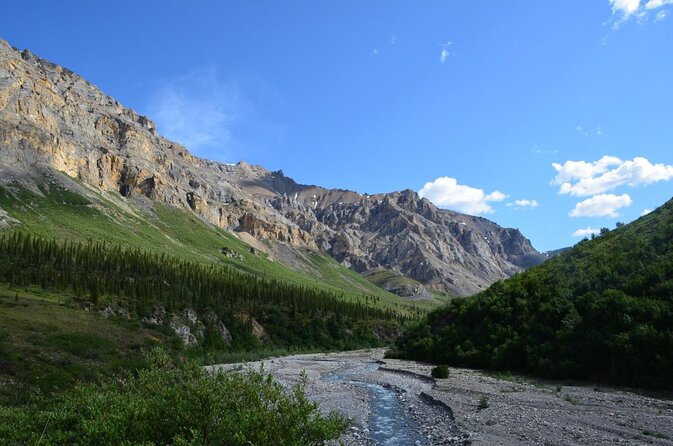
You’ll be picked up from the front of your hotel lobby and driven to the trailhead area. The standard start point is the Denali Princess Wilderness Lodge (238.5 Parks Hwy, Denali National Park and Preserve). From there, your guide takes you to the start of a trail leading up a mountain ridge.
That transfer time is part of the experience, not wasted time. It helps you get positioned for a meaningful climb without having to navigate trailheads on your own. Since the group can be small (maximum 12), it also helps everyone begin together and move as one unit.
You’ll return to the van for the hike’s final stretch, then be dropped back off at your hotel lobby. Plan to treat this as a commitment day. You’ll want to keep other plans light afterward.
The climb into alpine country: what you’ll notice as you gain elevation
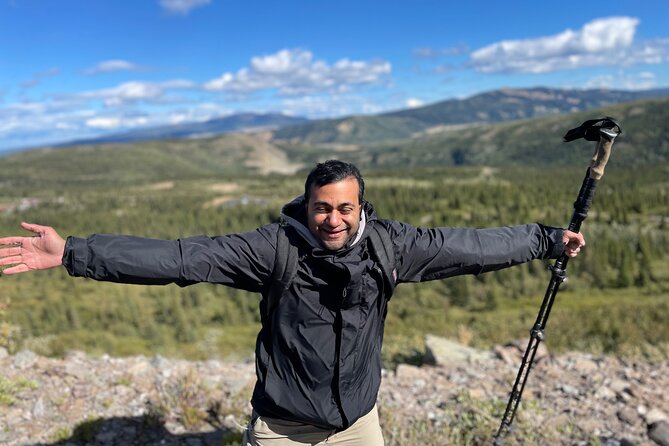
The route is built around gaining altitude. As you climb, you transition into higher-elevation terrain where the alpine tundra shows up more clearly. This is where Denali stops feeling like a forest day and starts feeling like a high-country hike.
Your guide will stop along the way to point out the natural features around you. That can include plant communities, the way the ground looks and holds moisture, and how ecosystems change with elevation. One common theme from excellent guides on this route: frequent stops, short explanations, and time to look closely.
Even when the hike feels strenuous, guides like Adrian and Derick have been praised for pacing. That usually means you’re not stuck in one long grind with no breaks. Instead, you get those small pauses where the view and the learning land at the same time.
Views that earn their keep: ridge panoramas and cloud reality
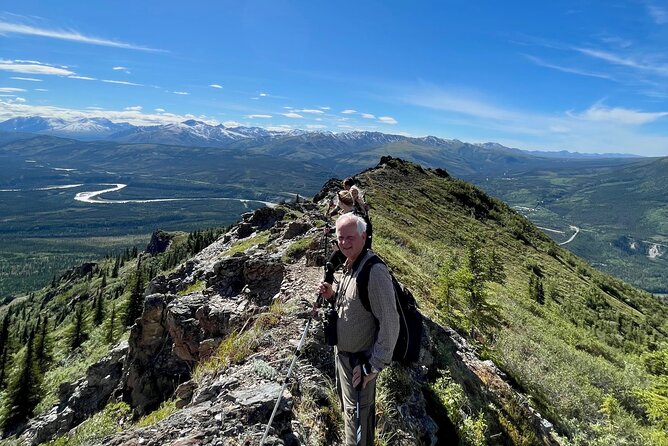
The best part of this hike is what you see when the angle opens up. As you get higher, you reach viewpoints that aren’t the same as the roadside or river-level scenery. Several guides have taken people toward top-of-mountain perspectives with repeated sight windows—so you feel progress rather than waiting for the end.
Even if clouds roll in, it doesn’t automatically ruin the day. Past hikers have reported that moderately low clouds still left impressive vistas. That’s a useful expectation to keep: Denali weather can change fast, but your guide can still get you to “worth it” sight lines.
Because the views depend on elevation and conditions, you’ll feel the trip’s payoff most when you’re steady on your feet and keeping your effort consistent. Bring patience for the steep moments. The climb is the ticket.
Wildlife spotting: small signs, big payoffs
This isn’t a guarantee of moose or bears. But it does offer a good shot at seeing the park’s wildlife in the way that often feels more real: tracks, scat, birds, and the constant small movement you miss when you rush.
On past hikes, people have seen ptarmigan and ground squirrels, along with moose tracks and bear scat. Others have reported close-enough excitement like spotting a black bear. So while you shouldn’t plan your day around a single animal, you can plan on paying attention.
If wildlife shows up, your guide can help you interpret what you’re seeing so it doesn’t feel random. That’s where the naturalist side pays off. You’re not just lucky—you’re learning how to read the park.
Gear and food: what’s included and what you should bring
Good news up front: you get trekking poles and rain jackets with the tour. Poles matter on steep terrain and uneven footing. Rain jackets matter because Denali can change its mood without warning.
What’s not included is food. Snacks and lunch are not provided. That means you should plan your own fueling and water strategy.
Here’s what I’d do if I were preparing:
- Pack water for a full 5-hour outing (more if you run hot).
- Bring snacks that don’t freeze into hockey pucks.
- Wear shoes with good tread for rough, possibly slick trail segments.
- Dress in layers. A rain jacket helps, but you’ll still want temperature flexibility.
Denali can be deceptively tiring. You’ll feel it more on the way down if you skip your food and hydration.
Trekking with a naturalist: berries, plants, fungi, and safe stories
This hike has a reputation for education that stays grounded in the real world. Guides often talk about alpine plants, animals, and fungi you can actually find around you, and some guides go further by explaining what’s safe, what isn’t, and how people in Alaska think about plants.
You may hear guides describe edible plants and share stories about local uses. People have mentioned berry sampling, including tasting wild berries along the hike. Others have praised guidance on safe vs unsafe plant choices, which is where this kind of talk becomes genuinely useful rather than just interesting.
One detail I really appreciate from how guides have led these hikes: they treat the learning like part of the trail, not a lecture. Adrian and Jordan have been praised for making the stops engaging. Derek and Derick have been praised for being friendly and for keeping the group safe while still having fun.
That balance is the whole point. You come for the views, but you leave with a more educated eye—and you can’t fake that.
Pacing and difficulty: what strong legs mean here
The tour is best for hikers with a strong physical fitness level and the ability to hike uphill for 3 hours or more. It can still be a good challenge for people who are fit, but it’s not a good match if your uphill endurance is limited.
Most people feel the climb as moderate to strenuous, especially as you gain elevation. Guides are trained to manage the group pace, and hikers have reported that some routes include options for different skill levels.
Still, don’t overestimate how much “guide pacing” can replace good conditioning. Your legs do the work. The guide helps you stay safe and get to the viewpoints, but you still need the fitness.
If you’re unsure, consider asking your guide what conditions look like on the day and whether there are easier options along the route.
Group size and the small-group advantage (up to 12)
With a maximum of 12 travelers, you get a different experience than the big-bus hiking tours. In practice, that usually means:
- More time to ask questions
- Easier adjustment if someone needs a slower pace
- A better chance to feel like a hike with friends instead of a moving classroom
Hikers have also shared that some days end up being very small, even down to just a couple of people. You shouldn’t count on that happening, but it helps explain why people leave with such strong memories of their guide.
If you want a tour where you actually get to talk to the person leading the hike, this setup supports that.
Price and value: $199 for a guided Denali mountain day
At $199 per person, this hike isn’t “cheap,” but it also doesn’t feel overpriced for what you’re getting. The value sits in three places:
- Professional guide time for a full half-day (pickup to drop-off).
- Included hiking support gear: trekking poles and rain jackets reduce what you need to carry and buy.
- Specialized interpretation: naturalist talk about plants, ecosystems, and field details that you’d rarely get on your own.
You’re paying for more than movement. You’re paying for fewer wrong turns, better pacing, and a guide who can explain what you’re seeing in real terrain.
Just remember: since snacks and lunch aren’t included, your total day cost will depend on what you pack.
Weather and trail reality: how to plan your expectations
This experience requires good weather. That matters in Denali because wind, rain, and low visibility can change what’s safe and enjoyable.
If weather is workable, your guide still aims for strong viewpoints and meaningful learning. If you’re coming in with a rigid plan—like needing a specific photo spot at a specific time—build flexibility into your mindset.
Also, accept that trail conditions can shift. One reason trekking poles help is that footing may be uneven, and traction can feel different once you’re higher up.
If you’re adaptable, you’ll get more out of the day.
Should you book this Denali mountain hike with Northern Epics?
If you want Denali in a way that feels active, educational, and personal, this is a strong pick. I’d book it if you:
- Like learning while moving, not just watching from a bus
- Can handle uphill effort for 3+ hours
- Want rain gear and poles handled for you
- Prefer a small group with room for questions
I’d skip it (or look for an easier option) if you:
- Struggle with steep uphill hiking
- Want a light, low-effort stroll
- Don’t want to manage your own snacks and lunch
My bottom line: this tour earns its cost through guide expertise, included gear, and a climb that turns Denali’s details into your own firsthand experience.
FAQ
How long is the Denali Alaska Range hike?
It runs about 5 hours (approximately 4.5 to 5 hours), including pickup and drop-off.
Where does pickup happen?
Your guide picks you up from the front of your hotel lobby.
Where is the meeting point?
The listed start meeting point is Denali Princess Wilderness Lodge, 238.5 Parks Hwy, Denali National Park and Preserve, AK 99755, USA.
What’s included in the price?
Trekking poles and rain jackets are included.
What should I bring for food?
Snacks and lunch are not included, so you’ll need to bring your own.
What’s the hiking difficulty like?
The tour is not recommended for travelers who cannot hike uphill for 3 hours or more. You should have a strong physical fitness level.
What’s the maximum group size?
This experience has a maximum of 12 travelers.
Is the tour language English?
Yes, the tour is offered in English.
Are service animals allowed?
Yes, service animals are allowed.
What’s the cancellation policy?
You can cancel for a full refund up to 24 hours in advance. If you cancel less than 24 hours before the experience starts, the amount paid is not refunded. The experience also requires good weather and may be rescheduled or refunded if canceled due to poor weather.