REVIEW · PARO
Best of Bhutan Tour( Culture- Hikes- Short Trek- Monastic Stay)
Book on Viator →Operated by Bhutan Best InBound Tour · Bookable on Viator
Five days in Bhutan moves fast and gently.
This tour is interesting because it mixes big-name sights with Tiger’s Nest and real day-to-day spirituality, not just sightseeing. I especially like the short hike rhythm built into the schedule, and I like the chance to experience Bhutan through a farm dinner and meeting a family, which adds warmth to all those stone and prayer-flag stops. One consideration: you will hike—some days are longer (like the Dodeydra approach and the Tiger’s Nest climb), so you’ll want solid walking stamina and comfortable shoes.
I also appreciate that it’s a private setup, so your guide can pace things and explain what you’re seeing without the usual crowd-pressure. The itinerary strings together Paro, Thimphu, and Punakha in a smart loop, with monasteries and viewpoints placed on days when the drive time doesn’t eat your energy. The best part is that the effort you put in actually pays off: you’ll end the day in places that feel quiet and meaningful, not just checked off.
In This Review
- Key highlights you’ll feel on the ground
- Paro, Thimphu, and Punakha: why this loop works
- Day-by-day: what each stop gives you (and what to expect)
- Day 1: Tachogang Bridge, Simtokha Dzong, and Thimphu valley flavor
- Day 2: Pangri Zampa and the approach to Dodeydra Monastery
- Day 3: Morning prayer at Dodeydra, then Dochula and Punakha Dzong
- Day 4: Early drive to Paro, then Tiger’s Nest (Paro Taktsang)
- Day 5: Paro wrap-up
- Monastery stay and the farm-family dinner: the human scale of Bhutan
- Short trek reality: fitness, pacing, and what to pack
- Price and value: what your $1,370 actually buys
- Logistics that matter: private comfort, tickets, and weather
- Who should book this Bhutan Best-of tour?
- Should you book this Best of Bhutan Tour?
- FAQ
- How long is the tour?
- Where does the tour start and end?
- Is pickup offered?
- What fitness level do I need?
- Is this tour private?
- What’s included in the price?
- What’s not included?
Key highlights you’ll feel on the ground
- Tiger’s Nest hike (Paro Taktsang): a classic pilgrimage viewpoint with an admission ticket included.
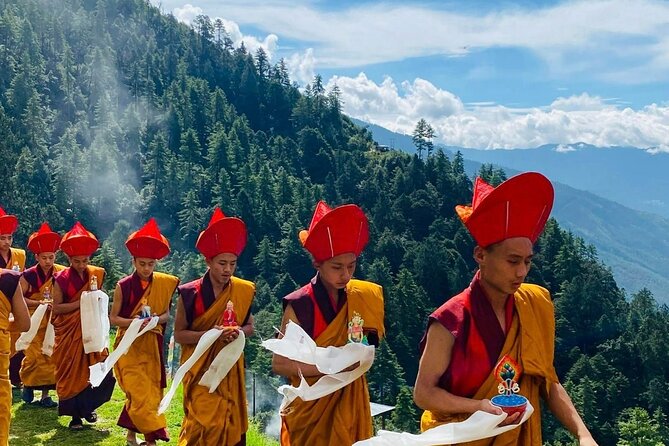
- Short-trek monastery time at Dodeydra: morning prayer with monks, plus a serious hilltop setting.
- Punakha Dzong at a river junction: one-hour visit to Bhutan’s important winter residence of the central monk body.
- Choirs of stone and prayer flags: Tachogang Lhakhang Bridge and other stops that are more than photo ops.
- Farm dinner + meeting locals: a human-scale Bhutan moment that makes the culture feel close.
Paro, Thimphu, and Punakha: why this loop works
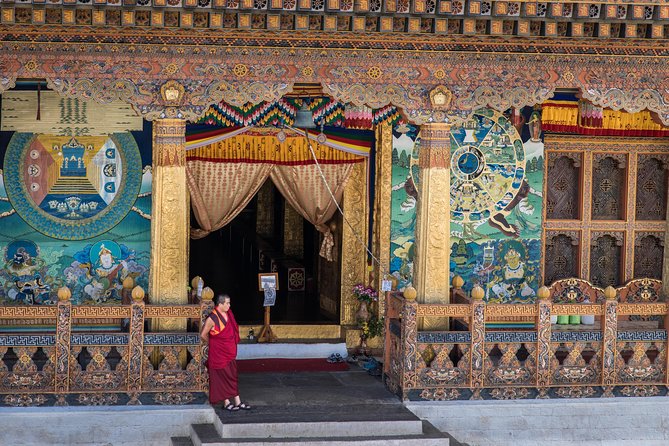
I like Bhutan tours that don’t just throw you into a single city. This route starts in Paro, swings through the Thimphu valley region, and continues to Punakha—so you get different valleys, different monasteries, and a steady sense of progression.
You’ll also get a clear rhythm: drives between stops, then walking/hiking legs that stay short enough to keep the day enjoyable. The pace fits a “see the sights, but don’t feel rushed” style, especially if you’re traveling as a couple or solo and want a guide who can slow things down when weather or footing changes.
A practical note: this is scheduled as a private tour/activity, and it’s built for travelers with at least moderate physical fitness. If you’re used to city walking only, I’d treat the hikes here as training ahead of time.
Day-by-day: what each stop gives you (and what to expect)
Day 1: Tachogang Bridge, Simtokha Dzong, and Thimphu valley flavor
Your first day has a nice “warm-up” feel, mixing Paro-area heritage and Thimphu valley highlights.
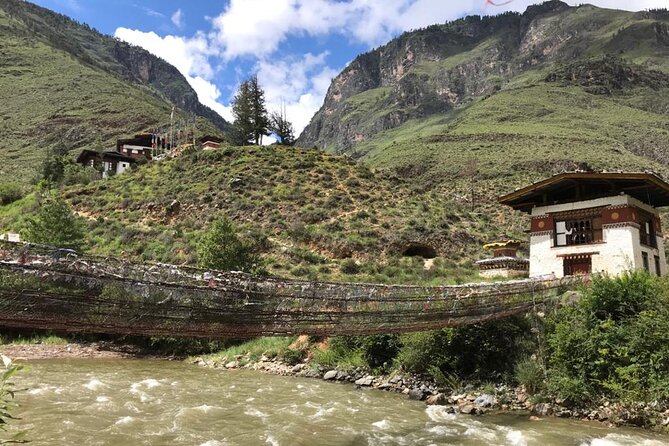
- Tachogang Lhakhang Bridge: You’ll cross an iron bridge lined with prayer flags on the way to a temple. This is the kind of stop that helps you get Bhutan’s visual language in your head fast—flags, stone, water, and that sense of devotion tied to everyday paths.
- Simtokha Dzong: The oldest fortress in the kingdom sits on a ridge above the Thimphu Valley. You get a focused, 40-minute admission-included visit, and it’s the sort of place where architecture does the storytelling.
- Buddha Dordenma: You’ll see the famous towering seated Buddha statue at Kuensel Phodrang (51.5 meters). It’s quick—about 30 minutes—but it leaves a strong impression because of its scale and clean lines.
Then the day shifts into an easy-hike mood.
- Wangdi-tse Monastery: Expect an easy hike through thick pine forest along the Thimphu valley side, crossing local apple farms and houses. The itinerary frames this as about two hours, and that matters: apple orchards mean you’re not just in temple grounds—you’re walking through a working landscape.
- Centenary Farmers Market: If your timing lands Thursday to Sunday, you’ll catch Thimphu’s weekend market near the Wang Chhu. It’s listed as about one hour, and it’s a good place to slow down and look at everyday Bhutan—spices, incense, small finds—without needing to be a food expert.
If you want a simple takeaway for Day 1: it’s the day to learn Bhutan’s rhythm—temples, ridges, then a gentle walk through village life.
Day 2: Pangri Zampa and the approach to Dodeydra Monastery
Day 2 leans more into spirituality and hiking, especially once you’re headed toward the hilltop world.
- Pangri Zampa Monastery: You drive up through the northern end of the Thimphu valley and pass countryside spots with an off-beaten-track hike feel. The stop includes the Buddhist College of astrology and a temple of the 21 Tara Devi, so you’re not only seeing buildings—you’re touching Bhutan’s learning and devotion side.
- Dodedrak Buddhist Monastery: This is the bigger hiking day. The schedule calls for a soul-stirring hike to the sacred hilltop, with about four hours set aside. The payoff is the sense of tranquility as you ascend, and the day’s best value is that you reach the monastery setting by working for it, not arriving by elevator.
For practical planning: Day 2 is where your footwear and energy matter most. If your legs are tired from travel, I’d keep the first part of the day easy and save your push for the final climb.
Day 3: Morning prayer at Dodeydra, then Dochula and Punakha Dzong
This day is built around one of the most meaningful elements of Bhutan travel: shared monastic life.
- Morning prayer at Dodedrak: You’ll rise early to bell sounds summoning monks for morning prayer and join the assembly for about an hour. This isn’t just a ceremony—it’s a window into how daily routine sits at the center of faith here.
- Dochula Pass: On the way to Punakha, you’ll stop at Dochu La (3,100 meters) marked by 108 Buddhist shrines. If skies are clear, the Himalayan peaks to the northeast can show up in strong form, but even without perfect visibility the pass still gives you that “high-ground” perspective.
- Chimi Lhakhang Temple: A short hike (about five minutes walk from Sopsokha Village) leads you to a temple known for the paintings and the odd, memorable personality of its artwork. Expect about an hour here with an admission ticket included.
- Punakha Dzong: The final major stop is Punakha Dzong, built at the junction of two rivers. It’s listed as a one-hour admission-included visit, and it still serves as the winter residence of the central monk body—so you’re seeing a living religious role, not a museum model.
If you’re wondering which day feels most “Bhutan-core,” Day 3 is it: prayer in the morning, then passes and a dzong that carries real seasonal function.
Day 4: Early drive to Paro, then Tiger’s Nest (Paro Taktsang)
Day 4 is the headline moment for most people, and it’s scheduled accordingly.
You’ll make an early morning drive to Paro, then hike up to Tiger’s Nest at Paro Taktsang. The itinerary sets aside about four hours, and an admission ticket is included. The monastery sits on a cliff at 3,120 meters, so the physical effort is matched by the emotional contrast—walking uphill in cooler air, then arriving at the dramatic cliffside viewpoint.
A quick reality check: there’s no “casual” version of Tiger’s Nest. Even if the route is manageable for moderate fitness, it’s still uphill time on a pilgrimage day. Plan for slower steps, take breaks, and don’t rush your breathing just to keep up with anyone else.
Day 5: Paro wrap-up
Day 5 is simple and practical: return to Paro and end with a drive to the airport. It’s listed as about an hour, and the trip ends back at the meeting point, which is the Paro International Airport area.
This is the right kind of ending—no extra surprise hikes on your departure day.
Monastery stay and the farm-family dinner: the human scale of Bhutan
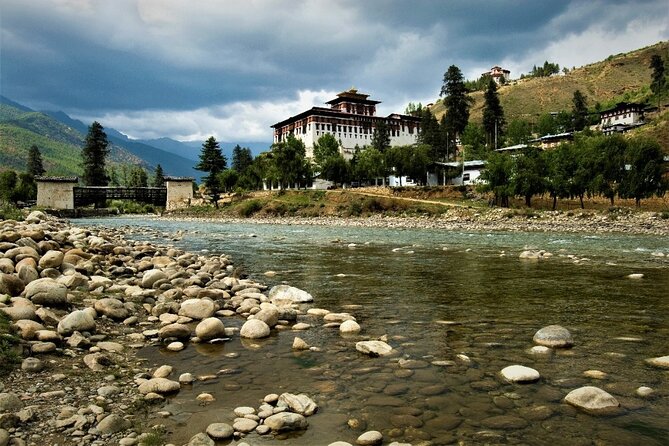
The tour’s title centers on culture, hikes, short trek, and a monastic stay, and the best moments tend to be the ones that aren’t purely scenic.
One solo traveler described the experience as including a monastery stay and a home stay in Bhutan, and that’s exactly the kind of shift that makes the trip feel personal. Another highlight you can plan for is the dinner at a local farm and the chance to meet the family behind it. That farm meal matters because it turns “Bhutan culture” into something you can actually taste and talk about—who grows what, how life works, and how hospitality shows up outside the temple gates.
It’s also where your guide becomes more valuable. For example, I’ve seen mentions of guides like Tandin Dorji and a driver named Pema on Paro area days, and in another case both guide and driver were listed with the name Tandin Wangchuk. Even when names differ by group, the consistent theme is that the people running the tour act friendly and flexible, which you’ll feel in how they time explanations and breaks.
Short trek reality: fitness, pacing, and what to pack
The tour says moderate physical fitness is required, and the schedule backs that up with real hike blocks.
The hike durations that stand out:
- Wangdi-tse Monastery: about 2 hours, easy hike over pine forest and apple farms.
- Dodeydra Monastery: about 4 hours on the way up, plus morning prayer time on Day 3.
- Tiger’s Nest: about 4 hours total with the climb to 3,120 meters.
What you should do with that information: train for consistent uphill walking. You don’t need to be a mountaineer, but you do need to handle leg fatigue without panicking.
What to pack is mostly common sense, but it matters more in Bhutan than in many places:
- Comfortable, broken-in hiking shoes
- A light layer (mountain air can shift quickly)
- Water and small snacks, since you’ll be walking and sitting across long gaps
- Sun protection for higher, exposed viewpoints
If you’re someone who hates steep steps, you might still enjoy this tour, but you’ll want to commit to a slower pace and longer breaks.
Price and value: what your $1,370 actually buys
The price is listed as $1,370 per person for this 5-day experience in Paro. That can sound either high or fair depending on what you’re comparing it to, so here’s how I look at value.
What you get that reduces your hidden costs:
- Bhutan Visa is included
- Accommodation is included
- Private transportation and a guide are included
- Taxes, fees, and charges are included
- Most meals are included: breakfast (5) and lunch (4) and dinner (4)
- A daily Bhutan SDF is included: USD 100 per person per night
- A mobile ticket is included
And in practice, that means you’re not spending extra time arranging basics between stops. In Bhutan, that’s not small. The cost of a trip goes up when you need multiple separate bookings, especially with timing sensitive drives and weather dependent hikes.
What costs extra:
- Single supplement of USD 300
- Alcohol and other beverages
My take: this is good value if you want a guide-led trip with most logistics handled and you’re okay paying for comfort and convenience rather than building everything yourself. If you’re already planning to do a lot independently, you may be able to pay less elsewhere, but you’d give up the ease of a single coordinated plan.
Logistics that matter: private comfort, tickets, and weather
This is a private tour/activity, meaning it’s built for your group only. You’re not competing for attention, and that helps on hike days when timing matters.
Your experience also includes pickup offered, and the meeting point is Paro International Airport. That’s a big deal for arrival-day stress: you start with a clear handoff instead of figuring out transport in a new country.
Two additional realities:
- Weather matters. The experience notes it requires good weather. If it’s canceled due to poor weather, you’ll be offered a different date or a full refund. That means your Tiger’s Nest and viewpoint moments can depend on conditions, so don’t treat day 4 as guaranteed perfect skies.
- Admission tickets are partial. Some stops list admission included (like Tachogang Bridge, Simtokha Dzong, Chimi Lhakhang, Punakha Dzong, and Tiger’s Nest), while others are free (like Buddha Dordenma, various monastery/temple stops). You don’t need to track every detail on your own because it’s built into the plan, but it does explain why the schedule includes a mix of time lengths.
Who should book this Bhutan Best-of tour?
This works best for you if:
- You want temple and monastery culture plus short trekking, not only flat city walks
- You want a guided experience in Bhutan where logistics are handled
- You’re traveling solo or as a small group and prefer private pacing
- You like a mix of major sights (Tiger’s Nest, Punakha Dzong) and quieter monastery moments (morning prayer)
It’s less ideal if:
- You have serious mobility limits and struggle with multi-hour uphill walking
- You’re only interested in short, easy walks with minimal physical effort
- You want a totally spontaneous itinerary with no set hike blocks
Should you book this Best of Bhutan Tour?
If you’re choosing between a strictly scenic Bhutan trip and a trip that actually includes walking, I’d lean toward this one. The combination of a Tiger’s Nest hike, monastery prayer time, and a farm-family dinner gives you both the big-name Bhutan moments and the human ones.
Before booking, be honest about your hiking ability. The schedule includes longer blocks (especially Dodeydra and Tiger’s Nest), and the tour is priced for a private, guided, mostly all-in package with meals and key logistics handled.
If you want a Bhutan experience that feels organized, respectful, and real—without turning into a strenuous slog—this is a strong fit.
FAQ
How long is the tour?
The tour is listed as 5 days (approx.).
Where does the tour start and end?
It starts at Paro International Airport (Airport Road, Paro) and ends back at the meeting point, with a drive to the airport on the final day.
Is pickup offered?
Yes, pickup is offered.
What fitness level do I need?
The tour notes a moderate physical fitness level is recommended, since it includes hikes and short trek days.
Is this tour private?
Yes. It’s a private tour/activity, and only your group participates.
What’s included in the price?
Included items list Bhutan SDF (USD 100 per person and per night), Bhutan visa, accommodation, private transportation, guide, taxes/fees, and meals (breakfast 5 times, lunch 4 times, dinner 4 times).
What’s not included?
Single supplement of USD 300 and alcohol and any other beverages are listed as not included.