REVIEW · ROTORUA
Volcanic Valley Self Guided Walking and Hiking at Waimangu
Book on Viator →Operated by Waimangu Volcanic Valley · Bookable on Viator
Waimangu is one of those places where steam feels alive. This self-guided volcanic valley walk lets you follow real geothermal trails through Rotorua’s world’s youngest geothermal system at your own pace, with a guide sheet helping you spot the big features like Inferno Crater Lake and Lake Rotomahana.
Two things I really like: it’s natural and un-fussy (you’re hiking trails, not doing a performance), and the geothermal sights are spread along the route so you’re not stuck watching one single view for hours. One thing to consider: the ground can be uneven and parts of the walking feel steep, so it’s not the best match if you have mobility limits or stamina issues.
In This Review
- Key takeaways before you go
- Waimangu Volcanic Valley: why this walk feels different
- What you get for $46.54: value you can feel
- Check-in and getting your bearings at 587 Waimangu Road
- The self-guided trail format: hike options that match your energy
- Stop in your mind: Inferno Crater Lake, Frying Pan Lake, and the geothermal “colors”
- Frying Pan Lake
- Inferno Crater Lake
- Lake Rotomahana viewpoints
- Forest steam vents and hot springs: how to watch the valley at work
- Native plants and animal life: the quiet side of Waimangu
- How the shuttle bus keeps your day calm (and avoids the uphill slog)
- Timing your visit: 1 to 4 hours, and how to pick a route
- Weather and uneven ground: dress so you don’t think about it
- Small-group feel: fewer people, more room to look
- Does this beat other Rotorua geothermal stops?
- Who should book this self-guided hike?
- Should you book Waimangu? My quick decision guide
- FAQ
- How long is the Waimangu self-guided walking and hiking experience?
- How much does it cost?
- What’s included in the ticket?
- Is there a way back if I don’t want to walk uphill?
- Does it run in bad weather?
- Is this suitable for children?
- Is it accessible for people with walking disabilities?
Key takeaways before you go
- Self-guided, but not clueless: you get a guide sheet that explains what you’re seeing.
- Your pace wins: multiple route options let you do 1 to 4 hours without feeling rushed.
- Steam, bubbles, and color: you’ll look for active vents and iconic geothermal lakes.
- Real nature vibes: native forest and wetlands with geothermal features woven in.
- Shuttle back uphill: you can hike down, then take the bus back when you’re done.
- Small group cap: limited to a maximum of 15 travelers.
Waimangu Volcanic Valley: why this walk feels different
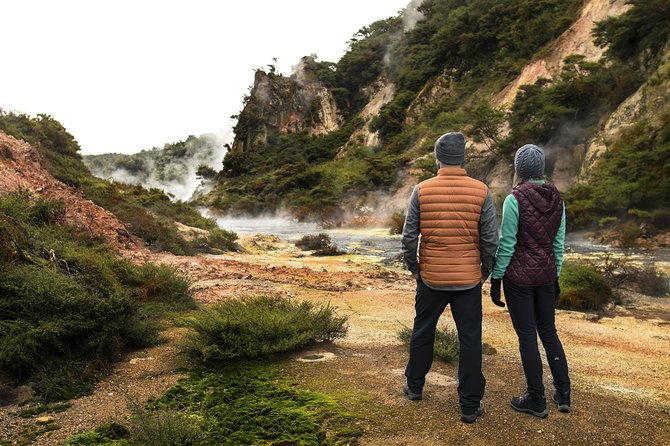
If you’ve done Rotorua’s big-name geothermal parks, you might expect crowds and choreography. Waimangu is still dramatic, but the experience feels more like walking through a live science exhibit in the open air.
The biggest reason is the setting. Waimangu’s geothermal valley is young and active, with steam vents and geothermal pools showing up as you move through forests, grasslands, and wetlands. It’s not just pretty scenery. It’s the landscape working in real time.
And because it’s self-guided, you’re in control of how long you linger at each crater, pool, or viewpoint. That matters here because some spots reward slow looking.
You can also read our reviews of more tours and experiences in Rotorua.
What you get for $46.54: value you can feel
At $46.54 per person, this is one of the more straightforward deals in Rotorua geothermal tourism. You’re paying for admission to the self-guided walk, a guide sheet, and an internal shuttle bus to help you get back to where you started.
You’re also not stuck paying for extras just to make the day work. Food and drinks are available to purchase on-site (and alcohol is available too), but they aren’t part of the ticket price. If you pack snacks and water, you’ll likely feel in better control of your timing.
The best value piece is the shuttle. Several people emphasize you don’t need to walk both ways. That turns what could be a long, tiring round-trip into a manageable hike with a clear finish line.
Check-in and getting your bearings at 587 Waimangu Road
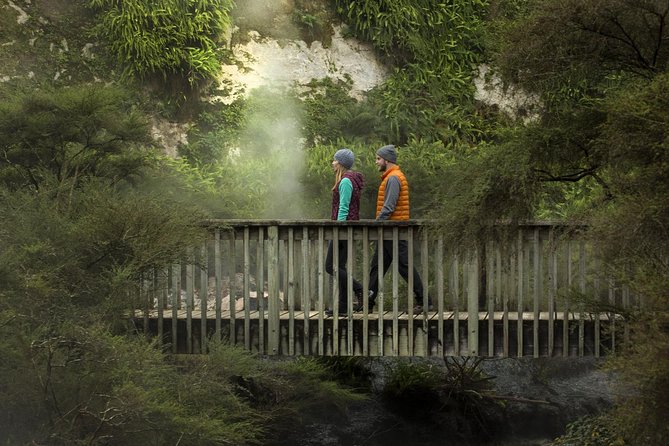
Your start point is 587 Waimangu Road. You check in at Waimangu Volcanic Valley, pick up your Wanderer Guide (the guide sheet), and you may also like downloading the free Waimangu App.
I like this setup because it keeps you from wandering around trying to decode geothermal signs with zero context. The guide sheet is there for a reason: it points out features and gives you the story behind what you’re seeing.
One more practical benefit: there’s a small group size here (maximum 15 travelers). That tends to make the day feel calmer, especially around the more popular viewing points.
The self-guided trail format: hike options that match your energy
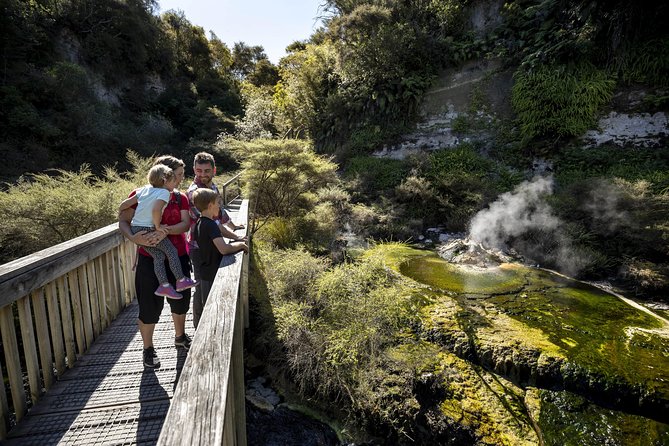
The walk is designed with choice. You can follow different paths depending on how much time and energy you have, which makes it a lot more forgiving than places where you must complete one fixed loop.
Most of the route is about moving from geothermal point to geothermal point, with planned stopping areas. People talk about benches and rest spots, which is huge if you want the experience without turning it into a grind.
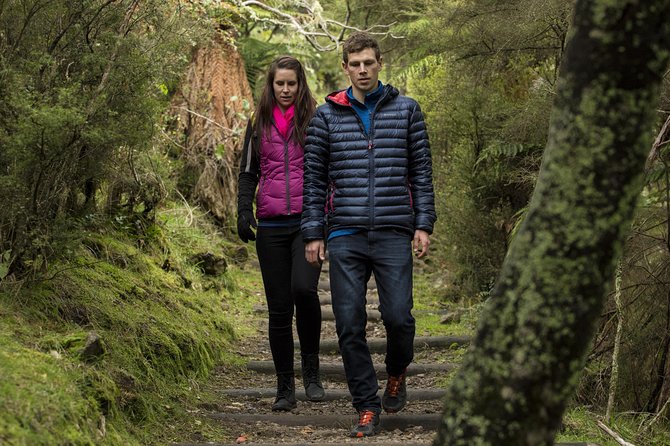
Also, wear shoes for uneven ground. The tour specifically notes uneven surfaces, and some reviews describe steep sections. Even if you’re fine physically, you’ll enjoy it more if your footing is secure.
Stop in your mind: Inferno Crater Lake, Frying Pan Lake, and the geothermal “colors”
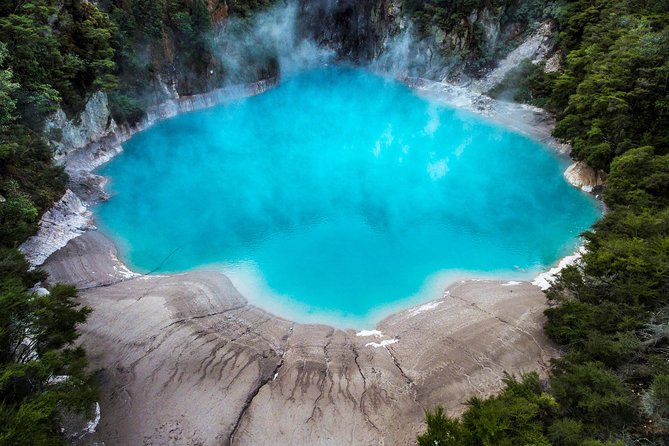
Even though this is one continuous self-guided experience, it helps to think in stops. Your guide sheet points you toward key features, and they’re the reason Waimangu is worth setting aside time.
Frying Pan Lake
Frying Pan Lake is one of the early geothermal sights people look for. It’s dramatic because of how the thermal activity shapes the landscape around it. The walk gives you multiple opportunities to see geothermal activity without forcing you to stay in one spot the whole time.
Inferno Crater Lake
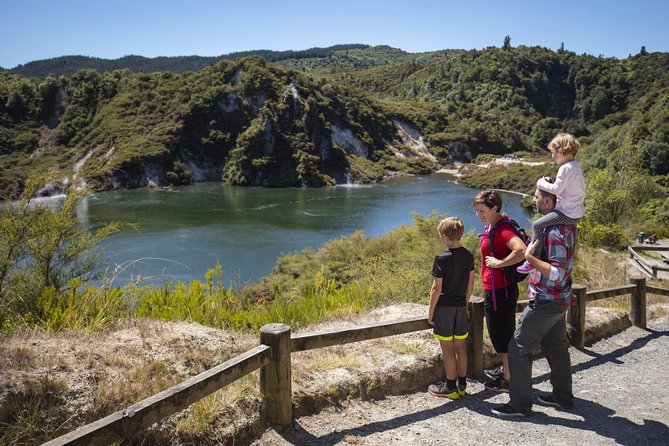
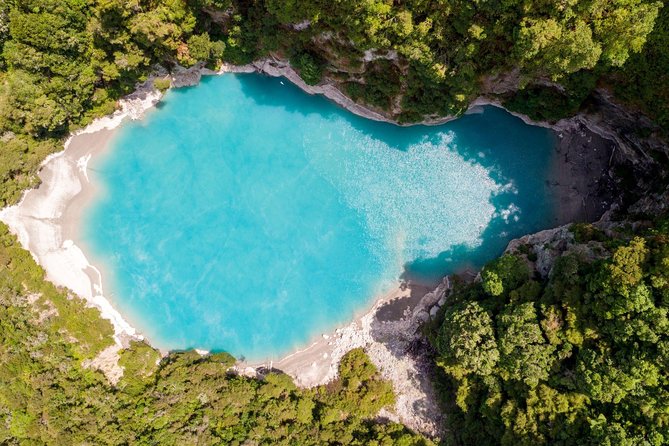
Inferno Crater Lake is the kind of place where you can’t help but stare. Reviews often mention its striking color (that vivid blue look people associate with geothermal waters). When you arrive, take a breath and slow down. The effect is more impressive when you stop treating it like a photo stop and start treating it like a real environment.
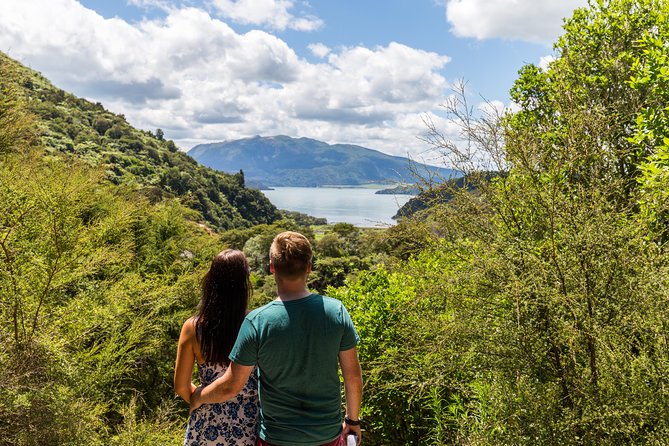
Lake Rotomahana viewpoints
Lake Rotomahana is another standout. It’s one of those features that connects the geothermal activity to the broader Rotorua region. You’re not just watching steam. You’re seeing how geothermal forces sit alongside volcanic lakes and shifting terrain.
Forest steam vents and hot springs: how to watch the valley at work
One of the most praised parts of this walk is how consistently you get to see steam vents bubbling and spurting through the landscape. Instead of waiting for one big highlight, you get smaller geothermal moments along the way.
This is where you’ll notice the value of the guide sheet. It helps you interpret what you’re looking at, including the history and legacy of Waimangu Volcanic Valley. You also learn about the Tarawera eruption and references to the now-hidden Pink and White Terraces.
That context changes the way you experience the place. Without it, the valley can look like a series of cool lakes and vents. With it, the whole area clicks into a timeline of change.
Native plants and animal life: the quiet side of Waimangu
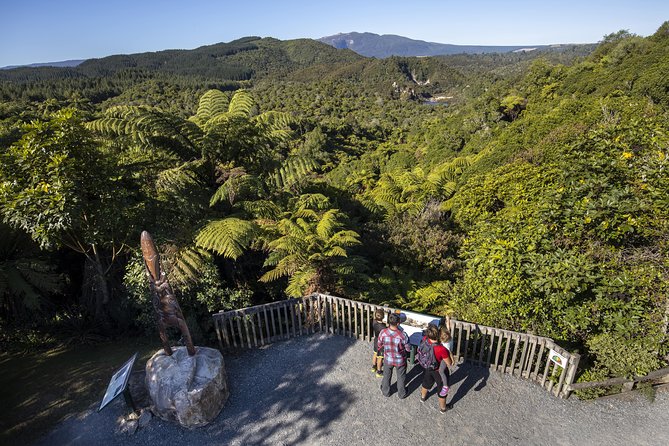
Waimangu isn’t only heat and rock. It’s also native plant and animal life, and the valley has an in-the-woods feel.
If you like travel that engages more than your camera, this part is a win. People mention hearing birds and noticing how the geothermal activity sits alongside greenery and ferns. You’ll likely get better enjoyment if you pause for 60 seconds in each zone and just listen.
The trick is to keep your eyes moving. When the steam and bubbling pull your attention, it’s easy to forget the living habitat around it. Waimangu makes it hard to ignore both at once.
How the shuttle bus keeps your day calm (and avoids the uphill slog)
The internal shuttle bus is a key part of the experience. Your hike ends at a trail end where the bus brings you back to the start.
That means you can focus on the walking down and across the thermal landscape, without planning a full return trek. Several people explicitly note the shuttle as a perk, and I agree: it turns the day into a series of choices rather than a forced march.
One caution: bus timing matters. One reviewer said their experience got cut short because the last bus departure was earlier than they expected. So if you’re booking a later entry window, I’d plan your hike so you don’t rely on being “just a little faster” at the end.
Timing your visit: 1 to 4 hours, and how to pick a route
The walk is listed at 1 to 4 hours (approx.). That range isn’t fluff. It reflects the fact that you’ll choose a shorter or longer path based on your comfort level.
If you want a smooth, relaxed outing: plan closer to 2 hours. Many people describe doing a longer walk that still feels manageable, with multiple places to stop and breathe.
If you’re tighter on time: do the shorter path and aim to catch the biggest geothermal features first. The guide sheet helps you decide what matters most to you, and the shuttle gives you an exit when you’re ready.
For the best “geothermal drama,” pay attention to the conditions of the day. The route operates in all weather conditions, but steam visibility can be affected by what the air is doing. If it’s a cool day, you might find more steam standing out against the air.
Weather and uneven ground: dress so you don’t think about it
The tour operates in all weather conditions, so plan like you’re going to get some wind, drizzle, or sudden changes. Even if the day looks clear when you leave the car, the valley can feel different as you move through forested sections.
Because the tour notes uneven surfaces, prioritize footwear with grip and good ankle support. If you use a cane or walker, you may find the ground challenging; this experience is not recommended for those with walking disabilities.
Also, the trail can include steep sections. One review uses the phrase pleasant downhill, but others mention steep trail and stairs. Your best move is to treat it as a hike, not a stroll.
Small-group feel: fewer people, more room to look
This isn’t a massive production. The tour caps at 15 travelers, and timed entry helps manage flow so you’re not constantly stepping aside for big waves of people.
That kind of pacing matters for geothermal parks because there’s a lot of temptation to rush. When the crowd pressure is lower, you can actually do what geothermal landscapes ask for: watch, read, and wait for small changes.
If you’re the type who likes quiet travel, you’ll probably enjoy Waimangu more than the flashier, busier geothermal sites.
Does this beat other Rotorua geothermal stops?
I can’t tell you it’s always better than every other stop in Rotorua. But I can tell you what makes Waimangu special.
Wai-o-Tapu and other parks can be very showy. Waimangu is more about active nature across a walkable route, with geothermal features embedded in forest and wetlands. You’re also getting educational context through the guide sheet while you move, which keeps your brain engaged.
If your goal is to see lots of geothermal activity without feeling like you’re standing in one place the whole time, this is a strong choice. And if you like options—short walk, longer walk—it’s a friendlier fit than fixed itineraries.
Who should book this self-guided hike?
This is a great fit if you:
- Want a walk at your own pace with plenty of breaks built in
- Enjoy geothermal features but don’t want a rigid schedule
- Like learning while moving (guide sheet explanations help a lot)
- Are okay with stairs/uneven surfaces and moderate fitness
It’s not the best fit if you:
- Need easy, level paths everywhere
- Have mobility limitations that don’t pair well with uneven ground
- Want a totally effortless, flat stroll
Families can do well here too. One account called it top-three for a family group and emphasized that kids were amazed by the full mix of forest, wetlands, lakes, and geothermal scenes.
Should you book Waimangu? My quick decision guide
Book it if you want authentic geothermal scenery that’s spread across a real walking route, not trapped behind a velvet rope. The guide sheet and shuttle make the day feel well thought-out, and the route options let you match the experience to your time and energy.
Skip it or reconsider if you need fully accessible paths or if stairs and uneven surfaces would frustrate you. Also, if you’re arriving with a tight timetable, plan your walk so you’re not gambling on the last shuttle.
If you’re visiting Rotorua for geothermal landscapes and you like nature-first travel, this is one of the more satisfying ways to spend a half-day.
FAQ
How long is the Waimangu self-guided walking and hiking experience?
It runs about 1 to 4 hours depending on which trail options you choose.
How much does it cost?
The price is $46.54 per person.
What’s included in the ticket?
You get the admission fee for the self-guided walk, a guide sheet, an internal shuttle bus, and an air-conditioned vehicle.
Is there a way back if I don’t want to walk uphill?
Yes. There is an internal shuttle bus that takes you back from the hiking trail end to where the activity starts.
Does it run in bad weather?
Yes. The tour operates in all weather conditions, so dress appropriately.
Is this suitable for children?
Children must be accompanied by an adult.
Is it accessible for people with walking disabilities?
It’s not recommended if you have walking disabilities because of uneven surfaces. The walk also calls for moderate physical fitness.