REVIEW · TASMAN GLACIER
Mount Cook: 3-Hour Tasman Glacier Helicopter Ride and Hike
Book on GetYourGuide →Operated by Mt Cook Glacier Guiding · Bookable on GetYourGuide
Crampons on a living ice cathedral. This Mount Cook heli-hike pairs Aoraki/Mount Cook from the air with guided walking on the Tasman Glacier for up to 2 hours, so you get geology you can actually feel under your boots.
I like how structured (and safety-focused) it is: a long briefing, pro gear, and a route set by your guide. One catch: it’s weather dependent, so you need flexibility, and the price is serious even for a short, 3-hour window.
In This Review
- Key Takeaways Before You Go
- Mount Cook Heli-Hike: The Big Idea (and why it works)
- Starting at Mount Cook Airport: What the first hour feels like
- First Helicopter Flight: Aoraki/Mount Cook in the 3D view
- Tasman Glacier on Foot: Up to 2 hours of real ice adventure
- What you’re actually looking for
- The pace: active but not extreme
- How the guide experience shapes your day
- Returning to Mount Cook: the second helicopter flight is more than a ride
- Price and Value: Is $537 per person worth it?
- Weather, cancellations, and planning like a pro
- Who this tour suits best (and who should skip it)
- Should you book the Mount Cook Tasman Glacier 3-hour Heli Hike?
- FAQ
- What’s the duration of the Mount Cook Tasman Glacier heli hike?
- What time slots are available?
- Where do I meet for the tour?
- How long do I spend on the glacier?
- What’s included in the tour?
- Is food or drinks included?
- Is the tour suitable for children?
- Is this tour okay for people with mobility impairments?
- Is the tour weather dependent?
- What’s the cancellation policy?
Key Takeaways Before You Go
- Two glacier stops with helicopter views: short flights, then real time on ice, then back again.
- Up to 2 hours on the glacier: enough time to see ice formations like caves and moulins, not just a quick walk-by.
- Small group size (max 11): you’ll move with less crowd pressure and get more attention during the hike.
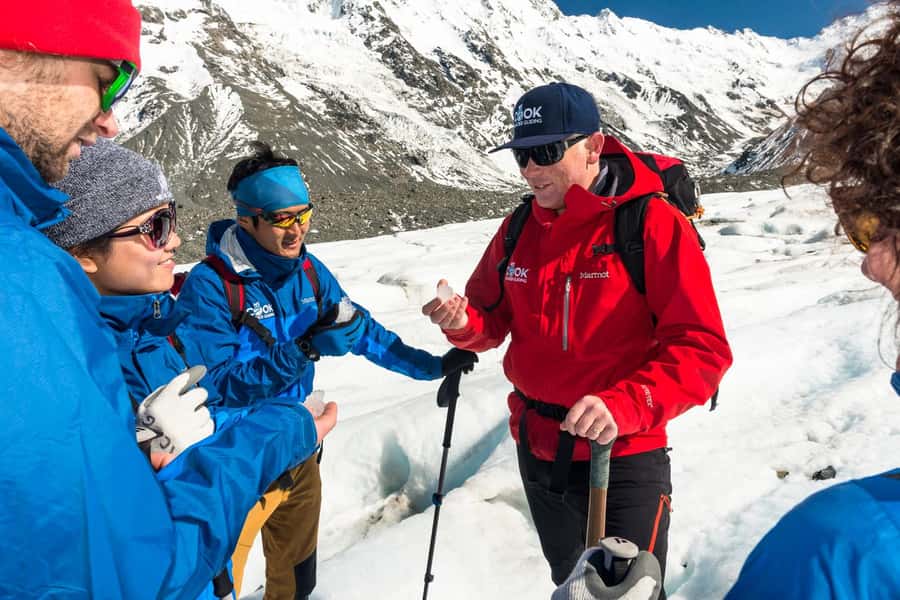
- Gear is handled for you: leather boots, wool socks, crampons, walking pole, and a waterproof jacket.
- Aoraki/Mount Cook scenery from multiple angles: once from the air, again as you return.
- Weather can change everything: the best plans include a backup mindset.
Mount Cook Heli-Hike: The Big Idea (and why it works)
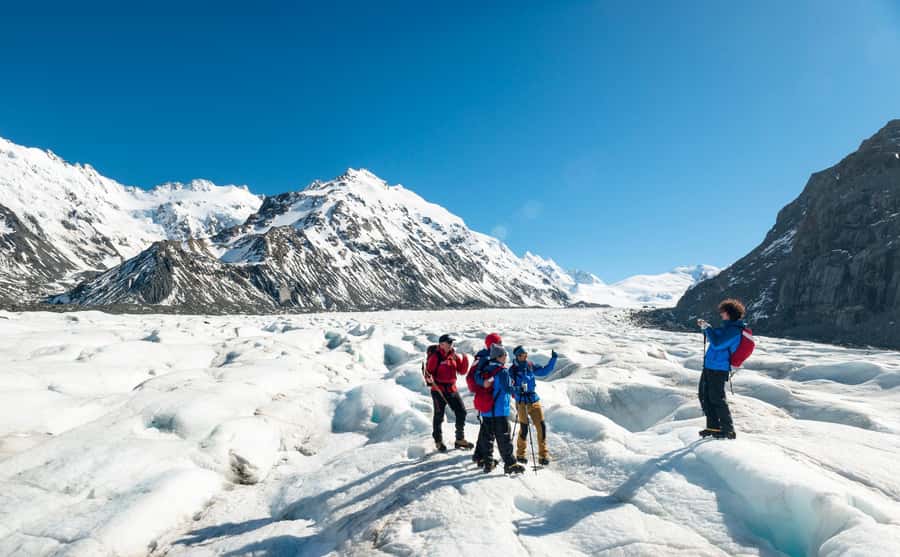
This is one of those rare trips where you’re not choosing between views and effort. You trade the usual hiking-only or sightseeing-only day for a hybrid: helicopter in, guided glacier hike, helicopter out. The payoff is big. From the air, you get the scale of Aoraki/Mount Cook and the wider glacier system. On the ground, you get textures—blue ice, dramatic formations, and that eerie crunch-and-groan soundtrack glaciers make as they shift.
The emotional hit comes from the contrast. One moment you’re strapped into a helicopter, looking down on New Zealand’s high country. The next you’re stepping onto the Tasman Glacier wearing crampons, following your guide as they cut steps and point out where the ice is behaving like a slow-moving river.
Two things I’d call out as the strongest parts of this experience:
- You get meaningful time on the ice (up to 2 hours), which turns it from a photo stop into an actual adventure.
- You get the mountain in the frame twice—there’s the fly-by on the way to the glacier and the scenic return—so your brain can connect the glacier to the mountain above it.
Starting at Mount Cook Airport: What the first hour feels like
You meet inside the terminal at Mount Cook Airport. Look for the Mt Cook Glacier Guiding desk. From there, the vibe is practical. You’re not rushed into the helicopter; you get set up first.
Plan for a safety briefing that runs about 45 minutes. That sounds long—until you’re on the ice with crampons. This is where your guide explains how you’ll move, why the route matters, and what to do if conditions are shifting. It also helps you understand the glacier is active. The ground isn’t “park ground.” It’s ice that changes, sometimes fast.
Then comes the gear moment. You’ll be fitted with leather boots, woolen socks, crampons, a walking pole, and a waterproof jacket. It’s a nice setup because it levels the playing field. You don’t have to bring specialty footwear or figure out how crampons work in the parking lot.
What to wear matters even with the provided jacket:
- Bring warm clothing. Layers beat one big coat.
- Sunglasses are worth it. Ice glare can be intense.
- A hat helps keep you warm and cuts wind chill.
If you’re the type who likes having your plan clear before you get scared by a crevasse-shaped shadow, you’ll appreciate this start.
First Helicopter Flight: Aoraki/Mount Cook in the 3D view
The helicopter leg out of Mount Cook is brief—about 15 minutes—but it sets the tone. You’re flying to a remote part of the glacier, and the point isn’t just transport. It’s scale.
From the air, Aoraki/Mount Cook is the kind of mountain you can’t fully grasp from the road. The helicopter shows relationships: how the glacier feeds, how the slopes read, and how far you’re actually going. Even if you’ve looked at photos before, the helicopter view makes it real in minutes.
Also, the small group setup helps. With fewer people to manage at once, the pilots can focus on smooth, scenic flying while your guide handles the details on the ground.
If you’re sensitive to motion, you’ll want to sit where the ride feels most stable for you (people often prefer spots with the least sensation of movement). But overall, the flights are widely praised as smooth.
Tasman Glacier on Foot: Up to 2 hours of real ice adventure
This is the heart of the day: up to 2 hours on the Tasman Glacier, weather permitting.
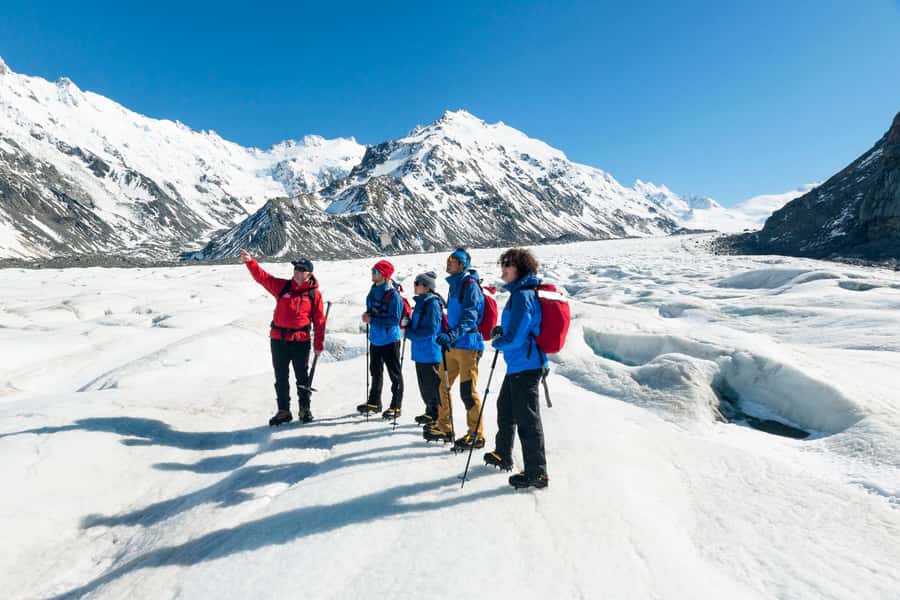
Before you start walking, you’ll do a quick photo stop and then move into guided touring and hiking. Your guide cuts steps in the glacier during the walk—this isn’t a DIY scramble. That step-cutting matters. It helps you move efficiently on uneven ice and keeps the group on the route designed for safety.
What you’re actually looking for
Glacier hikes can turn into just “walk and stop.” This one has a stronger aim: see the ice features up close. Depending on conditions, you may encounter:
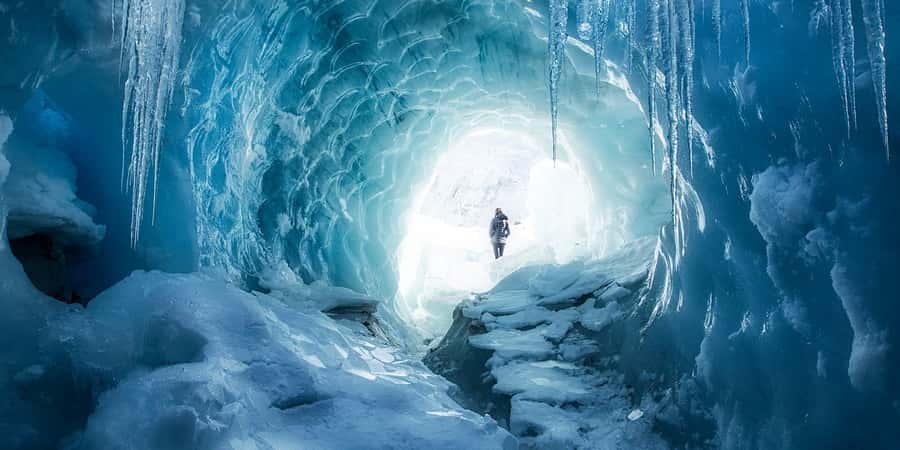
- Ice caves and ice tunnels
- Moulins (those vertical ice shafts where surface water can disappear)
- Blue ice formations
- Photo-ready pockets of ice where formations gather and color stands out
In some groups, guides have led people through striking ice cave areas and through moulin spots that feel more like a natural labyrinth than a trail. The gear and guide timing are built for this style of walking—slow enough to explore, disciplined enough to keep everyone safe.
One thing I really like is how the walk gives you both drama and science. You learn what you’re seeing without turning it into a lecture. Guides such as Hunter, Anna, Kirsten, and Bia show up often in guest reports as people who manage the group well and explain terrain as you move over it.
The pace: active but not extreme
You’re hiking on ice with crampons. That’s not the same as hiking on a dirt trail, so bring the mindset of careful, steady movement. The route is pre-planned by the glacier guide, and you follow the group and the instructions.
Some people love the technical feel of crampons on textured ice. Others just want the views and the awe. Either way, you’ll likely get a mix of both—walking, stopping, looking closely, and taking photos when it’s safe.
How the guide experience shapes your day
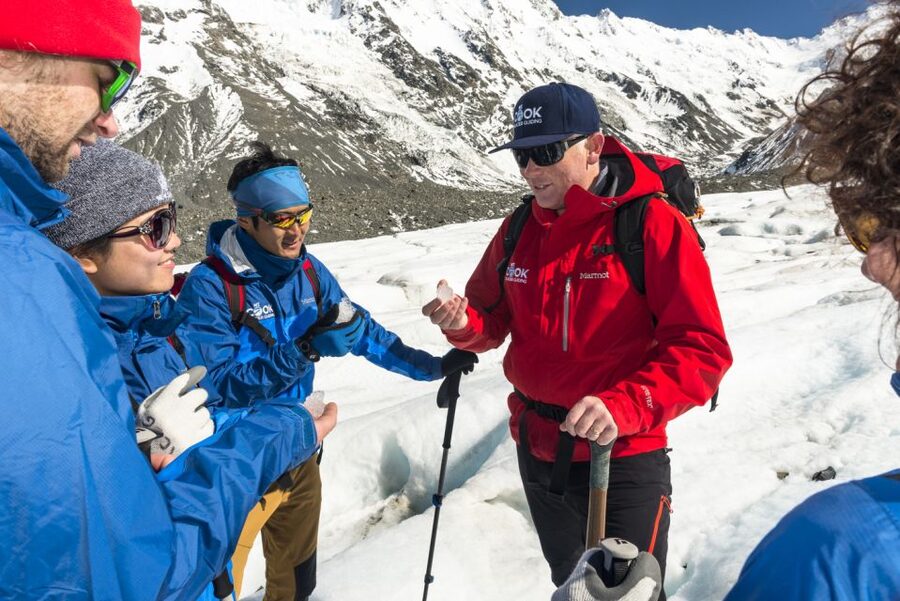
This tour runs on guide skill, not luck. Your guide is responsible for pacing, route control, and keeping everyone within the safety plan. And it shows in the way groups describe the experience: calm, clear instructions; safety-focused leadership; and help with gear.
A few details that come through strongly:
- You’ll get a real briefing before stepping onto the glacier.
- You’re not left alone with the crampons. You’ll get support so the equipment works for you.
- Photo help is part of the job. Some guides actively help take group shots or single-guest photos.
Guides named in guest reports include Jimmy, Rich, Tori, Liam, Kirby, Paul, Pawel, Hector, and Ana. I can’t promise you’ll get the same person, but I can say the guiding style seems consistent: safety first, and then a strong push to show people interesting ice features.
And yes—this is where group behavior matters. If people ignore instructions or slow the group enough that you lose time, you might not get every cave or tunnel stop you hoped for. If you like rules during high-adrenaline activities, you’ll have an easier day.
Returning to Mount Cook: the second helicopter flight is more than a ride
After the ice time, you get a second helicopter flight—again about 15 minutes—back toward Mount Cook.
This return leg is where the day clicks together. You can look back at the glacier route you walked and see how it sits in the terrain. It’s also a chance to notice other glaciers from the air, which many guests find surprising because you start noticing patterns: ice fields, bends, and how the mountains feed these systems.
You’ll also have a short break on arrival (about 10 minutes) before it’s over. It’s just enough time to adjust layers and take a breath without dragging the schedule.
Price and Value: Is $537 per person worth it?
At $537 per person for a 3-hour outing, this is not a casual add-on. The value has to come from what you can’t easily replicate on your own.
Here’s what you’re paying for:
- Two helicopter flights (not just one scenic transfer)
- A guided glacier walk designed for safety and real access to ice features
- Full gear: boots, wool socks, crampons, walking pole, waterproof jacket
- A guide managing the route and timing so you can spend up to 2 hours on the glacier
What you’re not paying for: food and drinks. So budget for a snack plan before or after, especially if you’re going straight from the airport area to other stops in Mount Cook Village.
If you compare this with other glacier experiences, the key value driver is time on ice. A quick glacier “taster” can be pretty, but it doesn’t feel like an expedition. This tour builds in enough hours for you to move, explore, and look at features long enough that you’ll remember them later.
If weather shuts things down, the day still becomes a management challenge. That’s not unique to this operator—it’s just real mountain life. But the overall structure and high satisfaction scores suggest you’re in good hands when conditions cooperate.
Weather, cancellations, and planning like a pro
This tour is weather dependent, plain and simple. Wind, cloud cover, and visibility can affect whether flights can run and how much time you’ll get on the ice.
So here’s how I’d plan around that:
- Pick the most flexible day you can in your Mount Cook schedule.
- Keep an alternate activity in mind for the same area if the weather doesn’t cooperate.
- Dress for cold. Even if the day starts clear, glacier weather can turn quickly.
The good news? When weather lines up, people describe it as a highlight. Clear windows can mean better visibility from the helicopter and more time and access on the glacier. On the flip side, if conditions aren’t right, you may see rescheduling happen.
And if you’re traveling in peak season, expect the operator to manage a lot of variables. That’s where a well-run process matters.
Who this tour suits best (and who should skip it)
This is a small group tour, capped at 11 participants. That small size helps with safety and attention.
It’s not recommended for people with limited mobility, and it’s not suitable for people with mobility impairments. You’ll be walking on ice with crampons and following a route that can involve uneven footing.
It’s also not suitable for children under 9.
Who should love it:
- You want a glacier hike but don’t want to figure out equipment or safety systems yourself.
- You like helicopter scenery and want Aoraki/Mount Cook shown from above.
- You want to see ice features like caves and moulins if conditions allow.
- You enjoy guided adventures with a clear structure and time to take photos.
If you want a relaxed stroll with zero cold exposure, this isn’t that day. If you want to earn awe with crampon steps, you’re in the right place.
Should you book the Mount Cook Tasman Glacier 3-hour Heli Hike?
Yes—if you can handle the weather gamble and you’re comfortable paying for helicopter access. This tour is built for maximum payoff: scenic flights, up to 2 hours on the ice, and a guide-led experience that targets real glacier features, not just a stop at the edge.
I’d skip it only if:
- you can’t do active, careful walking on glacier terrain,
- you need a fully predictable schedule with no weather-based changes,
- or you’re looking for food included and zero gear hassle.
If your idea of a perfect day is mountain views plus ice under your boots, this is one of the best ways to do it around Aoraki/Mount Cook.
FAQ
What’s the duration of the Mount Cook Tasman Glacier heli hike?
The tour runs for about 3 hours.
What time slots are available?
There are two time slots: 8:45 AM and 10:45 AM.
Where do I meet for the tour?
Meet inside the terminal of Mount Cook Airport and look for the Mt Cook Glacier Guiding desk.
How long do I spend on the glacier?
You can spend up to 2 hours on the ice, weather permitting.
What’s included in the tour?
Included are two scenic helicopter flights, a tour guide, and gear: leather boots, woolen socks, crampons, walking pole, and a waterproof jacket.
Is food or drinks included?
No. Food and drinks are not included.
Is the tour suitable for children?
No. It’s not suitable for children under 9 years.
Is this tour okay for people with mobility impairments?
No. It’s not recommended for people with limited mobility, and it’s not suitable for people with mobility impairments.
Is the tour weather dependent?
Yes. The trip is weather dependent.
What’s the cancellation policy?
You can cancel up to 24 hours in advance for a full refund.