REVIEW · AORAKI MOUNT COOK NATIONAL PARK TE WAHIPOUNAMU
Mount Cook: 3-Hour Tasman Glacier Heli-Hike
Book on Viator →Operated by Totally Tourism - The Helicopter Line · Bookable on Viator
3 hours can feel like time travel. This Mount Cook heli-hike puts you above the Tasman Glacier first, then on the ice for a guided walk that feels both wild and strangely controlled.
I love that the experience is built around real glacier walking gear—crampons, walking poles, and quality boots—so you’re not just looking from a distance. I also like the extra payoff of the return flight, with a chance to spot the Hochstetter Icefall from the air.
One thing to plan for: this is weather dependent, and the day’s ice time can change. Even when the tour runs, glacier walking takes focus, since the ice isn’t flat.
In This Review
- Key things to know before you go
- Why this Tasman Glacier heli-hike is such a good use of time
- From Mount Cook Airport to a snow landing above Aoraki
- Hitting the ice: what the 2-hour guided hike feels like
- The gear that actually matters (and what to bring anyway)
- The helicopter views: spotting Hochstetter Icefall on the return
- Weather is the boss here (so build your day accordingly)
- Price and value: is $601.48 really worth it?
- Who this tour fits best (and who should think twice)
- Practical expectations: group size, timing, and what to watch for
- Should you book the Mount Cook Tasman Glacier heli-hike?
- FAQ
- What is the duration of the Mount Cook 3-Hour Tasman Glacier Heli-Hike?
- How long is the helicopter flight time?
- What does the tour include for the glacier walk?
- Is lunch included?
- What cold-weather items are provided?
- Is the tour suitable for kids?
- What fitness level do you need?
- What’s the maximum group size?
- Is the tour affected by weather?
Key things to know before you go
- 30 minutes in the air: enough helicopter time to earn the ticket, without eating your whole day
- 2 hours on the glacier: a real guided hike, not a quick photo stop
- Crampons, poles, and boots included: you’ll get what you need to walk safely on the ice
- Woolen socks plus waterproof clothing: you’ll stay warmer than you might expect at glacier altitude
- Hochstetter Icefall from the return: one more angle on the glacier’s dramatic structure
- Small group size (up to 20): easier communication, tighter pacing on the ice
Why this Tasman Glacier heli-hike is such a good use of time
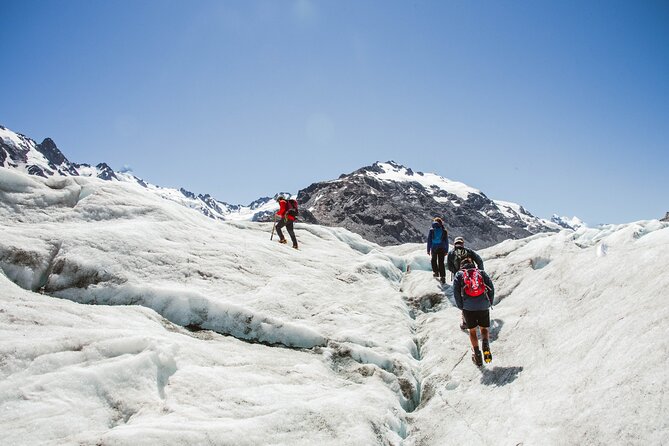
At Mount Cook (Aoraki), a lot of adventures are “look from here” experiences. This one flips the script. You still get the big overhead views from the helicopter—but then you actually step onto the Tasman Glacier with a guide and walk among the ice features up close.
The timing helps too. You’re looking at about 3 hours total, and that includes the whole flow: check-in, flying in, gearing up, the hike, and flying back. The glacier itself is the point, and the schedule is built so you spend your precious hours doing glacier time instead of transit time.
Finally, it’s the kind of tour where the guide matters. Names that come up include Connor Bensen, Matt, Scott, Maddie, Greg (as a pilot), and Emma—people who can explain what you’re seeing while keeping the group moving with calm confidence. That’s not just nice to have. On glacier ice, it helps you stay relaxed and steady.
From Mount Cook Airport to a snow landing above Aoraki
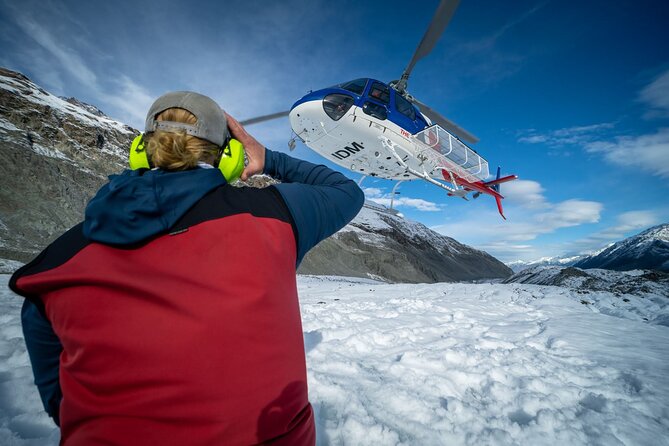
You start at Mount Cook Airport on Mount Cook Road. Then the day kicks off with a helicopter flight that’s short but scenic—listed flight time is 30 minutes—with informative pilot commentary along the way.
A big moment comes early: a snow landing with the Aoraki/Mount Cook backdrop before you go onto the glacier. Even if you’ve seen photos of Mount Cook, this is different. From the air, the scale of the Southern Alps makes it hard to measure distance like normal. Up close, it turns into texture: wind-scoured snow, steep rock walls, and a glacier that looks solid until you realize it’s moving.
Practical note: you’re landing at around 1,200 meters above sea level. That means colder air, and it’s why warm layers and waterproof gear matter more here than on a summer walk in a city park.
Hitting the ice: what the 2-hour guided hike feels like
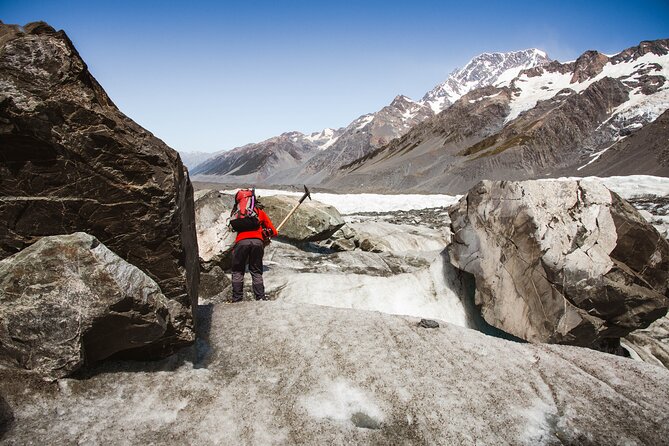
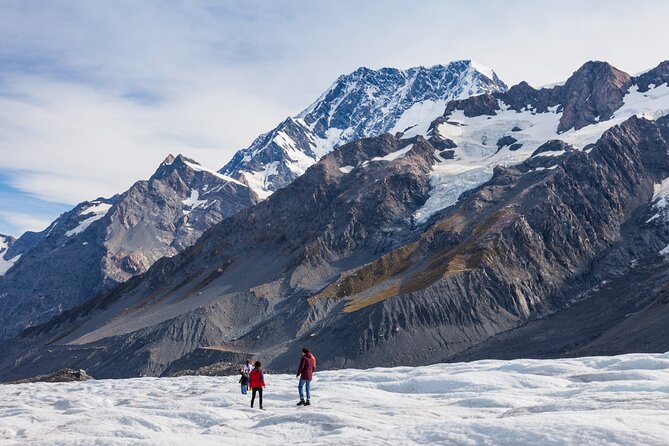
Once you land on the ice, you get the main event: a 2-hour guided hike on the Tasman Glacier. This is where the tour turns from sightseeing into actual glacier travel.
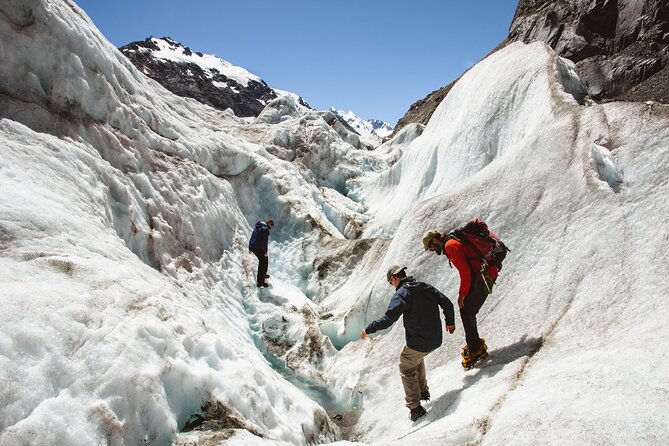
Here’s what makes it work for most people: the tour supplies the traction and the tools. You’ll use crampons plus walking poles and quality boots. That combination is a big deal. Without it, you’d be constantly thinking about your footing. With it, you can focus on learning the glacier’s clues—ice formations, melt patterns, and how the surface can change under your feet.
Also, glacier walking isn’t about speed. It’s about balance and attention. Even when you feel steady, the ice isn’t guaranteed to be flat or consistent. Your guide’s job is to keep you moving with safe spacing and clear instructions.
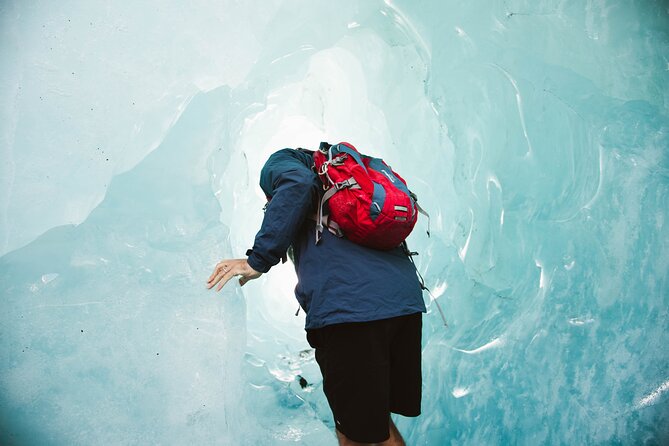
You may also be part of a glacier-cave style stop, depending on weather. The tour commonly includes ice cave time, but it’s not guaranteed. I’d treat cave exploration as a bonus, not a promise, and be ready to enjoy the hike even if the plan adjusts.
The gear that actually matters (and what to bring anyway)
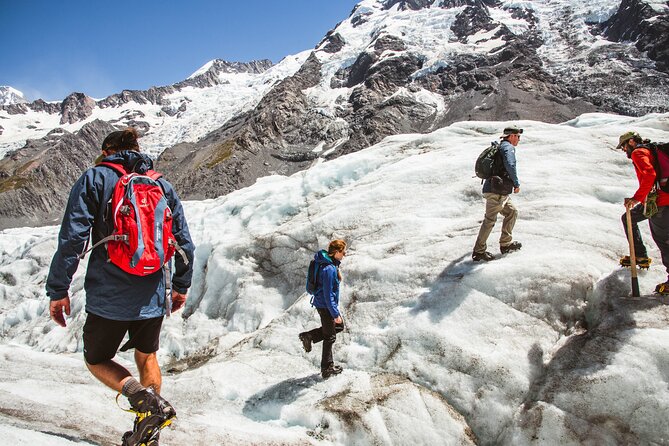
The operator provides a lot of the hard-to-get glacier essentials. Included items cover the big categories:
- Walking boots and crampons
- Walking poles
- Woolen socks
- Waterproof jacket and trousers (if required)
That’s a solid package because cold and wet are the real enemies here. The woolen socks help with warmth, and the waterproof outer layers help you stay comfortable if you get mist or light precipitation.
Still, you should bring a few extras so you’re not cold or fiddling with missing items. My top suggestion: pack warm layers you can wear under the provided waterproof clothing. Also consider waterproof gloves, especially if you’re dealing with sprinkling or mist—this comes up as a practical tip from past experiences.
One more thing: bring a small backpack with snacks and drinks. Lunch isn’t included, and having a quick snack helps you enjoy the day instead of thinking about food.
The helicopter views: spotting Hochstetter Icefall on the return
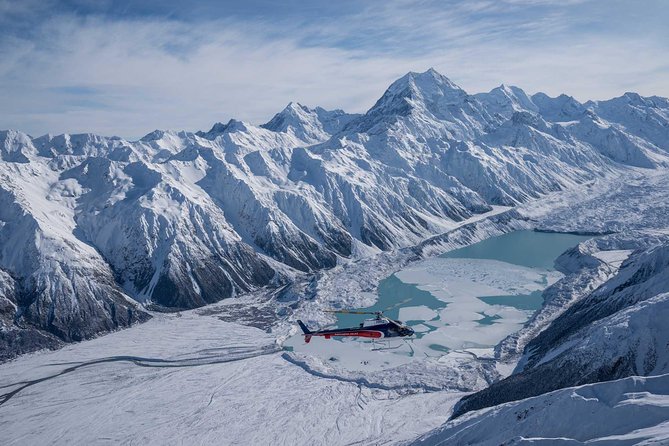
On the way back, you get another payoff: a chance to see the Hochstetter Icefall from the helicopter. Icefalls are where gravity turns a glacier’s structure into something dramatic—broken, sculpted, and constantly reshaping.
From the air, you get a bird’s-eye read of the glacier that you can’t replicate from the ground. You also get perspective on what you walked: the patterns in the ice surface make more sense when you can see how the glacier feeds into its steeper sections.
Even if weather limits what you can see from the ground, the return flight can still deliver a strong visual moment—assuming the flight happens as planned that day.
Weather is the boss here (so build your day accordingly)
This tour requires good weather, and your experience may change if conditions aren’t right. That can mean adjustments, and in some cases, cancellations and rescheduling.
So what should you do with your schedule? Keep a little flexibility. I’d avoid booking other time-sensitive plans right after your heli-hike. Past experiences also emphasize that morning runs can be a smart bet when conditions are unstable.
There’s also a reality check: the tour depends on weather for certain activities, including the way ice-time is handled. If ice cave time is part of the day, it hinges on safety and conditions. If it isn’t, the glacier hike still matters—so the value stays, but the exact details might shift.
Price and value: is $601.48 really worth it?
At $601.48 per person, this isn’t a budget activity. The value comes from what’s included and how hard it would be to replicate on your own.
You’re paying for:
- Return scenic helicopter flights (with commentary)
- A glacier landing
- A guided 2-hour hike with specialized footwear and traction
- The cold-weather comfort items: woolen socks and waterproof clothing
If you think of it as helicopter access to a remote place plus professional gear plus a guided safety-focused hike, the cost starts to make more sense. You’re not just buying a view—you’re buying the ability to walk on the glacier without turning your trip into a logistics project.
Still, it’s worth being honest with yourself: if you’re someone who hates uncertainty, weather dependence may frustrate you. If you can handle a weather-linked schedule and want the glacier experience to be the highlight of your day, then the price can feel fair.
Who this tour fits best (and who should think twice)
This heli-hike is designed for people with moderate physical fitness. The hike itself is guided, and the gear helps a lot, but you should be ready for cold conditions and careful walking. Minimum age is 10 years.
It’s also a good match if you want both:
- the helicopter perspective (big, cinematic views), and
- hands-on glacier time (traction, poles, and step-by-step guidance)
Who should think twice? If you’re dealing with mobility limits or you’re very uncomfortable walking on uneven, icy surfaces, this may not be your best match. The tour can be manageable for many people, but it’s still a glacier environment.
Weight limits are also part of the decision. The data provided lists 331 lbs total weight per passenger, and it notes a maximum of 150kg for a person on the rear helicopter seat. If you’re near the limit, double-check so you don’t get surprised by seating constraints.
Practical expectations: group size, timing, and what to watch for
The group size is capped at 20 travelers, which is a big plus. Smaller groups usually mean fewer bottlenecks on boarding, more consistent spacing on the ice, and quicker communication when the guide needs attention.
You’ll be outdoors in cold, so plan your clothing like it matters. Wear sturdy footwear (even though boots are provided, it still helps to show up ready), and bring warm layers for before and after the landing. Once you’re geared up, the provided waterproof clothing and woolen socks do a lot of the work.
Timing-wise, plan for about 3 hours total. Some days run smoothly; other days shift due to conditions. The best move is to keep your day flexible and treat the tour as the anchor, not the side quest.
Should you book the Mount Cook Tasman Glacier heli-hike?
Book it if you want the rare combo: helicopter access plus a real glacier hike with traction and cold-weather gear handled for you. It’s especially worth it if you’ll regret only seeing the glacier from a distance.
Think twice if you can’t handle weather uncertainty, or if you’re not comfortable with careful walking on icy ground. Also, keep the weight limits in mind before you fall in love with the idea.
If your schedule has room and you’re excited about seeing the Tasman Glacier up close—then this is the kind of Mount Cook experience that tends to stick in your memory.
FAQ
What is the duration of the Mount Cook 3-Hour Tasman Glacier Heli-Hike?
The tour runs for about 3 hours total.
How long is the helicopter flight time?
The flight time is listed as 30 minutes.
What does the tour include for the glacier walk?
You get a 2-hour guided hike on the Tasman Glacier, plus walking poles, crampons, and quality walking boots.
Is lunch included?
No. Lunch isn’t included, and it’s recommended that you bring a small backpack with snacks and drinks.
What cold-weather items are provided?
You’ll receive woolen socks and waterproof clothing (waterproof jackets & trousers if required).
Is the tour suitable for kids?
The minimum age is 10 years.
What fitness level do you need?
The tour calls for a moderate level of fitness.
What’s the maximum group size?
This activity has a maximum of 20 travelers.
Is the tour affected by weather?
Yes. It requires good weather, and some activities (like ice caves) are dependent on conditions. If it’s canceled due to poor weather, you’ll be offered a different date or a full refund.