REVIEW · LA PALMA
La Palma: Caldera de Taburiente National Park Guided Hike
Book on GetYourGuide →Operated by La Palma Transfer & Tours · Bookable on GetYourGuide
A crater-sized national park on foot. This guided hike through Caldera de Taburiente mixes cedar shade, ravine crossings, and big views that feel a lot wilder than the usual island trails. You also get the payoff stop at the Waterfall of Colors, plus guided stories that help the scenery make sense.
I love how the trail stays varied: rocky vegetation, pine and cedar shade, and those wooden bridges over fast streams. I also like the real-world pacing, with a swim option at Playa de Taburiente and a break before the more dramatic ravine sections.
One thing to consider: the tour includes time on uneven ground, and weather can change the route at the end. If you hate wet feet, bring the right footwear and a jacket, because conditions in a crater can shift fast.
In This Review
- Key things I’d prioritize on this La Palma hike
- Why Caldera de Taburiente Feels Like a Big Closed World
- Price and Time: What $49 Buys in La Palma
- Getting There: Bus Pickup, Los Llanos Transfers, and Real Timing
- First Views at Los Brecitos and the PR LP 13 Trail
- Canary Pines, Cedar Shade, and Crossing Streams on Wooden Bridges
- Swim Stop at Playa de Taburiente: Cool Off Without Ruining Your Day
- The Waterfall of Colors: The Signature Stop With a Purpose
- Returning Through Las Angustias Ravine and Back to Los Llanos de Aridane
- What to Bring (So You Don’t Spend the Day Thinking About Gear)
- Who This Tour Suits Best (And Who Might Want a Different Plan)
- Does It Live Up to the Hype? My Balanced Take
- Should You Book This La Palma Caldera de Taburiente Hike?
- FAQ
- How long is the La Palma Caldera de Taburiente guided hike?
- What is included in the price?
- Is food provided on the hike?
- Where does the tour start and how do you get there?
- What languages are the live guides available in?
- Is there a swimming stop?
- What should I bring for this hike?
- Can the route change due to weather?
- Is this tour suitable for everyone?
Key things I’d prioritize on this La Palma hike
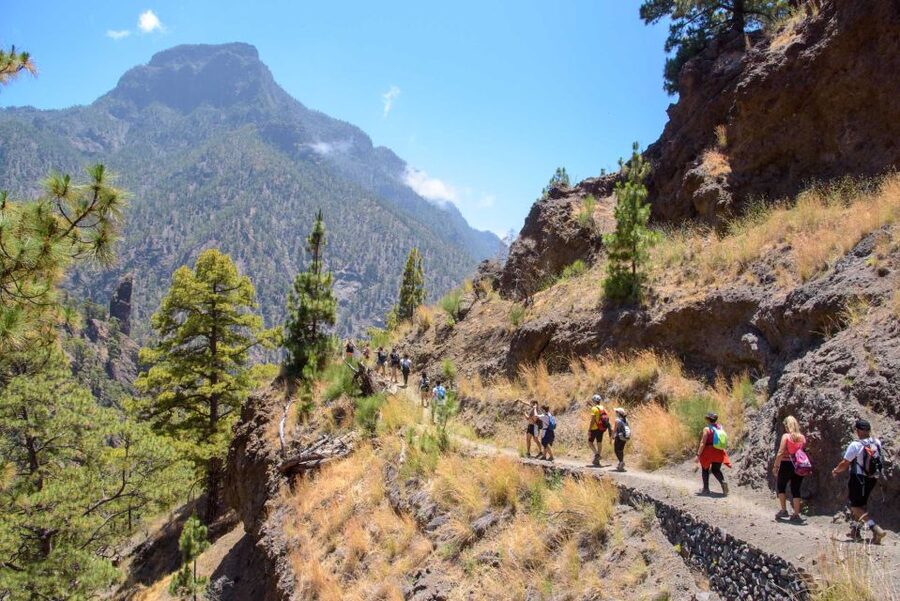
- PR LP 13 trail walking through rocky vegetation and pine/cedar shade
- Wooden bridges and streams that turn the hike into more than just point-to-point scenery
- Waterfall of Colors as the signature photo moment (and a reason to time your trip right)
- Playa de Taburiente swim stop if you want to cool off mid-hike
- 4×4 transfer to Los Brecitos so you start with mountain views instead of a long slog first
Why Caldera de Taburiente Feels Like a Big Closed World
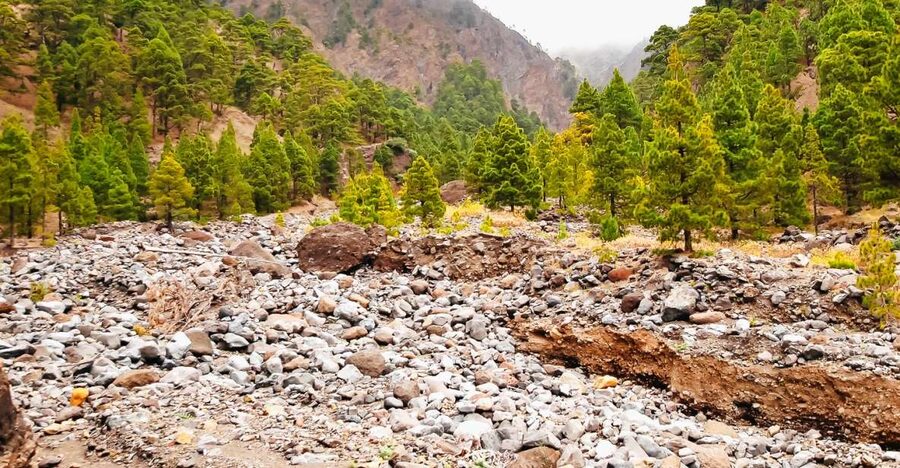
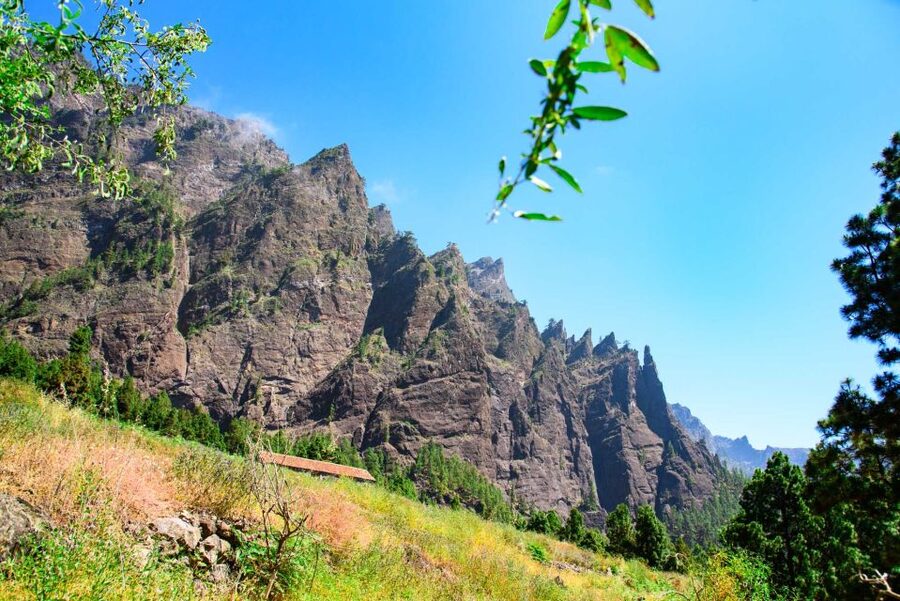
Caldera de Taburiente is one of those places where the setting does half the work. You’re inside a crater about 8 kilometers across and roughly 1,800 meters deep, so the views don’t just look scenic—they feel enclosed, like the island carved out its own planet-scale bowl. That’s why this hike feels different from a typical coastal walk. You’re moving through a system of ravines, streams, and volcanic formations that make La Palma’s “why” obvious.
The guided part matters here. The trail is beautiful, but it’s also easy to miss what you’re looking at when you’re just snapping photos. With a live guide on hand, the place becomes clearer: what shaped the ravines, why the vegetation grows this way, and how the park’s history ties into the landscape you’re walking through.
Expect a day that’s active but not rushed. You’re not just trekking for fitness; you’re trekking for understanding and views—plus a couple of well-chosen stops.
You can also read our reviews of more guided tours in La Palma
Price and Time: What $49 Buys in La Palma
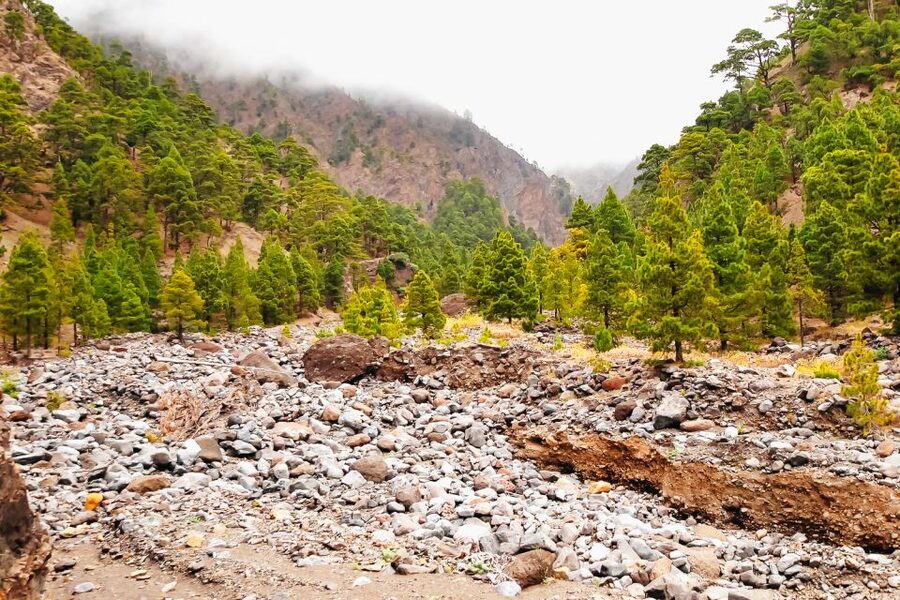
At about $49 per person for a 6-hour tour, the value isn’t in a fancy “extras” list. The value is in the transportation and the guidance. This park is not right next to the bus stop. You’ll use bus pickup and drop-off from meeting points, then transfer again via a spacious 4×4-style bus to get you positioned at the observation deck.
That means you’re paying for someone else to solve the logistics puzzle—so you can spend your energy walking the actual PR LP 13 trail and enjoying the scenery. If you tried to do this on your own, you’d likely spend time coordinating multiple legs of transport, and you’d still be guessing about the best timing for key stops.
The one clear trade-off: food and drinks aren’t included. For a 6-hour hike in a crater environment, that’s not a deal-breaker, but it does mean you should pack properly and not assume there will be a shop or a full break with snacks.
Getting There: Bus Pickup, Los Llanos Transfers, and Real Timing
The day starts with bus pickup from centrally-located meeting points on La Palma. You’ll ride to Los Llanos de Aridane Bus Station, then switch vehicles for a more rugged transfer—this part goes by a spacious 4×4-bus ride toward the Los Brecitos observation deck.
That 4×4 transfer is practical. It gets you into position to start the hike with sweeping mountain views instead of spending your energy on an approach hike. It also helps you avoid the common problem of traveling to remote areas on narrow roads and arriving already tired.
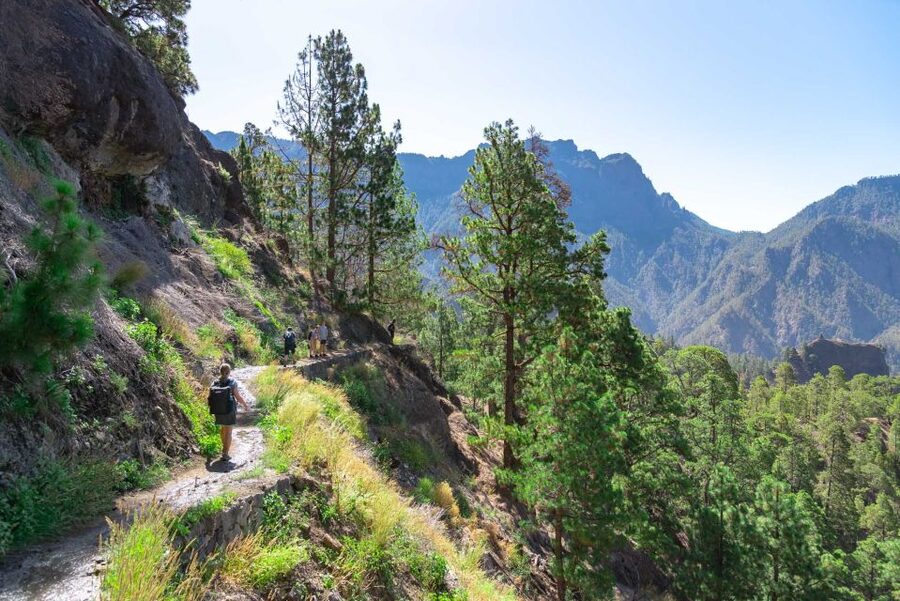
Once you begin hiking, the route is structured: mountain views first, then a long walk through rocky vegetation and shaded sections under Canary pine and cedar trees. Along the way you’ll cross wooden bridges over streams and pass through deep ravines—so you’ll feel like you’re gradually “working deeper” into the park, not just walking in a loop.
And yes, timing matters. The tour is built to move you between major zones efficiently—so you can reach the big signature stop at the Waterfall of Colors and still have time for the return ravine section.
First Views at Los Brecitos and the PR LP 13 Trail
The best way to describe the beginning is: views first, then vegetation, then the ravines start to take over. After the bus and 4×4 transfer, you start at Los Brecitos with sweeping mountain scenery. It’s a good opener because it settles your expectations. You’re not headed into a flat walk—you’re headed into a crater.
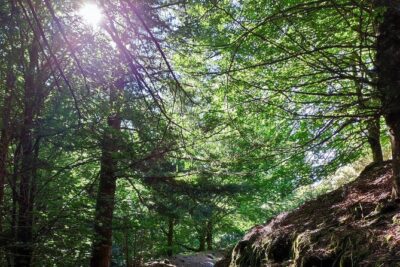
From there, you’ll follow the PR LP 13 trail, guided along a route that uses the park’s natural variety. You’ll pass through rocky vegetation and into the shade of Canary pine and cedar trees. That mix is one of the underrated parts of a hike like this. Shade helps your body manage the day, and rocky ground keeps the walking interesting instead of monotonous.
Your guide also keeps an eye on wildlife opportunities. Local birds are something you can watch for as you go, especially when you move through the more sheltered vegetation sections. Even if you don’t spot many, the guide-led pacing helps you slow down enough to actually notice what’s around you instead of treating the hike like a stopwatch game.
If you’re someone who likes a clear “storyline” to your walking day, you’ll appreciate how the route transitions: broad views, then shaded textures, then streams and crossings, then the big waterfall stop.
Canary Pines, Cedar Shade, and Crossing Streams on Wooden Bridges
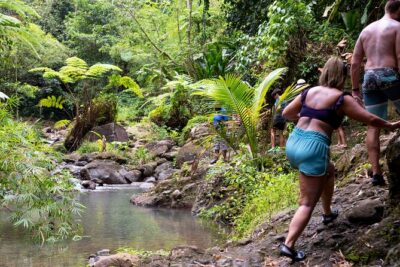
Here’s where you start to feel the park in your legs. The route includes wooden bridges spanning sparkling streams, and those crossings change the rhythm. You’re no longer just walking forward; you’re pausing, stepping carefully, and paying attention to water and depth changes in the ravines.
The vegetation details matter. Walking in the shade of Canary pine and cedar trees is a gift on a warm day, and it also makes the terrain feel more alive. You’re not just moving through rock and emptiness—you’re moving through pockets of life that make the crater seem more than just a dramatic hole in the ground.
And because the guide is there, you get more than scenery. You’ll hear stories connected to the park—how it developed, what you’re seeing in the terrain, and what local history has to do with the way people relate to these places. In the feedback from past hikers, the “explained a lot” point comes up clearly, and that tracks with what makes this hike satisfying rather than just pretty.
Practical note: those streams can mean slippery patches around bridge approaches. Comfortable shoes aren’t optional here. Think grip and stability, not just comfort.
You can also read our reviews of more hiking tours in La Palma
Swim Stop at Playa de Taburiente: Cool Off Without Ruining Your Day
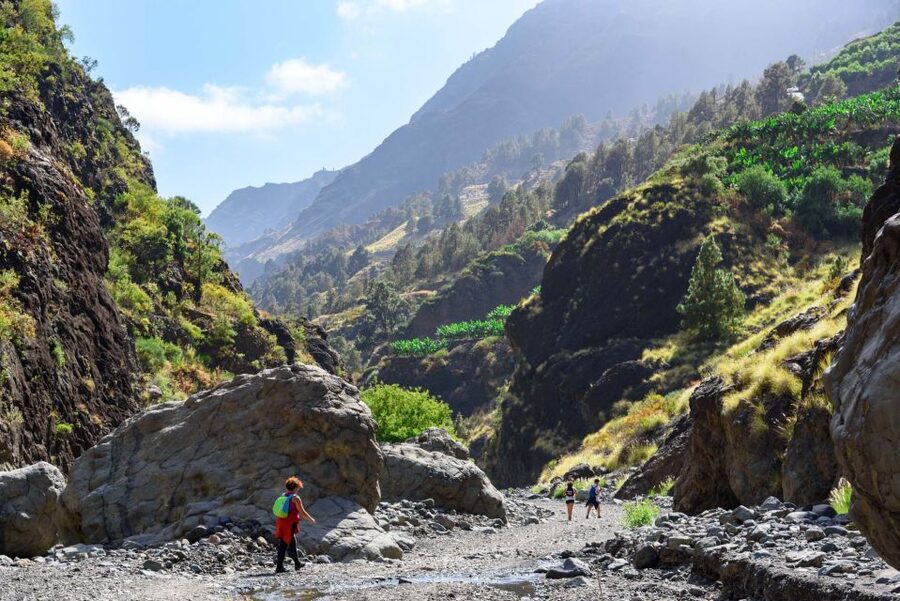
At some point during the hike, you get a stop at Playa de Taburiente to swim in cool waters. This is one of the reasons I like this tour for people who want more than photos. A short dip can reset you, especially on a long 6-hour active day.
But don’t treat it like a beach day. You’re still in hiking mode—so after swimming, you’ll want to change or at least manage wet gear and footwear so you don’t end up cold or uncomfortable later during the more rugged ravine return.
Also, in a hike built around ravines and transitions, even small delays matter. Keep your time reasonable, towel off, and be ready to move when the group does. If you love swimming, go ahead and do it. If you’re not a swimmer, you can still treat it as a cooling break and photo stop.
The Waterfall of Colors: The Signature Stop With a Purpose
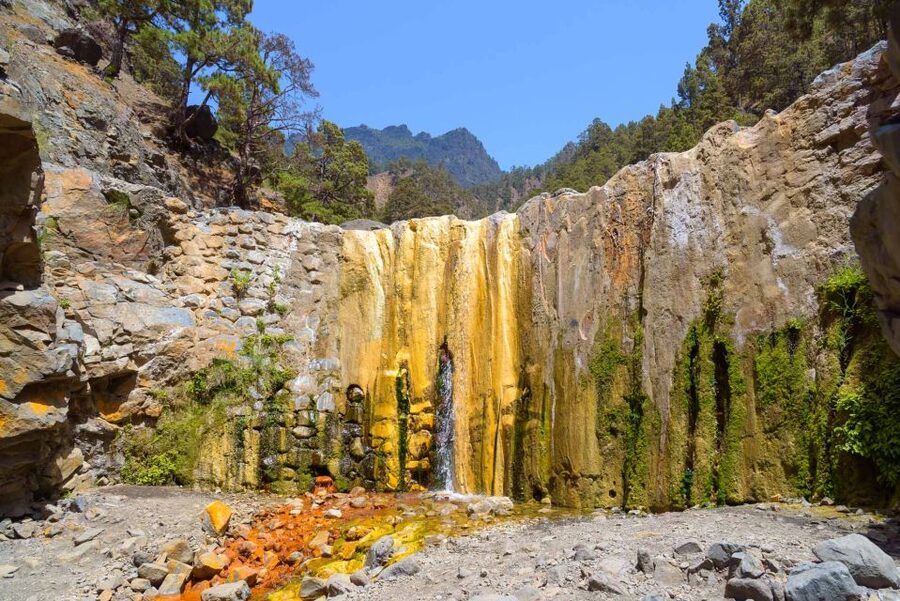
The Waterfall of Colors is the headline moment, and the route is designed to bring you there after you’ve already earned it. Before the waterfall stop, you rest and then travel through the Taburiente ravine section, which builds the sense of anticipation. By the time you arrive, you’re not bored and you’re not already tired of the scenery—you’re ready for the payoff.
The name comes from what you’ll see: bright, mineral-rich colors in the waterfall area. You don’t need expert geology to enjoy it. You just need to be paying attention. Waterfalls in a volcanic crater environment can show layers and mineral effects that look almost painted, especially when the lighting hits right.
If you’re planning photos, think in two modes:
- Wide shots that show the waterfall in context
- Close shots that capture the color patterns
And remember: this is not a long sightseeing museum stop. It’s a hike-driven day, so you’ll experience it and then keep moving. That’s part of the value—your time goes toward both the journey and the visual reward.
Returning Through Las Angustias Ravine and Back to Los Llanos de Aridane
The end of the tour brings you through Las Angustias ravine and across volcanic formations to return toward Los Llanos de Aridane Bus Station. This section is important because it turns the day from “pretty hike” into “full crater experience.” You’ve already seen streams and vegetation; now you see the park’s volcanic structure and ravine character more directly.
At the end, you transfer back to your meeting point by bus. In other words, you’re not stuck figuring out how to get home after you finish. That’s a big deal on an island where road access can be complicated once you’re in remote areas.
One more practical wrinkle: due to weather, the departure route may shift—from Barranco de Las Angustias to Mirador de Los Brecitos. If that happens, you’ll have a short ascent and then the bus will pick you up for the return to Los Llanos de Aridane Bus Station. I like having a plan that accounts for change, but it also means you should dress for versatility: jacket for cooler conditions, hat for sun, and shoes that handle damp ground.
What to Bring (So You Don’t Spend the Day Thinking About Gear)
For a 6-hour hike in a crater with ravines and possible swimming, pack like you’ll actually use everything:
- Comfortable shoes with grip for uneven ground and slick bridge areas
- Hat and sunscreen for exposed sections and sunny moments
- Food and drinks, since nothing is included
- A jacket for weather changes, especially in ravine shade
- Swimsuit-ready gear if you plan to use the Playa de Taburiente swim stop
If you want to make the “no food included” part easy, bring a simple snack plan: something you can eat quickly during the breaks without having to sit around. You’ll feel better on the waterfall approach and on the return ravine section.
Who This Tour Suits Best (And Who Might Want a Different Plan)
This hike is best for people who like real terrain. You’ll be walking through rocky vegetation, crossing streams on wooden bridges, and moving through deep ravines. That’s not a stroll. It’s manageable for fit hikers, but it requires good footing and comfort on uneven paths.
It’s also a strong fit for nature-minded travelers who want more than scenery. If you care about understanding what you’re walking through—why the vegetation looks the way it does and how the park’s features connect—this format works well because you’re not alone out there.
It’s not suitable for pregnant women or people with mobility impairments, based on the tour’s stated limitations. If you fall into that category, you should pick a gentler option on the island.
One more match: if you’re traveling with friends or family who take photos seriously, you’ll appreciate the structure—viewpoint start, shaded walking, bridge crossings, a swim, then the Waterfall of Colors.
Does It Live Up to the Hype? My Balanced Take
This tour earns its high rating because it does three things well: it gets you into the right areas, it keeps the walk moving, and it explains what you’re seeing. In the feedback from people who booked it, two themes show up strongly: the guides are friendly and share lots of knowledge, and the transportation runs on time.
I also like the way the itinerary balances “effort” and “reward.” You’re not just hunting for the waterfall. You earn it through bridges, shaded forest-like sections, stream sounds, and ravine passage. That makes the signature stop feel earned rather than randomly scheduled.
The main drawback is simple: it’s active, weather matters, and you need to bring your own food and drinks. If those points fit your travel style, this is a very solid use of a day on La Palma.
Should You Book This La Palma Caldera de Taburiente Hike?
I’d book it if you want a guided hike that’s more than a scenic walk. The combination of bus and 4×4 transfers, shaded hiking under Canary pine and cedar, stream crossings on wooden bridges, a Playa de Taburiente swim stop, and the Waterfall of Colors payoff makes this a well-rounded crater day.
I’d skip it or choose a gentler alternative if you need step-free or low-effort walking, or if the idea of rocky ground and ravine sections makes you uneasy. Also, if you hate the thought of packing your own food and drinks for the day, plan ahead—because the tour doesn’t provide them.
If you’re ready for a real hike with a clear signature moment, this one is worth serious consideration.
FAQ
How long is the La Palma Caldera de Taburiente guided hike?
The tour lasts about 6 hours.
What is included in the price?
The price includes the hiking tour, a guide, and bus transfer.
Is food provided on the hike?
No. Food and drinks are not included, so you’ll want to bring your own.
Where does the tour start and how do you get there?
You’re picked up by bus from centrally-located meeting points on La Palma, then transferred to Los Llanos de Aridane and onward to the start area by spacious 4×4-bus.
What languages are the live guides available in?
The guide offers live commentary in Spanish, English, and German.
Is there a swimming stop?
Yes. There’s a stop at Playa de Taburiente where you can swim in cool waters.
What should I bring for this hike?
Bring comfortable shoes, a hat, sunscreen, a jacket, and food and drinks.
Can the route change due to weather?
Yes. The departure route may change from Barranco de Las Angustias to Mirador de Los Brecitos, with a short ascent and bus pickup for the return.
Is this tour suitable for everyone?
It’s not suitable for pregnant women or people with mobility impairments, based on the tour’s guidance.