REVIEW · KALABAKA
Kalabaka: Meteora Small-Group Hiking Tour w/ Monastery Visit
Book on GetYourGuide →Operated by Visit Meteora · Bookable on GetYourGuide
Meteora looks impossible until you walk it. I love the guided footpaths that get you up close to the sandstone pillars, and I love the panoramic views that unfold step by step instead of all at once. You also get more than sightseeing: the guide ties the scenery to Orthodox monastic life, local myths, and even what lives around these rocks.
The main thing to consider is effort. This isn’t a flat stroll. You’ll deal with steep sections and rocky footing, so good shoes matter as much as timing and enthusiasm.
In This Review
- Key takeaways before you go
- Meteora looks different when you hike it, not when you drive
- Kalabaka pickup and the short ride to Kastraki Square
- Dupiani Hermitage: ruins, rock walls, and an easy start with big payoff
- The hike up toward Great Meteoro and Varlaam cliffs
- Great Meteoron and Varlaam: what the monastery visit actually gives you
- St. George the Madilas: the viewpoint with a living tradition
- How hard is the hike in real terms
- What to bring (and what the rules are actually enforcing)
- How guides like Christos, Evan, and Dimitri change the experience
- Value for about $35: what you’re really paying for
- Who should book this Meteora hiking tour (and who should skip)
- Should you book it? My take
- FAQ
- How long is the Meteora small-group hiking tour?
- Where do I get picked up?
- How do I get to the trailhead?
- Which monasteries are visited?
- Are monastery entry fees included?
- What’s included in the price?
- What should I bring for the hike?
- What clothing or items are not allowed?
- Is it refundable if my plans change?
Key takeaways before you go
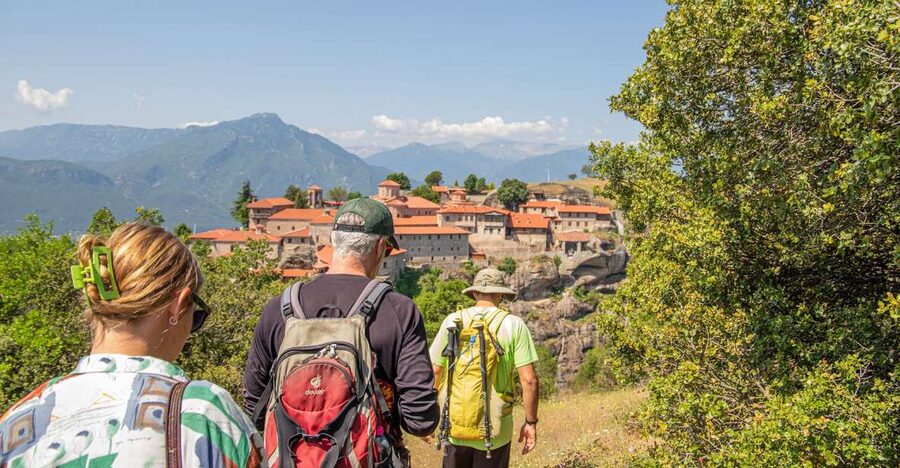
- You see Meteora properly on foot: walking is the point here, not an afterthought.
- Guides (like Evan or Christos) keep the story moving with local history, fauna, and myths.
- The route links multiple monastery sites along the cliffs around Kastraki, Dupiani, Ypapanti, Great Meteoron, and Varlaam.
- Great views are built into the pacing, with photo stops and viewpoint time.
- Plan for extra monastery entry fees (about €5 per monastery) since they’re not included.
Meteora looks different when you hike it, not when you drive
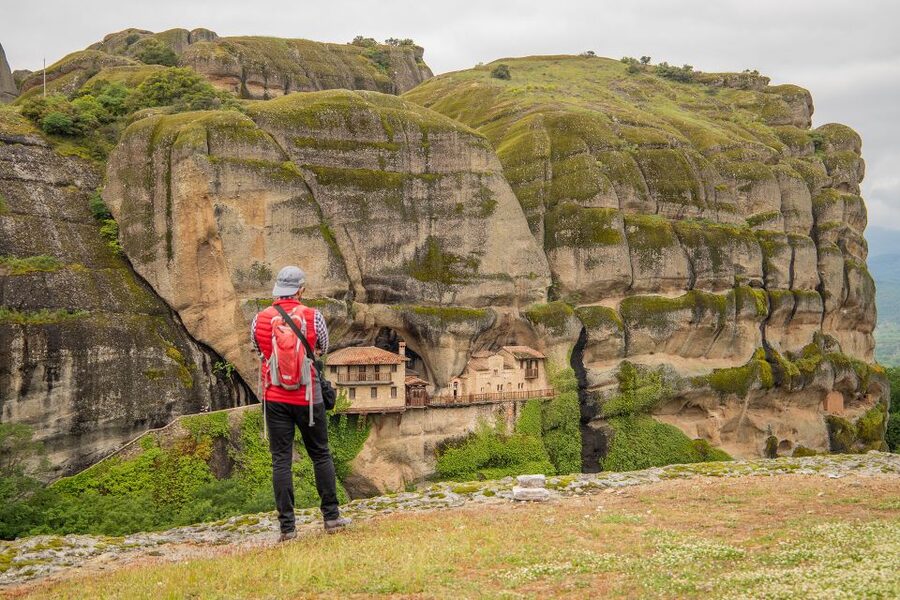
Meteora is dramatic from the road. But on this tour, the drama changes shape. You’re moving through hollows, climbing along rock edges, and stopping when the cliffs frame the monasteries like someone arranged them for a photo.
I like that the hike focuses on what walking reveals: the strange rock patterns, the way the terrain channels your sightlines, and how the monasteries feel perched rather than simply placed. The guide also connects the rocks to the human story here—Orthodox monks choosing isolation, plus the local legends and beliefs that grew around these high walls.
Another plus: this is a morning style experience. You start in Kalabaka, ride up briefly, and spend the bulk of your time outside. That means you get fresh air and real time to take in the scale, without waiting in long lines for viewpoints.
You can also read our reviews of more hiking tours in Kalabaka
Kalabaka pickup and the short ride to Kastraki Square
The tour starts in Kalabaka, with pickup offered from a long list of nearby hotels and guesthouses. If you’re staying in the Kalabaka area, you’ll likely be close to the designated stop options.
After pickup, the coach ride is brief—about 10 minutes—which keeps the morning from turning into a travel day. You arrive at the hiking area around Kastraki Square, and that’s where the walking begins with a photo stop and a guided orientation.
That short transport piece matters. When the transfer is quick, you spend more of your half-day actually on the path, and less time sitting on a vehicle that’s doing nothing except getting you there.
Dupiani Hermitage: ruins, rock walls, and an easy start with big payoff
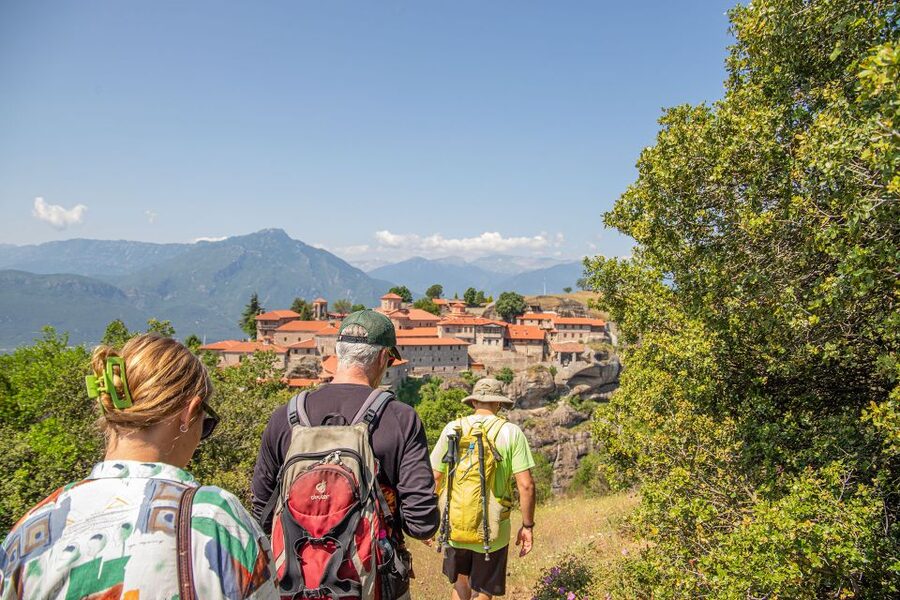
Your first walking stretch takes you from Kastraki Square onward to Dupiani Hermitage. This is one of the smartest parts of the experience because it sets expectations early: Meteora isn’t one viewpoint—it’s a whole system of cliffs, monasteries, and trail corridors.
Along the way, you pass below the ruined Pantokratoros Monastery on the north side of Dupiani’s rock. Even in ruin, you can feel why these places worked. The rock gives protection, and it gives the kind of isolation monks came for.
Then you reach the Ypapanti Monastery and the nearby ruins of St. Dimitrios, a monastery that was destroyed by the Ottomans in 1808 during a local uprising. That detail gives the scenery more weight than simple postcard beauty. It also helps you notice things you might otherwise miss—stone choices, the way sites sit in the cliffs, and how the human story is carved into the setting.
The hike up toward Great Meteoro and Varlaam cliffs
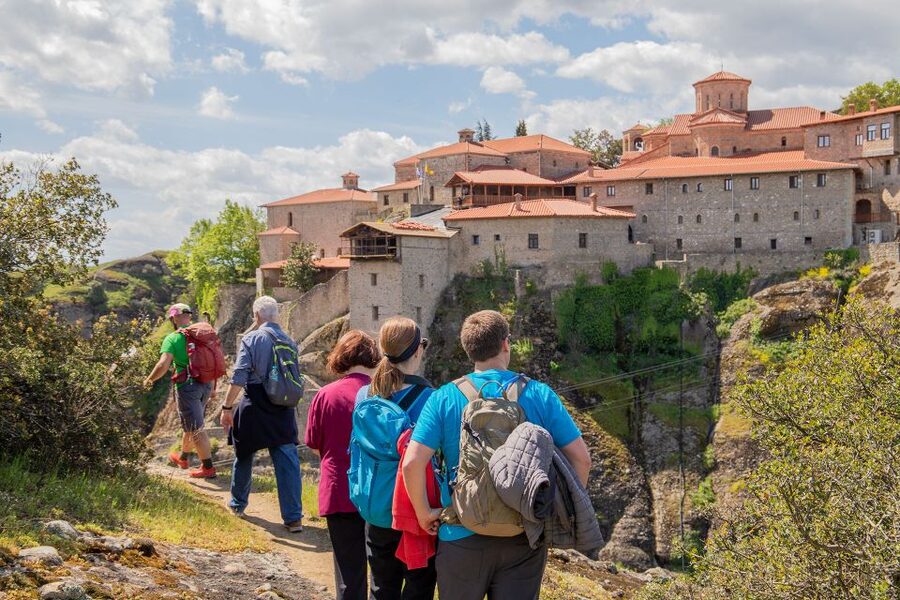
From there, the trail climbs. This is where you start earning those big “look at that” moments, because the route is designed to bring you close to the monastery areas rather than just letting you look from below.
The tour leads you up to the Great Meteoro and Varlaam monasteries, two of the six Eastern Orthodox monasteries located in the Meteora rock complex. Both are part of the UNESCO World Heritage Site, and the guide’s job is to help you see what UNESCO can’t capture in a headline: how these monasteries relate to the cliffs and to the daily logic of monastic life.
You’ll also get practical viewpoint moments while you walk—stops for photos, short stretches of explanation, and enough time to look up at the rock towers without constantly checking your footing. A recurring theme in the experience is pacing: guides like Evan, Christos, Dimitri, Chris, and Vangelis are repeatedly praised for keeping the rhythm comfortable and adjusting when conditions change.
Great Meteoron and Varlaam: what the monastery visit actually gives you
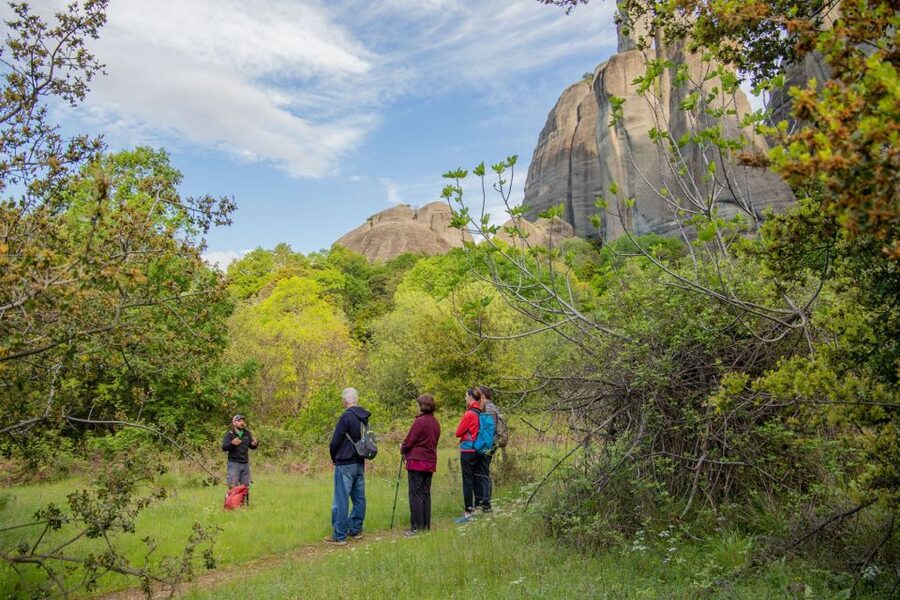
Once you’re near the top monastery zone, you get a guided tour of the grounds and then time for your own look. The tour also includes visiting one monastery interior, with Great Meteoron often the stop, and Varlaam built into the walking route and viewpoint sequence.
Here’s the practical part: monastery entry fees are not included. The cost is about €5 per person per monastery, and you’ll want cash. Also, the guide’s time inside is limited, so you’re mostly using your own eyes and the highlights the guide points out before you go in.
What makes this valuable isn’t just architecture. It’s context. The guide helps you focus on what matters inside—what to notice when you look at the way these spaces were built, and how monastic life shaped both art and routine. Several guides are also noted for pointing out small, satisfying details, from plant life to what to look for in the monastery areas.
St. George the Madilas: the viewpoint with a living tradition
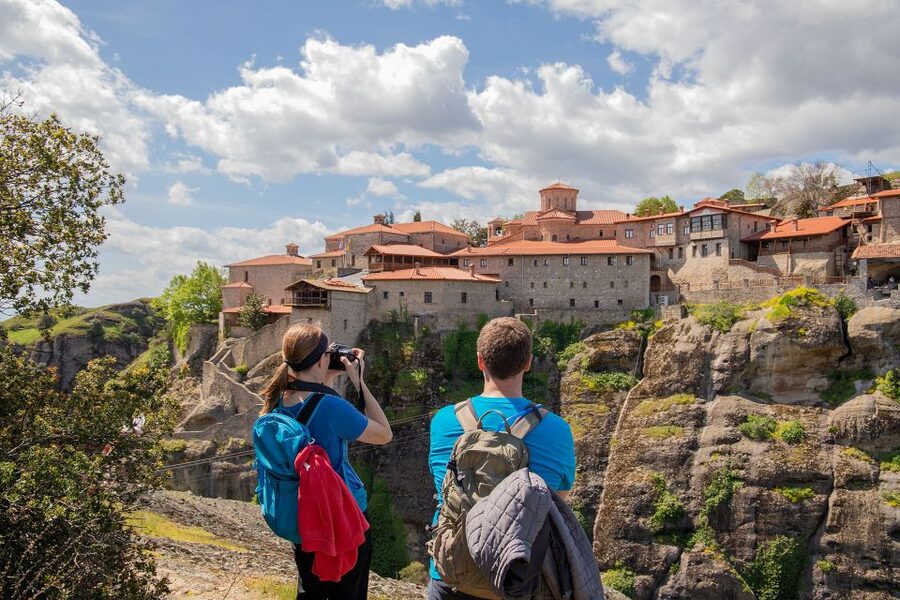
After the higher monastery section, the route continues down toward St. George the Madilas. This isn’t just another stop for photos. It’s a specific place connected to a tradition: local children climb using only a rope to dedicate offerings to St. George.
You’re not watching a daily activity on demand, of course. But the point is that you learn what this spot means and why it’s remembered. That shifts the tone of the walk from history viewing to cultural understanding.
Even if your main goal is scenery, I’d still put this part on your personal checklist. It’s one of the few moments that makes Meteora feel like a living place, not a museum of monasteries on a cliff.
How hard is the hike in real terms
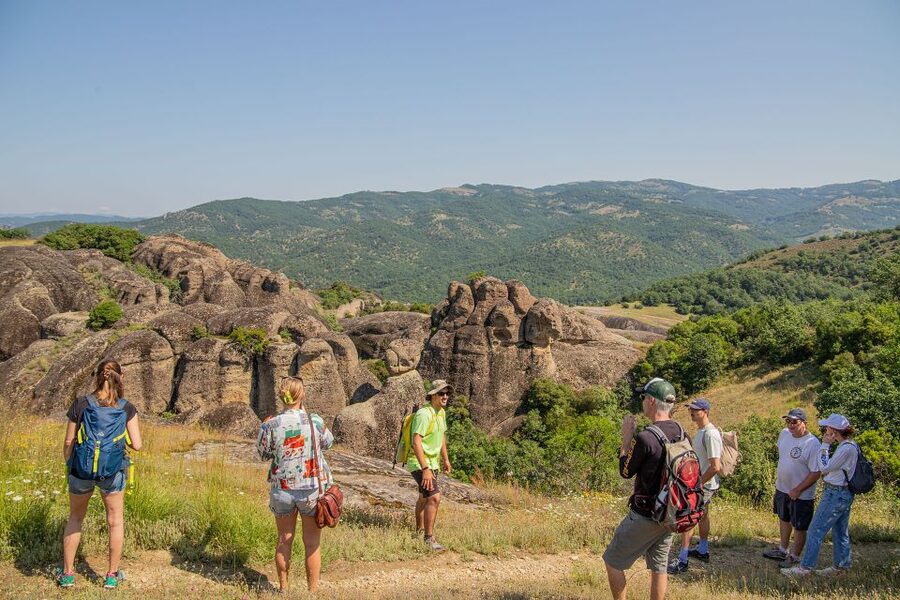
This is the question most people should ask, and the honest answer is: it varies by your comfort level and the weather.
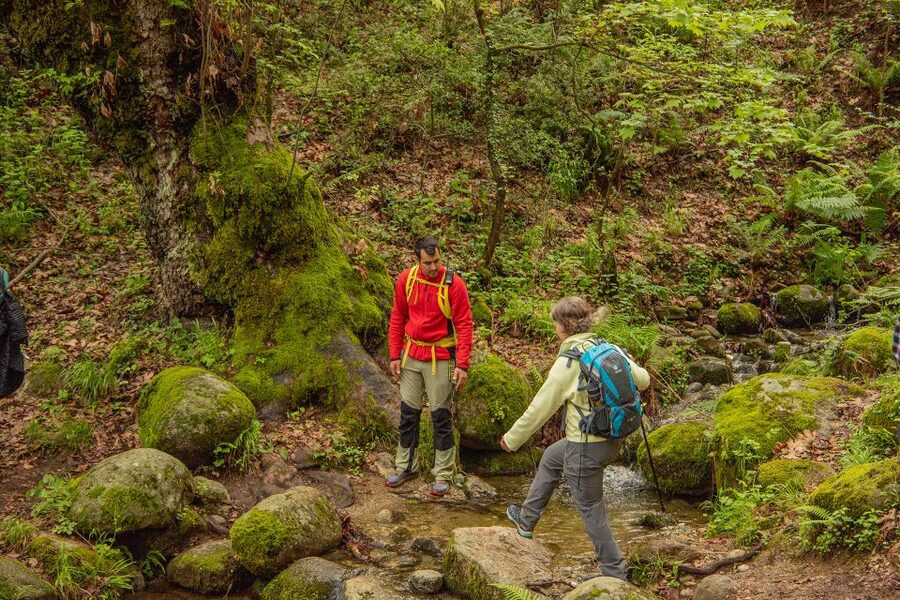
The hike often gets described as manageable for many people, with portions that can feel like a steady climb. But there are also comments about steep steps, rocky sections, and a descent that can feel harder than the uphill. In warmer months, heat is a factor. Rain can change footing and pace too, though guides are set up to keep the group moving and safe.
Here’s my practical advice:
- Wear closed-toe shoes with grip. Sandals or flip-flops are not allowed.
- Consider bringing snacks and a hat, since the tour is outdoors for hours.
- If you use walking poles, be ready to use them. Some guides are known to have poles available, and people find them useful on steeper bits.
If you’re aiming for a workout, this tour gives you one. If you’re not a regular hiker, don’t panic—but choose it only if you’re honest about your comfort on uneven ground.
What to bring (and what the rules are actually enforcing)
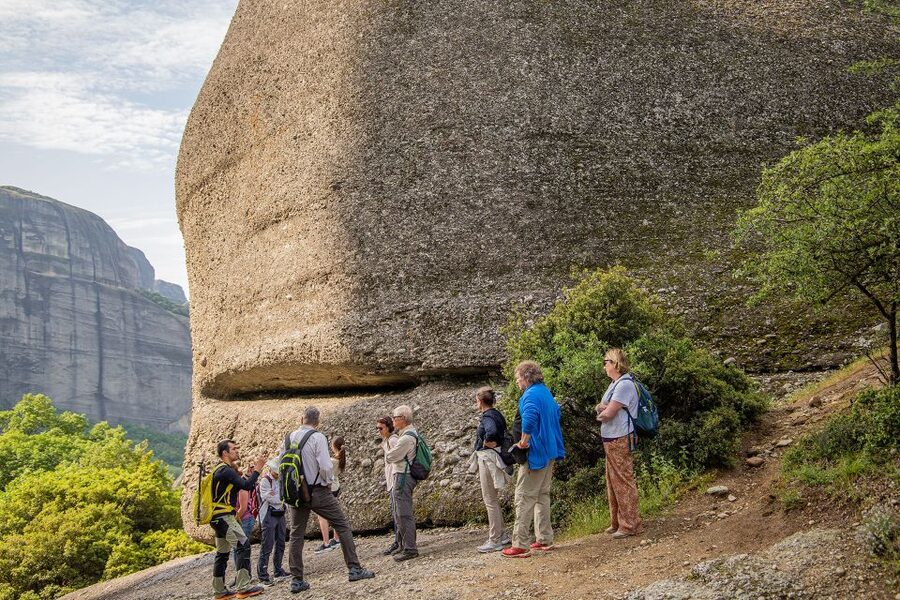
The “what to bring” list is short for a reason: the tour is built around moving, not wandering.
Bring:
- Comfortable clothes
- Comfortable shoes (no flip-flops)
- A hat
- Snacks
- Cash
- Any basics for sun and hydration
Also note the restrictions:
- No sandals or flip-flops
- No pets
- No sleeveless shirts
That last rule matters in Greece’s monastery environment. If you show up in summer gear, you might end up spending time scrambling for coverage. I’d rather you plan ahead and walk in feeling ready.
You’ll get:
- Pickup and drop-off
- A mountain guide
- A map
- A bottle of water
Even with water provided, I’d still pack snacks. People with different appetites and energy levels handle the hike differently, and it’s smart not to rely on a single bottle.
How guides like Christos, Evan, and Dimitri change the experience
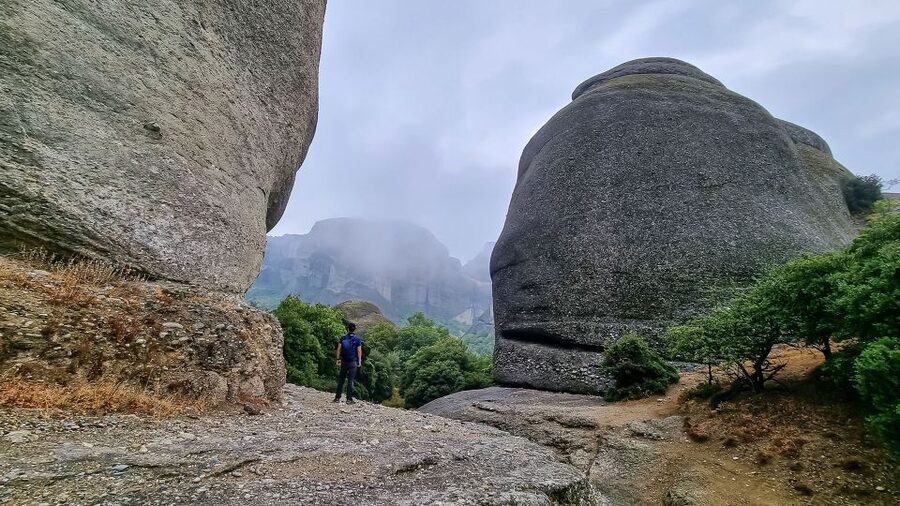
This tour rises or falls on the guide. The repeated praise is pretty consistent: guides are engaging, adjust pace, and make the stops make sense.
Names that come up again and again include Christos, Evan, Dimitri/Dimitris, Chris, and Vangelis. The pattern in their comments is helpful for your expectations: they don’t just list facts. They point out what to look for as you walk—plants and small animals, the geology behind the formations, and stories tied to the monastery culture.
One of the best practical takeaways from the experience is how guides help you avoid the common Meteora trap: staring at cliffs without knowing what you’re seeing. With a good guide, you start recognizing patterns—where monasteries sit and why, and how myths and local tradition connect to the terrain.
Also, small-group setups tend to make this easier. You’re less likely to be stuck behind someone who stops every five minutes for a perfect shot. The guides are also noted for setting a pace that works for mixed fitness levels, which is rare.
Value for about $35: what you’re really paying for
At around $35 per person for a 5-hour morning tour, the value is mostly in three things: guided walking time, transport from Kalabaka, and the monastery stop structure.
The transport component is praised for smoothness, including a high satisfaction score for the ride. That matters in Meteora because the sites are spread out and you don’t want to waste your limited time in transit.
The guide is the biggest value driver. A good guide turns a walk into a story you can remember. You’re also getting a map and water included, which keeps the basic needs covered.
Your main cost add-on is the monastery entry. Expect about €5 per monastery if you’re visiting the interior where fees apply. That’s not a deal-breaker, but it’s a reality check. If you arrive with only a card and no cash, you’ll be annoyed at the wrong time.
Overall, for a half-day that gives you hiking, viewpoints, and at least one monastery interior, this is a strong value option—especially if you’re staying near Kalabaka and want a meaningful use of your limited time.
Who should book this Meteora hiking tour (and who should skip)
I think this tour is a great fit if you:
- Like walking and can handle uneven ground
- Want big views without relying on a car schedule
- Enjoy learning geology, local stories, and Orthodox monastic culture
- Prefer a smaller, guide-led experience rather than a fast bus stop
It’s not a fit if you:
- Have heart problems
- Have mobility impairments
- Have low level of fitness for steep, rocky sections
- Are visually impaired
- Are traveling with children under 7 years
Also, if you want a totally effortless day with no steep steps or rough footing, you might find this more active than you expected.
Should you book it? My take
Book this tour if you want Meteora the way it’s meant to be experienced: on foot, with a guide to explain what you’re seeing, and with monastery stops that feel connected to the hike instead of pasted on at the end.
Skip it if walking conditions would stress you out—steep sections, rocky trails, and descents are part of the deal. In that case, you might be happier with a lower-effort viewpoint plan.
If you do book, come ready: shoes with grip, a hat, snacks, and cash. Then lean into the guide’s pace. The best moments happen when you look up at the monasteries and also watch your steps at the same time. That mix of effort and awe is exactly what makes Meteora stick.
FAQ
How long is the Meteora small-group hiking tour?
The tour lasts about 5 hours.
Where do I get picked up?
Pickup is from Kalabaka, with stops including Boutique Hotel Iridanos, multiple guesthouses, and hotels listed in the pickup area.
How do I get to the trailhead?
You take a short coach ride (about 10 minutes) and begin the hike around Kastraki Square.
Which monasteries are visited?
The experience includes a visit connected to the Great Meteoron and/or Varlaam monasteries (both are part of the monastery complex on the route), and you learn about one monastery site among the six in the area.
Are monastery entry fees included?
No. Great Meteoron or Varlaam monastery entry fees are extra (listed as about €5 per person per monastery). The guide inside the monasteries is not included.
What’s included in the price?
Included are pickup and drop-off, a mountain guide, a map, and a bottle of water.
What should I bring for the hike?
Wear comfortable clothes and comfortable closed-toe shoes, bring a hat and snacks, and carry cash.
What clothing or items are not allowed?
Sandals or flip-flops are not allowed, pets are not allowed, and sleeveless shirts are not allowed.
Is it refundable if my plans change?
Yes. Free cancellation is available up to 24 hours in advance for a full refund.