REVIEW · MONTANA
Guided Alpine Lake Float and Hike – Southern Bitterroot Mountains
Book on Viator →Operated by Bitterroot Backpacking · Bookable on Viator
Hike up, float down—sounds good, right? This half-day-to-evening-feeling outing takes you into the Southern Bitterroot Mountains: a glacially carved canyon hike followed by a calm packraft float on an alpine lake. I like that the guide brings almost everything you need—packrafts, backpacks, poles, snacks, even bear spray—so you can travel lighter. I also like how Luke builds the walk around real nature details, from plant and animal spotting to geology talk in the Bitterroots. One thing to consider: there’s real climbing (over 1,000 feet) and the day depends on decent weather.
This is a small group day—up to 8 people—with a feel that stays personal. You get an easy meetup at the Camas Creek Trailhead, and if you’re staying in Missoula you can arrange pickup at your hotel. It’s also scheduled for 9:30 am, so you get out early and still have the rest of the day to explore Hamilton or head back toward Missoula.
Expect a guided out-and-back route roughly 6–8 miles, then time on the water with fresh tea or coffee while you float. You’ll go leave-no-trace on purpose, and you’ll return to the trailhead with sore calves (maybe) and a big grin (almost certainly).
In This Review
- Key things to know before you go
- Entering the Bitterroots: Hamilton to Camas Creek Trailhead
- Getting geared up before you climb
- The hike through a glacially carved canyon (and what to watch for)
- Huckleberries, snacks, and small moments that add up
- Reaching the alpine lake: packrafts at the ready
- If weather changes (it can)
- Safety and backcountry support that actually matters
- Price and value: what $169 buys you in the Bitterroots
- The best kind of traveler for this tour
- What to pack so your day feels easy
- Final call: should you book the Alpine Lake Float and Hike?
- FAQ
- What’s the duration of the guided hike and packraft float?
- Where does the tour start, and where does it end?
- How much hiking should I expect?
- Is packraft equipment included in the price?
- What snacks and drinks are provided?
- Does huckleberry picking happen on the tour?
Key things to know before you go
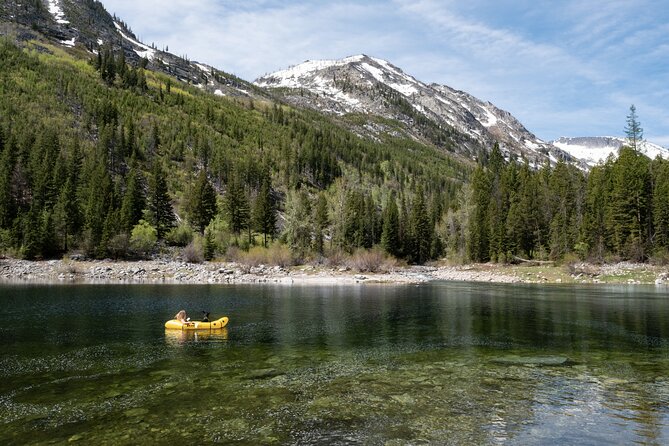
- Small-group pace with Luke guiding the day so you’re not stuck following a line of strangers
- Hike to an alpine lake (about 6–8 miles, 1,000+ feet up) then switch gears to a packraft float
- All the big gear is included: packrafts, paddles, life vests, trekking poles, backpacks, bear spray, and safety tools
- Backcountry-ready support with a water filter, first aid kit, and a GPS communicator carried by the guide
- Snacks are a full-on bag of fuel with beef and vegan jerky, trail mix, and protein bars
- Optional huckleberry picking in season (mid July to Sept) if conditions allow
Entering the Bitterroots: Hamilton to Camas Creek Trailhead
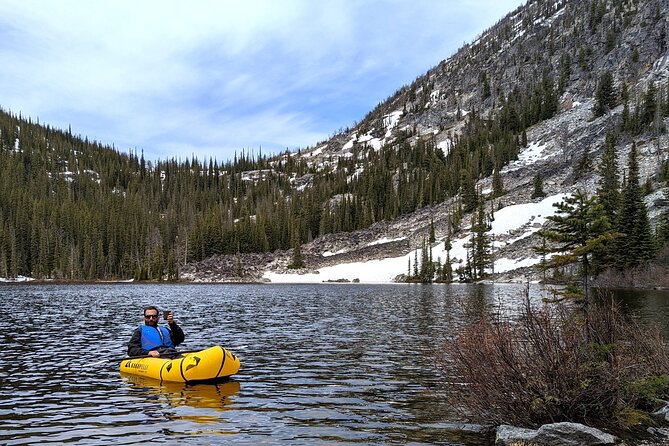
Your day centers around Hamilton, Montana, with the main meetup at Camas Creek Trailhead on Lost Horse Observation Point Rd (Hamilton MT 59840). Start time is 9:30 am, and the tour ends back at the same spot, which makes planning simple.
If you’re coming from Missoula, you can often arrange pickup at your hotel. That’s a big deal in rural areas: you don’t want your hike day turning into a car-park saga. The tour also uses a mobile ticket, and you get confirmation around booking—so you can spend less time thinking about logistics.
One practical note: this kind of outing tends to book up. On average it’s reserved about 68 days in advance, so if your trip dates are fixed, plan to lock in early.
Getting geared up before you climb
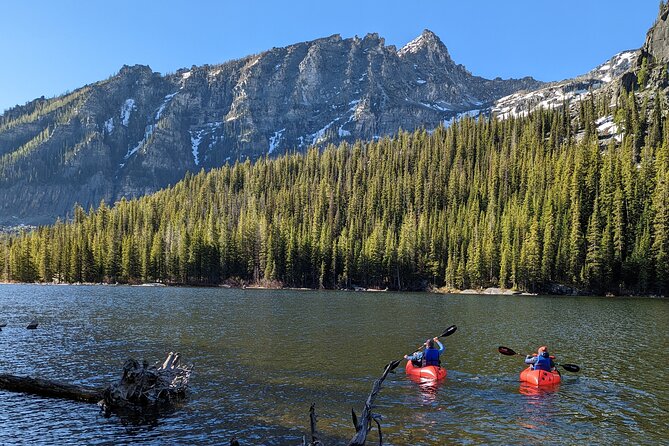
The guide—Luke—handles the heavy-lift part of “outdoor day planning.” You’ll be given or outfitted with:
- backpacks
- trekking poles
- packraft setup (packraft, paddle, and life vest)
- bear spray
- and other backcountry basics the guide carries
A key detail: the permit restricts how many rafts they can use at once. You get packraft rentals up to 4 per group, and the guide carries two packraft setups. If you want guaranteed gear coverage, a private tour is an option that ensures the guide carries your equipment.
This setup matters for how the day feels. You arrive, you get sorted fast, and then you move. No last-minute scramble for life vests, no waiting for gear handoffs at the trailhead.
The hike through a glacially carved canyon (and what to watch for)
The hiking is the backbone of the day. You’ll do an out-and-back route to the lake with roughly 6–8 miles total and significant elevation gain—over 1,000 feet. That’s not a flat nature walk. Plan for a steady climb, not a casual stroll.
Here’s what makes the hike more than exercise:
- Luke shares plant and animal information as you go, so you’re learning while you’re working
- there are “sciencey nature talks” tied to what you’re seeing, plus quick humor to keep it light
- the Bitterroot Mountains have a lot of geology and glacial history baked into the terrain, and the guide brings that to life
The guides also filter water for you from snowmelt. That means you’re not just carrying a bottle and hoping. In practice, it helps you stay flexible with timing and snack breaks.
Comfort tip: even if the hike feels “moderate,” your legs will notice the climb. Bring layers you can manage as you warm up, and keep the pace steady when your breath starts to get louder than the birds.
Huckleberries, snacks, and small moments that add up
Fuel and little seasonal perks are built into the day. You’ll get a snack bag with lots of options, including beef jerky and vegan jerky, trail mix, assorted dried fruit, and protein bars (including brands like Cliff/Lara/GoMacro as listed).
If you’re visiting in season, huckleberry picking can be part of the outing. It’s noted for mid July to September, so the exact timing depends on the calendar. Still, it’s the kind of bonus that turns a good day into a memorable one—because you’re tasting something local as you walk.
Also, don’t overlook the practical value of having snacks planned. Protein and carbs during a hike help you actually enjoy the second half of the day. It’s easier to be relaxed on the lake float when you’re not running on empty.
Reaching the alpine lake: packrafts at the ready
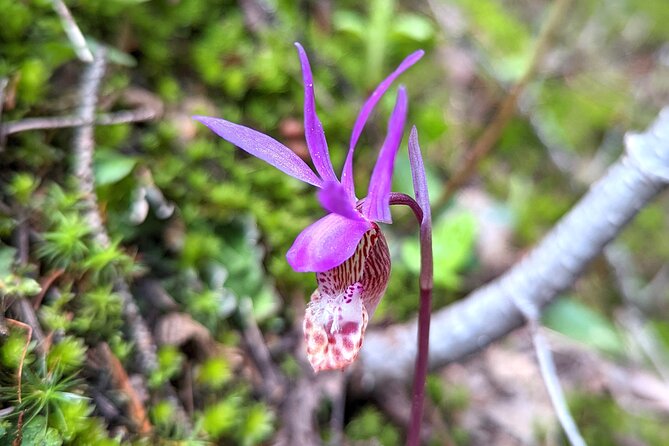
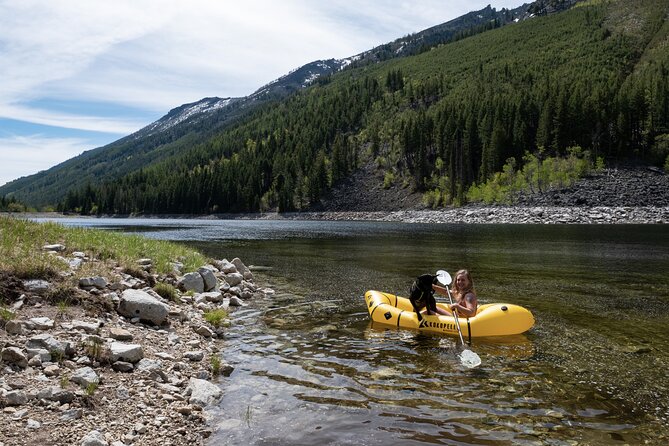
Once you arrive at the lake, the mood shifts. You’ll inflate the packrafts and head out onto the water. This is the “why did I not do this sooner?” part of the day.
The float is guided by the setup and the pace:
- You’ll each have a packraft setup (one per adult or youth ticket), up to the permit limit
- Luke carries key equipment and safety tools, and you’ll be given the basics for using the raft safely
- your group stays small enough to manage efficiently
And the lake itself? It’s serene, cold, and calm in a way that makes your brain unclench. You might see wildlife like trout near the surface and birds overhead—wildlife sightings aren’t guaranteed, but the vibe is absolutely about noticing.
Luke also makes fresh tea or coffee for you to enjoy while you float. That’s not just a nice touch; it’s a temperature-and-mind reset. After the climb, it turns the raft time into a proper break, not just transportation.
If weather changes (it can)
This is Montana. Weather can turn quickly. One clear example from the experience: a thunderstorm with rain and small hail can roll in, and Luke still navigates the day with calm and good decision-making. The tour requires good weather, and there’s a weather-based contingency, but your day might still include moments where you have to go with the flow.
Safety and backcountry support that actually matters
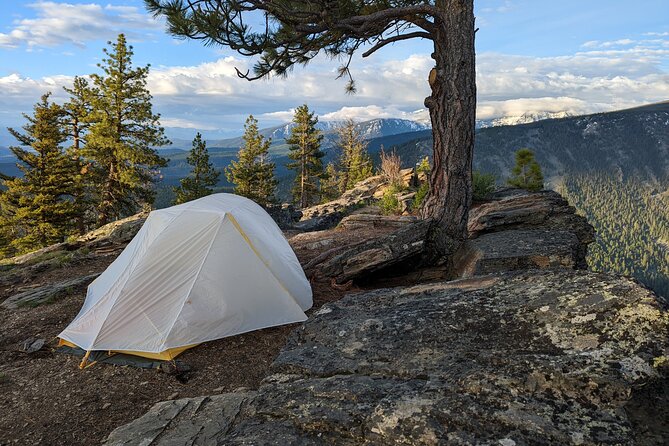
This trip isn’t “survival-themed,” but it is built with real safety tools in mind. Included items and guide support include:
- bear spray
- a water filter for snowmelt
- a first aid kit carried by the guide
- a Garmin GPS communicator
- Wilderness First Responder and Leave No Trace certified guidance
Why that matters to you: it reduces the mental load. When you don’t have to worry about basic safety logistics, you can focus on the scenery, the conversation, and the simple fun of paddling a packraft on a mountain lake.
Also, packrafting has its own learning curve. The life vest and the guide carrying essential gear make it much easier to get into the experience quickly—especially if you’ve never used a packraft before.
Price and value: what $169 buys you in the Bitterroots
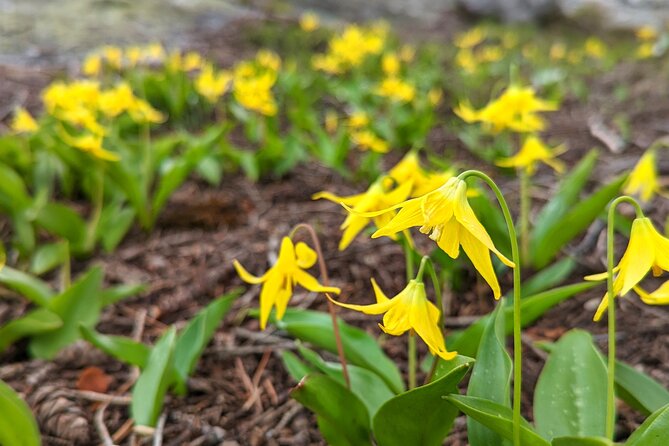
At $169 per person for about 6 hours, this is not a cheap “tour bus” outing. But it’s also not a bare-bones hike. You’re paying for:
- a guide for the entire hike and float
- packraft rentals (with paddle and life vest)
- trekking poles and backpacks
- bear spray
- safety and communication gear carried by the guide
- snacks and filtered water
- and guided interpretation (plants, animals, and geology talk)
In plain terms: a lot of the cost is covering gear you’d otherwise have to rent, buy, or skip. For many people, that changes the equation. You can take a trip like this without hauling a heavy packing list or worrying you didn’t bring the right “one thing.”
If you’re traveling light and you want a guided day that combines two activities—hike plus lake float—the pricing feels fair for what’s included.
The best kind of traveler for this tour
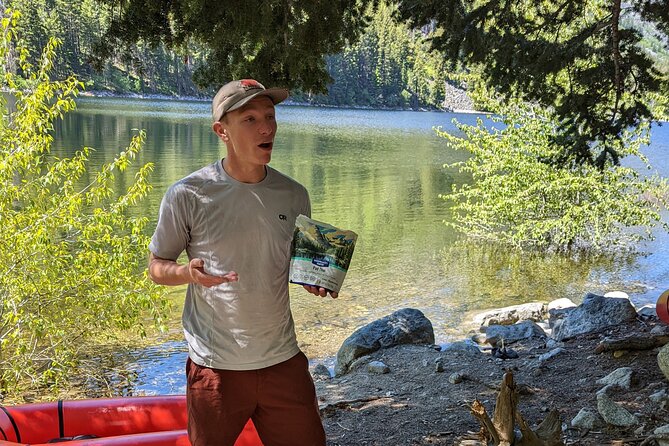
This outing suits anyone with moderate physical fitness. Hikes are around 6–8 miles with significant elevation gain, and the day is active even though the lake time is relaxing.
You’ll likely enjoy it most if you:
- like guided learning while you hike (plants, animals, geology)
- want an outdoors day that doesn’t require you to own packrafting gear
- can handle changing weather in the mountains
- travel with a family or group that wants a structured adventure
This might not be ideal if you:
- want a flat, low-effort nature walk
- dislike activities where you might get wet
- are uncomfortable with climbs over 1,000 feet
What to pack so your day feels easy
You’ll be provided with a lot, but a few basics still fall on you. The tour lists that hiking clothing, hiking shoes, sunscreen, and a raincoat aren’t included. Warm clothing might be needed if the forecast is chilly—though backups are available.
Here’s what I’d bring to keep it comfortable:
- hiking shoes with decent grip
- sunscreen (you’re climbing in open areas)
- a light rain layer just in case
- a sun hat or cap
- water and snacks if you want extras beyond the snack bag
- a small dry bag or plastic bag for items you don’t want wet
Since it’s a lake float, plan like you might get splashed. Even if the water time is short, getting wet can happen fast in packrafts.
Final call: should you book the Alpine Lake Float and Hike?
If you want a Montana day that mixes real effort with real reward, I’d book this. The best part is the balance: you work for the view, then you switch into a calm float with tea or coffee. Add the small group feel, Luke’s detailed nature talks, and the fact that major gear and safety equipment are included, and the day becomes a strong value.
Book it if you’re ready for a moderate climb and you’re flexible about weather. Skip it if you want “easy mode” or you’re not comfortable with a hike that has real elevation.
FAQ
What’s the duration of the guided hike and packraft float?
It runs about 6 hours (approximately), with time for the hike and the packraft float on the alpine lake.
Where does the tour start, and where does it end?
The tour starts and ends at Camas Creek Trailhead on Lost Horse Observation Point Rd, near Hamilton, MT. It’s an out-and-back style day with return to the same meeting point.
How much hiking should I expect?
Expect hikes around 6–8 miles total with significant elevation gain (over 1,000 feet).
Is packraft equipment included in the price?
Yes. Packraft rentals are included, along with a packraft setup (packraft, paddle, life vest) for each adult or youth ticket, up to permit limits. Trekking poles and backpacks are also included.
What snacks and drinks are provided?
You’ll get a snack bag with items like trail mix, beef and vegan jerky, dried fruit, and protein bars. The guide also provides freshly filtered water from snowmelt, and makes fresh tea or coffee to enjoy during the float.
Does huckleberry picking happen on the tour?
Huckleberry picking is included during the mid July to September season, depending on conditions.