REVIEW · EAST JAVA
From Bali or Banyuwangi: Ijen Crater Sunrise Hike
Book on GetYourGuide →Operated by Jogja Borobudur Tour & Travel · Bookable on GetYourGuide
Walking up in the dark to Ijen Crater is a different kind of sunrise mission, and the payoff is real: a huge view over Java’s acid lake and the daily work of the local sulfur miners. I really like how the tour handles the hard parts for you with pickup, local guidance, and safety gear. My main caution is simple: the famous blue fire is not guaranteed, and Ijen can also be closed on the first Friday of each month.
From the Bali side, I like that you’re not just dropped off and told to figure it out. The plan routes you through Ketapang Port with lounge time before you continue, so you can rest a bit and arrive ready for the early climb. From Banyuwangi, the late-night pickup timing is tight and efficient, which matters when you’re heading out around midnight.
One possible drawback to weigh: this is a strenuous, pre-sunrise hike and it’s not suitable for everyone (including people with vertigo, respiratory issues, heart problems, or back problems). If that describes you, you’ll want to pick a different Ijen experience—or talk to a doctor—before committing.
In This Review
- Key things that make this Ijen sunrise hike worth your time
- Sunrise logistics: Bali vs Banyuwangi pickup that actually makes sense
- What happens before the hike: gear, timing, and your safety net
- The 1.5–2 hour climb to the viewpoint
- Blue fire: how to set expectations without ruining the moment
- The miners and sulfur rock: the human scale of Ijen
- Sunrise over Java’s acid lake: what you’re actually going for
- Trekking back down: where energy usually runs out
- Price and value: what $74 is buying you (and what it isn’t)
- The guides make the difference: English, pacing, and small wins
- Who should book this Ijen sunrise hike (and who should skip it)
- Should you book this Ijen sunrise hike?
- FAQ
- How long is the Ijen Crater sunrise hike?
- What time is pickup if I stay in Banyuwangi?
- Do Ijen blue flames happen every time?
- Is food included in the tour price?
- What’s included for safety and gear?
- Is Ijen Crater open every day?
- Is this tour suitable for people with medical conditions?
Key things that make this Ijen sunrise hike worth your time
- Pickup from Bali or Banyuwangi keeps the trip from turning into a scavenger hunt.
- Gas mask and headlamp are provided, which is crucial for the crater area and low-light hike.
- Local guides like Sena, Malik/Maluk, and Galang bring the story of Ijen and the people around it.
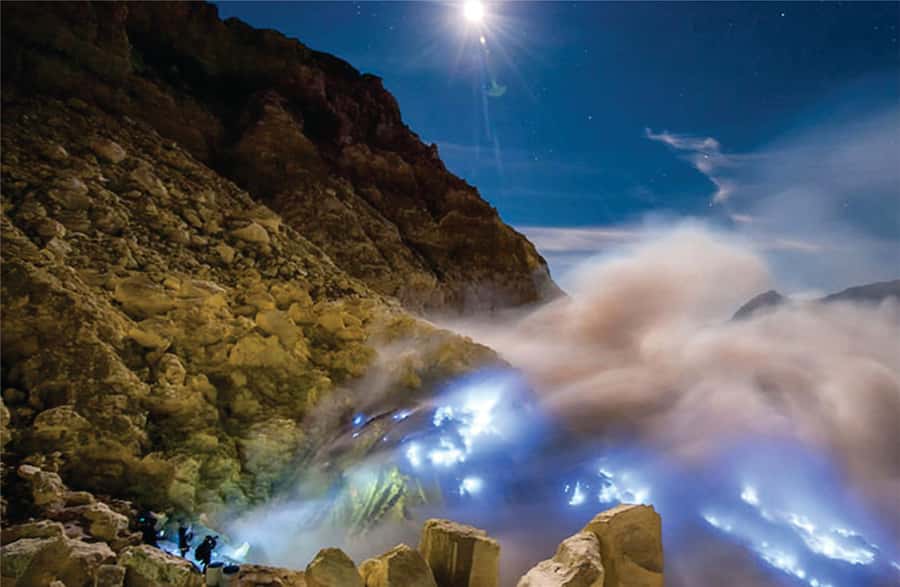
- Blue fire is a possibility, not a promise, so you go for sunrise and crater views first.
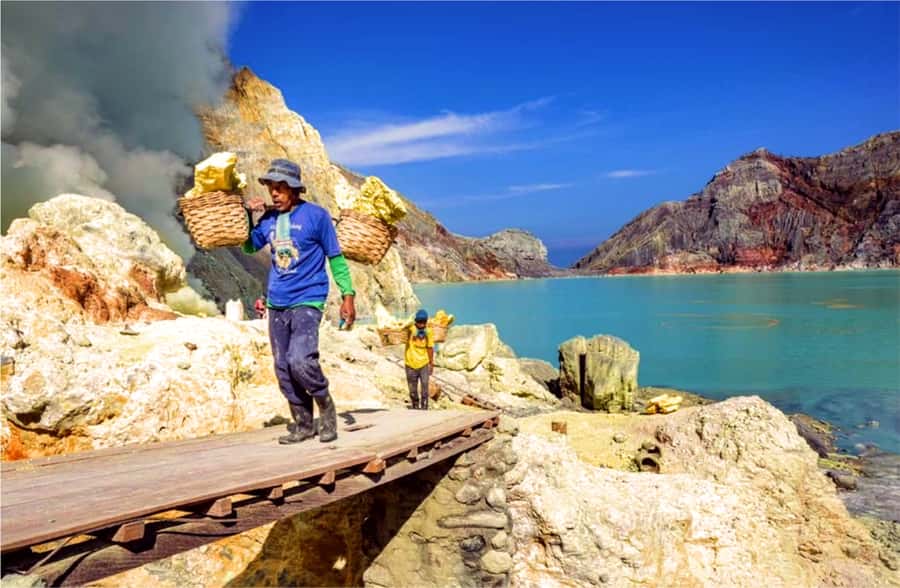
- You’ll see sulfur miners carrying heavy rocks, a powerful, human part of the day.
- Some guides help you find quieter viewpoints, so sunrise feels less like a crowd event.
Sunrise logistics: Bali vs Banyuwangi pickup that actually makes sense
This tour is built around an early start, but how you reach the volcano differs depending on where you’re staying.
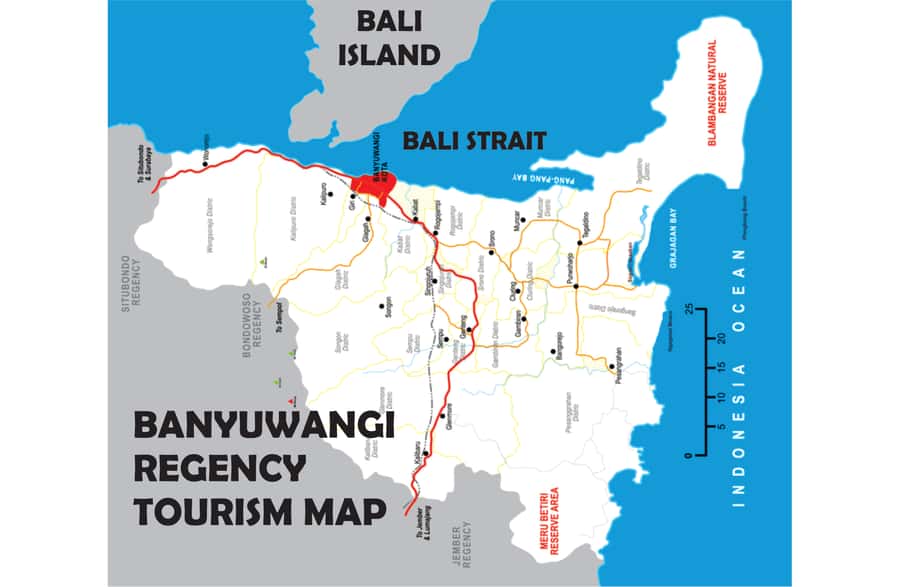
If you’re coming from Bali, you typically begin in the evening by traveling to Ketapang Port in Banyuwangi. You then relax in a lounge before your team picks you up and continues toward Ijen. This routing is useful because it gives you a more realistic transition time—especially if you’re not local to Java and you don’t want to guess travel schedules at night.
If you’re starting from Banyuwangi, pickup from your accommodation is listed at 12:30 AM. That means your night is basically dedicated to the crater approach and the early walk. It’s efficient, but it also means you should be ready for minimal sleep and a straight shot into hiking mode.
Either way, the tour duration is 8–15 hours, so you should plan your day around being out well past sunrise. For Banyuwangi stays, the return time is around 9:00 AM, while Bali returns are scheduled for the afternoon.
What happens before the hike: gear, timing, and your safety net
At Ijen, you’re not going in blind. Included in the cost are a local guide at Ijen, plus practical safety items: a gas mask, a headlamp, and a walking stick if needed.
That combo matters. The headlamp helps you move confidently in the dark and early hours. The gas mask is especially important for the crater area, where conditions can be unpleasant. And if your legs aren’t loving the climb, the walking stick can take some stress off your knees.
You’re also paying for more than transport. The plan includes parking and entrance fees, which would otherwise be extra steps you’d have to handle yourself.
On the guide side, I like the way this tour leans into person-to-person support. In one example, a guide named Sena asked often if everything was okay and if a pause was needed. That kind of check-in is not just polite—it helps you keep control of your pace in the dark.
The 1.5–2 hour climb to the viewpoint
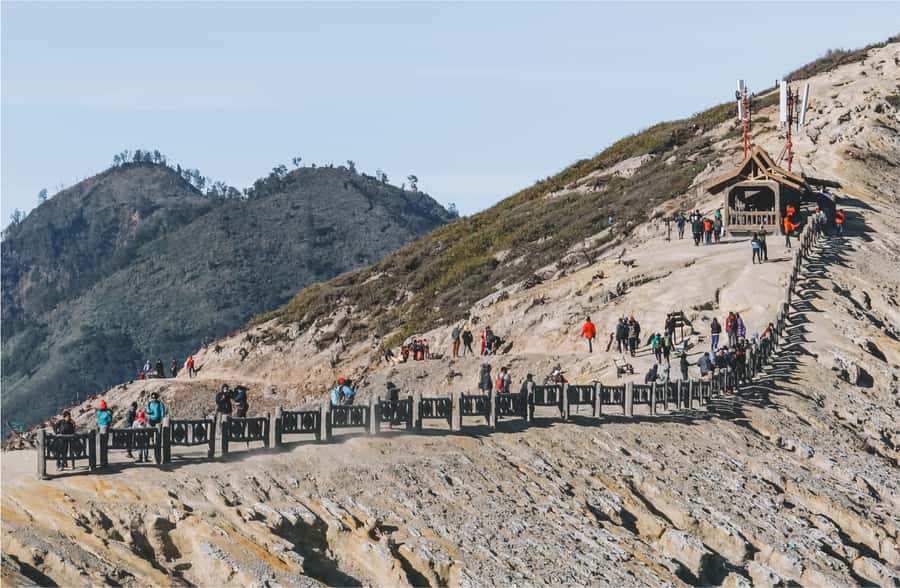
The hike to the Ijen Crater viewpoint is listed at 1.5–2 hours, and you’ll do it before sunrise. Expect darkness for a portion of the ascent, which is why your headlamp is included and why you’ll want to wear the right shoes.
This is also where fitness matters. One review-style tip that comes up often is that you need to be physically active—regular walking helps a lot. If you’re not used to steep, early-morning walking, you’ll feel it faster than you expect.
If you run into mobility limits, you might be able to use trolley options if necessary, depending on conditions at the time. Because that detail isn’t guaranteed in every situation, treat it as a possible help rather than a promise.
Blue fire: how to set expectations without ruining the moment
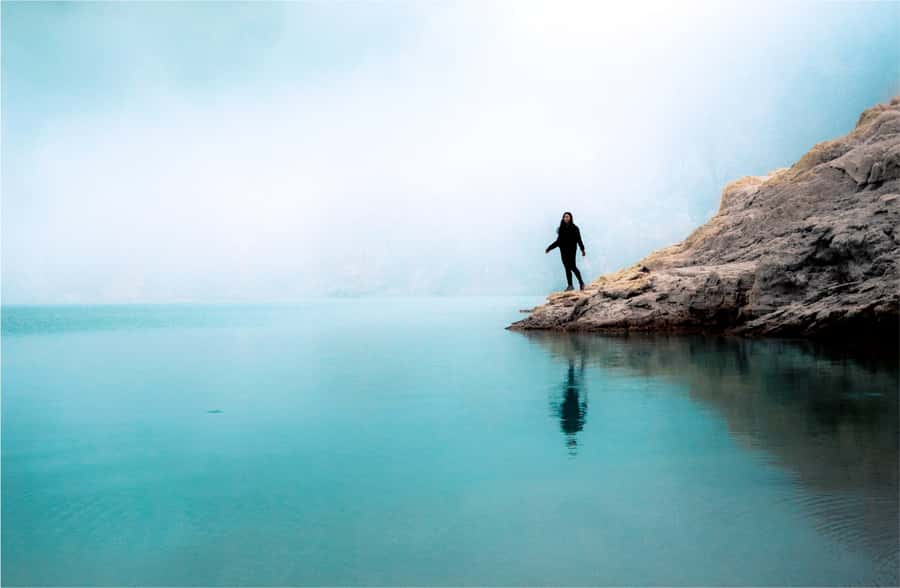
The blue fire at Ijen is the headline, but you should plan your mind like a smart traveler: treat it as a bonus.
The tour explicitly warns that blue flames are not guaranteed. That lines up with what can happen on-site when conditions and rules change. One disappointed experience mentioned government restrictions closing the blue fire, even though the hike still ran with an English-speaking guide who wasn’t able to provide much in English. That’s the risk you accept when the event depends on factors you can’t control.
So here’s the value of going anyway: even without blue fire, the crater area and sunrise over the lake are still the core of the experience. The blue fire is the special effect; the rest is the real film.
If you do get blue fire, it’s not just a visual treat—it also helps you understand why Ijen is famous worldwide. It’s tied to the unique chemical environment around the crater, and the miners’ daily work happens right next to it.
The miners and sulfur rock: the human scale of Ijen
One of the most moving parts of Ijen isn’t the view—it’s the people doing the work.
A key highlight here is appreciating local miners carrying sulfur rocks as part of their daily life. This matters because it keeps the experience grounded. You’re not just sightseeing a volcano; you’re watching how communities make a living in a harsh environment.
It also affects how you experience the crater. When you see miners moving with heavy loads, you start measuring the place by effort and routine, not by postcards. Sunrise hits differently when you know the work is happening right there.
Take a moment to watch their pace and body language. You’ll learn faster about the place than any explanation alone.
Sunrise over Java’s acid lake: what you’re actually going for
The timing is built around catching sunrise from the crater area. The plan is to admire the views from the top and then follow the light as the sky wakes up.
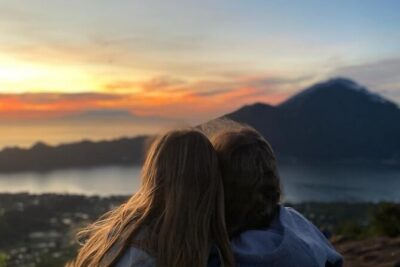
You’re promised the sunrise over the largest acid lake on Java Island. Even if the blue fire isn’t visible, sunrise here is still the big reason to wake up so early. The crater viewpoint gives you a wide sense of scale, and it’s the kind of moment that makes the long dark hike feel worth it.
In at least one case, a guide (again, Sena) took a small-group approach—leading to spots with fewer people so the view didn’t feel crowded. That’s a quality-of-experience difference you’ll appreciate if you care about seeing the moment without constant jostling.
Trekking back down: where energy usually runs out
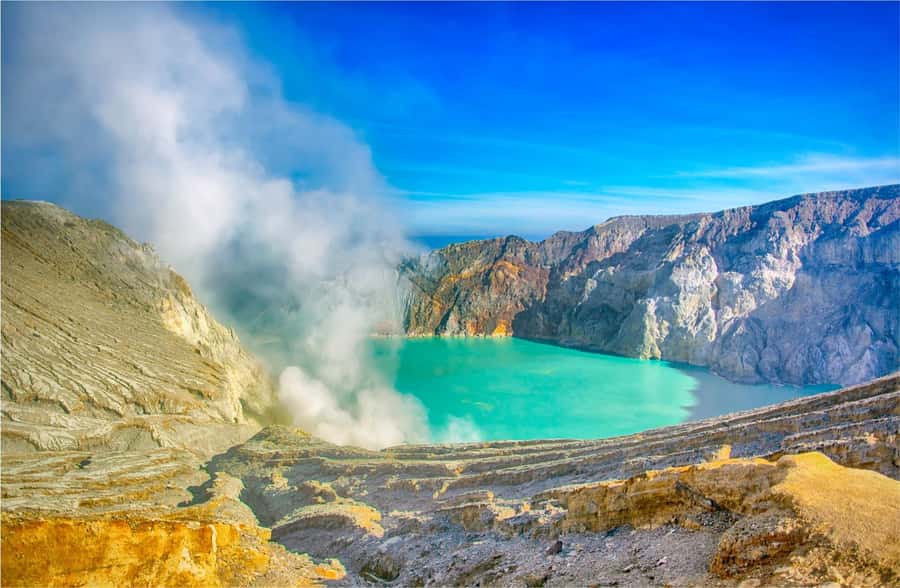
After the crater time, the tour has you trek down and back to the parking lot. This is when tired legs usually show up.
Descending can be just as hard as going up, especially if you lose focus or move too fast to compensate for fatigue. If your guide offers a walking stick, take it seriously—you’ll thank yourself later.
The tour also has defined return timing. For Banyuwangi, you’re back around 9:00 AM. For Bali, you return to accommodations in the afternoon. Either way, plan for a slow rest of the day after you get back—your body will do the talking.
Price and value: what $74 is buying you (and what it isn’t)
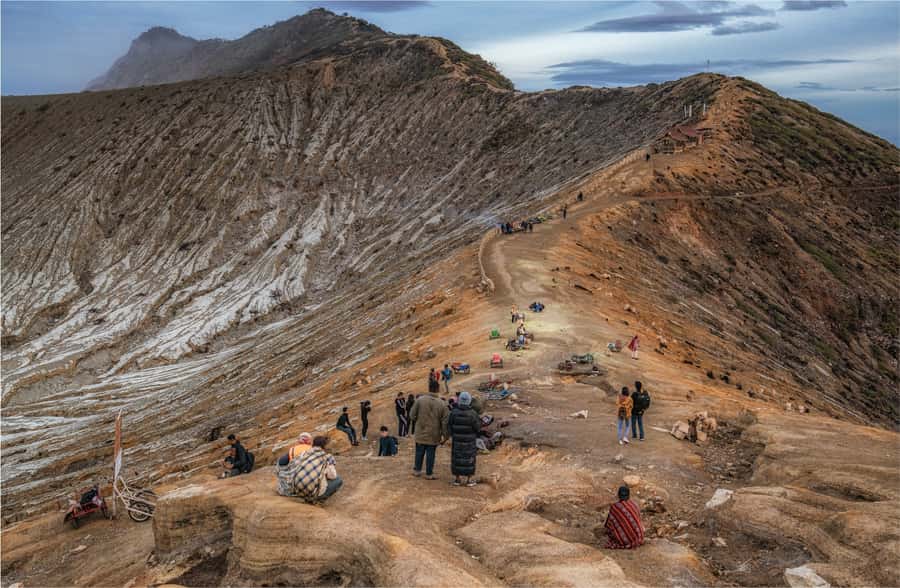
At $74 per person, this is not a budget activity. You’re paying for the package: hotel pickup and drop-off, an Ijen local guide, headlamp and gas mask, entrance and parking, and for Bali participants, a ferry ticket.
That’s the value story. An independent DIY version might look cheaper on paper, but you’d still have to piece together transport, guidance, and the safety gear. Here, those elements are bundled, which is what keeps the experience from becoming stressful.
What you should not expect: food or drink aren’t included. That’s important. Even if you feel tough, you’ll want a plan for hydration and a simple meal after the hike. Bringing your own snacks might be worth it if you know you’ll get hungry.
One more value note: the tour has high-rated transport with many perfect scores. For an early start, that reliability is part of what you’re paying for.
The guides make the difference: English, pacing, and small wins
This kind of tour lives or dies on the guide. The included guide is listed as English-capable, and many experiences reflect that.
Some guide names that come up include Sena, Malik, Maluk, Galang—each tied to good safety habits, strong English, and a willingness to explain more than just the volcano itself. In one case, Malik was described as fun to talk to and even multilingual, including Spanish and Italian. Another guide (Maluk) was noted for speaking English and also Italian and Spanish.
Not every experience hits the mark, though. One account mentioned poor English ability and disappointment when blue fire was restricted. That doesn’t mean the tour is always flawed; it means you should go in understanding that conditions and guide performance can vary.
If English matters a lot to you, I’d treat that as a question to ask before booking: how strong is your guide’s English on your date. With early-morning tours, you want clarity up front.
Who should book this Ijen sunrise hike (and who should skip it)
This tour is best for people who can handle an early start and a physically active hike.
It’s clearly listed as not suitable for:
- pregnant women
- people with back problems
- people with heart problems
- people with vertigo
- people with respiratory issues
I’d add a practical mindset here. Even if you don’t have a listed medical condition, you should be comfortable walking uphill in the dark and dealing with crater-area air conditions where a gas mask is part of the deal.
It’s a great fit if you want:
- sunrise views with real scale
- a human element via sulfur miners
- the chance to see blue fire, knowing it’s not guaranteed
- a guided plan that handles transport and fees
If you’re more interested in an easy sightseeing day, you might find this too intense.
Should you book this Ijen sunrise hike?
Yes—if you’re serious about sunrise, crater views, and the human story of Ijen, this is a strong way to do it. The included gas mask, headlamp, pickup, and guide are exactly what you want when you’re waking up far too early and heading into a place that doesn’t forgive mistakes.
But book with the right expectations. Blue fire isn’t guaranteed, and Ijen is closed on the first Friday of every month. Also, bring your own food strategy since food and drink aren’t included.
If you can’t do strenuous early hiking or you’re in one of the listed medical categories, skip this one. In that case, your best move is to find an alternative that matches your pace and health needs.
FAQ
How long is the Ijen Crater sunrise hike?
The total experience runs 8–15 hours, and the hike to the Ijen Crater viewpoint is about 1.5–2 hours.
What time is pickup if I stay in Banyuwangi?
Pickup from accommodations in Banyuwangi is listed at 12:30 AM.
Do Ijen blue flames happen every time?
No. The tour notes that blue flames are not guaranteed.
Is food included in the tour price?
No. Food or drink are not included.
What’s included for safety and gear?
You’ll get a gas mask and a headlamp, plus parking and entrance fees. A walking stick is provided if needed.
Is Ijen Crater open every day?
No. Ijen is closed to visitors on the first Friday of the month.
Is this tour suitable for people with medical conditions?
The tour states it is not suitable for pregnant women and people with back problems, heart problems, vertigo, or respiratory issues.