REVIEW · AREQUIPA
4-hour excursion: Sillar Route with Hiking in Culebrillas
Book on GetYourGuide →Operated by Latitudes · Bookable on GetYourGuide
Sillar stone has a story you can walk. This short 4-hour outing connects the Ruta del Sillar quarry culture with a real canyon walk in Culebrillas, plus viewpoints over the volcanoes and Chilina Valley. I especially like seeing sillar in use at an operating quarry, and I love how the canyon stop brings you face-to-face with ancient Wari petroglyphs. The only possible downside: it is more of a light walk than serious hiking, and some people may prefer photos over the history talk.
I went into this expecting mostly stone and ended up with a mix: working stonemasons, dramatic quarry walls, a short interior canyon trek, and a few meaningful stops that slow you down. For $20 plus a small entrance fee, it’s a good way to get out of Arequipa and learn how the region’s stone shapes the city.
In This Review
- Key points worth knowing before you go
- The best part: a stone-and-canyon loop in just 4 hours
- Meeting at 09:15: viewpoints over volcanoes and the Chilina Valley
- Añashuayco Quarry: active sillar cutting, a canyon of ignimbrite walls, and a mega carving
- The Culebrillas canyon walk: 15–20 meter walls, water carving, and Wari petroglyphs
- Apachetas at the end: gratitude stones and the good-luck moment
- Price, tickets, and how good value usually feels on the ground
- Who this tour suits best (and who might want a different day plan)
- Should you book Sillar Route with Hiking in Culebrillas?
- FAQ
- FAQ
- How long is the Sillar Route with Hiking in Culebrillas excursion?
- What sites do we visit during the tour?
- Is hiking actually part of this tour?
- What is included in the tour price?
- Are entrance tickets included?
- What can I see at Añashuayco Quarry?
- Do we see ancient artwork on the tour?
- What languages is the guide available in?
Key points worth knowing before you go
- Añashuayco Quarry is still active, and you’ll see stonemasons at work early in the day
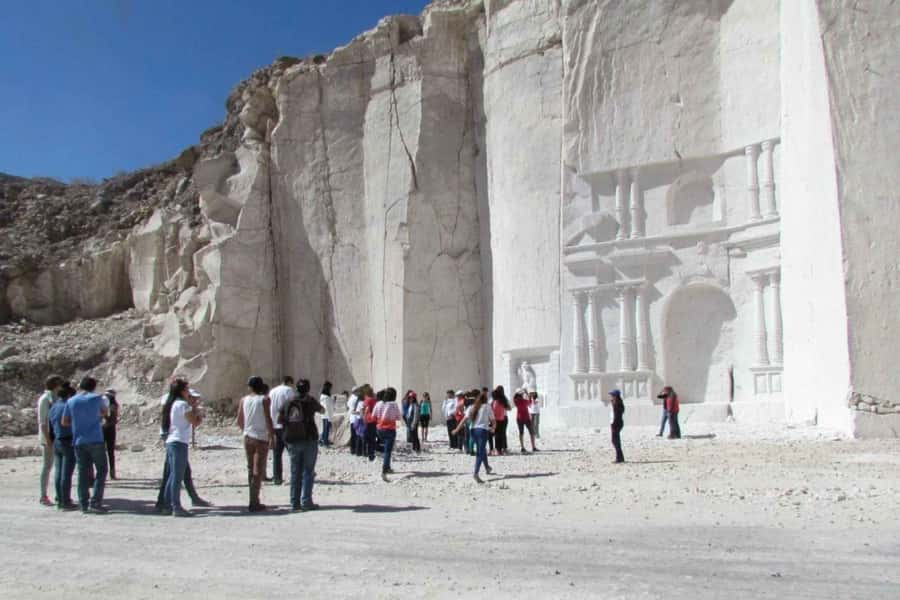
- Mega carving of the Church of the Company of Jesus is made by the quarry stonemasons
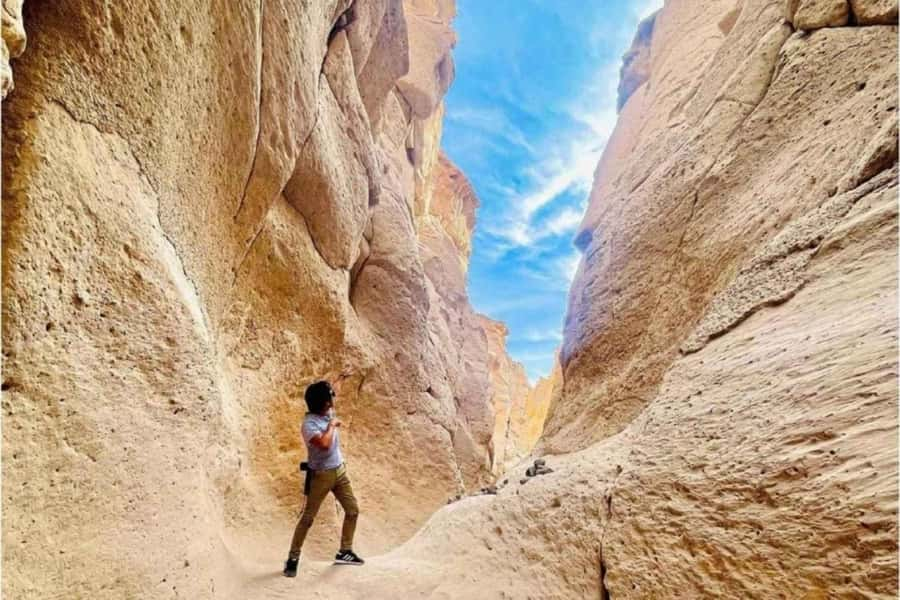
- Culebrillas is a short canyon walk (about 20 minutes) with towering 15–20 meter walls
- Wari petroglyphs show up at the end of the canyon interior walk
- Apachetas are included—stacked stones tied to gratitude and good luck
- It’s a tight 4-hour loop, so you get highlights without losing a whole day
The best part: a stone-and-canyon loop in just 4 hours
This tour works because it does two things Arequipa does well: it shows you the region’s famous stone, and it gives you a canyon moment that feels older than the city. You start with viewpoints over volcanoes and the Chilina Valley, then you move straight into quarry life—where sillar/ashlar is cut into the blocks that build Andean towns. After that, you shift gears to the Quebrada de Culebrillas, where water carved the canyon and people left marks long ago.
What makes it “worth your time” is the pacing. You are not stuck in one place for hours. You get a quick transfer, a focused visit at the quarry, a short canyon walk, and then you head back to Arequipa by early afternoon.
Do note one thing: the name includes hiking, but the walking portion is brief. The main physical effort is the interior canyon section (around 20 minutes), plus time on your feet at viewpoints and quarry areas. If you want a long trek with sustained elevation gain, you might feel this is too short.
Also, keep your expectations realistic about audio. A small number of past bookings reported that the guide’s microphone was hard to hear at times. If you rely heavily on spoken details, bring a good attitude and be ready to catch the key points.
Meeting at 09:15: viewpoints over volcanoes and the Chilina Valley
You begin at 09:15 and head toward the Ruta del Sillar, a route tied to quarries and the living culture around them. The first stop is a strategic viewpoint point with a brief pause. From here, you can see the volcanoes and the Chilina Valley—useful because it gives you scale before you step into the stone world.
Depending on the time of year, the tour may swap in another traditional viewpoint that also highlights the volcanoes. That’s a small detail, but it matters. It means the “best angle” can change with seasonal conditions, and you might get different sightlines even on the same route.
In practice, this segment is about getting oriented. You learn what you’re looking at—volcano presence, the valley shape, and the general geography that makes sillar extraction possible. It’s the kind of opening that makes the rest of the tour click faster, because you’re not just reading about the area—you’re seeing why it matters.
If the sky is clear, this is also where photos come easiest. If it’s hazy or windy, the viewpoint can still be beautiful, but you may need patience for sharp visibility.
Añashuayco Quarry: active sillar cutting, a canyon of ignimbrite walls, and a mega carving
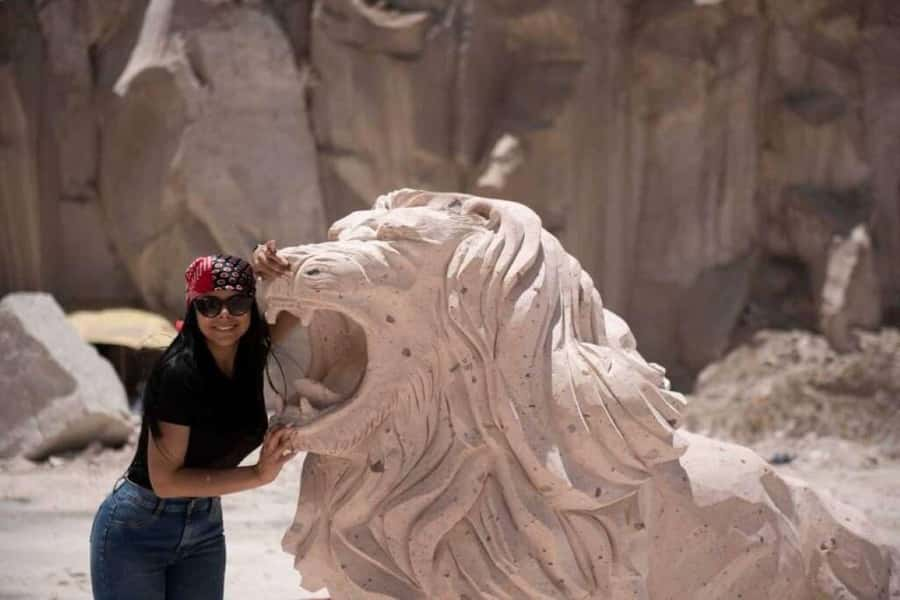
After about 45 minutes of travel, you reach Añashuayco Quarry. This is the stop that turns “Arequipa stone” from a fact into a scene. The quarry is currently in operation, and stonemasons work very early—so you see real labor, not just a staged demonstration.
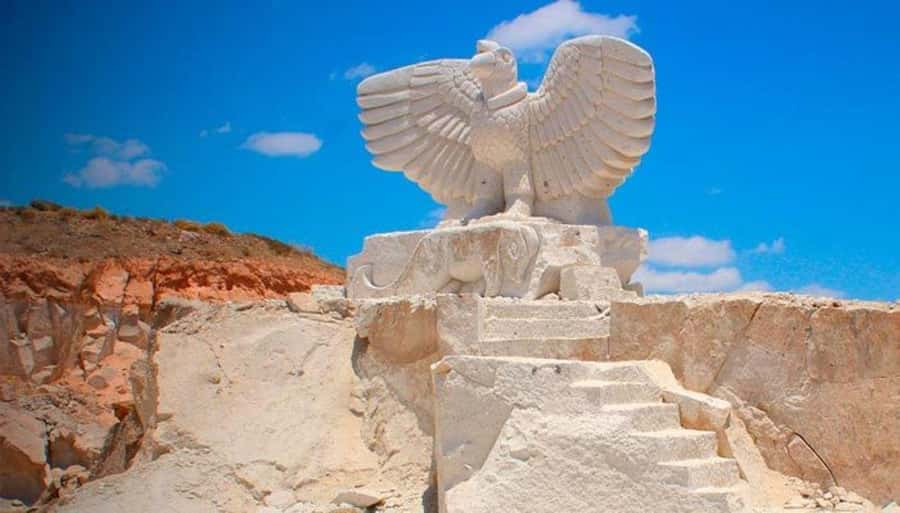
The quarry itself is dramatic. You’ll look out over an immense canyon with cliffs—ignimbrite walls—formed by the extraction of ashlar (the stone behind Arequipa’s sillar). You’ll also hear the history of ashlar production and the uses it’s had over time. Even if you’ve seen sillar photos before, standing at the quarry edges helps you understand how the material shapes what’s possible in local building.
One of the most specific highlights is the Mega carving of the Church of the Company of Jesus. It’s created by the same stonemasons in the quarry, which makes it more than a decorative moment. It shows how carving skill, daily work, and local identity can overlap in one place.
And there’s a hands-on element. You can visit a stonemason to hear about daily work, and the tour offers the chance to try cutting one of the stone blocks yourself. You shouldn’t expect a full sculptor training session in a 4-hour outing, but you will get a real feel for how precise cutting has to be—especially when you’re working with heavy stone.
What could be a drawback here? It’s an operating worksite. That means you’ll want comfortable shoes and a bit of caution around edges. Also, because the stonemasons work early, the timing matters—showing up on time helps you see more of the real activity.
The Culebrillas canyon walk: 15–20 meter walls, water carving, and Wari petroglyphs
Next you transfer about 30 minutes to Quebrada de Culebrillas. Here you take a walk of around 20 minutes through the interior of a small canyon formed by water passage. The canyon walls are about 15 to 20 meters high, and as you go deeper, they rise taller around you. Even on a short walk, that “being inside the canyon” feeling changes how the area reads.
At the end of the interior walk, you’ll see petroglyphs made by the Wari culture, reportedly more than a thousand years old. This is the stop that adds an “ancient human layer” to the stone and industry theme. You’re not only seeing how people work stone. You’re seeing how people marked and communicated in the landscape long before the modern quarry era.
Is it hard hiking? Not really. The time and distance are short, and the experience is more about the canyon setting than athletic challenge. Still, you are moving inside a canyon space, so you’ll want good footing and a watchful pace, especially if the ground is uneven.
One more practical note: since this is a photogenic canyon interior, it can feel busy at times. If you truly want the history, keep your ears open and ask your guide to point out key details in the petroglyph area before everyone drifts toward photo spots.
Apachetas at the end: gratitude stones and the good-luck moment
Before heading back toward the city, you’ll stop to observe Apachetas. These are stone formations stacked one on top of the other. The tour frames them as a symbol of gratitude toward nature and also a cultural attraction tied to good luck, with a slightly mystical vibe.
This is a small stop, but it’s one of the reasons the tour feels more “cultural” than purely scenic. The Apachetas give you a moment to slow down after the canyon walk. It also reinforces a big idea: in this region, landscape isn’t only something you look at. It’s something people respond to with ritual and meaning.
You may not stay long, but that’s part of the value of the 4-hour structure. You get the quarry scale, then the canyon interior, then the human meaning. It’s a clean arc.
If you’re the type who likes short cultural pauses, you’ll appreciate this. If you only want movement and views, you may treat it as a quick photo break.
Price, tickets, and how good value usually feels on the ground
The tour price is $20 per person for a 4-hour excursion, including tourist transport and a professional guide. On paper, that is fair for a half-day that covers multiple sites with a quarry worksite plus a canyon stop.
But here’s the key value detail: entrance fees are separate. You’ll need an entrance ticket to the places for 10 soles (not included). Budgeting for that prevents a last-minute surprise and keeps the math honest.
So is it good value? In my view, it’s strongest if you want:
- a guided explanation (not just wandering),
- a quarry stop with real working stonemasons,
- and a short canyon walk with petroglyphs.
If you’re mainly hunting Instagram-style views, the tour may feel a bit “surface-level,” especially at the more commercial viewpoint and quarry areas. One of the past disappointments tied to expectations was that it did not always feel like a deeper spiritual or ancient-focused experience at the sillar route. Still, Culebrillas aligned better with what people expected from a canyon day.
Also, watch for potential variation in guide delivery. A small set of bookings complained about nervousness and heavy accent making the microphone hard to understand. That’s not universal, but it’s a fair consideration if you rely on the spoken history for your enjoyment. Picking any departure time that gives you the best light for photos can help you enjoy even if narration comes in fragments.
Who this tour suits best (and who might want a different day plan)
This outing fits you if you’re in Arequipa for a first visit and want a fast, structured way to see two different worlds: quarry craftsmanship and canyon spirituality/archaeology (petroglyphs plus Apachetas). It’s also a good match if you like learning by seeing—how the stone is cut, where it comes from, and how people have used it.
You’ll probably enjoy it even more if you like hands-on moments. The quarry visit includes the chance to cut a stone block, and that kind of experience sticks better than photos alone.
I’d think twice before booking if you want long hiking. The tour includes a brief interior canyon walk, but most of the day is movement between highlights rather than extended trekking.
One more “real life” note: there was one report that a tour did not take place at all. That’s rare, but it’s why I recommend you confirm timing details on your day and arrive early at the meeting point. Most tours run fine, but you should protect yourself.
Should you book Sillar Route with Hiking in Culebrillas?
Yes, if you want a half-day that mixes working quarry views, a canyon interior, and cultural stops without eating your whole day. At $20, plus a 10-sol fee for entry, it’s a practical value choice when you want variety and guidance.
Book it if:
- you want active stonemason quarry life at Añashuayco,
- you want to see Wari petroglyphs in Culebrillas,
- and you’re happy with a short walk rather than a full hike.
Consider skipping or swapping tours if:
- you want serious hiking time,
- you’re very sensitive to clear audio narration,
- or you’re expecting a highly “ancient/spiritual” experience at every stop rather than a mix of craft, commerce, and culture.
FAQ
FAQ
How long is the Sillar Route with Hiking in Culebrillas excursion?
It’s a 4-hour tour. You start around 09:15 and return to Arequipa by about 13:30.
What sites do we visit during the tour?
You visit the Ruta del Sillar area, including Añashuayco Quarry, then Quebrada de Culebrillas for the canyon walk, and you also stop to observe Apachetas.
Is hiking actually part of this tour?
There is a walking portion of about 20 minutes inside the Culebrillas canyon interior. The rest of the experience includes viewpoints and visits around the quarry.
What is included in the tour price?
The price includes tourist transport and a professional guide.
Are entrance tickets included?
No. Entrance tickets to the places cost 10 soles and are not included.
What can I see at Añashuayco Quarry?
You can see the quarry canyon with tall cliffs formed by ashlar extraction, learn about ashlar production and use, and you’ll see a mega carving of the Church of the Company of Jesus. There’s also a chance to meet stonemasons and try cutting a stone block.
Do we see ancient artwork on the tour?
Yes. In Culebrillas, you see petroglyphs made by the Wari culture, described as more than a thousand years old.
What languages is the guide available in?
The tour guide provides live commentary in English and Spanish.
If you want, tell me your travel dates and whether you prefer more walking or more history talk, and I’ll help you decide if this pace fits your Arequipa day.