REVIEW · KALAMATA
Ridomo Gorge hike to MANA spring
Book on Viator →Operated by 2407 Mountain Activities · Bookable on Viator
Ridomo Gorge feels like a secret portal. What makes it special is the way West Mani turns geology into an actual walk—stratified rock bands, strong color, then a green, cooler canyon feel as you go. I really love the small group size (max 6) because it keeps the hike calm, and I also love the helmet and first-aid setup because you’re not guessing about safety on the rockier moments. The only real catch: this is not a stroll, so you’ll want good boots and comfort with a few short climbs inside the gorge.
You start with a short drive up from Kardamyli to the village area where the hike begins, then you head downhill into Ridomo Gorge with an experienced guide-first-aider. Guides like Smaro and Yanis are known for explaining the gorge’s geology and local history while giving practical tips for where to place your feet.
One more consideration: the tour is built for moderate physical fitness, and the timing depends on good conditions in the canyon. If you’re sensitive to uneven ground, you may find the middle rocky section a bit of a workout.
In This Review
- Quick hits
- Ridomo Gorge to MANA spring: what makes it worth your half day
- The ride from Kardamyli to the gorge start (and why it matters)
- Heading downhill into Ridomo Gorge: geology, colors, and the “fairies” feeling
- The rocky middle: helmets, first-aid guidance, and how you’ll handle climbs
- MANA spring and the gorge’s final stretch toward the bay
- Guides that actually explain what you’re walking on
- Who should book (and who should be cautious)
- Price and value: what $118.95 buys you in practice
- What to bring (so the rocky bits don’t surprise you)
- Timing, weather, and how to plan your day in Mani
- Should you book Ridomo Gorge hike to MANA spring?
- FAQ
- What is the duration of the Ridomo Gorge hike to MANA spring?
- How much does it cost?
- Is the group small?
- What’s included in the tour price?
- Where does the tour start and end?
- Do I need a specific fitness level?
Quick hits
- Max 6 travelers keeps the pace friendly and makes it easier for the guide to help hands-on.
- Helmets + first-aid guide gives real confidence on exposed or rock-hopping sections.
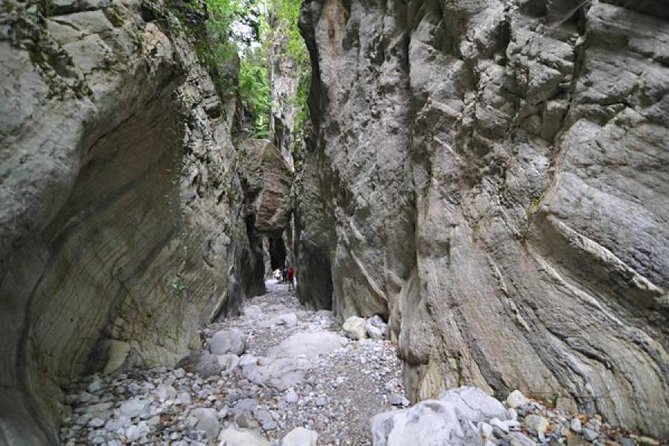
- Ridomo’s geology is the star: visible rock stratification and bold color bands as you hike.
- Downhill start from Vorio means the first part sets the canyon mood fast.
- Guides share practical climbing tips for larger rocks and small climbs in the gorge.
- No food included so you’ll want to plan what you’ll eat before and after.
Ridomo Gorge to MANA spring: what makes it worth your half day
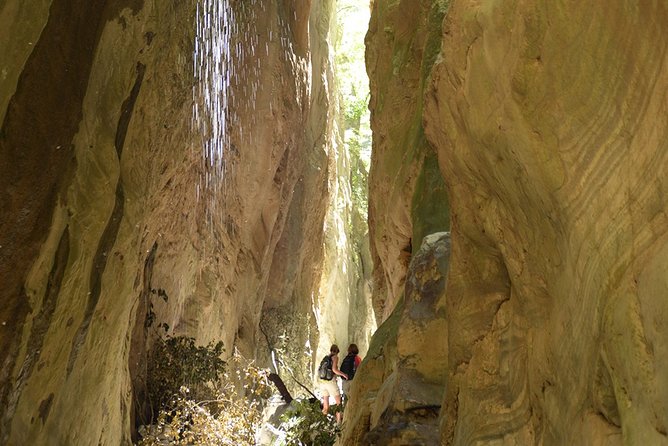
This hike is one of those Mani experiences where the scenery isn’t just pretty—it’s readable. Ridomo Gorge runs from the Taygetos ridgeline down toward the Messinian Bay, shaping the western boundary of Mani all the way down toward Sadova beach. On the walk, you’ll see the gorge’s geology in a very direct way: rock layers stacked like pages, then shifts in color that make the canyon look almost painted.
What you’re really buying with this tour is structure. You’re not going in blind. An experienced guide-first-aider leads the way, and the safety kit (including helmets) means the walk is handled like a real activity, not a casual ramble. That changes how you experience the tricky bits—you can focus on balance and footing without worrying about whether the group is prepared.
And yes, there’s a little mystique in the way the canyon feels when you drop in. The route is described as an almost mystical descent, like stepping into a land of fairies. I can’t promise it will feel mystical in the same way for everyone, but I can tell you the mood is real: the canyon narrows, the light shifts, and the colors against the greenery can feel otherworldly.
The ride from Kardamyli to the gorge start (and why it matters)
The day begins back at the Kardamyli meeting point (Kardamyli 240 22, Greece). From there, you’ll take a vehicle transfer—about 30 minutes—up to Vorio village, where the hiking portion starts.
This matters more than it sounds. Getting up to the trailhead means you’re not spending your energy on long approaches. You’re also starting close enough to the canyon that the hike feels connected and efficient. The whole tour comes in around 4 hours 30 minutes, including that transfer.
Also, the transfer is not a hassle to plan yourself. Return transport is included, so you don’t end up coordinating rides after the hike. For many hikers, that alone makes a half-day outing feel smooth.
Heading downhill into Ridomo Gorge: geology, colors, and the “fairies” feeling
Once you reach Vorio, the walking begins with a downhill trek to the riverbed. That transition is where the gorge starts doing its magic. As you descend, you’re moving from ridge-side light into canyon shade, and the rock layers become easier to read. Stratification isn’t just a concept here—you can spot it as you go, with bands of rock that show how the place formed over time.
The tour description also emphasizes a strong rock color palette paired with greenery. It’s not just “pretty canyon time.” The canyon is a mix of geology and plant life, and it’s the guide’s job to help you notice both. Some guides are particularly focused on explaining the gorge’s features and what you’re looking at—so even if you’re not a geology person, you’ll still come away knowing what’s special.
I’d expect a steady pace with a few moments where you pause, look, and then move again. This isn’t a “race through the gorge” kind of outing. It’s designed to be enjoyed.
The rocky middle: helmets, first-aid guidance, and how you’ll handle climbs
Even with all the beauty, Ridomo Gorge includes sections that require real attention. One of the most consistent bits of practical advice from the guide-led nature of this experience is this: you need solid hiking boots. The trail is described as challenging in places, and there are a couple of small climbs in the middle rocky section.
The good part is that you’re not thrown in alone with a “good luck” attitude. This is where the experienced first-aid guide and the safety equipment show their value.
Guides are known for:
- helping you climb larger rocks
- offering tips for moving through the gorge efficiently
- being patient when a spot feels awkward
If you’ve ever watched someone cross a tricky section and thought, I wish someone would show me where to put my feet, this is that moment. The tour is built around guided technique—so you learn a better way to step, not just a destination.
And because the group is capped at 6, the guide can usually see exactly who’s struggling and who’s cruising.
MANA spring and the gorge’s final stretch toward the bay
Your hike is specifically described as going to MANA spring. The gorge itself runs down toward the Messinian Bay, and the bigger geographic picture ends near Sadova beach. So even if you don’t treat this like a “long destination walk,” you’re still moving through the gorge in the direction of the sea.
Here’s how I’d frame this for you: MANA spring is the trip’s purpose, and the gorge is the journey. As you approach the spring area, the canyon character changes—less about the first steep descent feeling and more about finishing the day with that payoff you came for.
Photo opportunities tend to peak when:
- the gorge opens for a moment
- rock layers become more visible again
- greenery and canyon walls frame you from different angles
Don’t overpack for the photo moments, though. This is still a hike with rock footing. Bring what you need, keep your steps deliberate, and let the scenery come to you.
Guides that actually explain what you’re walking on
One reason this hike earns top marks is the people leading it. In the supplied accounts, you’ll see names like Smaro, Yanis, Sotiria/Sotiras, and Jorge tied to standout guiding. The consistent theme across them is knowledge plus practical help.
Some guides focus on:
- geology of the gorge, including what the rock layers mean and why the canyon looks the way it does
- local history tied to different points in the walk
- plants and the kind of environment you’re moving through
- real-time technique for crossing rough sections
I like this combination because it keeps the hike from turning into a lecture. You walk, you stop, you learn, you move again. And if you’re hiking for the first time in Greece’s interior, that approach gives you context without slowing the day into boredom.
Who should book (and who should be cautious)
This is for you if:
- you want a guided gorge walk in West Mani
- you enjoy understanding what you’re seeing (geology, plants, local context)
- you want a manageable half-day, not an all-day endurance trek
- you’re okay with uneven ground and short climbs
This is where I’d be cautious if:
- you’re expecting something like a flat countryside path
- you don’t feel comfortable with rocky footing, even with help
- you’re traveling with limited mobility and you’re unsure how you’ll handle irregular steps
The good news: the tour is built for a range of ages. One example mentioned a group age range from 6 to 70 with guidance that helped everyone handle the hike at their level. Still, the physical requirement is listed as moderate, so go in honestly.
Price and value: what $118.95 buys you in practice
At $118.95 per person for about 4 hours 30 minutes, this isn’t the cheapest way to enjoy the Mani. But it’s also not just “a guide holding a leash.” You’re paying for a package that includes:
- an experienced guide and first-aider
- helmets for safety
- free transfer to and from the starting point
- a small group capped at 6
When I evaluate value, I look at how much friction you avoid. In this case, you avoid planning transfers, you avoid going without safety equipment, and you avoid being one of a crowd trying to get help on a rocky step. That’s real money-saving convenience.
Also, food isn’t included. So your cost is the tour fee plus your own pre/post-hike snack plan. If you show up fed and carry what you need for hydration, the overall cost feels more reasonable because you’re not paying for two trips.
What to bring (so the rocky bits don’t surprise you)
The tour details don’t list specific gear beyond safety equipment you’ll receive, but the hiking demands come through clearly in the guidance. I’d pack for comfort and footing:
- Hiking boots with grip (strongly recommended from the practical advice shared)
- Water (since food/drinks aren’t included)
- A light layer for the canyon shade changes
- Sun protection if the day starts bright before you drop into the gorge
If you’re the type who brings everything “just in case,” keep it light. You’ll be moving through uneven terrain, and anything bulky becomes a nuisance.
Timing, weather, and how to plan your day in Mani
This experience requires good weather. Since you’re walking in a gorge, conditions can matter for footing and comfort. If the hike gets canceled due to poor weather, you’ll be offered a different date or a full refund, which is helpful if your Mani itinerary is flexible.
Plan your day like this:
- Put the hike earlier rather than later if you can.
- Leave time after for a relaxed meal and rest.
- Don’t stack your schedule with another complicated activity that same day, since you’re doing a hike with uneven terrain.
The whole tour runs about 4.5 hours, so it’s a great half-day anchor if you want to balance active time with downtime.
Should you book Ridomo Gorge hike to MANA spring?
Book it if you want a real guided gorge experience in West Mani, with safety equipment, a small group, and guides who explain the place—not just point at it. It’s a good choice when you value technique and context: helmets and a first-aid guide on one side, and geology/history/plant info on the other.
Skip it (or reconsider) if your idea of fun is smooth paths and zero climbs. Even with help, this is still a hike through a rocky canyon. And remember: no food or drinks are included, so you’ll want to handle that yourself.
If you’re curious about Ridomo Gorge and you like the idea of finishing at MANA spring, this tour is a solid way to do it without guesswork.
FAQ
What is the duration of the Ridomo Gorge hike to MANA spring?
The hike takes about 4 hours 30 minutes (approx.), including the time for the drive to the start of the hike and back.
How much does it cost?
The price is $118.95 per person.
Is the group small?
Yes. This activity has a maximum of 6 travelers, so it stays small.
What’s included in the tour price?
You get helmets, an experienced guide and first-aider, and free transfer to the starting point and return. Food and drinks are not included.
Where does the tour start and end?
It starts at Kardamyli 240 22, Greece, and the activity ends back at the meeting point.
Do I need a specific fitness level?
You should have moderate physical fitness. The route includes downhill walking and some rocky sections with small climbs.