REVIEW · WAIKOLOA VILLAGE
MaunaKea Summit SUNSET and Star Tour with Photo
Book on GetYourGuide →Operated by Hawaiian Eyes Tours · Bookable on GetYourGuide
Mauna Kea turns the sky into science class. This 8-hour 4×4 sunset and stars tour takes you to the summit for sunset and then down for stargazing around 12,000 feet. I love that you get free DSLR photos taken by the guides (delivered to your smartphone), and that you’re outfitted for the cold, even though weather and moon phase can affect what you see.
On the drive up, guides like Yoki John and James mix Big Island history with practical altitude tips, and they keep an eye on everyone. You’ll start with an easy pickup, acclimate at the Mauna Kea visitor area, then do a guided photo session before you switch gears to telescope viewing with a laser pointer.
In This Review
- Key things I’d watch for on this Mauna Kea sunset + star tour
- Why Mauna Kea sunset feels different than any other Hawaii sky
- Pickup, van ride, and how you avoid the boring part of the trip
- Onizuka Visitor Information Station: the acclimation pause that actually helps
- Warm-weather gear: what’s included, and why it matters at 13,800 feet
- The summit road: your photo session starts before the sun drops
- Sunset at the summit: what you’re really paying for
- After sunset at about 12,000 feet: telescope time with a laser pointer
- Food and comfort: BLT sandwich and hot drinks at altitude
- Price and value: what $280 covers on Mauna Kea
- Safety and who should reconsider this tour
- Tips to get the best night sky photos (without becoming a photographer)
- Should you book Hawaiian Eyes Tours for Mauna Kea sunset and stars?
- FAQ
- What is the duration of the Mauna Kea Summit Sunset and Star Tour?
- What time do you reach the summit for sunset?
- Are the sunset and star photos included, and how do I receive them?
- Is entry inside the observatories included?
- What food and drinks are included?
- What should I bring and wear?
- Can I cancel and get a full refund?
Key things I’d watch for on this Mauna Kea sunset + star tour
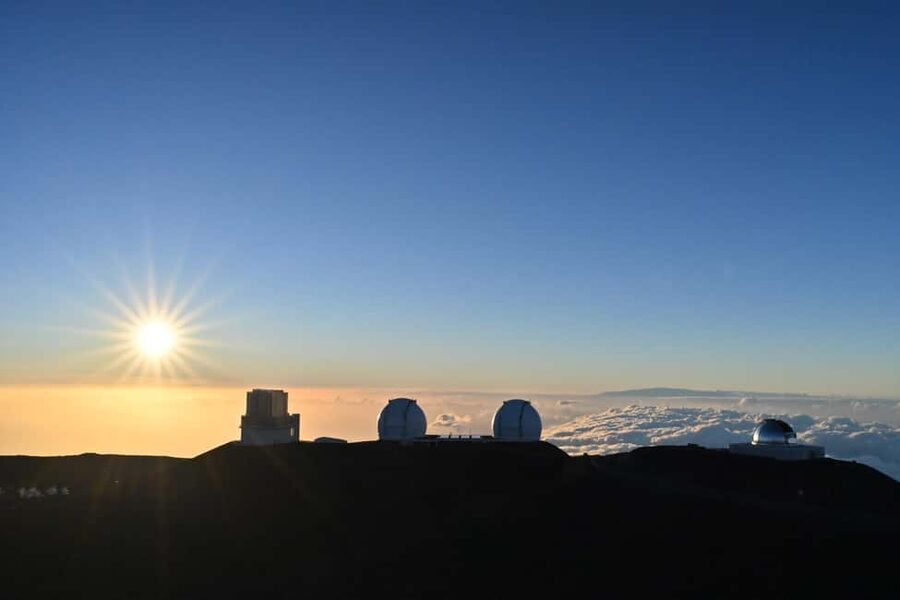
- 4×4 summit timing: you reach the summit about 60 minutes before sunset
- Free pro photos: guides shoot with a DSLR and send images to your phone at the end
- Cold-weather gear provided: snow parkas, ski pants, and gloves are included
- Stargazing at lower altitude: after sunset, you head down to about 12,000 feet for telescope time
- Telescope + laser pointer: you get help locating planets, stars, and celestial objects
- Guides focused on safety: oxygen equipment is carried for emergencies, and altitude pacing can adjust
Why Mauna Kea sunset feels different than any other Hawaii sky
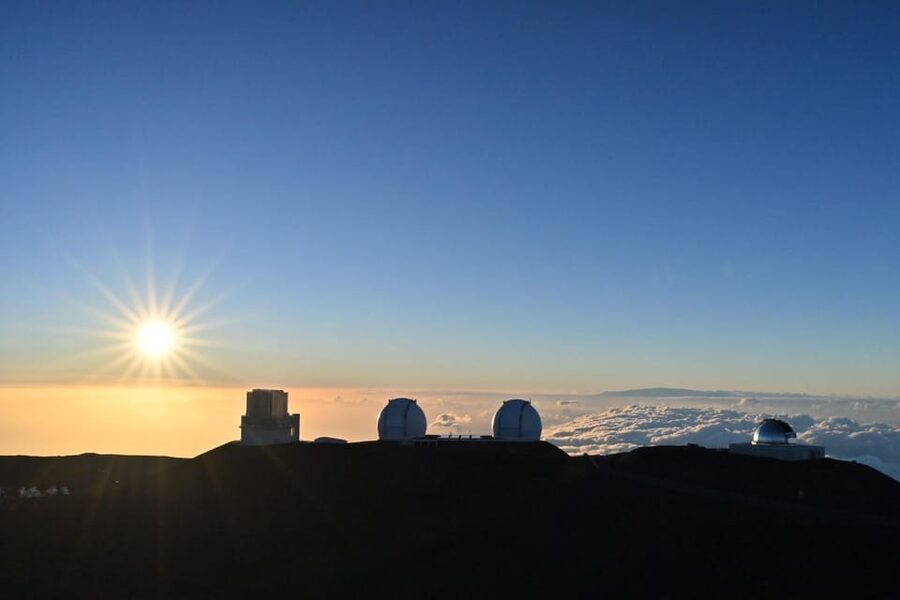
Mauna Kea has one big advantage: elevation. At the summit and in the dark, the air is thin, the sky gets crisp, and you’re less likely to feel like you’re staring at washed-out stars. Even if you’ve seen photos of the Milky Way from elsewhere, the real thing tends to hit harder when you’re this high and away from city lights.
This tour is built around timing. You’re not just “up there sometime.” You reach the summit before sunset, then swap to stargazing after dark. That structure matters because sunset is about the show in front of you, while stargazing is about visibility after the sky fully darkens.
The other reason I like this setup: you’re guided. On a clear night, a telescope and a laser pointer can turn the sky from random dots into named objects you can actually follow.
Pickup, van ride, and how you avoid the boring part of the trip
Your day starts with an easy meet-up. Depending on what you booked, you’ll gather at either McDonald’s or Queens’ Marketplace (Waikoloa area). Then you ride in a van toward Mauna Kea.
You should expect a travel rhythm rather than a rushed sprint. There’s time built in for the visitor center stop and acclimation, so the trip doesn’t feel like a straight line from parking lot to summit. The van ride also gives your guide time to share Mauna Kea and Hawaii context, including volcanic history and what you’ll likely notice later at night.
One small but real win: guides often handle the “what do we do now?” moment. In the past, guides such as Wes and Francis were praised for being organized and staying attentive to the group, which helps when everyone’s cold, tired, and altitude-aware.
Onizuka Visitor Information Station: the acclimation pause that actually helps
You stop at the Mauna Kea visitor information area (often referenced as the Onizuka Visitor Information Center) and you’ll get a break plus time to acclimate. This is not the time to sprint around for photos. The tour gives you around 45 minutes to settle in, use facilities as needed, and get used to the altitude.
This stop also gives you practical benefits:
- You can shop in the visitor center gift area if you want.
- You can check your gear and get fully dressed before the summit push.
- You get a chance to mentally switch from beach vacation mode to mountain mode.
If altitude has ever gotten to you before, this is the part of the day that makes a difference. Multiple guides on this tour style themselves around safety and altitude monitoring, and that usually starts here with pacing and check-ins.
Warm-weather gear: what’s included, and why it matters at 13,800 feet
The summit is cold. Not a mild-cold kind of day. The tour provides snow parkas, ski pants, and gloves, so you’re not guessing what to wear in “possible snow” weather.
I like that it’s handled for you because it removes the most common planning problem. People arrive thinking they packed enough layers for a breezy sunset, then realize the summit is a whole different temperature game.
You still need to show up ready. The tour asks for closed-toe shoes. That’s your responsibility. Everything else is mainly about letting the guides do the outfitting so you can focus on enjoying the sky.
The summit road: your photo session starts before the sun drops
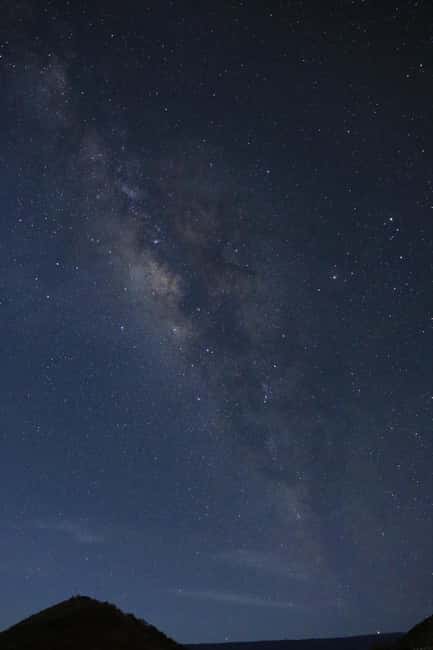
You head to the summit in a 4×4 vehicle and arrive roughly 60 minutes before sunset. That early arrival is a smart move. It gives time for positioning, adjusting your camera phone settings, and taking that first big breath of high-altitude air.
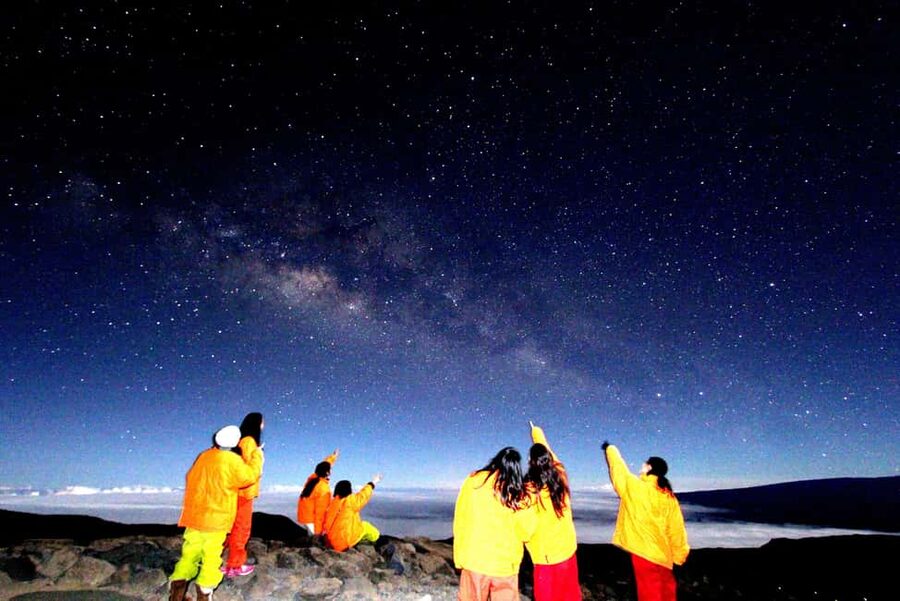
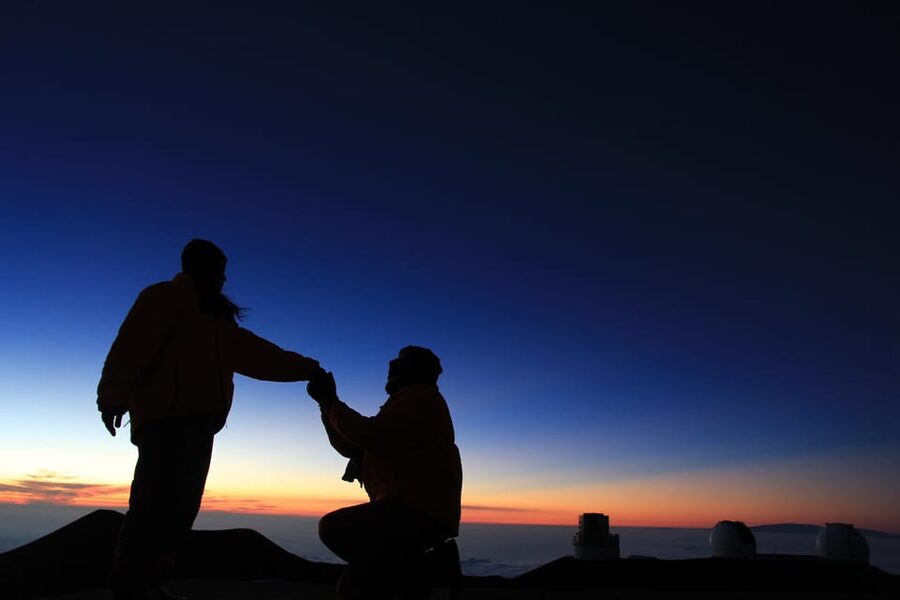
This is also when the guided DSLR photo session happens. Guides take photos of you at the right moments at the summit, and those images are free. The promise here is simple: you get the photos sent to your smartphone at the end of the tour.
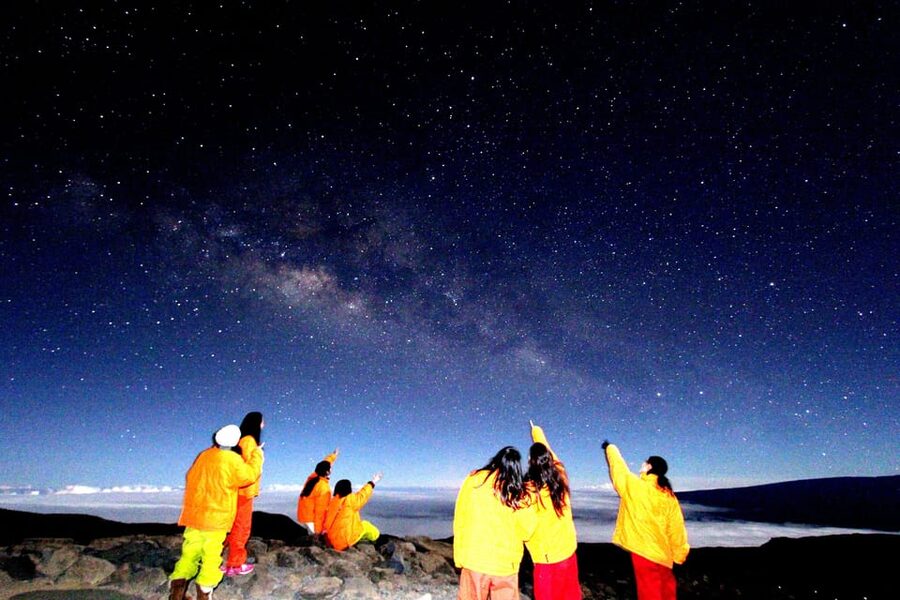
Pose time can feel awkward for a minute, but it’s the trade-off for not having to figure out angles in extreme cold. Guides are clearly used to coaching people fast. They’re also praised specifically for photography quality, including moments with the Milky Way background later on, when conditions are favorable.
Also note: timing can shift. Weather, cloud cover, and other site conditions can change when you reach the summit view or when stargazing happens. That’s normal on Mauna Kea, and it’s part of why this experience is run with flexibility.
Sunset at the summit: what you’re really paying for
Sunset here isn’t just pretty. It’s a change in atmosphere and visibility. As the sun drops, the lighting shifts and the sky transitions from golden and hazy to clear and dark. That creates the “wow” moment people remember because you can feel the world darken while you’re standing on the highest point in Hawaii.
Guides often add context while you wait—volcano talk, island history, and what to look for as darkness arrives. People mention guides like James and Josh for staying attentive, keeping the mood lively, and making sure everyone’s okay while they’re waiting for the main sky moment.
One more thing I appreciate: you’re not just standing still. You’ll also stop for scenic views and photo stops on the way up. It breaks the drive into smaller experiences, which matters when your legs and hands are busy staying warm.
After sunset at about 12,000 feet: telescope time with a laser pointer
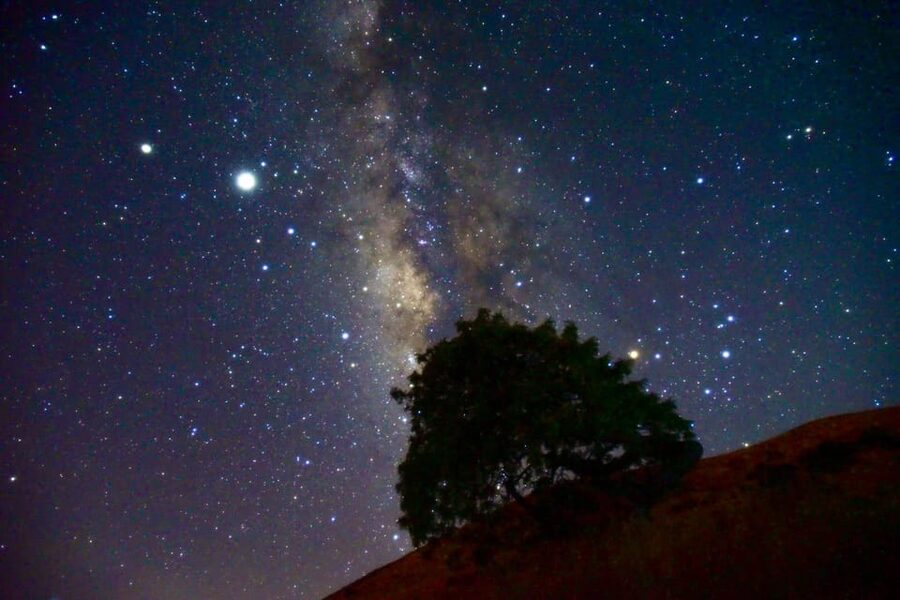
Once the sun is gone, the tour heads back down to around 12,000 feet for stargazing for about an hour (the exact timing can vary with conditions). This lower altitude can make the night feel more manageable than the summit, while still keeping the sky sharp.
Here’s what you get during stargazing:
- A refractor telescope for viewing celestial objects
- A laser pointer to help you match what you see to what the guide explains
- Explanations about constellations and other sky targets
- A hot drink for comfort while you look up
This portion is frequently praised because it turns “I hope the stars are good” into something interactive. You’re not stuck guessing what you’re seeing. People also mention seeing Saturn through the telescope during at least some tours, and lots of excitement about seeing the Milky Way in strong dark-sky conditions.
If you’re the kind of person who enjoys learning, this is where the tour earns its keep. The guide’s job is to connect the sky to names and patterns you can take home in your memory.
Food and comfort: BLT sandwich and hot drinks at altitude
At the visitor area or around the summit window, you’ll get a light meal—a BLT sandwich. There’s an option for veggie sandwiches if you send a message ahead of time for dietary restrictions. Bottled water is included.
During stargazing, you’ll get a hot drink. Many people specifically call out hot chocolate, which makes sense at night when hands and breath turn into visible little clouds.
A practical note: sandwich texture can get less fun when everyone’s bundled up and timing is tight. You’ll likely eat fast, move carefully, and keep an eye on the cold. If you want this part to go smoothly, eat early enough that you’re not fighting temperature and hunger right at the summit.
Price and value: what $280 covers on Mauna Kea
$280 sounds steep until you break down what’s included. You’re paying for a lot of real logistical work:
- admission fee to Mauna Kea
- transportation up to the summit in a 4×4 passenger van
- cold-weather gear (parka, ski pants, gloves)
- a telescope stargazing setup
- an oxygen tank carried for emergency use
- and the big one for most people: free DSLR photos that you receive on your smartphone
If you were to do this on your own, the hardest parts aren’t just tickets. It’s the coordination: getting to the summit at the right time, dealing with gear, and finding a guide who can help you read the sky once it’s dark. This tour bundles those needs into one day.
My take: it’s good value for couples, small groups, and anyone who wants to maximize the sunset-to-stars sequence without juggling details. If you’re the DIY type and you already know how you’ll handle timing, clothing, and the astronomy side, you might question the price. But most people choose this tour because the whole day runs smoother than planning it yourselves.
Safety and who should reconsider this tour
Mauna Kea asks more of your body than a typical island outing. This tour has clear limits: no participants under 16 and no one over 70 (and it also lists other restrictions such as pregnancy, respiratory issues, wheelchair use, back problems, claustrophobia, recent surgeries, and people over 300 lbs).
The tour also warns that altitude issues can happen, and the time at the summit or stargazing location may be adjusted if someone needs it.
I’d take those rules seriously. If you’ve had altitude sickness before, you should plan carefully and consider whether you’re comfortable with high elevation. On this tour, the guide experience level shows in the attention to check-ins, but no one can erase altitude entirely.
Also, the tour is not set up for observatory visits. No entry inside the observatories is part of the experience.
Tips to get the best night sky photos (without becoming a photographer)
Even if you’re not bringing a camera, this tour is friendly for “I just want the moment” travelers because the guides handle the DSLR shooting. Still, you can improve your odds of a great result and a smoother night.
Here’s what helps:
- Wear closed-toe shoes and keep your feet warm and stable for cold ground.
- Expect posing at the summit. Your guide will take the main photos, but being ready makes the session faster.
- Keep an eye on cloud cover and moon phase. The tour notes that stargazing visibility can change with weather and moon conditions.
- Be ready for schedule changes. Sunset and stargazing timing may shift depending on events and weather.
One more smart move: don’t fight the process. The guides are working a tight sequence—summit timing, then telescope time. If you follow their lead, you’ll spend more time looking up and less time worrying about what happens next.
Should you book Hawaiian Eyes Tours for Mauna Kea sunset and stars?
If you want the classic Mauna Kea experience with minimal stress, I think this is a strong choice. The biggest reasons are practical: you get summit timing, warm gear, a guided telescope session, and free pro DSLR photos delivered to your smartphone. That combination is hard to reproduce solo without a lot more planning.
I’d book it if you’re:
- traveling with limited time on the Big Island
- excited to see planets and constellations through a telescope
- the type who wants someone to handle gear, pacing, and the “when do we do what” parts
I’d skip or think twice if you’re in the “not suitable” category, or if altitude is a major concern for you. And go in knowing that clear skies are the goal, not the guarantee—weather and moon phase can change how dramatic the star field looks.
Bottom line: this tour is built for people who want to trade planning headaches for a smooth, guided day where sunset and stars both get their moment.
FAQ
What is the duration of the Mauna Kea Summit Sunset and Star Tour?
The tour runs for about 8 hours.
What time do you reach the summit for sunset?
You arrive at the summit about 60 minutes before the sunset time.
Are the sunset and star photos included, and how do I receive them?
Yes. The tour includes a free DSLR photo package of you during sunset and stargazing, and you receive the photos on your smartphone at the end of the tour.
Is entry inside the observatories included?
No. The tour notes that there is no entry inside the observatories.
What food and drinks are included?
You receive a BLT sandwich (with a veggie sandwich option if you message in advance for dietary restrictions), bottled water, and a hot drink during the stargazing.
What should I bring and wear?
You should wear closed-toe shoes. The tour provides warm weather gear including snow parkas, ski pants, and gloves.
Can I cancel and get a full refund?
Yes. The tour offers free cancellation up to 24 hours in advance for a full refund.