REVIEW · QUEPOS
Manuel Antonio National Park guided tour
Book on Viator →Operated by Diego Nature Tours · Bookable on Viator
Animal spotting in Manuel Antonio beats guessing. With Diego Nature Tours and a licensed guide you’re not just wandering trails. You’re hunting wildlife with help—then using telescopes to get everyone great looks and photos.
I especially like how the tour turns Manuel Antonio into a real wildlife checklist, with sloths, monkeys, toucans, and reptiles you often miss on your own. One thing to plan for: the park is popular, so you can’t fully avoid crowds once you’re inside.
What I love next is the pacing. It’s about two hours, so you get the best guided spotting, then you can stay afterward to hike more or head to the beaches. It’s a small group too, so the guide can keep moving you toward sightings without turning it into a chaos line.
In This Review
- Key Highlights You’ll Care About
- Why Manuel Antonio Works So Well for Wildlife
- Getting Started at Restaurante Donde Alex and Finding Your Pace
- The 2-Hour Trail Walk: What You’re Actually Looking For
- Telescopes That Turn a Glimpse Into a Photo
- Small Group Size: Better Viewing, Less Rush
- Crowds Inside the Park: How to Handle Busy Days
- Price and Value: Is $28 Worth It?
- Who This Tour Suits Best (and Who Might Want Another Plan)
- A Few Planning Tips That Make the Day Easier
- Should You Book This Manuel Antonio National Park Guided Tour?
- FAQ
- How long is the Manuel Antonio National Park guided tour?
- How much does the tour cost?
- Is the tour guided in English or Spanish?
- What wildlife can I expect to see?
- Are telescopes included?
- Where does the tour start and end?
- Do I need to arrange my own food and drinks?
- Is pickup or drop-off included?
- What happens if the weather is bad?
Key Highlights You’ll Care About
- Licensed guides (English & Spanish) who can actually help you find what matters on the trail
- Telescopes that let you zoom in and still share the view for photos and videos
- Small groups (max 10) so you get time at the sighting, not just a quick glance
- Wildlife you’ll likely miss solo, like sloths, monkeys, toucans, lizards, and frogs
- Works well as a first Manuel Antonio plan, then you can keep exploring on your own after
Why Manuel Antonio Works So Well for Wildlife
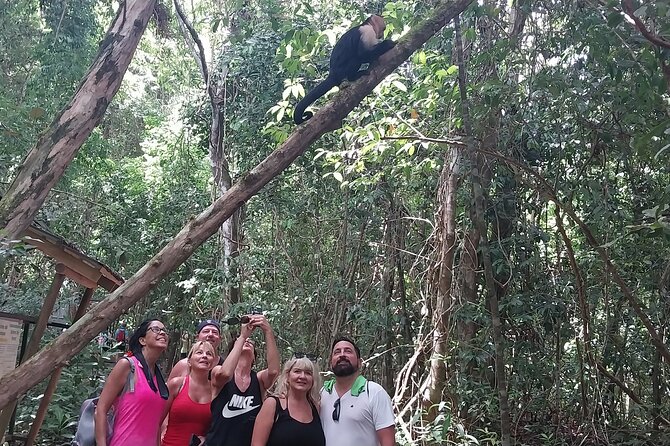
Manuel Antonio is one of those places where wildlife feels close, even when it’s not right next to you. You’ll be walking rainforest trails, not a manicured zoo. That difference matters because your guide spends their energy looking in the right spots, reading movement, and knowing where animals tend to be at that time of day.
This tour is built for exactly that challenge: you don’t need to be a naturalist to see cool animals. You just need the right route and the right eyes with optical instruments. That’s what makes it more than a casual stroll. You’re moving through a living habitat where sloths may be slow, monkeys can be quick, and birds show up when you’re ready to look up—not when you’re busy trying to figure out where to look.
And yes, the park is popular. Once you enter, you’ll feel it. But the good news is that popularity usually means the wildlife is still there, and there are multiple trail areas and viewing moments. The smart move is to arrive with a plan—and use the guide for the first round of spotting.
Getting Started at Restaurante Donde Alex and Finding Your Pace
Your tour begins and ends at Restaurante Donde AlexBeach Trail in Quepos, Costa Rica. Since there’s no pickup or drop-off, you’ll want to make sure you can get there easily (it’s noted as being near public transportation).
The start matters because the first minutes set your rhythm. You’ll meet your guide and then start walking the park trails with a group that’s capped at 10 people. That small size is practical: it’s easier for the guide to stop, point, and help everyone reposition for the best view. In a bigger group, you can lose the moment fast. Here, the layout stays workable, and you’re not constantly stepping on each other’s feet or phones.
Think of the first stretch as your warm-up for spotting. Even if you’re not seeing animals immediately, you’re learning the visual habits that make wildlife detection possible—like scanning treetops for monkey movement or watching for the still shapes that can be a sloth.
The 2-Hour Trail Walk: What You’re Actually Looking For
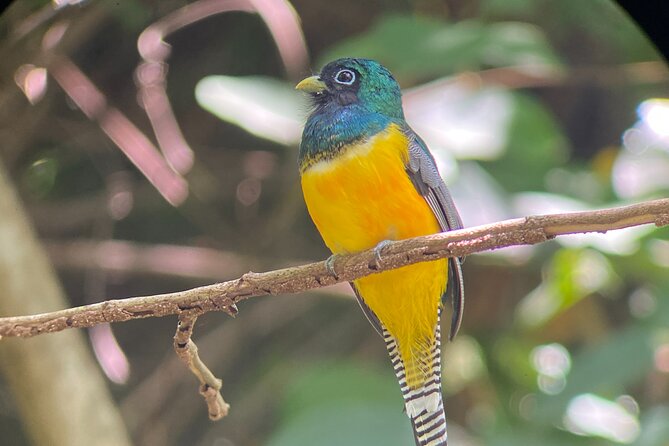
The core of this experience is a guided wildlife walk through Manuel Antonio National Park. It runs about 2 hours (approx.), and that time box is a big part of the value. Two hours is long enough to get multiple chances at sightings, but short enough that you’re not stuck waiting forever if the animals decide to be quiet.
What you’re likely to see is exactly what makes this park famous:
- Sloths, often unhurried and easy to overlook if you’re not trained to look for subtle motion
- Monkeys, which may swing through the treetops and appear in brief windows
- Birds like toucans, usually more visible once you’re looking in the right canopy spots
- Lizards and frogs, which can turn up when the guide reads the habitat well
Guiding here is about more than spotting. It’s about slowing you down at the right times so you can actually observe. A good guide helps you look longer, not harder. That’s why solo wildlife spotting can feel frustrating: animals are there, but your eyes move too fast or you’re scanning the wrong height, the wrong direction, or the wrong type of habitat.
The guide’s role also shows up in how the tour flows. From the feedback, guides tend to help the group get proper viewing time and fair chances to photograph. That changes the whole experience, because wildlife tours can otherwise feel like a line that keeps moving even when you finally found the thing.
Telescopes That Turn a Glimpse Into a Photo
The standout feature is the telescopes. This isn’t just a nice extra. It’s the difference between noticing wildlife as movement and seeing wildlife as detail.
Here’s what that looks like in real terms:
- You can zoom in on animals without forcing them to be closer
- You can share the view, so your whole group gets a turn
- You can take photos through the scope for closer-looking results
From guide experiences mentioned in the reviews, the telescope is also used so everyone can capture good phone content. One description highlights that the guide had a device that lets you capture videos through the telescope using an iPhone. Even if your setup is slightly different, the key idea is the same: you’re not stuck with tiny, distant silhouettes. You’re able to get your images to match what you’re seeing with the guide’s help.
Practical tip: for wildlife viewing, your success often depends on not chasing. When the guide says look there, look there for a moment. Let the telescope do the work. If you keep moving your focus around, you’ll miss the tiny changes that tell you an animal is about to shift position.
And don’t stress about the camera gear. Even with a basic phone, the scope helps you get closer framing. The telescope takes care of that part.
Small Group Size: Better Viewing, Less Rush
This tour holds a maximum of 10 travelers. That number is small enough to feel human, but big enough to keep energy up in the group.
What small size does for you:
- You can gather around the guide without blocking each other
- The guide can adjust the pace when spotting requires a stop
- More people get meaningful time with the telescope, instead of a quick pass
In wildlife settings, timing and attention matter. A slow sloth might stay in place for a while. A monkey might move fast. If your group is too large, you become a traffic jam and everyone misses the best angle. With a small group, the guide can manage turns and viewing positions better.
It also helps with the learning moments. When the guide can breathe and talk, you pick up more than random animal names. You start to understand patterns: where certain animals may show up, what kinds of movement are most worth watching, and how the forest layout affects sightings.
Crowds Inside the Park: How to Handle Busy Days
Manuel Antonio is the main attraction in the area, so the park can feel busy. There’s no magic way around that. You’ll likely see other groups while you’re there.
Here’s the realistic way to use that to your advantage. During your guided portion, stay focused on what the guide is finding and where they stop. When you’re with a good spotting guide, you’re not competing with the crowd—you’re following someone who knows how to work within it.
After the tour, you’ll have the option to stay in the park. That’s a smart strategy because your first pass is guided, then you can choose how you want the rest of the day to feel. If you want quieter hiking moments, you can keep exploring. If you want to switch modes, the beaches are there.
So yes, plan for crowds. But don’t let crowd pressure push you into moving too fast. With a good guide and a telescope, you’re not just walking through noise. You’re hunting sightings.
Price and Value: Is $28 Worth It?
At $28 per person for about two hours, this tour sits in a very reasonable range for guided wildlife in a well-known national park. The key point isn’t the sticker price. It’s what you’re paying for.
You’re paying for:
- An official license guide in English and Spanish
- Telescope equipment that improves viewing and photo results
- A route and spotting approach that helps you see animals that are hard to detect on your own
The value is strongest if you want the maximum chance of seeing wildlife without spending your whole time guessing. The reviews are consistent on this idea: without a guide and without optical help, it’s very hard to spot animals in Manuel Antonio. Wildlife is there, but your eyes need support.
Another value factor: it’s a small group. A crowded guided tour can quickly feel like you’re paying for shoulder-to-shoulder walking. Here, the cap of 10 keeps it more controlled, which makes the telescope feature actually work for everyone.
Also, two hours is a sweet spot. You’re not committing your entire day, but you’re getting a structured wildlife session before you branch off on your own.
Who This Tour Suits Best (and Who Might Want Another Plan)
I’d book this if you’re:
- Visiting Manuel Antonio for the first time and want a fast start on wildlife
- Hoping to take better photos or phone videos without chasing animals
- Traveling with people who would rather see wildlife than read a trail map for hours
- Interested in learning what you’re looking at while you’re in the forest
I’d consider skipping it if you:
- Prefer completely self-paced exploration and don’t want to follow stops
- Don’t care about wildlife spotting enough to tolerate waiting for sightings
- Are on a super tight schedule and need more flexibility than a set 2-hour tour
If you’re on the fence, think of it like this: the guide helps you turn a rainforest walk into a wildlife viewing plan. If that’s your goal, the tour fits.
A Few Planning Tips That Make the Day Easier
Because there’s no pickup or drop-off, your biggest planning job is getting to Restaurante Donde AlexBeach Trail on time. Make sure you have a simple way to arrive, especially if you’re relying on public transportation.
Also, food and drinks are not included. So bring water and a snack if you’ll still be in the park after the tour. Two hours passes fast, but your total day might stretch, especially if you want beach time after.
The tour requires good weather. If conditions are poor, you’ll be offered a different date or a full refund. So it helps to keep your afternoon flexible if possible. If your trip is rigid, still book with the knowledge that weather can change plans.
Finally, since confirmation is received at booking, you can plan your day with less uncertainty once you book. And because this activity is often booked about 16 days in advance on average, I’d avoid waiting until the last minute during peak periods.
Should You Book This Manuel Antonio National Park Guided Tour?
Yes, if you want the best shot at seeing wildlife in Manuel Antonio without turning your day into a scavenger hunt. The combination of a licensed guide, a small group, and telescope viewing is the real reason this experience gets such strong marks. You’re paying for help that turns distant wildlife into clear sightings you can actually photograph.
Book it especially if you’re there for the animals and want a smooth first experience in the park. Then use the time after the tour however you like—more hiking, more exploring, or beach time when you’ve had your fill of rainforest action.
FAQ
How long is the Manuel Antonio National Park guided tour?
The tour lasts about 2 hours.
How much does the tour cost?
It costs $28.00 per person.
Is the tour guided in English or Spanish?
Yes. The official license guide provides the tour in English and Spanish.
What wildlife can I expect to see?
You’ll likely see wildlife such as sloths, monkeys, toucans, lizards, and frogs, depending on what’s active during your visit.
Are telescopes included?
Yes. The tour includes state-of-the-art optical instruments like telescopes.
Where does the tour start and end?
It starts at Restaurante Donde AlexBeach Trail in Quepos, Costa Rica, and ends back at the same meeting point.
Do I need to arrange my own food and drinks?
Yes. Food and drinks are not included, so you are responsible for them.
Is pickup or drop-off included?
No. The tour does not offer pickup or drop-off services.
What happens if the weather is bad?
The experience requires good weather. If it’s canceled due to poor weather, you’ll be offered a different date or a full refund.