REVIEW · SABANA DE LA MAR
Los Haitises: Caves, Mangroves, & Rainforest Hike/Boat Tour
Book on GetYourGuide →Operated by Whale Punta Cana · Bookable on GetYourGuide
Mangroves, limestone caves, and wild rainforest. In Los Haitises National Park, you bounce from Caño Hondo to San Lorenzo Bay and end up seeing why this part of the Dominican Republic feels so different from beach days. You’ll travel by boat through red mangroves, then walk into the park’s wet, rugged corners with a local guide explaining what you’re looking at.
Two things I really like: the chance to see Taino pictographs inside the caves and the way the mangrove boat ride sets the tone for the whole day. In one group I came across, Ignacio stood out for making the rainforest feel understandable instead of random, and the cave stops felt grounded in real place-based stories.
One thing to plan for: parts of the hike can be slippery and steep, so you’ll want solid grip. Even with a guide, it’s not a casual stroll on flat ground, and the roads getting in and out can feel rough in places.
In This Review
- Key highlights you’ll actually care about
- Los Haitises: the Taino meaning behind the scenery
- From Caño Hondo to San Lorenzo Bay: the mangrove boat ride
- Mogotes and bird life: what to watch for on the islands
- The caves: Cueva de la Arena and Cueva de la Línea
- Rainforest hike: wet footing and why it’s worth it
- Wildlife spotting on the water (and the limits of guessing)
- What $70 gets you: value, plus what to budget
- Timing, transfers, and the comfort reality check
- Gear and small prep that save your day
- Should you book Los Haitises caves, mangroves, and rainforest hike?
- FAQ
- How long is the Los Haitises tour?
- What does the price include?
- Is food and drinks included?
- Where does the tour start?
- What languages are the guides available in?
- Can I cancel and get a full refund?
Key highlights you’ll actually care about
- Caño Hondo (Deep Creek) boat start with life jackets and a steady introduction to the park
- San Lorenzo Bay and Mogotes limestone islands, where birds and plant life show off
- Caves with Taino pictographs at stops like Cueva de la Arena and Cueva de la Línea
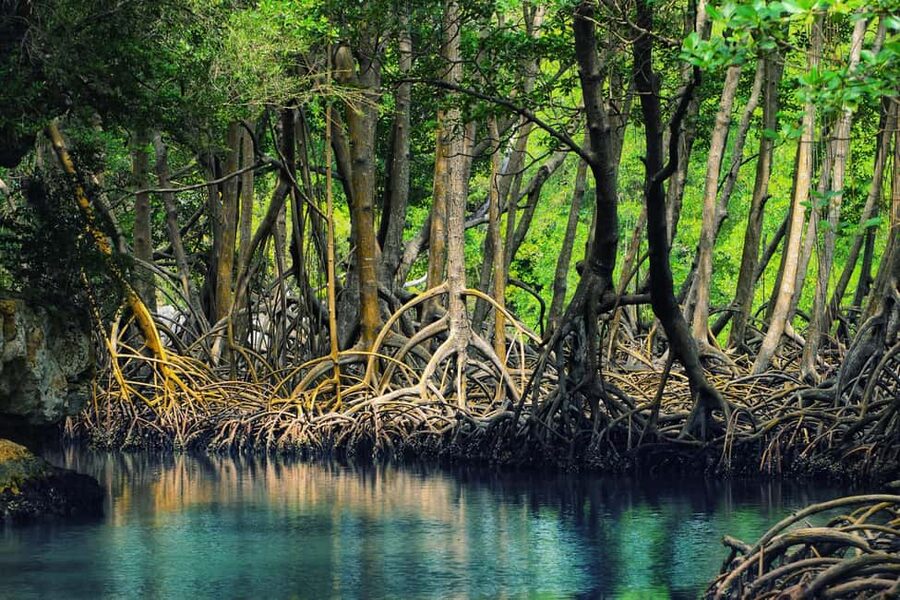
- Red mangroves by boat, a real wildlife zone (not just pretty water)
- Rainforest hike conditions: wet footing, some steep sections, grabby shoes matter
- Wildlife potential on the water: you may spot manatees, dolphins, and crustaceans
Los Haitises: the Taino meaning behind the scenery

Los Haitises is named for the original Taino inhabitants. In their language, Haitises translates to highlands or hills—an old-school description of the steep limestone coastline you see along the water. The park’s geography is the star: sharp rock formations, caves, and a coastline that’s hard to forget once you’ve been on it.
This matters because the park isn’t just “nature time.” Your guide walks you through how the area was used and why the caves and coastline mattered to people long before modern tourism. That storytelling gives the day texture, especially when you reach the cave walls with indigenous pictographs.
From Caño Hondo to San Lorenzo Bay: the mangrove boat ride
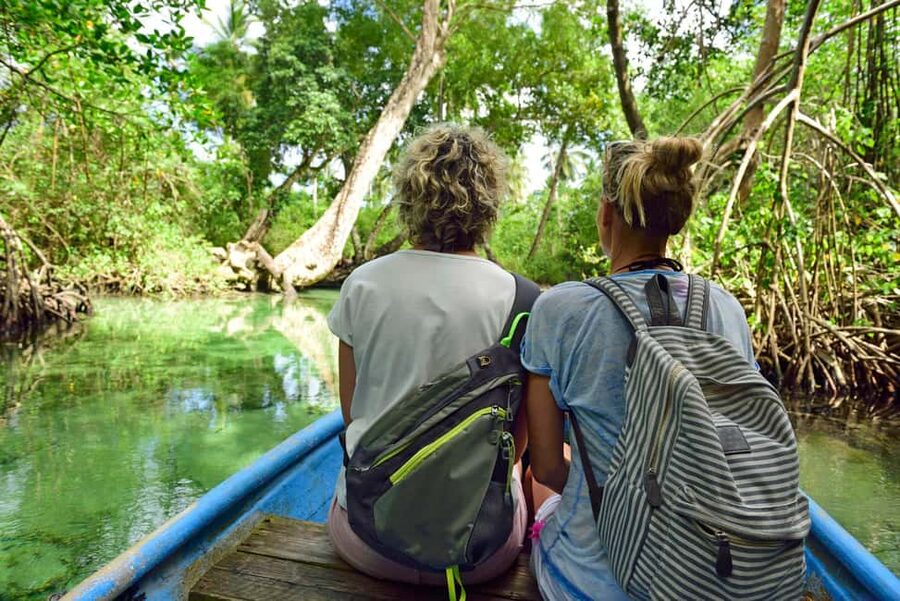
The day usually begins at the main Los Haitises port at Caño Hondo (Deep Creek). You head out by boat with life jackets, and the first stretch is all about getting your eyes adjusted to how the mangroves work.
Red mangroves aren’t only about color. They’re living structure—roots that slow the water, shelter small life, and create a different micro-world than open water. As you move through this maze of vegetation, you’re positioned to spot wildlife that prefers shallow, protected areas.
Eventually you reach San Lorenzo Bay, a small bay inside Samaná Bay. This is where the view snaps into “bigger picture” mode: open water, steep limestone formations, and the famous Mogotes—limestone mountain islands rising from the bay. It’s also a good reminder that Los Haitises isn’t one environment. It’s connected zones: mangrove water, bay water, and then forested land.
Mogotes and bird life: what to watch for on the islands
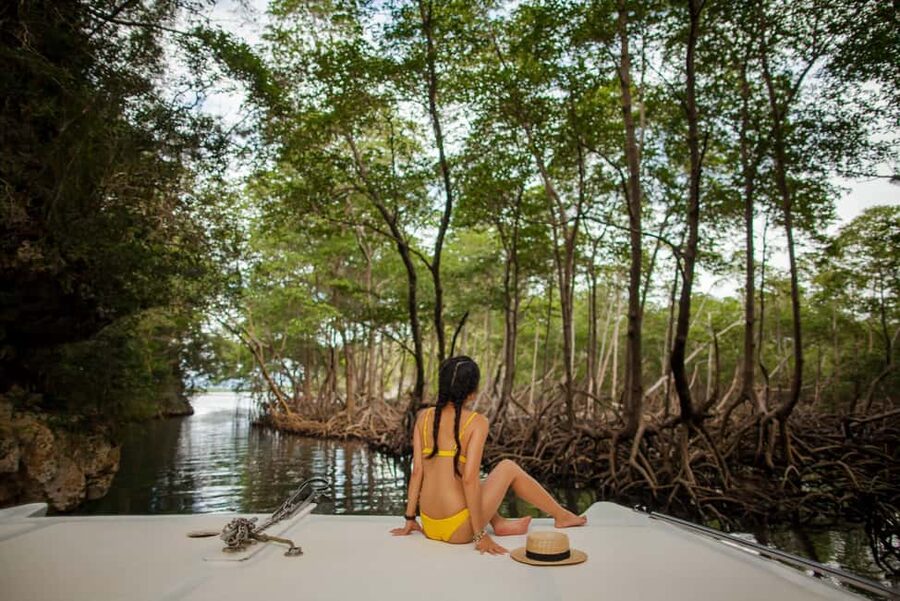
One of the coolest details here is the plant diversity tied to the limestone formations. You’ll hear that the Mogotes area supports more than 700 species of plants, and that number isn’t just trivia—it explains the variety you can see, from wet growth along edges to plants clinging to rocky surfaces.
Then there are the birds. The park is known for wetlands birds, and on the water you’re usually in the right place to catch them flying overhead or hanging close to the mangroves. In at least one recent experience, people reported seeing pelicans during the boat portion, which fits the “water + shelter + food” mix.
Practical tip: if you’re serious about bird spotting, keep your phone away until you’ve got a stable view. The action can be quick—birds move on their own schedule while you’re navigating around islands and bays.
The caves: Cueva de la Arena and Cueva de la Línea

The caves are the big reason many people sign up, and the payoff is real. Los Haitises caves contain evidence tied to indigenous communities, including pictographs said to be around 750 years old. You’ll also hear how caves offered shelter and, later, how pirates used hiding spaces when the coastline was tougher to patrol.
Two cave stops often highlighted are Cueva de la Arena and Cueva de la Línea. The point isn’t only to see rock. It’s to look at walls decorated with drawings and understand they’re tied to real human presence, not just geological curiosity.
Because you’re in caves, expect a different feel: cooler air than outside, darker interiors, and surfaces that may be uneven. Guides help you interpret what you’re seeing and point out details your eyes might otherwise miss.
If you’re short on patience, caves might still surprise you. Done right, you’ll spend the time looking—not racing. And if your guide is strong (like Ignacio, who people singled out for making the cave portion memorable), the walls start to make sense.
Rainforest hike: wet footing and why it’s worth it
After the water, you shift to land and the day turns physical. You’ll explore deeper into the park by foot, and the rainforest walk is where you really feel you’re in a living system.
Here’s the part you should respect: the hike can be slippery. In one account, it was described as sometimes steep enough that travelers needed to hold on. That means trekking shoes with good tread aren’t optional if you want to stay comfortable and safe.
Still, this is exactly where the experience becomes more than sightseeing. You’ll get closer to the vegetation and the “up close” feel of the rainforest—where sound carries differently, and where you can spot life near the ground that’s invisible from the boat.
You might also hear your guide point out how the limestone and water connect to the forest. It’s the same geography, just seen from different angles.
Wildlife spotting on the water (and the limits of guessing)
On the boat, you may spot wildlife like manatees, crustaceans, and dolphins. That’s the promise you’ll hear, and it’s a fair one because mangrove and bay waters can support those species.
But you also need to keep expectations realistic. Wildlife is wildlife. You’re traveling in a protected area and moving through different water zones, but sightings depend on timing, weather, and where animals choose to surface.
What you can control is your attitude. Pay attention to movement along the shoreline, watch for breaks in the water, and stay quiet when your guide calls out activity. If you do see manatees or dolphins, it tends to feel like you earned it—not because you were lucky, but because you were paying attention.
Also, don’t ignore birds. Many people walk away remembering bird moments as much as animal sightings at the waterline. Wetland birds are part of the park’s rhythm.
What $70 gets you: value, plus what to budget
At around $70 per person, this tour sits in the mid-range for a full-day national park experience. You’re paying for a local guide, boat time through mangroves, cave access, and transportation support (transfer is included, and tips are listed as included too).
The parts that can affect your final cost:
- Food and drinks aren’t included, and lunch is listed as an extra cost. Plan on bringing snacks or money for lunch.
- Some tours may include water or soft drinks, but the safe move is to assume you’ll need to purchase or supplement your own supplies unless your booking clearly states otherwise.
Why it’s still good value: few experiences combine caves + mangroves + rainforest hiking in one organized day at this price point. If you’re staying in the Samaná region or nearby, this feels like a practical way to see the park without having to figure out boat schedules and guide interpretation yourself.
Timing, transfers, and the comfort reality check
The tour duration can run 5 to 11 hours, depending on the option and how the day flows. That’s a wide range, so treat this like a flexible half-day to full-day slot.
Also, be prepared for less-than-smooth roads. One recent experience noted that the drive to and from the national park can be bumpy because the roads aren’t great, even though the driver handled it well. In other words: bring a little mental patience, not just water.
Group size can also shape your day. Some people got small groups, even family-style groupings. That matters because smaller groups generally help you move with less waiting and get more personalized guidance during the caves and hike.
Gear and small prep that save your day
For a cave-and-rainforest day, your checklist is simple:
- Shoes with grip for wet, possibly steep, and uneven ground
- A light layer. Caves can feel cooler than the outside air
- Sunscreen and bug repellent, because you’re outdoors for a while
- A small bag you don’t mind getting damp
- Bring cash for lunch if you want food on your own schedule
Water matters too. Since food and drinks aren’t listed as included, I’d rather you over-pack slightly than end up rationing later.
If your tour version includes time at natural pools (some experiences mention an end stop with refresh time and small waterfalls), you might also consider quick-dry clothing or a small towel. Just don’t expect a resort setup—this is about nature, not comfort amenities.
Should you book Los Haitises caves, mangroves, and rainforest hike?
If you want more than a postcard, I think you should book this. The combination of mangrove boat time, caves with Taino pictographs, and a rainforest walk gives you multiple ways to understand the park in one day. And when your guide is strong—people highlighted Ignacio and José for making the experience feel organized and meaningful—that interpretation turns nature time into real learning.
Skip it if you need a flat, easy hike or if wet footing makes you nervous. This day can be slick, and you’ll feel it in your shoes.
If you’re doing Samaná-area sightseeing and want something authentically Dominican beyond beaches, Los Haitises is a smart choice. Book it if you can handle variable timing, pack for damp terrain, and show up ready to look closely at birds, plants, and cave walls—not just scenery.
FAQ
How long is the Los Haitises tour?
The duration is listed as 5 to 11 hours, depending on the option booked and starting times available.
What does the price include?
The tour includes transfer and tips.
Is food and drinks included?
Food and drinks are not included. Lunch is available at an extra cost.
Where does the tour start?
The meeting point may vary depending on the option you book.
What languages are the guides available in?
The live tour guide is listed as available in English, Spanish, and French.
Can I cancel and get a full refund?
Yes. Free cancellation is available up to 24 hours in advance for a full refund.