REVIEW · YOKOHAMA
Kamakura One Day Hike Tour with Government-Licensed Guide
Book on Viator →Operated by Japan Guide Agency · Bookable on Viator
Kamakura is a sharp escape from Tokyo. In about 1 hour from Tokyo, you trade city pace for samurai-era temples and a walk on the Daibutsu Trail that links the Great Buddha area with Zen sites.
I really like two things about this tour. First, you get a government-licensed guide interpreter, so the cultural and historical context lands quickly (and your day can be explained clearly even if you’re new to Japanese Buddhism). Second, I like the flexibility: you pick 3–4 stops from the site list, so the route fits your interests and your energy.
The main drawback is simple timing. It can feel tight if you’re basing the trip on a long Tokyo day, since getting there and back can take time on top of the 6-hour walk.
In This Review
- Key highlights worth planning for
- Kamakura in one day: why this feels better than a rushed stop
- The guide’s job is more than facts
- Daibutsu Trail hike: the 6 km link that gives the day its rhythm
- Tsurugaoka Hachimangu: start with samurai symbolism
- Great Buddha and the Kotoku-in zone: famous, but worth the pause
- Hasedera, Hokoku-ji bamboo, and the calm beauty between the big names
- Zen temples by the handful: how to plan your taste
- Enoshima island: sea air and a potential Mt. Fuji photo
- Price and value: what you’re paying for (and what you’re not)
- Timing and comfort: how to make the 6-hour walk feel good
- Who this tour fits best
- Should you book this Kamakura one day hike tour?
- FAQ
- FAQ
- How long is the Kamakura one day hike tour?
- Is this tour mostly walking?
- Where do we meet the guide?
- Can I customize which sights we visit?
- Is the guide government-licensed?
- Are entrance fees included?
- Is lunch included?
- Do I get mobile tickets?
- Is this a private tour?
- What should I consider for weather?
- Is free cancellation available?
Key highlights worth planning for
- Government-licensed guide interpreter for clear, culture-first explanations
- Custom route (3–4 sites) instead of being stuck on a rigid checklist
- Daibutsu Trail hike (about 6 km / 3.7 miles) connecting major sacred areas
- Temple variety in one day: shrines, Zen monasteries, bamboo, hydrangeas, and a coin-washing shrine
- Optional Enoshima stop for sea air and a potential Mt. Fuji photo moment
- Private tour feel with only your group, plus pickup on foot near Kamakura/Yokohama
Kamakura in one day: why this feels better than a rushed stop
Kamakura sits close enough to Tokyo that it’s easy to tack on, but different enough that it actually changes the tone of your trip. It’s strongly tied to Japan’s samurai past, and that shows in the mix of shrines, temple compounds, and hillside paths.
What makes this tour work is the structure: you don’t just pop into one famous sight and sprint off. You move through the sacred geography of the area, with walking time built in for the connection between places.
The guide’s job is more than facts
The guide here is a National Government Licensed Guide Interpreter. That matters because you’re not just hearing place names. You’re getting the background needed to understand why specific shrines and temple schools mattered to people over centuries.
In the comments from Shinji Komiyama’s tours, the approach comes through fast: he reached out in advance to ask what the group wanted to focus on, then adjusted the day so it matched interests like a broader overview of Kamakura history plus a solid hike. You’ll likely feel the same “you’re driving, not just following” vibe, especially since the route is customizable.
Also, you’re not stuck with a bland script. The guide can personalize based on what you want to see, what start time you want, and where you’re staying.
Daibutsu Trail hike: the 6 km link that gives the day its rhythm
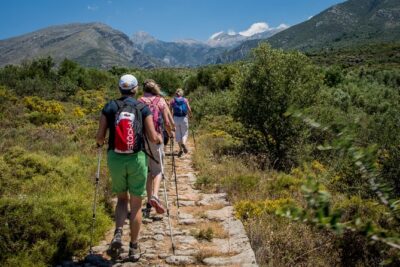
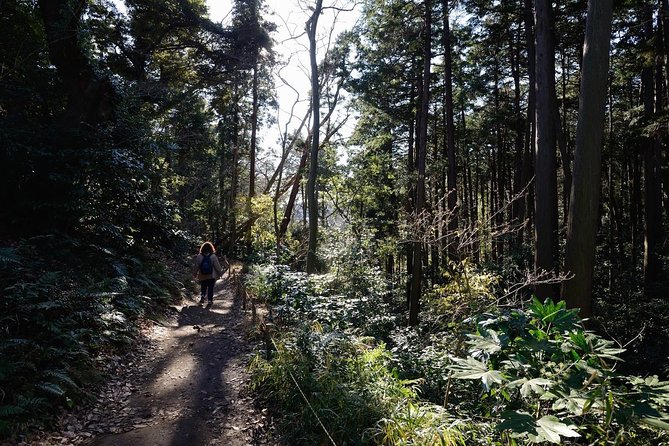
The heart of the walk is the Daibutsu Trail, about 6 km (3.7 miles). It runs between the Great Buddha area in the south and toward the Jōchi-ji Zen temple side to the north.
Even though it’s not described as a technical hike, it’s still a walking day. You’re moving between temple precincts and hillside paths, which is exactly what makes Kamakura feel like Kamakura rather than a museum visit.
Practical tip: after rain, paths can be slick. One guide response noted that rain the day before made the hiking trail a little slippery, but the group was able to walk without trouble. Still, I’d treat this as a shoes-and-attention kind of hike, not a sneakers-and-photos-only situation.
Tsurugaoka Hachimangu: start with samurai symbolism
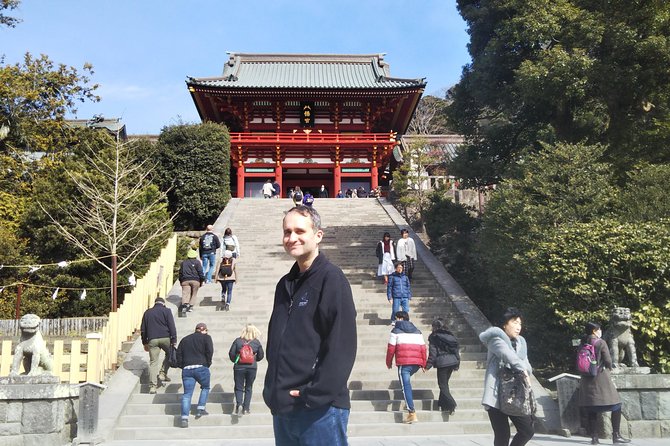
Most tours begin you with a “main character” shrine, and Tsurugaoka Hachimangu Shrine fits that role perfectly. It’s dedicated to Hachiman, the patron god of the Minamoto family and samurai more broadly, with ties to deified ancient imperial spirit identities.
Why this matters on a walking day: it frames what you’ll see next. When you start with a shrine linked to samurai patronage, later temple details don’t feel random. They feel like pieces of a larger story.
Timing is light here—about 30 minutes with admission marked as free—so it’s a good way to get oriented without eating your whole schedule.
Great Buddha and the Kotoku-in zone: famous, but worth the pause
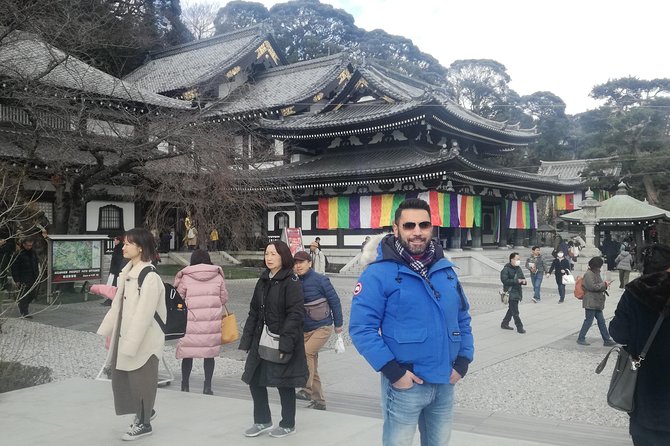
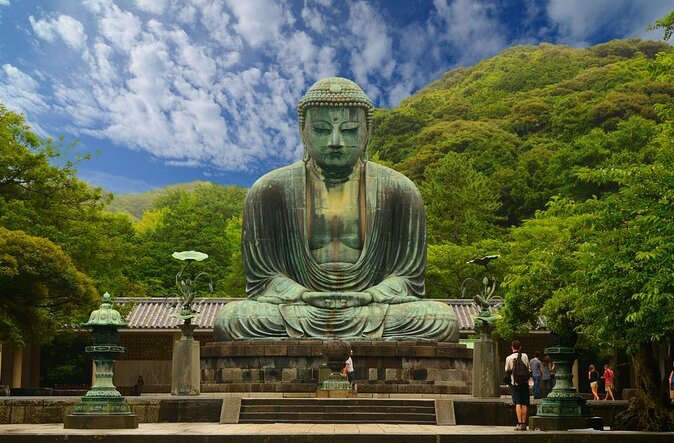
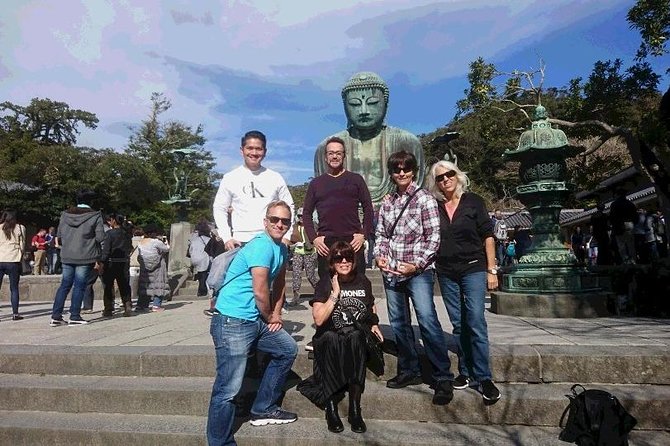
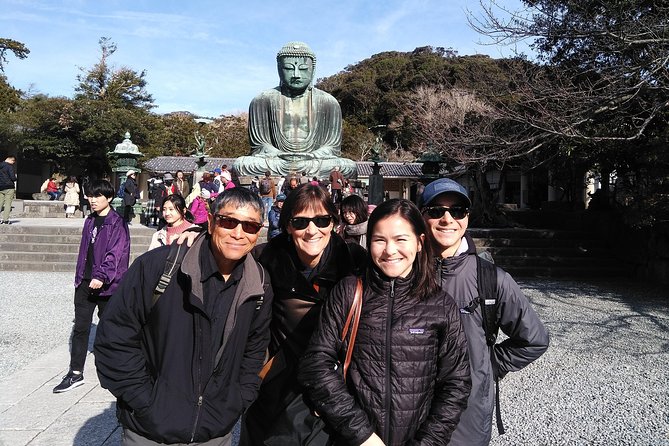
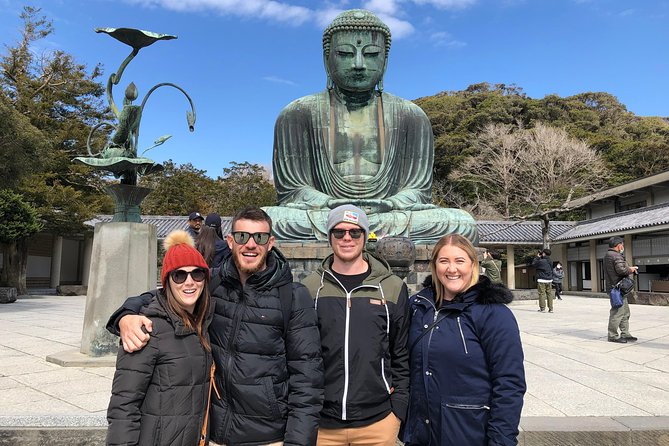
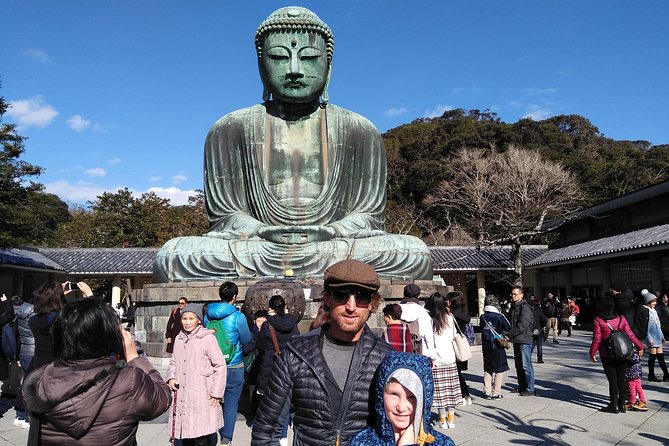
Next up is Kotoku-in and the Great Buddha of Kamakura. The statue is bronze and about 11.4 meters tall. It’s a short stop time in the plan—around 5 minutes—and admission is marked as not included in the tour price.
That short window can work in two ways. If you’re the type who likes photos and a quick explanation, you’re not waiting around. If you slow down for atmosphere, your guide can help you focus on what to notice around the statue and the temple grounds.
Even with a brief visit, the Great Buddha is still the kind of sight that resets your brain from everyday sightseeing. You get scale fast, and you get it right at the start of the southern sacred zone.
Hasedera, Hokoku-ji bamboo, and the calm beauty between the big names
Two stops add a distinctly Kamakura feel: Hasedera Temple and Hokoku-ji Temple.
At Hasedera (長谷寺), the focus is the eleven-headed statue of Kannon, the goddess of mercy. The tall, gilded wooden statue is listed as about 9.18 meters, and the stop time is about 5 minutes with admission not included.
Then you have Hokoku-ji Temple, famous for a bamboo grove behind the main hall with over 2,000 bamboo stalks and narrow pathways through the bamboo. The stop time is around 30 minutes.
This is one of the best “pace balance” moments. The Great Buddha gives you monument scale, while Hokoku-ji gives you texture and quiet. If you’re choosing only a few stops from the menu, I’d seriously consider Hokoku-ji, because it’s the type of place where the guide can point out small things you’d miss on your own.
Zen temples by the handful: how to plan your taste
Kamakura’s temple reputation is real, and this tour leans into Zen. The list includes multiple major monastery sites, plus smaller branch temples in the hills. That means you can shape the day to match your interests: big flagship temples, nature settings, or more out-of-the-way compounds.
Here are a few standouts from the options:
- Engaku-ji (円覚寺): described as one of the leading Zen temples in Eastern Japan and the number two of Kamakura’s five great Zen temples. It was founded in 1282 by regent Hojo Tokimune.
- Kencho-ji (建長寺): the number one of the five great Zen temples and the oldest Zen temple in Kamakura, founded in 1253 by regent Hojo Tokiyori.
- Meigetsuin (Hydrangea Temple): known as Ajisaidera because hydrangeas bloom in abundance on the grounds (admission not included).
- Zuisen-ji: described as in a narrow valley surrounded by wooded hills, a quieter-feeling choice (admission not included).
- Jochiji, Tokeiji, Jufukuji, and others: several additional Zen-related sites appear on the list, letting you build a full hillside loop if you like the “slow reveal” of temple compounds.
One more special mention: Zeniarai Benten Shrine (銭洗弁天). It’s a popular shrine visit where people wash money at a spring—“zeniarai” means coin washing. The stop time is about 30 minutes, admission is marked free, and it’s an easy way to add something playful and local-feeling to a day otherwise focused on solemn sites.
Enoshima island: sea air and a potential Mt. Fuji photo
You also have an optional side stop at Enoshima Island, described as a short train ride west of Kamakura and connected to the mainland by bridge. The island has a shrine and multiple attractions, though your planned stop time here is listed as about 5 minutes, with admission marked as free.
Why it earns a spot anyway: it breaks up the temple-focused day with the ocean and the open air.
And there’s a bonus tied to timing and weather. One guide response mentioned they were able to see Mt. Fuji from Enoshima when the tour day had good weather. If a clear sky is in your forecast, this is the kind of addition that can turn a normal sightseeing day into a memorable photo moment.
Price and value: what you’re paying for (and what you’re not)
The price is $153.50 per person for about 6 hours with a licensed guide interpreter. That’s not a budget bargain, but it can be strong value if you care about explanations and a smoother day structure.
Here’s the value math in plain terms:
- You’re paying for a human translator-guide who understands Japanese culture and history well enough to explain it clearly.
- You’re paying for an active day that mixes walking time plus site selection flexibility (3–4 stops from a list).
- You’re not paying for entrance fees or lunch, and that’s where you’ll do some budgeting.
Not included: transportation fees, entrance fees, lunch, and other personal expenses. Entrance fees are specifically marked as free for some stops (like Tsurugaoka Hachimangu and Zeniarai Benten) and not included for others (like the Great Buddha at Kotoku-in, Hasedera, and several Zen temples).
Also, note that pickup is described as on foot in the Kamakura/Yokohama area rather than private car service. If you’re coming from somewhere farther out, you’ll want to handle getting to the meeting area on your own.
Timing and comfort: how to make the 6-hour walk feel good
This is a walking tour. Even if you don’t think of yourself as a “hiker,” plan for a steady pace and time spent walking between compounds.
Start time is customizable, which helps. If you can begin earlier, you may have a better shot at smoother paths and more comfortable walking temperatures. If your day is rainy, treat it as a “slow down and watch footing” kind of route.
Packing basics I’d strongly suggest:
- Comfortable shoes with solid grip
- Water (especially since lunch is not included)
- A light layer, because temple hills can feel cooler than you expect
- Your camera ready, because Enoshima and the Great Buddha are both photo-worthy
If you like to take your time, tell the guide up front. Since you choose 3–4 sites, you can favor the spots that match your pace rather than trying to power through everything.
Who this tour fits best
This tour is a good fit if you:
- Want guided context for samurai-era and Zen sites, not just a route
- Like the idea of combining history + walking without doing all the planning yourself
- Prefer a day that feels like you’re moving through the region rather than checking boxes
- Appreciate a route that can be adjusted to your interests and start time
It may feel less ideal if you’re trying to do Kamakura as a “quick detour” from Tokyo with no breathing room. One caution from a guide response style of thinking matches the math: if travel from Tokyo takes about 1.5 hours each way, you’re adding roughly 3 hours of round-trip time to the day.
Should you book this Kamakura one day hike tour?
If you want a Kamakura day that feels thoughtful instead of rushed, I’d book it. The combination of a government-licensed guide interpreter plus a real 6 km Daibutsu Trail walk gives you both meaning and movement. The ability to choose 3–4 stops is especially helpful when you know you don’t want to spend six hours sprinting between temples.
I’d skip (or scale down your expectations) if your plan is built around limited travel time from Tokyo and you’re hoping for a leisurely pace with no schedule pressure. In that case, Kamakura can deserve more than one quick day.
FAQ
FAQ
How long is the Kamakura one day hike tour?
The tour is about 6 hours.
Is this tour mostly walking?
Yes. It’s described as a walking tour, with pickup on foot.
Where do we meet the guide?
You meet the guide on foot within a designated Kamakura/Yokohama area, and the tour also states you can meet at your hotel or the closest station.
Can I customize which sights we visit?
Yes. You select your must-see spots from a list to create a customized itinerary, and the tour is built around choosing 3–4 sites.
Is the guide government-licensed?
Yes. The guide is a National Government Licensed Guide Interpreter.
Are entrance fees included?
No. Entrance fees are not included, and some stops are marked free while others are marked as not included.
Is lunch included?
No. Lunch is not included.
Do I get mobile tickets?
Yes, the tour includes mobile ticket.
Is this a private tour?
Yes. It’s listed as a private tour/activity where only your group participates.
What should I consider for weather?
This tour includes hiking. One guide response noted that rain the day before can make the hiking trail slippery, so footwear and caution matter.
Is free cancellation available?
Yes. You can cancel for a full refund up to 24 hours before the experience start time.