REVIEW · JUNEAU
Juneau Shore Excursion: Mendenhall Glacier Canoe, Paddle and Hike
Book on Viator →Operated by Above and Beyond Alaska · Bookable on Viator
Ice and paddles beat a bus tour. This shore excursion pairs canoe time on Mendenhall Lake with a guided look at the glacier’s changing face—real Alaska, not just a viewpoint stop. You also get a smooth pickup setup, so you spend less time figuring out where to be and more time outdoors.
What I like most is that you go in prepared. You skip equipment rentals because the tour provides rain gear, rubber boots, and all paddling equipment, plus snacks and bottled water. I also really value the small-group feel, with a professional guide who helps you make sense of what you’re seeing on the water.
One thing to weigh: this is not a casual stroll. You should expect a real workout (paddling 5–6 miles and hiking around 2 miles roundtrip) and understand that you’re viewing the glacier from safe ground, not trekking on top of the ice.
In This Review
- Key things to know before you go
- Juneau’s Mendenhall combo: canoe first, glacier edge second
- Getting outfitted at Above & Beyond Alaska’s warehouse
- The paddle on Mendenhall Lake: where you feel the glacier up close
- Exiting the canoe and hiking the rocky glacier-edge terrain
- West Glacier trailhead: de-gear, reset, and head back
- Small group, big value: why the price can make sense
- Effort and safety: who this tour suits best
- Weather changes everything (and that’s part of Alaska)
- Should you book Mendenhall Glacier Canoe, Paddle and Hike?
- FAQ
- FAQ
- How long is the Juneau Mendenhall Glacier canoe, paddle and hike tour?
- What gear is included for the canoeing and hike?
- Where do cruise passengers meet?
- Do I need to know how to swim or be able to paddle and hike?
- Are there age and weight limits?
- What happens if weather is bad or the minimum group size isn’t met?
Key things to know before you go
- Small-group canoeing with 1–2 guides in 8- or 12-person canoes (up to 12 travelers total)
- No rental hassles: rain gear, rubber boots, paddling equipment, snacks, and bottled water included
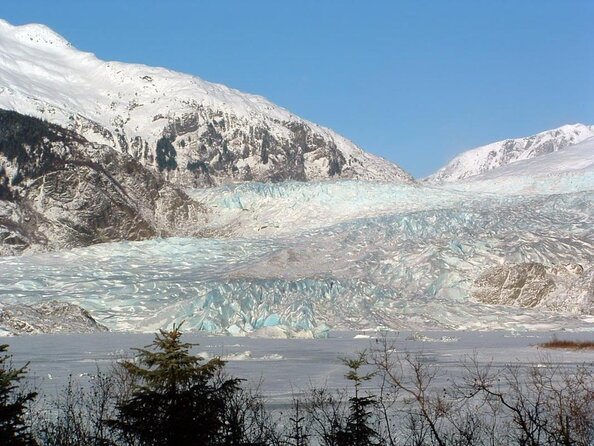
- Glacier access from bedrock only: you’ll explore the edge safely, not walk on the glacier
- Real physical demands: paddle 5–6 miles and hike ~2 miles roundtrip; you must know how to swim
- Cruise-day friendly meeting spot: the “C” sign between Mt. Roberts Tramway and green Taku Smokeries
- Glacier conditions change: what you can see and how long you spend near the ice depends on weather and pace
Juneau’s Mendenhall combo: canoe first, glacier edge second
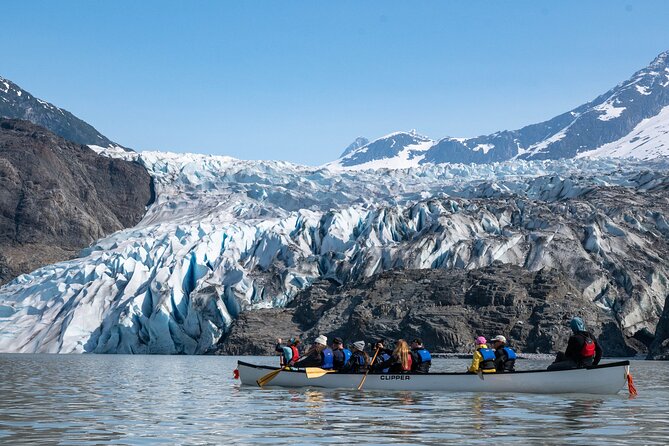
This tour works because it uses two different ways of seeing the same place. From the canoe, you get a sense of scale that’s hard to copy from land. Then the rocky hike brings you closer to the edges where the glacier shows its details—ice blocks, calving-ready faces, and the evidence of constant retreat.
You should also know the tour’s core promise up front: it’s about close observation, not “walking on the glacier.” The guide will take you to safe bedrock viewpoints while the Mendenhall Glacier keeps changing daily. That matters, because it sets expectations for what “close” means on this day—breathtaking, yes, but still weather-and-terrain limited.
And since you’re in water early, before the day gets busy, your eyes adjust to the cold and the light. You’re basically training your attention. After the paddle, the hike feels like the continuation of the same story: how the glacier feeds the lake, how the shoreline reshapes, and how quickly that can change.
Getting outfitted at Above & Beyond Alaska’s warehouse
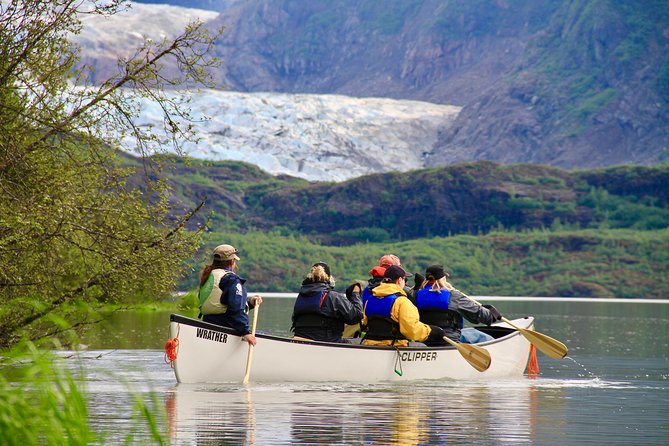
Most of your tour day starts with logistics that are actually worth caring about. You’re picked up, then transported to the gear warehouse for fitting, orientation, and restroom access. This is a smart setup for cruise passengers because it avoids the scramble of trying to rent boots and rain gear in a short window.
At the warehouse, you’ll get your gear and get the rules clearly explained. Rain gear and rubber boots are included, which is a big deal in Juneau. The lake area can be cold and wet even on decent days. Having proper boots also helps you hike without worrying about slick soles.
Small-group operations can mean you get more of the guide’s attention during the setup. The tour caps at 12 travelers, and you’ll be placed in 8- or 12-person canoes with 1 to 2 guides depending on group size. That balance matters: you’re not just another body in a lineup. You’re learning a skill (paddling) while still getting time to look around.
One practical note: the tour requires you to disclose raingear and shoe sizes when booking, including the range of youth and adult sizes they can accommodate. So do yourself a favor and have your shoe size ready before you pay—this is exactly the kind of thing that can slow you down on embarkation day.
The paddle on Mendenhall Lake: where you feel the glacier up close
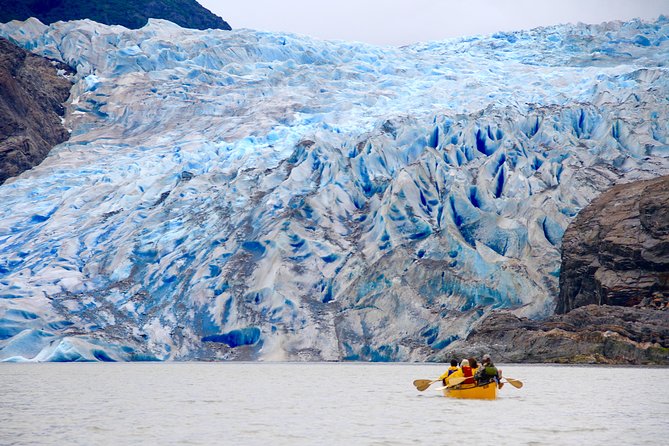
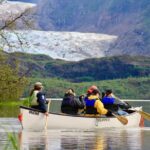
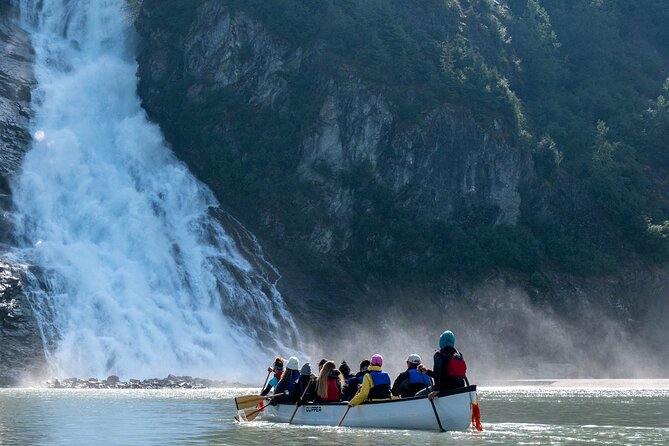
Now for the main event. After you get ready, the tour heads to the Mendenhall Lake area. The plan is simple in concept: you paddle across glacier-fed water, round a peninsula, and meet the glacier face where it confronts you.
This is the part where you’ll understand why canoeing is better than a flat shoreline walk. Ice carving and calving are dramatic from a distance, but on the water you also feel the water texture, the temperature, and how the glacier melt shapes the lake. It’s not just a photo stop. It’s an experience of moving through the landscape.
The paddle itself takes effort. You should be comfortable paddling 5–6 miles, and some conditions can make it tougher. Wind can turn a “fun row” into arm work, especially on the way toward the glacier. One of the most common realities from past departures is that paddling can be strenuous—so pace yourself early rather than trying to muscle through.
The guide also plays a big role here. You’ll get narration about flora and fauna around the glacier. That sounds like a generic eco speech until you’re actually staring at the shoreline and realizing how much is happening in a place you assumed was just ice and mist. The best part is that it ties observations to the glacier’s story: how meltwater changes the lake, how the surrounding ecosystem reacts to cold and season.
And yes, you’ll see ice blocks standing tall and waiting to calve. That moment is why this tour costs what it does: it’s one of the few ways you can watch the glacier at human scale.
Exiting the canoe and hiking the rocky glacier-edge terrain
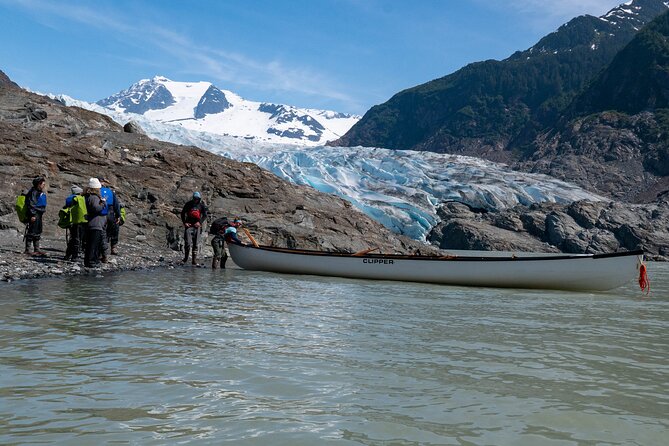
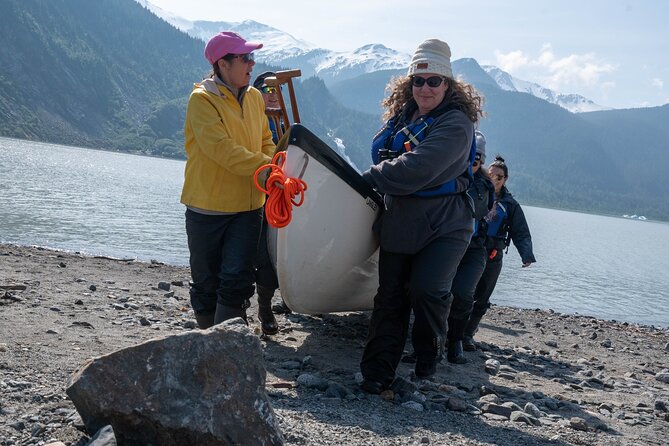
After the paddle, you get out of the canoe and switch to land. This is often where expectations need a gentle reset. The hike is described as rocky terrain with intimate views, but it’s not a long trek. You’re looking at the glacier edge up close while staying on safe routes.
Expect around 2 miles roundtrip of hiking over the course of this tour, which is enough to feel like you did something without turning into a full-day endurance event. Still, it’s not “flip-flops and a selfie.” You’ve got boots on, and you’re walking on uneven ground. The rubber boots help a lot here, especially if conditions are damp or slick.
What makes the hike valuable is the angle. Canoeing gives you the front-of-ice feeling. The hike gives you the lateral detail: the recession lines, the way edges shift, and the sight of how the glacier has been retreating. The tour is very clear about this: it’s in constant change, and not all features may be accessible. That isn’t marketing fluff—it’s the reason the guide stays flexible with how close you can safely get.
Time at the glacier edge also isn’t guaranteed. Weather and the pace of the group affect it, so don’t treat this like a clockwork checklist. The guide will focus on safety and the best available viewing conditions that day.
A useful mindset: think of this section as learning how to read a glacier. Once you know what to look for—edges, melt pathways, and the shape of the shoreline—the whole experience feels more vivid.
West Glacier trailhead: de-gear, reset, and head back
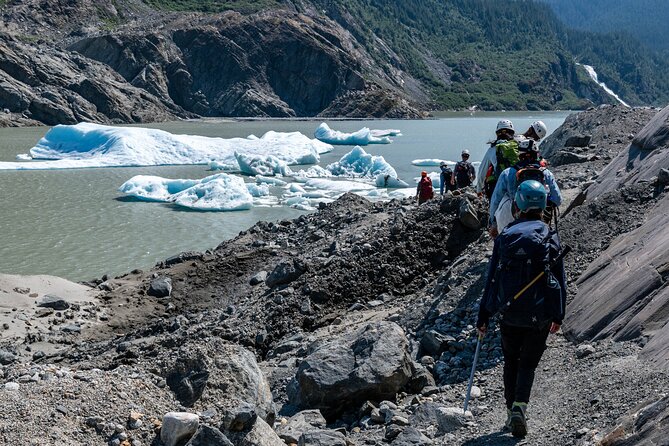
After you’ve hiked and seen what you came for, you de-gear at the trailhead area and take transport back to the main office. Then you get transported back to your meeting point. It’s a clean flow that keeps the day from dragging.
This is also where you’ll appreciate the tour’s “hassle-free” promise. Shore excursions often fail at the end—late pickups, confusion on where to drop off, or gaps that leave you stuck. Here, you’ve got a defined return process.
You’ll likely feel the day in your arms and legs. Even with breaks and guidance, paddling can leave you sore for a few days. That’s normal for an activity that includes real effort on top of wet cold conditions.
Small group, big value: why the price can make sense
At $402.09 per person for an approximately 5.5-hour day, this isn’t the cheapest way to see Juneau glaciers. But the value story is straightforward if you look at what’s included and what’s not.
You get:
- round-trip guided activity structure with professional guidance
- all necessary paddling equipment
- rain gear and rubber boots
- bottled water and snacks
- national park fees
If you had to price those items separately—especially in Alaska, where last-minute rentals can be pricey—you’d likely end up spending close to the tour cost anyway. The guide also matters. Canoeing isn’t just “sit and go.” You’re learning technique, getting safety guidance, and getting interpretation about what you’re seeing.
Also, you’re not crammed with hundreds of other people. With a maximum of 12 travelers and canoes sized to match the group, you tend to get a more personal experience—more conversation, better positioning, and quicker help when needed.
One more quiet value point: pickup options. You can choose from several start times, and you’ll get centralized meeting logistics. That helps you actually arrive ready rather than rushed.
Effort and safety: who this tour suits best
This tour is best for people who like an active day outdoors and don’t mind cold, wet weather.
You need:
- strong physical fitness
- the ability to paddle 5–6 miles
- hiking about 2 miles roundtrip
- to know how to swim
- to understand you’ll sign a release form at the start of the trip
- to be within age minimum (12+) and weight limit (250 pounds max)
Pregnancy is not permitted on this tour, due to inherent risks. That’s not a detail to skim—it’s part of how the operator keeps the day within their safety plan.
If you’ve got a knee issue or shoulder limitation, don’t assume you can “push through” with gear. The paddle is the demanding piece. The hike is shorter, but it’s rocky. If you’re unsure, talk to the operator during booking and disclose medical information. The tour explicitly asks for relevant medical history and notes that guides may need to adapt.
If you’re looking for a gentle, low-effort walk with glacier photos from one flat spot, you’ll likely feel disappointed. But if you want the kind of glacier day that includes movement, guidance, and a closer sense of the ice’s presence, this fits well.
Weather changes everything (and that’s part of Alaska)
This experience requires good weather. That line matters because the glacier and lake environment aren’t controllable. If weather forces changes, you’ll be offered a different date or a refund.
Also, glacier features may vary because the glacier is receding daily. You’ll explore the edges safely from bedrock. In other words: the operator is focused on safe viewing, not checking a fixed list of ice formations.
So plan to dress like you’re going to get wet and cold. Even if the sky looks friendly, Juneau weather has a way of reminding you who’s in charge.
Should you book Mendenhall Glacier Canoe, Paddle and Hike?
If you want the most memorable kind of Juneau shore excursion, I’d strongly consider booking this one. The best reason is simple: you’re not just looking at a glacier—you’re participating in the environment that glacier creates. Canoeing on glacier-fed water plus a guided rocky edge hike is a rare combo.
Book it if you:
- can handle paddling as real work
- know how to swim and enjoy being outdoors in rain
- want a small-group experience with clear gear support
- care about glacier change and explanation, not only photos
Skip it if:
- you want an easy walk with minimal physical effort
- you’re not comfortable with wet cold conditions
- you can’t meet the tour’s swimming and fitness requirements
FAQ
FAQ
How long is the Juneau Mendenhall Glacier canoe, paddle and hike tour?
The tour runs about 5 hours 30 minutes (approx.).
What gear is included for the canoeing and hike?
The tour includes all necessary paddling equipment, rain gear, and rubber boots, along with bottled water and snacks.
Where do cruise passengers meet?
Cruise passengers meet at the “C” sign near the cruise ship docks, directly between Mt. Roberts Tramway and the green Taku Smokeries building.
Do I need to know how to swim or be able to paddle and hike?
Yes. You must know how to swim, and you need strong physical fitness to paddle 5–6 miles and hike about 2 miles roundtrip.
Are there age and weight limits?
Yes. The minimum age is 12, and the maximum weight limit is 250 pounds per person.
What happens if weather is bad or the minimum group size isn’t met?
If the experience is canceled due to poor weather, you’ll be offered a different date or a full refund. The tour also requires a minimum of 4 travelers to operate; if that minimum isn’t met, the reservation may be changed or canceled.