REVIEW · GRAND CANYON NATIONAL PARK
Grand Canyon South Kaibab Day Hike
Book on Viator →Operated by The Desert Hiking Company · Bookable on Viator
Five hours, one big canyon lesson.
This South Kaibab hike drops you from Yaki Point down a ridge for wide canyon views you don’t get on most routes. I love how the plan mixes big scenery with real guide talk, so the canyon becomes more than a photo backdrop, and the group size stays small (up to 7).
Second, I like the practical setup: you get trekking poles plus a backpack and you’ll stop for lunch and snacks with the guide keeping you safe and moving at a pace that fits. One consideration: the hike is moderately strenuous, and the climb back up can feel intense, with one past group reporting roughly 3,300 feet of elevation gain on their day—so pack smart and don’t treat the return as a formality.
In This Review
- Key things that make this South Kaibab day hike worth your time
- South Kaibab Trail from Yaki Point: the view-first part
- The route rhythm: Ooh Aah, Cedar Ridge, and maybe Skeleton Point
- What your guide actually adds (and why names matter)
- Lunch, snacks, and the “don’t bonk” strategy
- Gear included: trekking poles and a backpack (small detail, big relief)
- How long it takes and when you’ll start
- Safety and pacing on a trail with a long uphill ending
- Value check: $270 for a small-group guided day
- Logistics that actually matter: meeting spot and getting there
- Who this hike suits best
- Quick reality check: weather and trail changes
- Should you book the Grand Canyon South Kaibab Day Hike?
- FAQ
- How long is the Grand Canyon South Kaibab day hike?
- Where is the meeting point?
- What does the tour include?
- Are entrance fees included?
- Is bottled water included?
- How many people are in the group?
Key things that make this South Kaibab day hike worth your time
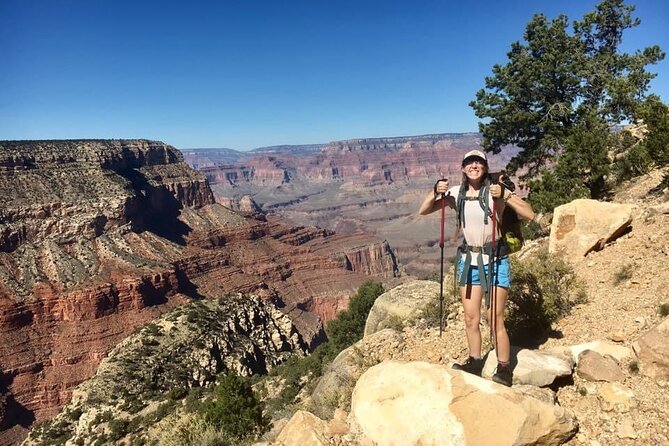
- Yaki Point ridge start: you begin with panoramic canyon views before you even start the descent
- Landmarks timed for sight-stops: Ooh Aah Point, Cedar Ridge, and sometimes Skeleton Point depending on pace
- Small group energy (max 7): easier questions, tighter pacing, and less waiting around
- Included gear: trekking poles and a backpack reduce the hassle when you land in the park
- Lunch built into the hike: a mid-hike meal means you don’t end up burning energy on empty stomach math
South Kaibab Trail from Yaki Point: the view-first part
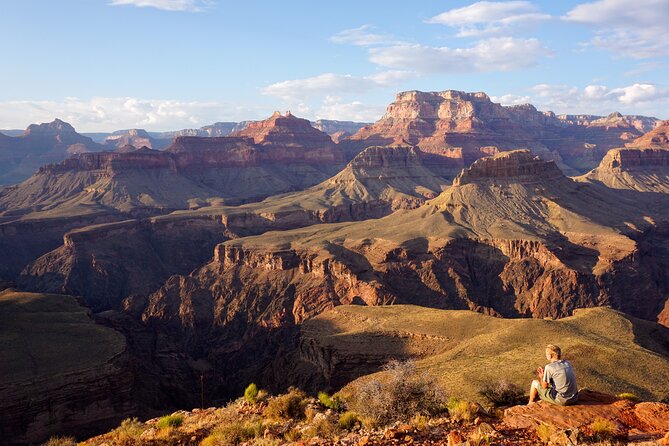
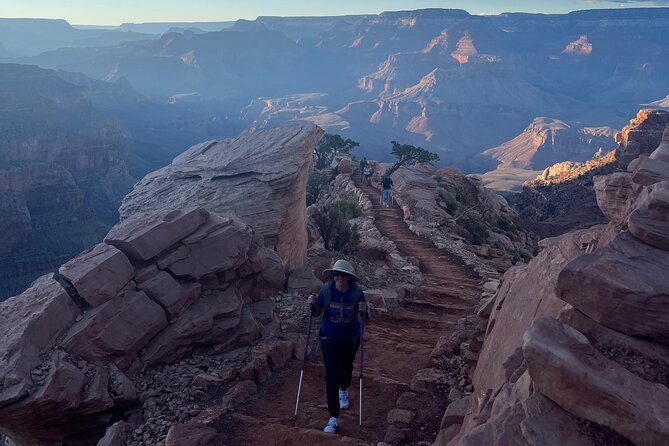
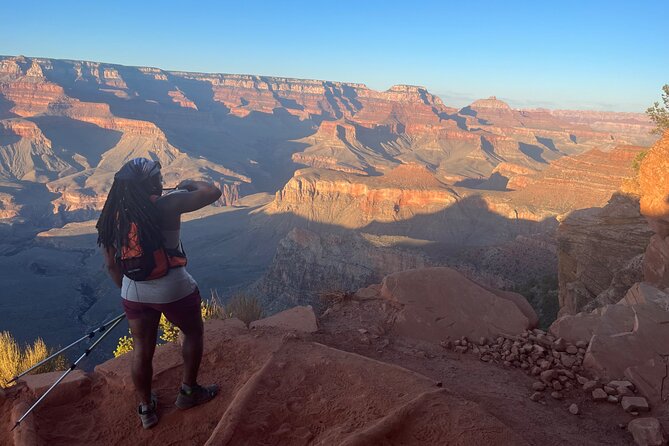
The South Kaibab Trail is famous for a reason. From Yaki Point, you get that “wow” moment quickly, with the canyon laid out in layers. Then the trail starts doing what it’s known for: a ridge descent that puts sweeping, dramatic views on your left and right for long stretches.
This is a good hike if you want classic Grand Canyon scenery but also want to understand what you’re looking at. Your guide shares geology, history, and ecology along the way. That sounds like a classroom pitch, but in practice it’s more like having someone help you read the canyon—what you’re seeing now, and how it got carved over time.
The route rhythm: Ooh Aah, Cedar Ridge, and maybe Skeleton Point
You’ll head along the South Kaibab Trail with planned stops for viewpoints and landmarks. Ooh Aah Point is one of the signature photo stops, and Cedar Ridge is where the scenery opens up again as you keep moving. If your group pace allows it, you may also get to Skeleton Point.
Here’s why this routing works for real people. The trail isn’t just about marching downhill and calling it a day. Those landmark moments break the hike into manageable chunks. They also give you pauses that aren’t forced. If you’re a quick walker, you’ll likely cover more. If you need breaks, the guide adjusts.
A mid-hike pace check is part of the deal. The hike is labeled moderately strenuous, and that usually means you should expect uneven footing and a return that tests your legs. The key is that the guide keeps tabs on the group so you don’t end up rushed, and you don’t end up dragging because you’re stubborn about your own timing.
What your guide actually adds (and why names matter)
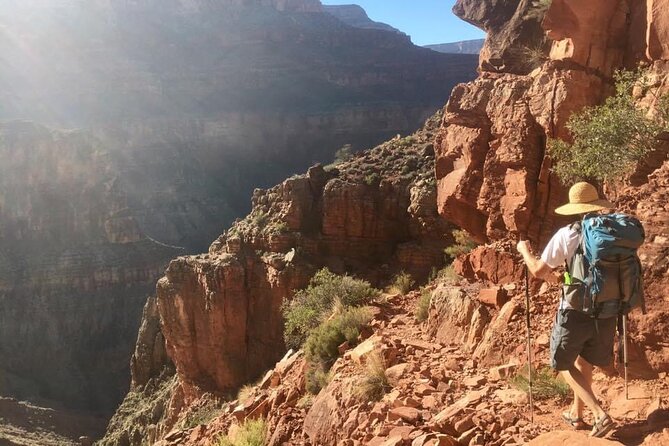
One of the biggest advantages here is the guide. The tour includes a licensed and certified guide, and the vibe from multiple past experiences is consistent: guides don’t just point; they explain.
I’ve seen how much difference it makes when the guide can talk about fossils, plants, and canyon history in a way that doesn’t feel like a script. People have specifically praised guides like Lewis, Chris, Josh, and Louis for being thoughtful and tuned to the group’s needs. You’ll want that if this is your first Grand Canyon hike, since the canyon can feel intimidating even when the trail is well marked.
Also, guides are the reason the day can flex. In at least one case, concerns about afternoon storms led to a plan adjustment toward a different trail and a start time earlier than planned. That’s exactly the sort of thinking that helps you get a safer, better day instead of a mediocre one.
Lunch, snacks, and the “don’t bonk” strategy
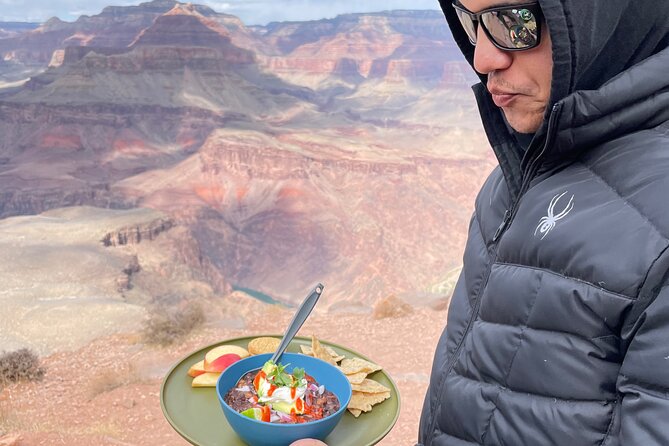
This tour includes lunch plus snacks, which matters more than it sounds. Grand Canyon days have their own rhythm—heat, wind, and constant visual input. If you skip food, you don’t just feel hungry. You feel sluggish, and your form changes. That’s when hills get harder.
The lunch stop is timed into the hike, so it’s not a random break where you spend 20 minutes deciding what to do. Past groups have described homemade-style picnic moments and also a wrap-style lunch made on the spot. Translation: it’s not only about calories, it’s about taking a breath and actually enjoying the view while you eat.
One practical note: bottled water is not included. That’s not a dealbreaker, but plan for it. Bring water for the day, and use the snacks like a steady engine rather than a last-second rescue.
Gear included: trekking poles and a backpack (small detail, big relief)
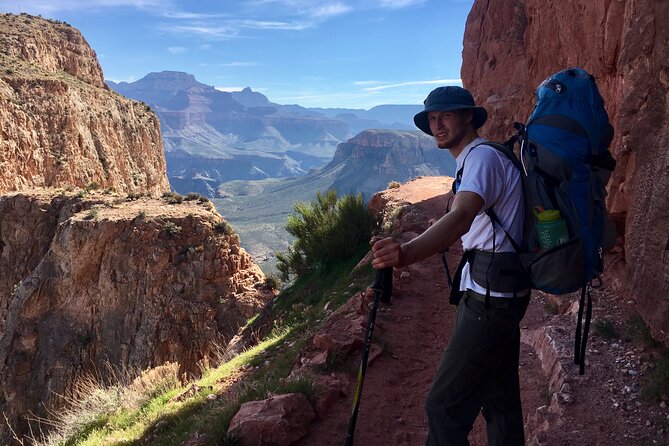
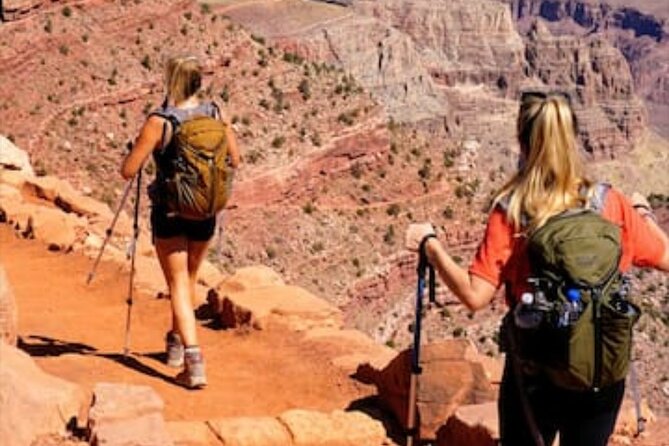
You’ll be provided with a backpack and trekking poles. For this hike, poles are more than a “nice-to-have.” The descent and the climb both put stress on knees and ankles. Poles help you control that motion and keep your footing steadier, especially on rocky, uneven sections.
The backpack matters because you’ll actually use it. In a canyon setting, you don’t want to be juggling a bag in one hand and trying to manage water and snacks with the other. Having a dedicated pack keeps the day feeling organized, even when you’re sweating.
If you’re the type who hates carrying extra stuff on vacation, this is a quiet win. You avoid the hassle of renting gear last minute or hauling your own bulky equipment through the airport and car.
How long it takes and when you’ll start
The tour runs for about 6 hours and includes time to hike, stop, eat, and enjoy the viewpoints. Departure hours are listed from 8:00 AM to 1:00 PM, and the activity ends back at the meeting point.
That time window affects your planning. A late start can compress your day, especially if weather pops up later. Many canyon hikes get worse later in the day, not because the trail changes, but because your body does. So if you have flexibility, an earlier start often feels easier.
Safety and pacing on a trail with a long uphill ending
This hike is adjusted for the group, and safety and hydration are built into the guidance. That doesn’t mean it’s easy. It means you’re less likely to feel abandoned on a technical moment.
The biggest reality check is the return uphill. South Kaibab’s payoff is the descent. The “plot twist” is the climb back. One past hike reported about 3,300 feet of elevation gain on the return, and even if your day’s numbers differ, you should still treat the uphill as the main event.
So your job is simple:
- Wear shoes with solid grip
- Use poles if you’ve got them
- Take the breaks the guide offers, even if you feel okay at first
Your guide will keep checking in. That’s what helps the day feel like a hike instead of a survival test.
Value check: $270 for a small-group guided day
At $270 per person, you’re paying for more than “a route.” You’re paying for a licensed guide, small-group attention (maximum 7 travelers), and included gear plus food.
Let’s break down the value in plain terms:
- Guide time: you’re not just buying a trail, you’re buying interpretation and pacing
- Included lunch and snacks: you’re not feeding yourself from scratch in the park
- Trekking poles and backpack: you’re saving effort and possibly rental costs elsewhere
- Small group: questions get answered faster, and you don’t spend half your day waiting
What’s not included is also important. Entrance fee isn’t included, and bottled water isn’t included. So your true “trip total” is the tour price plus those park-related costs and any guide gratuity you choose to give.
If you’re a first-time Grand Canyon hiker or you want to feel confident on a return uphill, this price starts making sense. If you already hike comfortably and prefer total independence, you might not need a guide. But for most people, the added context and steady pacing is what turns a tiring descent into a memorable day.
Logistics that actually matter: meeting spot and getting there
You meet at 6 S Entrance Rd, Grand Canyon Village, AZ 86023, and you return there at the end. The listed opening window is broad enough to fit different vacation rhythms, but you should still plan to arrive early and not scramble.
It’s noted as being near public transportation, which is useful if you’re not renting a car. Still, the canyon hikes run on schedules, so arrive with buffer time even if the area feels easy to reach.
Who this hike suits best
This hike fits people with moderate physical fitness who want a guided day with iconic views. It’s also a strong option if you:
- want a manageable group size (up to 7)
- appreciate geology/ecology/history explanations on the trail
- prefer having poles and a backpack handled
- don’t want to guess when to stop for food and photos
It may not be the best match if you’re expecting a gentle stroll. The descent and especially the climb back can be tough, even for fit hikers. If you’re nursing a knee injury or have limited tolerance for steep grades, you might want to consider a different trail with less vertical work.
Quick reality check: weather and trail changes
Grand Canyon weather can change fast. One past experience involved a forecast for thunder storms and a shift in the hiking plan, plus an earlier start to reduce afternoon exposure. You don’t need panic, but you do need flexibility.
So when you book, do two things:
1) Be ready for a route tweak if conditions require it
2) Keep your schedule open enough to start early if asked
That flexibility is often what makes the difference between a good day and a stressful day.
Should you book the Grand Canyon South Kaibab Day Hike?
I think this is a book-worthy experience for most visitors who want the iconic South Rim feel without playing trail logistics roulette. You’re getting a small group, a licensed guide, and included food plus hiking support gear. The guide element is the secret sauce—especially if you want more than just views and you care about safety and pacing.
I would skip it only if you strongly prefer solo hiking, you’re on the edge of moderate fitness, or you’re very sensitive to steep uphill returns. Otherwise, this is one of those “you’ll remember the canyon and the explanations” days, not just another line on your itinerary.
FAQ
How long is the Grand Canyon South Kaibab day hike?
It’s listed at about 6 hours on average.
Where is the meeting point?
You meet at 6 S Entrance Rd, Grand Canyon Village, AZ 86023, USA.
What does the tour include?
Lunch, snacks, a backpack, trekking poles, and a licensed and certified guide are included.
Are entrance fees included?
No. The entrance fee is not included.
Is bottled water included?
No. Bottled water is not included.
How many people are in the group?
The hike has a maximum of 7 travelers.