REVIEW · MOUNT COOK
Glentanner High Country Heli Hike
Book on Viator →Operated by Glentanner High Country Heli Hike · Bookable on Viator
Sky first, then glaciers underfoot. A short helicopter ride over Lake Pukaki and Aoraki Mount Cook National Park sets up amazing photo chances, then you switch to foot power for the Glentanner High Country hike and a stop at a restored historic field station. I love the mix of sky views and hands-on hiking time, and I also love the warm breaks—home-baked snacks and hot drinks at the field station. One consideration: mountain weather matters, so plan for possible rescheduling and make sure you bring proper footwear and clothing layers.
I also like how this stays small and conversational. With a max group size of 15, your guide has time to answer questions, and the pacing includes frequent stops for photos and views. Expect a moderate 4-hour outing with hiking that is gentler for part of the route and then more downhill later.
In This Review
- Key things to know before you go
- Why this heli-hike format feels so efficient in the Alps
- Lake Pukaki and Aoraki Mount Cook National Park from above
- The 7KM access track and what to expect on the trail
- Glacier stories you can actually picture while you hike
- The restored historic field station: snacks, heat, and context
- Guide Brian’s style: lots of info without the lecture
- What you should pack (and what you should not assume is included)
- Small-group size and the weather reality of heli time
- Price and value: what $307.18 buys you in practice
- Who this heli-hike suits best (and who might want to rethink)
- Should you book the Glentanner High Country heli-hike?
- FAQ
- How long is the Glentanner Heli Hike?
- How long is the helicopter flight?
- Where do you meet for the tour?
- What’s included, and what do I need to bring?
- What fitness level do I need?
- What happens if weather is poor?
Key things to know before you go
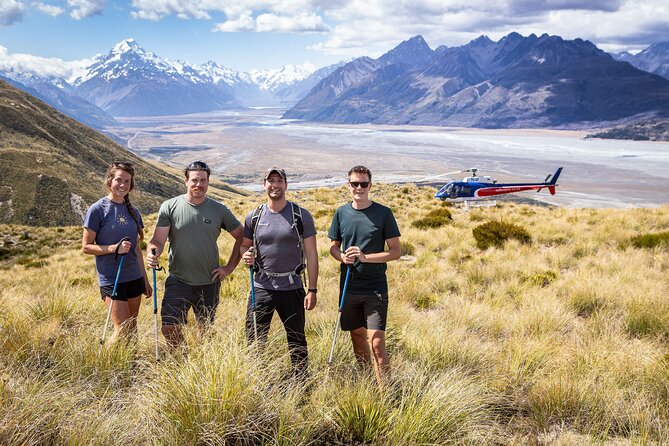
- Helicopter time is short, views are not: about 8 minutes in the air, with big-photo angles over Lake Pukaki and the park area.
- You get a restored historic field station break: snacks and hot tea/coffee/hot chocolate are part of the experience.
- A small group means real Q&A: up to 15 people, so you can ask your guide about terrain, wildlife, and local history.
- Terrain is partly flat, then downhill: it is not an all-day steep grind, but you do need solid footing for the latter stretch.
- Poles and safety extras are provided: hiking poles, plus sunscreen and insect repellent.
- Bring your own footwear and weather-appropriate clothing: those are not included, and conditions can change fast.
Why this heli-hike format feels so efficient in the Alps
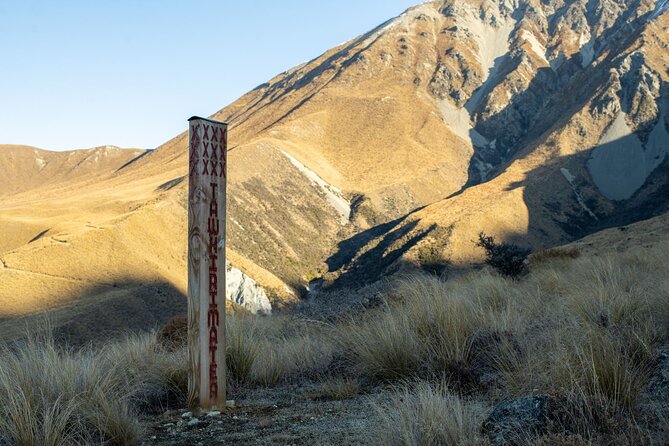
This tour works because it gives you the best angles without the usual trade-offs. A helicopter is an obvious splurge, but here it is not just for show. It saves you time and effort while still delivering that clear “up high” perspective that lets the Southern Alps make sense.
Then you shift to a real hike through the Glentanner High Country. You do not just stand and look—you walk, stop often, and get context for what you are seeing. The route is based around a well-maintained access track and a longer hiking section with views toward Lake Pukaki and the Tasman River Delta. It is the kind of day that feels balanced: aerial wow, then grounded exploration.
If you care about photos, you also benefit. You get both birds-eye views and from-the-ground angles. That pairing matters. Some scenery photographs better from above, while other moments hit harder once you are lower and closer to the terrain.
Lake Pukaki and Aoraki Mount Cook National Park from above
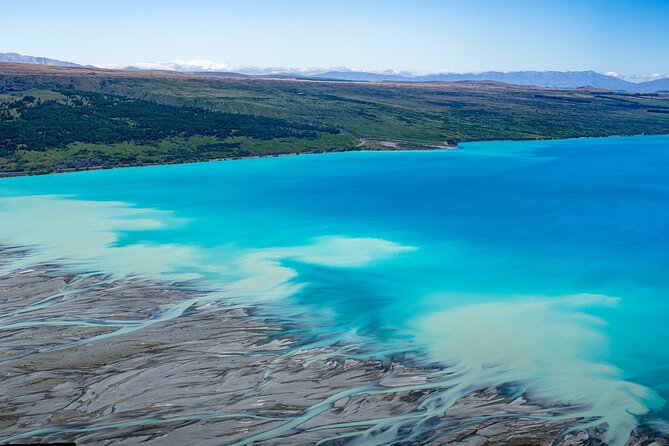
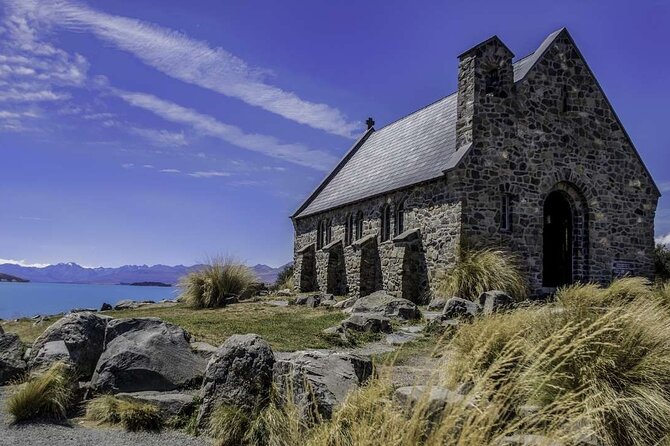
The helicopter portion is brief—around 8 minutes—but it is packed with major view corridors. You fly over Aoraki Mount Cook National Park scenery, then you get birds-eye looks at Lake Pukaki. In person, Lake Pukaki’s colour is famous, and from above it has that striking, turquoise-to-deep-blue look people talk about.
On the flight, you also pick up a sense of how the mountains and valleys connect. That matters because the hiking section later is not just random walking. Once you have seen the shape of the area from the air, the terrain you move through feels more readable.
Practical tip: during the flight, keep your camera secure and ready before you get a view. Helicopter moments are fast, and you want to be able to focus on framing instead of fumbling.
The 7KM access track and what to expect on the trail
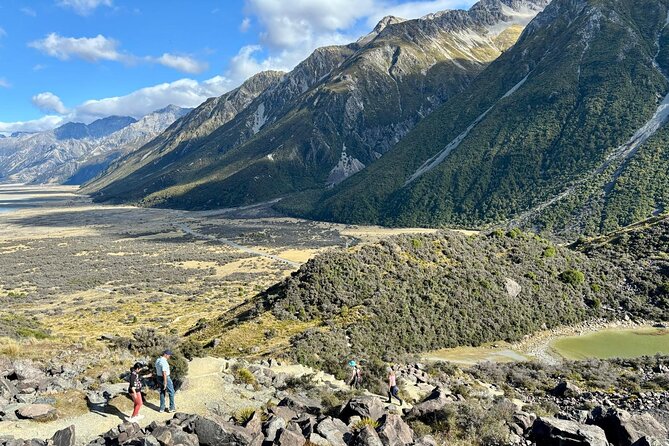
Your day includes a well-maintained 4×4 track segment of about 7KM, plus additional hiking time as you explore the high country area. The overall tour time is about 4 hours, but the hike does not feel like a nonstop march. Expect frequent stops—both for views and for guide info.
From what you should plan for physically, the route is described as relatively flat for roughly the first third, and then it shifts downhill for the rest. That means you need more than just endurance. You need balance and confidence with your feet, especially on slopes. Hiking poles help a lot here because they give you extra stability on the downhill portions.
Fitness-wise, this is aimed at moderate capability. If you are already comfortable with regular walking and general outdoor movement, you should be fine. If you get shaky on downhill footing, treat this as a “take it slow and use poles” day.
Glacier stories you can actually picture while you hike
The Glentanner High Country hike is tied to the idea of ancient glaciers shaping the region. You get guide explanations as you walk, and that’s a big reason the hike feels more worthwhile than just scenery.
When a guide connects what you are seeing to how glaciers carved the area, the features stop being vague. Instead of looking at rocks and ridges as decoration, you start seeing cause-and-effect—how ice movement leads to valley shapes, changes in elevation, and the dramatic mountain feel of the Southern Alps.
This is also why a small group helps. In a group that’s too large, you often hear only part of the story. Here, you can ask questions and get answers that match what you are seeing in front of you—especially if you care about the history, terrain, and wildlife.
The restored historic field station: snacks, heat, and context
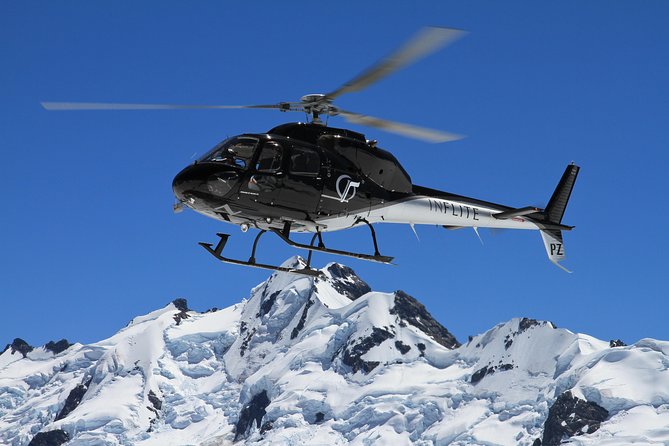
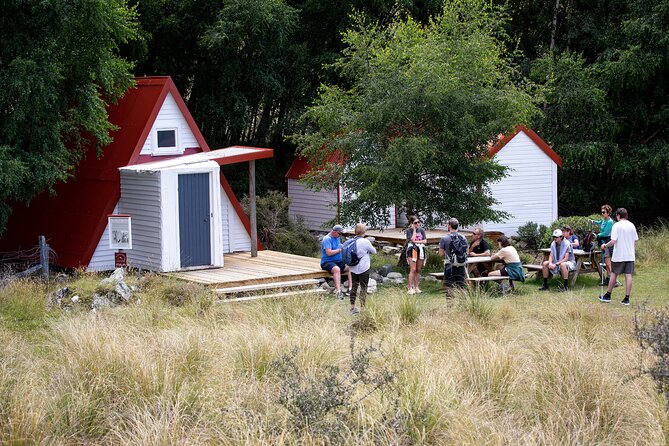
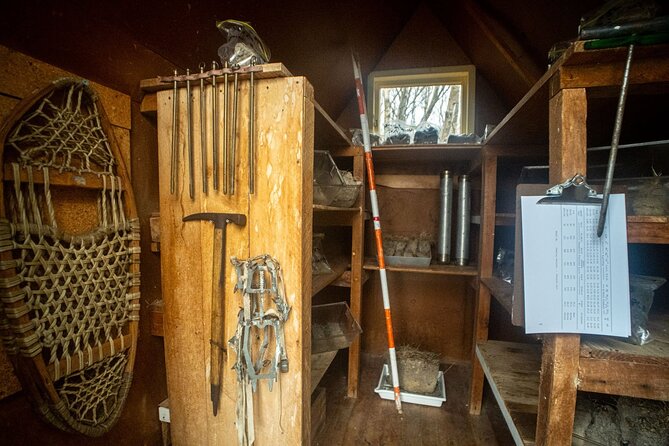
One of the best parts of this outing is the stop at a restored historic field station. It breaks up the day in a smart way—morning-to-midday rhythm without making you feel rushed.
At the field station, you get home-baked snacks, plus hot tea, coffee, and hot chocolate. That alone is a value add on a mountain day. Cold air and wind can drain your energy, so having something warm and a quick break helps you enjoy the second half with better focus.
This stop also gives the guide a natural moment to add more interpretation. You are not just hiking through views; you are learning while you pause. Guides also share information that can include terrain, wildlife, and local culture, and the field station setting makes those stories easier to hold onto.
If you are new to alpine travel, this kind of contextual rest is a gift. You get to reset, warm up, and understand what you are seeing before moving onward.
Guide Brian’s style: lots of info without the lecture
A recurring theme with this tour is guidance that feels personal and practical. In particular, Brian comes up in comments about being very informative—covering the terrain, wildlife, and history/culture in a way that connects to the hike.
That style matters. You do not want a guide who recites facts with no link to your surroundings. Here, the info is tied to what you are walking through and viewing from different angles. You get to ask questions and get answers that help you notice details you might otherwise miss.
Another plus: pacing. People mention stops for breaks and views, not just a strict schedule. The result is that the hike feels like a guided walk with frequent “pause and look” moments, which is exactly how you get the most out of mountain time.
What you should pack (and what you should not assume is included)
This tour provides several key support items. You’ll have hiking poles available, along with sunscreen and insect repellent. You also get snacks and hot drinks at the historic field station.
But you are responsible for the essentials they specifically do not include:
- proper hiking footwear
- proper clothing for the weather conditions
That is not a small detail. Even on a clear day, alpine conditions can shift. Wear shoes with real traction and choose layers you can adjust. If you tend to get cold easily, plan for that. If you get warm outdoors, you’ll want breathable layers you can remove.
Also note the weight limit: total weight per passenger is listed as 265 lbs. If you are near that figure, double-check when booking so you do not get surprised later.
Finally, you’ll move between helicopter and trail surfaces. Be ready for that footwear-to-terrain transition. Poles help, but good shoes do the heavy lifting.
Small-group size and the weather reality of heli time
This is a maximum of 15 travelers. That small number keeps the experience from turning into a production line. It also supports more conversation with your guide and more time for you to ask questions and get photo help.
Weather is the other reality. This is described as requiring good weather, so the day is not fixed in a vacuum. If conditions are not right, you may be offered a different date, and in some cases scheduling adjustments happen so you still get to hike when conditions improve.
One helpful mindset: think of it as a mountain window experience. You’re choosing a half-day, but you’re also choosing flexibility. If you’re traveling with a tight schedule, you should still try, just keep expectations grounded and have at least a bit of flexibility if possible.
Price and value: what $307.18 buys you in practice
At $307.18 per person, this is not a budget hike. But it is also not just a scenic walk. Your money supports three big things: helicopter transport (including about 8 minutes of flight time), guiding and interpretation, and a genuine comfort break at a restored historic field station (snacks plus hot drinks).
Then you also get practical extras that reduce what you need to bring or buy for the day—hiking poles, sunscreen, and insect repellent. On a trip like this, those small items add up.
The small-group format also matters for value. With up to 15 people, you typically spend less time waiting, and your questions are more likely to get answered clearly. That is part of why people rate it so highly.
If you’re deciding between a plain hike and the heli-hike option, the simplest way to think about the value is this: the helicopter time pays for the high-altitude perspective and helps you access terrain in a way that would be harder to replicate on foot alone.
Who this heli-hike suits best (and who might want to rethink)
You’ll likely love this if you want:
- strong photography chances of Lake Pukaki and Aoraki Mount Cook National Park
- a guided hike with real storytelling, not just directions
- a moderate outdoor day that lasts about 4 hours
- a first helicopter experience or a special-views-only day without committing to a full expedition
You might want to rethink it if:
- you struggle with downhill footing, since the hike shifts to downhill for about the latter portion
- you don’t have proper hiking footwear or you’re underprepared for changing conditions
- you’re close to the listed weight limit (265 lbs), since you’ll need to confirm eligibility at booking
This tour also fits well when you want a clear, time-efficient signature experience on the South Island—one day where the air and the trail both deliver.
Should you book the Glentanner High Country heli-hike?
Book it if you want a day that balances big views with real walking, and you care about getting context from your guide. The combination of helicopter views over Lake Pukaki and Aoraki Mount Cook National Park, plus the restored historic field station stop with home-baked snacks and hot drinks, is a strong mix for the money.
Skip or wait if you hate the idea of weather affecting timing, or if you cannot handle uneven downhill footing. This is a great experience, but it does ask for basic mountain-readiness—especially good shoes and weather layers.
If you’re in the Glentanner/Mount Cook area and want a guided half-day with a memorable aerial-and-trail payoff, this one makes a lot of sense.
FAQ
How long is the Glentanner Heli Hike?
It lasts about 4 hours total.
How long is the helicopter flight?
The flight time is listed as about 8 minutes.
Where do you meet for the tour?
The meeting point is 3388 Mount Cook Road, Glentanner 7999, New Zealand.
What’s included, and what do I need to bring?
Hiking poles are provided, and you’ll get snacks plus hot tea/coffee/hot chocolate at the historic field station stop. Sunscreen and insect repellent are also provided. You need to bring proper hiking footwear and proper clothing for the weather.
What fitness level do I need?
The tour calls for a moderate physical fitness level. Most people with street-level fitness should enjoy it, and the hiking includes downhill later in the walk.
What happens if weather is poor?
The experience requires good weather. If it’s canceled due to poor weather, you’ll be offered a different date or a full refund.