REVIEW · GERMANY
Alpaca hike in the Barnimer Feldmark
Book on Viator →Operated by Buchholz Saloon (Alpaka Wanderungen im Berlin Umland) · Bookable on Viator
A hike with alpacas sounds silly until it works. I love how this alpaca-led walk turns your pace into theirs, and I also love the quiet, hands-on animal time before and after. A key consideration: it’s best for kids age 10+ (and dogs and strollers aren’t allowed), so plan accordingly.
This trip is built for slowing down. You’ll get a clear intro to alpacas and then meet them up close—some haltering, some leading, and plenty of chances to learn how calm, sensitive animals behave. The walk itself moves through villages, meadows, and quiet lanes, and it’s intentionally flexible because the alpacas set the pace.
If you want a fixed-distance hike, this isn’t that kind of outing. Expect 60 to 90 minutes outdoors, with the distance varying depending on the animals’ mood and comfort.
In This Review
- Key things that make this alpaca hike worth your time
- Alpaca-paced walking in the Barnimer Feldmark: what you’re really signing up for
- Meeting at Buchholz Saloon (Altlandsberg): plan your morning around a real start
- What happens before you walk: alpaca briefing, haltering, and learning to move safely
- Leading alpacas through villages, fields, and quiet lanes
- How the group size changes everything (and why max 4 is a big deal)
- Brushing, learning alpaca behavior, and why hands-on time matters
- Knitting yarn from alpaca wool: a small souvenir with a story
- Price and value: is $45.86 per group a fair trade for the experience?
- Who this hike suits best (and who should skip it)
- Practical tips so you get the most from this calm, hands-on outing
- Should you book the Alpaca Hike in the Barnimer Feldmark?
- FAQ
- How long is the alpaca hike?
- Where does the hike start, and when is it scheduled?
- What age is required?
- Are dogs or strollers allowed?
- How many people are in a group?
- Can I cancel and get a full refund?
- What happens if the weather is poor?
Key things that make this alpaca hike worth your time
- Tiny groups (max 4 people) so you’re not lost in the crowd and you get real interaction time
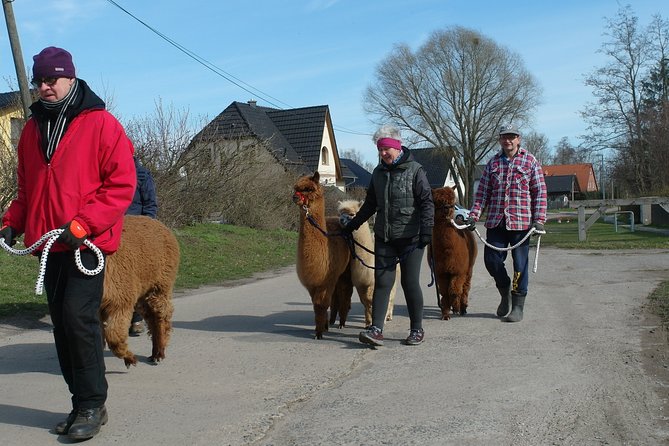
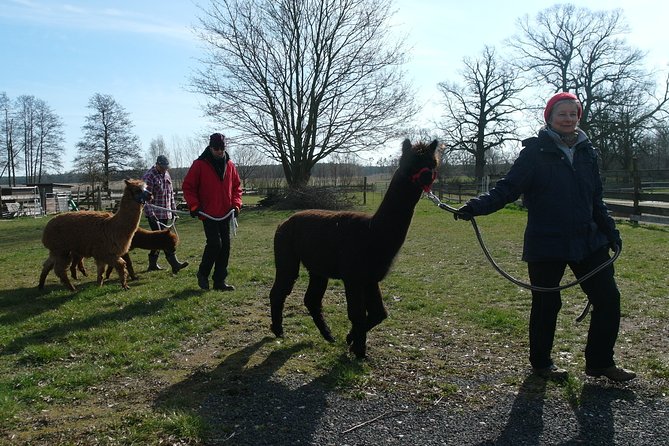
- 2 to 4 alpacas haltered and led by participants so you’re doing more than watching
- 60 to 90 minutes of alpaca-paced walking through villages and meadow paths
- Guided alpaca coaching before you start so you know how to handle sensitive animals safely
- Hands-on brushing and a chance to meet other animals like dwarf sheep at the farm (if included on the day)
- A post-hike stop at Buchholz Saloon starting at noon for lingering and a relaxed finish
Alpaca-paced walking in the Barnimer Feldmark: what you’re really signing up for
On paper, this is a 1 hour 30 minute alpaca hike. In real terms, you’re signing up for a different way to move through countryside—one where the animal’s comfort controls the rhythm. That’s not just a cute detail. It changes the whole experience.
I like that the distance can vary because the alpacas run the schedule. You’re not being pushed along a route like a checklist. Instead, you’re learning to read small signals—when the animal wants to pause, when it’s curious, and when it’s ready to keep going. That’s where the calm comes from.
You’ll also get a structured intro to the herd before you head out. You’re not thrown into a situation and told good luck. The goal is a safe, responsible way of spending time with animals, and the reviews back up that the explanation is a big part of why people felt comfortable.
Meeting at Buchholz Saloon (Altlandsberg): plan your morning around a real start
The hike starts at 10:00 am at Buchholz Saloon, Bettina und Holger, Wesendahler Str. 12, 15345 Altlandsberg, Germany. Ending back at the same place keeps it simple, and it’s nice when your morning doesn’t turn into a mini logistics project.
One practical advantage: the start point is a saloon setting, not a random parking lot. That matters because you’ll likely use a bit of time before the walk begins for instructions and getting introduced to the animals. You’ll be glad there’s a defined place to gather, listen, and settle in.
After the hike, you can linger at the Buchholz Saloon starting at 12:00 pm. Even if you don’t stay for a full sit-down, having an anchor point after the walk helps you keep the whole outing relaxed instead of rushed.
What happens before you walk: alpaca briefing, haltering, and learning to move safely
Before you step outside, you’ll get acquainted with the herd and a briefing about alpacas and what makes them special. This is where you learn the basics: what they’re like, how they communicate, and how to behave around them.
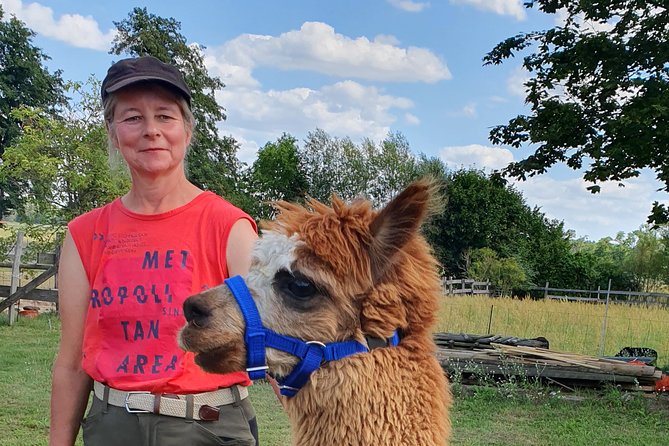
Then comes the hands-on part. 2 to 4 alpacas are haltered and led by participants. That means your experience isn’t just standing next to an animal for photos. You’re involved in the process, guided so you’re doing it responsibly.
A detail I’m grateful for: the animals are described as sensitive. That’s a clue about the style of the whole operation. If you want an “approach first, ask questions later” event, skip it. This is about preparation and gentle handling, not grabbing at cute moments.
Also, dogs aren’t allowed, and strollers aren’t allowed. That helps keep the alpacas calm and makes the group interaction more manageable—especially in a route that includes lanes and fields where there’s not much room for chaos.
Leading alpacas through villages, fields, and quiet lanes
Once you’re walking, you’ll head out of the village and into the wider countryside—fields and meadows included, plus those quiet lanes that make this feel like real rural Germany rather than a staged zoo route.
The route is designed for a measured pace. Alpacas determine it. That can mean you cover a bit less ground than you imagined, but it also means you’re less likely to arrive stressed or breathless. This is the kind of walk that helps you slow down on purpose.
A fun element: the briefing includes the idea that sometimes you can even listen to the alpacas’ spoken language. I can’t promise every sound will be clear, but the point is that the experience nudges you to pay attention. You’re not just walking; you’re observing.
And yes, you might also notice each animal has its own character. Some reviews call out that softness and individuality—one alpaca moves differently than another. That’s actually useful to know as you go: don’t assume every alpaca “should” walk the same.
How the group size changes everything (and why max 4 is a big deal)
The hike has a maximum of 4 travelers. That’s small enough that the guide can adjust if someone needs a slower moment, if an alpaca is hesitant, or if you want a little extra time for photos.
This is one of the most praised parts of the experience. People consistently highlight the relaxed feel of a small group and the way the host takes time with guests. In a group of four, you’re not competing for attention, and the instructions land better.
For you, this often translates into a better animal experience. In smaller groups, the handling time doesn’t feel rushed, and the alpacas aren’t getting swarmed by too many people at once.
Brushing, learning alpaca behavior, and why hands-on time matters
One of the most memorable parts of the experience is the chance to get close in a calm way—especially around grooming. Many reviews describe time brushing the alpacas before and after the walk. That fits perfectly with the idea that alpacas need gentle, patient contact to feel safe.
This is more than cuteness. Brushing helps the animal get used to you, and it helps you understand how careful you need to be. If you’ve ever handled timid animals, you know the difference between “I petted it for a second” and “I learned its comfort signals.” This experience pushes you into that second category.
There’s also mention of time with other animals back on the farm—like dwarf sheep—depending on the day. Even if that’s not the main event, it adds variety to the visit. It turns a short hike into a mini animal encounter, not just a walk-with-legs.
Knitting yarn from alpaca wool: a small souvenir with a story
After the hike, there’s a small selection of wool from the alpacas that’s been processed into knitting yarn. If you knit (or know someone who does), this is a more personal souvenir than a mass-market trinket.
If you don’t knit, it still helps you connect the dots: the alpaca isn’t just a walking prop. The farm is part of a broader system, and you’re seeing a tangible product made from their wool.
Price and value: is $45.86 per group a fair trade for the experience?
The price is listed as $45.86 per group (up to 1). That’s the kind of pricing that can feel unclear until you look at what you’re actually getting: a tiny group, real hands-on involvement (leading haltered alpacas), and a guided explanation.
Because the group is max 4 and a few alpacas are directly part of the walking segment, you’re not paying for a distant animal viewing. You’re paying for safety, instruction, and time with animals in a controlled setup.
So is it good value? For me, it would be, if you want:
- an interactive animal outing (leading + brushing),
- a calm countryside walk,
- and a small-group teaching vibe rather than a crowded activity.
If you only want photos with minimal interaction, you might find other, cheaper animal experiences. But if you’re an animal lover who likes learning and slowing down, this price looks like it matches the scale of the event.
Who this hike suits best (and who should skip it)
This is a strong pick for:
- Animal lovers who want a responsible, guided way to spend time with alpacas
- People who enjoy slow, observation-based walks more than distance chasing
- Families with older kids, because the minimum age for accompanying persons is 10 years
It’s also described as suitable for children aged 10 and over, with guidance noting alpaca hikes aren’t suitable for kids under 10. That’s not a random rule; it’s likely tied to keeping the animals calm and making sure handling is safe.
A few “don’t go if…” notes based on the experience rules:
- If you need to bring a stroller, this isn’t set up for it.
- If you want your dog with you, dogs aren’t allowed.
- If your group includes very young kids, look for a different activity.
One more subtle fit question: if you want a hike where you can count on a set distance and speed, this won’t be your best match. The alpacas control the pace.
Practical tips so you get the most from this calm, hands-on outing
I’ll keep these grounded in what the experience is designed for.
Wear shoes you don’t mind getting slightly field-dusty. You’ll be walking through fields and meadows, plus village lanes. Comfortable footwear matters more than style here.
Dress for a countryside walk, not a city stroll. Even though the outing is short, you’ll be outdoors for 60 to 90 minutes of actual walking time, plus time for introductions.
Be ready to follow the animals’ lead. Mentally commit to slowing down. If you’re tense or in a hurry, it’s harder to enjoy the deceleration vibe.
Leave space for gentle handling. This works best when you approach brushing and leading with patience. The whole event depends on keeping alpacas comfortable.
Should you book the Alpaca Hike in the Barnimer Feldmark?
If you want an animal experience that feels thoughtful—not chaotic—this is an easy yes. The most praised parts are the small group size, the informative hosting, and the chance to interact in a safe way through leading and brushing. Add in a countryside route and a relaxed post-hike option at Buchholz Saloon, and it becomes more than a quick novelty.
I’d skip it only if you need stroller access, you’re traveling with a dog, or your kids are younger than 10. Also skip it if you’re expecting a fixed-distance performance hike. This is meant to be paced by the alpacas, not by your watch.
If you fit the basic profile—animal lovers, older kids, calm walkers—you should enjoy it.
FAQ
How long is the alpaca hike?
The activity runs about 1 hour 30 minutes total. The actual hike time is roughly 60 to 90 minutes.
Where does the hike start, and when is it scheduled?
You meet at Buchholz Saloon, Bettina und Holger, Wesendahler Str. 12, 15345 Altlandsberg, Germany. The start time is 10:00 am, and it ends back at the meeting point.
What age is required?
Children should be aged 10 and over. The minimum age for accompanying persons is 10 years. There is a separate note that the minimum age to own your own alpaca is 14 years.
Are dogs or strollers allowed?
No. Dogs are not allowed on the hike, and strollers are not allowed.
How many people are in a group?
This activity has a maximum of 4 travelers.
Can I cancel and get a full refund?
Yes. You can cancel up to 24 hours in advance for a full refund. If you cancel less than 24 hours before the start time, the paid amount isn’t refunded.
What happens if the weather is poor?
The experience requires good weather. If it’s canceled due to poor weather, you’ll be offered a different date or a full refund.