REVIEW · KILIMANJARO
8 Days Kilimanjaro Hike via Lemosho Route
Book on Viator →Operated by Nafika tours · Bookable on Viator
One mountain, eight days, and real-time altitude management. This Kilimanjaro via Lemosho Route is built for big views from the western side, with a steady plan that helps your body adjust.
I especially love two things here: first, the way Lemosho spreads the climb out so you get time to acclimatize while still stacking up incredible scenery. Second, the safety setup sounds serious and practical, with guides doing regular health checks and carrying emergency oxygen if altitude hits hard.
The main drawback to consider is the summit push. Expect a very long, high-stakes Day 7—midnight wake-up, hours of climbing close to the crater rim, then a same-day descent—so your best bet is solid walking fitness and a calm, patient pace.
In This Review
- Quick hits before you go
- Why the Lemosho Route Fits People Who Want Great Views and Better Odds
- Getting to Lemosho Gate: Transfers, Timing, and What to Expect on Day 1
- Day 1 in the Forest to Big Tree Camp: Your First Real Acclimatization Win
- Days 2–3 Across Shira Plateau: Moorland, Volcanic Rock, and Big-Cloud Views
- Day 4 to Lava Tower and Great Barranco Valley: High Desert to Cliffside Camping
- Day 5: Barranco Wall, Glaciers Overhead, and That Short Acclimatization Trick
- Day 6: Barafu Camp at 4,640 m and the Early Night Before the Longest Part
- Day 7 Summit Day: Midnight Start, Stella Point, Uhuru Peak, and One Day of Work
- Day 8 Down from Millennium Campsite to Mweka Gate: Certificates and Cold-Drink Relief
- Camps, Meals, and Water: The Included Comfort Stuff That Helps You Finish Strong
- Safety First: Health Checks, Emergency Oxygen, and a Team That Watches Your Pace
- Value and Price: Why $2,350 Can Make Sense for an 8-Day Guided Climb
- Who Should Choose This 8-Day Lemosho Climb (and Who Should Rethink It)
- Should You Book Nafika Tours on the Lemosho Route?
- FAQ
- How long is the 8 Days Kilimanjaro hike via Lemosho route?
- Where does the hike start and what altitude is it at?
- What time does pickup happen before the climb?
- What is included in the price?
- What is not included?
- Is emergency oxygen provided?
- How large is the group?
- Can I get a full refund if I cancel?
Quick hits before you go
- Western start at 2,360m at Londorossi/Lemosho side, setting you up for a gradual rhythm
- Shira Plateau views where Kibo Peak can appear dramatically above cloud cover
- Lava Tower lunch stop (4,640m) with dramatic high-desert and glacier-adjacent scenery
- Great Barranco Valley camp at 3,960m for sheltered sleeping plus huge cliffside photo moments
- Midnight summit day aiming for Stella Point (5,756m) then Uhuru Peak (5,895m) before descent
- Comfort support included like camp gear, treated water, and well-run tea breaks (table-and-chair style)
Why the Lemosho Route Fits People Who Want Great Views and Better Odds
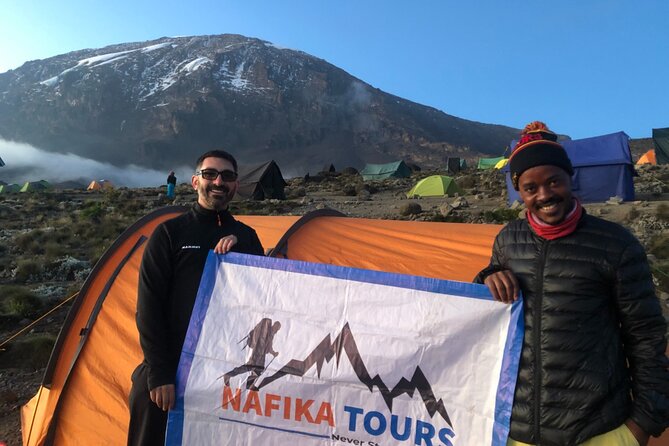
Lemosho is often picked for a simple reason: it gives you a long, scenic approach around Kilimanjaro instead of rushing straight upward. Starting on the western side helps you slowly build your altitude while watching the mountain change faces—forests to moorland to alpine desert.
A big plus is the route’s pacing. Some days include gentler gradients or short acclimatization walks, which means you’re not just grinding uphill every single hour. That matters because altitude doesn’t care how motivated you are; it cares how your body adapts.
If you’re shopping for a route that balances scenery with a “climb smart” schedule, Lemosho is the kind of plan you’ll feel good about from day to day.
Getting to Lemosho Gate: Transfers, Timing, and What to Expect on Day 1
Your day starts with pickup and transfer. The plan calls for getting picked up around 8:00 am and transported to Lemosho Gate on the western side, after which Nafika Tours handles the pre-hike formalities.
Even before the first step, you’re getting the practical stuff right: private transport is included, and the trip is designed around a smooth handoff from hotel-to-gate so you’re not wasting time figuring out schedules on your own.
Once you reach camp for the night, you’ll transition into a rhythm: you’ll hike in the day, set up camp at the end, then use the evening for recovery and an early start the next morning. Day 1 is forest walking through the Lemosho glades toward Big Tree Camp, so you ease into conditions rather than launching immediately into extreme altitude.
Day 1 in the Forest to Big Tree Camp: Your First Real Acclimatization Win
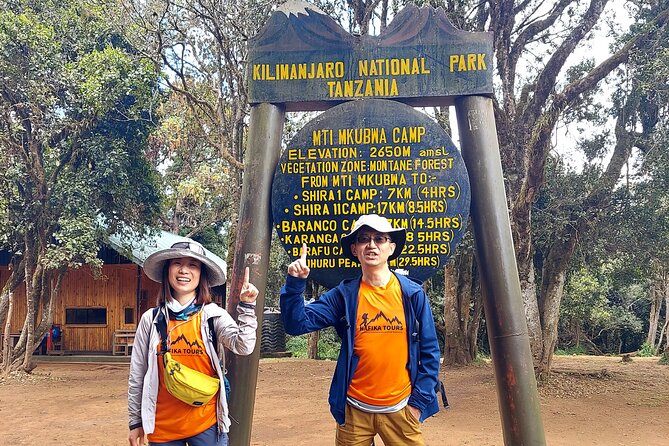
Day 1 is all about landing softly. You hike about 4 hours through forest glades to Big Tree Camp, and that sets a tone: you’re moving, but you’re not yet fighting the highest elevations.
There’s also something psychologically helpful here. Forest starts feel more forgiving—cooler air, more gradual climbs, and fewer “I have to breathe” moments than later on. That’s not magic; it just helps you arrive at camp without going out too fast.
When I look at route quality, I weigh the early-day pacing heavily. A good Day 1 isn’t a “warm-up marketing line”—it’s your body’s first chance to settle into hiking mode.
Days 2–3 Across Shira Plateau: Moorland, Volcanic Rock, and Big-Cloud Views
Day 2 shifts you into Shira 1 Camp territory after a hike of about 5.3 miles (8.5 km). You’ll cross grassy moorland and heather scattered with volcanic rock formations. The view payoff starts early, including the chance to see Kibo Peak floating on clouds from the area.
Then Day 3 is your Shira Plateau day, about 8 km / 5 mi, with moorland walking that doubles as acclimatization. Here you’ll get another kind of wow: views of the northern ice fields from the western side, plus unusual Kibo angles depending on cloud and weather.
These two days are where Lemosho’s “scenic balance” really shows. You’re climbing, but you’re not just climbing. You’re also being guided through altitude management—steadier effort, time to adjust, and camp nights that keep you from feeling like you’re constantly behind.
Practical note: moorland weather can change fast. Pack for wind and temperature swings, even if the morning looks calm.
Day 4 to Lava Tower and Great Barranco Valley: High Desert to Cliffside Camping
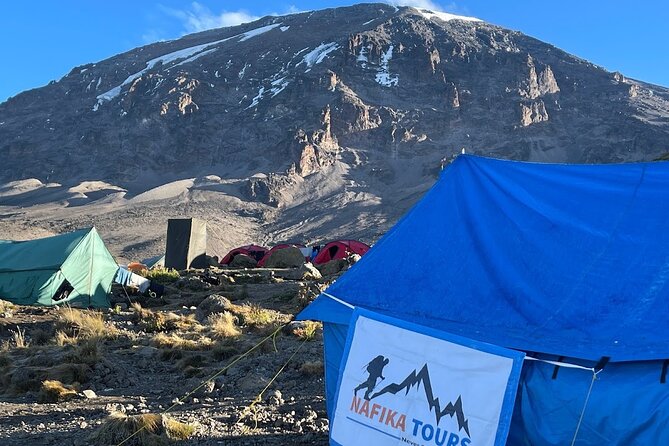
On Day 4, you climb toward Lava Tower (4,640 m), your highest point of the day, and it’s a lunch moment worth planning for. The hike runs about 10 km / 6.2 mi over roughly 7 hours, with views that get bigger as you enter upland desert zones.
After lunch, you descend toward Great Barranco Valley at about 3,960 m. This is one of the most memorable camp settings in the entire climb: you’re sleeping beneath tall cliffs, with wide views over the plains below.
Two things make this day useful, not just scenic. One, you’re continuing the climb in a way that supports acclimatization. Two, the valley camp gives your legs a break after higher terrain while keeping you visually close to the mountain’s drama.
Photos won’t replace your actual experience here, but they will help you remember how quickly the “green Kilimanjaro” becomes a high, dry world.
Day 5: Barranco Wall, Glaciers Overhead, and That Short Acclimatization Trick
Day 5 is a mix of challenge and payoff. You’ll ascend toward the Barranco wall and climb it—an obstacle that looks intimidating but is described as easier than it appears once you’re on it and moving with your guide.
From there, you pass under the Heim and Kersten glaciers, and the views around you get stunningly direct. You’ll head toward Karanga Valley with Kibo glaciers soaring overhead, plus the chance to spot Mawenzi in the distance from camp.
Then comes the smartest move of the day: a short afternoon you can use to rest, plus an optional acclimatization walk for those who feel strong, up to around 4,200 m, then back to camp.
This is the kind of day that separates “I was tired” from “I climbed well.” The short push helps your body learn the altitude without wrecking you before the summit attempt.
Day 6: Barafu Camp at 4,640 m and the Early Night Before the Longest Part
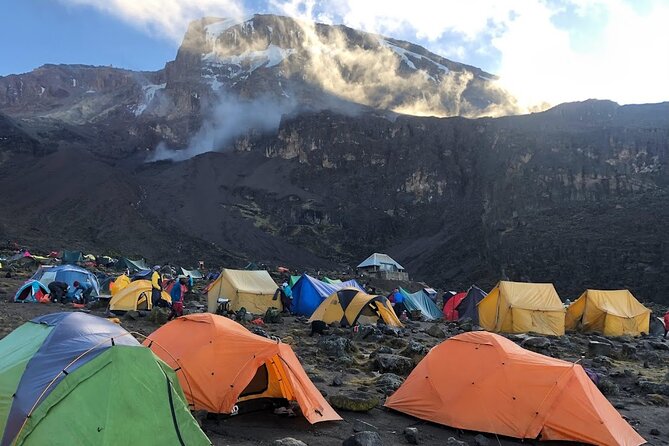
Day 6 hikes to Barafu Camp (4,640 m). The itinerary lists about 4 km, but don’t treat that as “easy distance.” At this altitude, shorter distance can still feel brutally demanding. You’ll hike with views of Kibo and Mawenzi along the way.
Once you reach camp, lunch is provided and the afternoon is built for sleep. Dinner is early, then you get back to your tent because alarms are set around midnight for the summit start.
This day is about preparation. Not just packing your layers, but pacing yourself emotionally. The less you fight fatigue now, the more energy you’ll have when the summit day starts.
If you’re the type who hates waiting around, here’s your assignment: rest like it matters, because it does.
Day 7 Summit Day: Midnight Start, Stella Point, Uhuru Peak, and One Day of Work
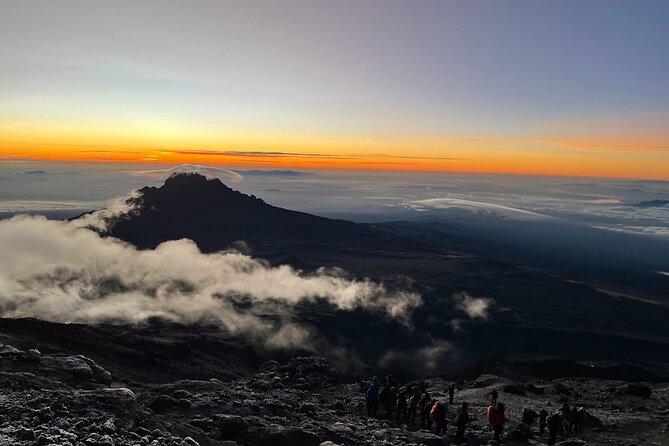
Day 7 is the big one. You’ll be woken at midnight with light tea and breakfast. After final preparations, you’ll begin a 4 to 5 hour climb gaining height quickly.
The key goals are clear:
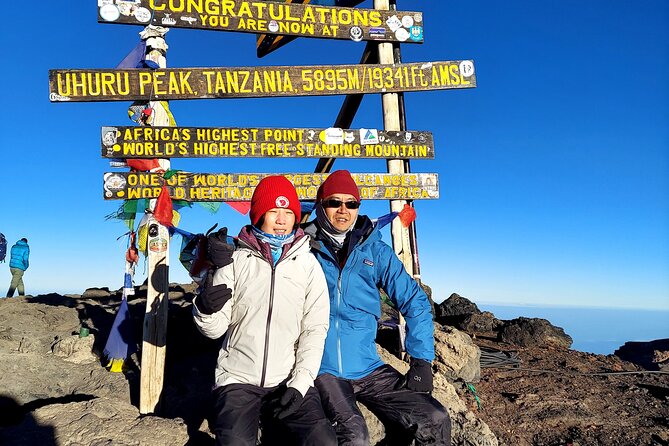
- Reach Stella Point (5,756 m) as the sun begins hitting the crater rim
- Continue about 1 hour from Stella Point to Uhuru Peak (5,895 m)
- Then descend back to Barafu Camp for lunch and rest
The itinerary says the day can run up to 13 hours, which lines up with what your body will feel like: cold mornings, steady climbing, and the long grind of breathing and balance. Sunrise at the crater rim sounds poetic, but the practical reality is this: you’ll want steady effort, not bursts.
From the summit, photos and a shared celebration are part of the plan. Then it’s back down—because descending is when altitude stress can still linger, and it’s when careful pacing keeps you safe.
Day 8 Down from Millennium Campsite to Mweka Gate: Certificates and Cold-Drink Relief
After breakfast, your final descent begins. You’ll walk about 14 km to Mweka Gate, where you’ll collect certificates.
Then you’re transferred back with a private car to your hotel, where you’ll be ready for the warm shower you’ve been thinking about since Day 1.
The walking may not feel glamorous, but it’s a huge moment. A successful descent is part of the whole climb experience, not just an afterthought.
If you’re proud, you’ll probably feel it here. And if you’re tired, you’ll still appreciate the fact that the trip has an end point that’s clearly handled for you.
Camps, Meals, and Water: The Included Comfort Stuff That Helps You Finish Strong
What stands out is how much is included that you’d otherwise have to figure out yourself. Nafika Tours provides camping equipment like tents, sleeping pads, sleeping bags, plus tables and chairs.
Meals are also planned by day:
- Breakfast (8)
- Lunch (8)
- Dinner (7)
Treated water is supplied throughout the trek. That’s a quiet quality-of-life win, because you’re dealing with altitude, not water logistics.
One travel story highlighted the “proper tea break” feel—tables, and sometimes chairs, plus food and tea rather than a quick grab. It’s a small detail, but it’s the kind that makes long days more bearable when you’re tired.
Safety First: Health Checks, Emergency Oxygen, and a Team That Watches Your Pace
Kilimanjaro can be dangerous if you treat it like a simple hike. This route is set up with safety in mind, including emergency oxygen and a first aid kit.
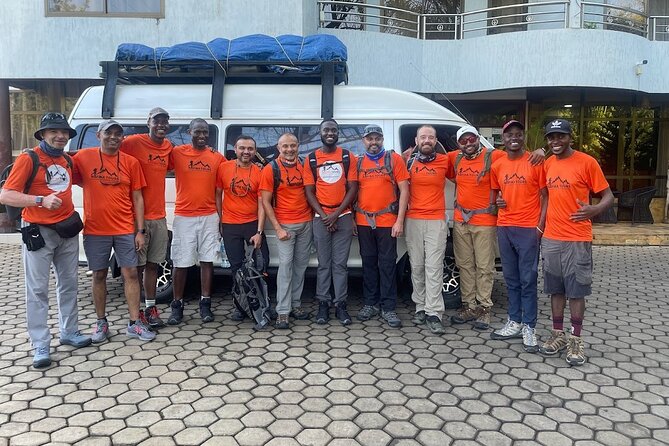
Just as important, guides do regular health checks and are described as ready to detect and treat altitude sickness. You also get the practical benefit of guides who adjust pace and keep an eye on how you’re handling effort.
From the named guide accounts I saw—people mentioned Meshakii, Inocent, Musa, and Elias/Eli—the common theme was attentiveness: checking in, staying close, and helping climbers manage fear or discomfort.
A final safety truth you should carry into any Kilimanjaro plan: tell your guide immediately if you feel off—headache, nausea, dizziness, or unusual weakness. Altitude problems are easier to manage early, when your response is fast.
Value and Price: Why $2,350 Can Make Sense for an 8-Day Guided Climb
At $2,350 per person, this isn’t a budget trek, but it also isn’t just “a guide and a walking stick.” Your cost includes a lot of the heavy lifting:
- Camping gear and tents
- Sleeping bags and pads
- Meals across the full trek
- 2 night hotel in Moshi
- Private transportation
- Treated water
- Emergency oxygen and first aid support
- Salaries for guides, porters, and crews
- Parking fees
That matters because Kilimanjaro logistics can snowball. If you have to rent gear, manage water, and organize transfers separately, you’ll spend time and money—and you’ll lose the tight coordination that helps pacing and safety.
The only clearly listed extra is the visa ($50). So the budget picture is mostly predictable.
If you care about value, look at what you’re not paying for: the gear headache, the water uncertainty, and the “did someone forget something” stress.
Who Should Choose This 8-Day Lemosho Climb (and Who Should Rethink It)
This climb is best for people with moderate physical fitness who can handle long hiking days and a summit push that runs into the night-to-morning schedule.
It also suits groups who want a well-managed experience. The group size cap is 20 travelers, which usually keeps things organized and reduces the chaos of very large camps.
If you’re sensitive to heights or get anxious during steep sections, it can still work—but you’ll want to bring patience. One highlighted benefit in the team approach is that guides stayed available and supportive for comfort and pacing.
Should You Book Nafika Tours on the Lemosho Route?
I’d book this if you want the Lemosho route’s scenic western approach plus a safety-forward team plan. The included gear, meals, treated water, and the specific support tools like emergency oxygen make it a more complete package than a “bare-bones” trek.
I’d think twice if you know you’re likely to panic during a long midnight start summit day, or if your fitness base is weak. Day 7 is not a casual outing, and your odds improve when you can walk steadily without rushing.
If you’re the type who likes clear structure, strong guide attention, and mountain days that deliver views without turning into chaos, this is a solid choice.
FAQ
How long is the 8 Days Kilimanjaro hike via Lemosho route?
The trek is listed as 8 days (approx.).
Where does the hike start and what altitude is it at?
The climb starts at Lemosho/Londorossi Gate on the western side of Kilimanjaro at 2,360 metres.
What time does pickup happen before the climb?
You’ll be picked up around 8:00 am and transferred to Lemosho gate for Day 1.
What is included in the price?
The package includes camping equipment (including tents, sleeping pads, and sleeping bags), table and chairs, 2 night hotel in Moshi, private transportation, treated water, emergency oxygen, first aid kit, guides and porters support, parking fees, and meals (breakfast 8x, lunch 8x, dinner 7x).
What is not included?
The only listed exclusion is the visa ($50).
Is emergency oxygen provided?
Yes. Emergence/Emergency oxygen is included.
How large is the group?
The maximum group size is 20 travelers.
Can I get a full refund if I cancel?
Yes. It’s free cancellation, and you can cancel up to 24 hours in advance for a full refund. If you cancel less than 24 hours before, there’s no refund.