REVIEW · MERZOUGA
5-Day Desert Hiking Adventure from Merzouga
Book on Viator →Operated by Berber Adventure Tours · Bookable on Viator
Silent dunes start your day before breakfast. This 5-day Sahara hike from Merzouga trades the usual dune-camp loop for quiet places most visitors never reach, with dried riverbeds, bare mountain layers, abandoned mines, and nomad-village evenings. I love the actual hiking (mostly sand and desert tracks, not just sitting on a camel seat), and I also love the rhythm of the days: breakfast, a shaded lunch stop, more hiking, then sunset time near camp. One drawback to weigh up: this is for moderate fitness, and you’ll sleep in a tent with mattresses provided, but you must bring your own sleeping bag.
The guides matter here. Berber Adventure Tours (often led by Eva and Hassan) have a reputation for making the trip feel personal, and the energy in the camp feels more like working with a team than being shipped from photo stop to photo stop. You’ll also be in a private group, which keeps the days flexible and less chaotic.
Plan your logistics like a grown-up: the start is 8:30 am at the Merzouga meeting point, there’s a mobile ticket, and pickup is offered—but transport to and from Merzouga isn’t listed as included. You’re close to public transport, yet you’ll still need to get yourself into position before day one.
In This Review
- Key highlights worth caring about
- Why this Merzouga trek goes beyond the usual dune camps
- The daily hiking rhythm: breakfast to tree shade lunch to sunset
- Day 1: Merzouga to dunes, oasis lunch, and a camp behind the dunes
- Day 2: Dry riverbed hiking and camp near Hassi Begaa
- Day 3: Local mountains, a sunset climb, and the same camp base
- Day 4: Erg Znigui crossing, hills, abandoned mines, and a nomad-village camp
- Day 5: Crossing Erg Chebbi again to return to Merzouga
- What’s included (and what you must bring) for a smoother desert night
- Guides, customization, and the small-group feel
- Price and value: what $2,093.83 per person is really paying for
- Getting there: meeting point, 8:30 am start, and transfers
- Should you book this 5-day desert hiking adventure from Merzouga?
- FAQ
- How fit do I need to be for this 5-day desert hiking?
- What’s the daily schedule like on the hike?
- Is this tour private?
- Where do we meet, and when does the tour start?
- What’s included in the price for meals and camping?
- Do I need to bring a sleeping bag?
- Is pickup included?
- What kind of terrain will I hike on?
- Will I ride camels during the trek?
- Is the booking refundable if I cancel?
Key highlights worth caring about
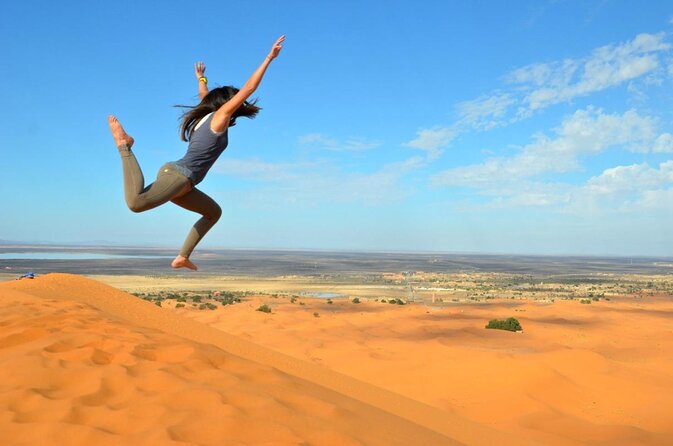
- Off-the-dunes routing: dried riverbeds, dry tracks, hills, and mine sites beyond the standard Merzouga overnight camps
- Camp life is part of it: you help set up camp and pack up in the morning
- Good desert food included: 4 dinners, 4 breakfasts, and 5 lunches, plus water and tea
- Comfort basics are handled: tents and mattresses provided, with camels to move luggage
- Sunset views built into the hike: including a climb for an amazing sunset on day three
Why this Merzouga trek goes beyond the usual dune camps
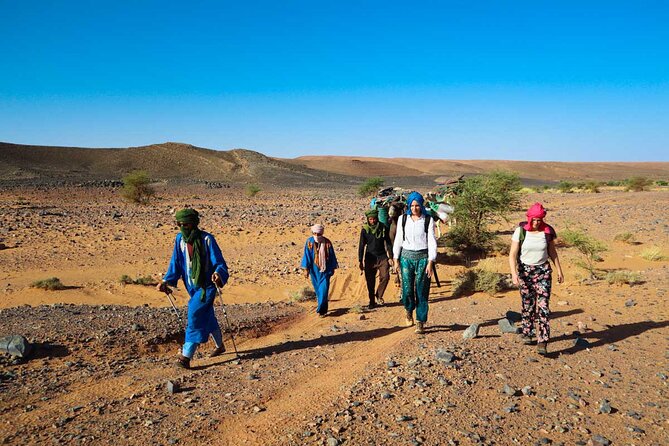
Most people arrive in Merzouga for a quick night behind the Erg Chebbi dunes. This hike is different. You’re moving through places that feel more like a living desert map: sand dunes, dried-up riverbeds, and mountain zones where the layers look ancient. The goal is not just seeing the Sahara, but walking through it.
That choice changes how the whole trip feels. When you’re not packed into the same small sunset loop as everyone else, you get that rare thing: silence. Even the camp moments feel calmer, because you’re often farther from the crowds. A few of the best parts of the experience come from those in-between stops—lunch under a tree, watching how the dunes shift as the light changes, and exploring the area around the campsite when the day’s hiking is done.
And yes, it’s still desert. That means big sun, sand underfoot, and nights that can feel cool depending on the season. But the trade-off is worth it if you want the Sahara as a walk-in experience instead of a drive-by.
The daily hiking rhythm: breakfast to tree shade lunch to sunset
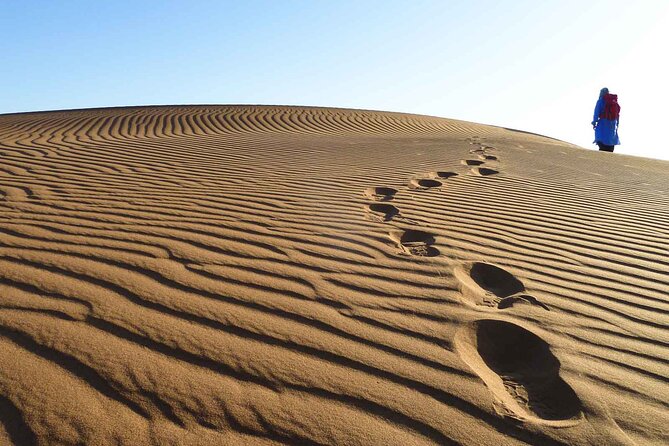
Your days follow a simple structure that makes it easy to stay calm and comfortable. Start hiking after breakfast. Then you get a lunch break under a tree before continuing in the afternoon. Evening time is your own—sunset, exploring near camp, and settling in.
Camp is not a take-a-pic-and-leave situation. You help set up camp, and you’ll pack up the next morning. On some evenings, depending on weather, there might be a campfire where bread gets baked for dinner or breakfast. Even if that doesn’t happen, you’ll still have the steady rhythm of tea, food, and a guide team that keeps things moving.
One smart detail: camels are part of the system for luggage transport. That matters because hiking in sand is work; reducing what you carry can keep the trip enjoyable instead of exhausting.
Day 1: Merzouga to dunes, oasis lunch, and a camp behind the dunes
Day one starts right after breakfast. You leave Merzouga and begin with desert walking that’s mostly sand. Crossing dunes in the morning light can feel surprisingly peaceful—until you realize how quickly your legs notice the effort. It’s the kind of hiking where you learn to pace: steady steps, short pauses, and water breaks that feel frequent for a reason.
Lunch is in an oasis. That single line is a big deal. Oasis shade is where you reset your energy, cool down, and get your head back into the day. After lunch, you keep hiking and then set up camp behind the dunes.
The camp setup on day one can be an optional luxury camp. That doesn’t mean it becomes a hotel. It still feels like desert camping. But if you’re the type who likes a touch more comfort at the start (good bedding, nicer camp feel), this is the day to appreciate it.
Day 2: Dry riverbed hiking and camp near Hassi Begaa
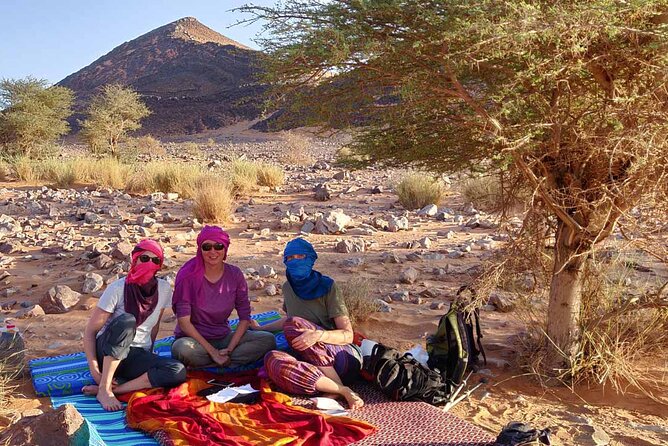
Day two leans into desert variety. You hike along a dry riverbed with big dune views. A dry riverbed is a different kind of walking than open sand. The ground can feel more uneven, and the route gives you longer sightlines to see how the dunes stretch and fold.
All day, you’re treated to those wide-open views that make the Sahara feel endless without needing any extra explanation. Then you set up camp close to Hassi Begaa.
Staying near the same general area gives you a practical benefit: you’re not constantly losing time to changing environments. You get used to the pace, the setting, and the daily routine. That helps if you’re new to sand hiking or you want to enjoy the scenery instead of just surviving it.
Day 3: Local mountains, a sunset climb, and the same camp base
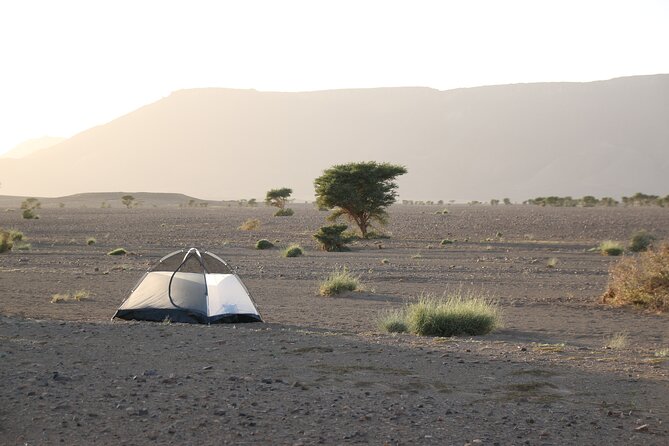
Day three is the payoff day for views. You explore local mountains and climb up for an amazing sunset view. A climb like this changes the whole perspective of the trek. From up high, the dunes become patterns, not just sand. The desert stops being a backdrop and becomes the main character.
The trip keeps the camp logistics simple: you camp at the same location as day two. That’s good design. It lowers the number of long moves, so your energy goes into the hike itself rather than into constant relocating and setting up from scratch in a different area.
If you’re the type who loves photography, this is where you’ll understand why people drive hours just for sunset. And even if you don’t care about photos, it’s still the best moment to slow down, let your body cool off, and watch the sky shift.
Day 4: Erg Znigui crossing, hills, abandoned mines, and a nomad-village camp
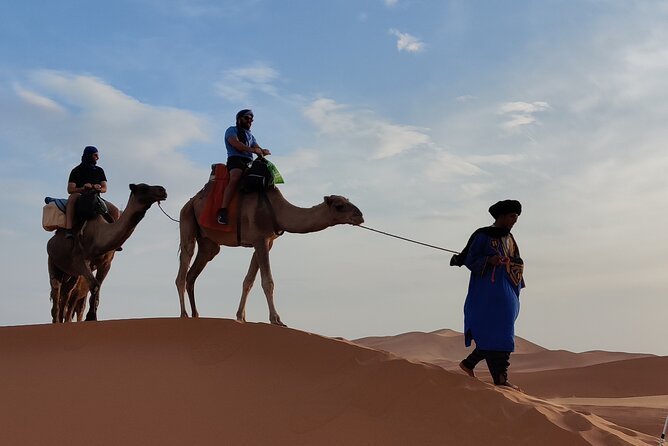
Day four is where the Sahara turns historical and rugged. You cross Erg Znigui and hike through hills. Then you visit an abandoned village and old mines.
Those mine sites and ruins can feel eerie in a grounded way. Not scary for the sake of drama—just quiet evidence that people once depended on this land for work and survival. It’s the kind of stop that makes your desert hiking feel connected to real lives, not just scenery.
Later you camp in a nomad village behind the dunes. That sounds romantic, and it can be. But the practical truth is that it’s also a working camp setting. You’ll still be part of the routine: sleeping in a tent, sharing the camp rhythm, and waking up to pack and move.
This day is also a good reminder that “adventure” here means doing the work: hiking, setting up, and living on schedule. If you’re craving a rugged, off-the-grid feel, this is the strongest day for that.
Day 5: Crossing Erg Chebbi again to return to Merzouga
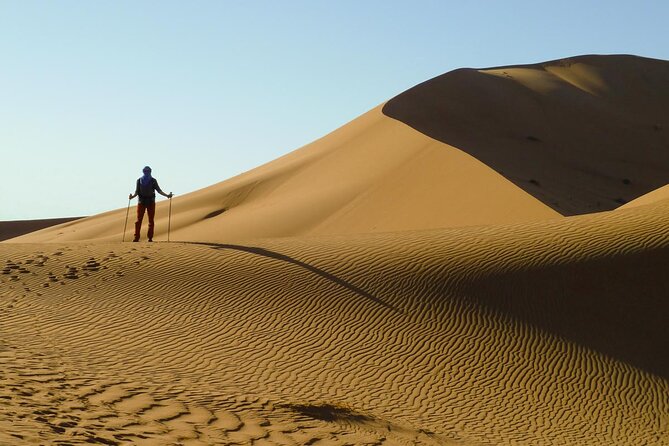
For the final day, you cross Erg Chebbi again to return to Merzouga. It’s a satisfying finish. Re-walking part of the route helps you see the dunes with fresh eyes, like you’re finally learning the terrain instead of just passing through it.
By day five, you’ll know your own pace. You’ll also understand what sand hiking demands from your body. If you stayed hydrated and kept your effort consistent, you’ll finish feeling proud instead of drained.
The tour ends back at the meeting point in Merzouga.
What’s included (and what you must bring) for a smoother desert night
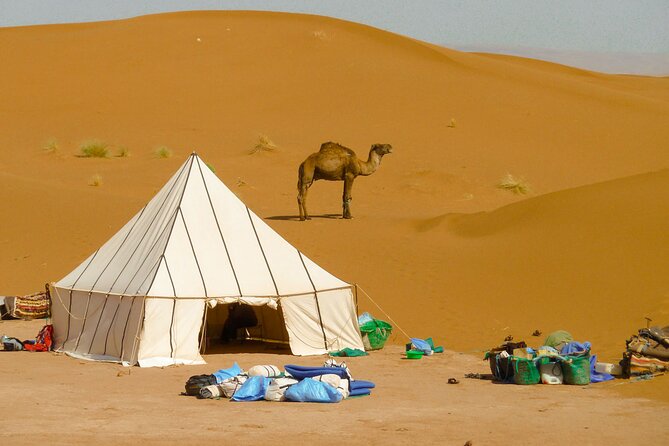
Here’s what you’re covered for:
- Tents and mattresses
- Camels for luggage transport
- Water and tea throughout the trek
- Meals: 4 breakfasts, 5 lunches, and 4 dinners
What you must bring:
- A sleeping bag (not included)
This is the kind of detail that matters a lot. A desert camp can feel comfortable during the day and very different at night. Your sleeping bag is how you stay warm enough to get real rest, so you can hike well the next morning.
Also plan for real hiking conditions: sand absorbs energy. Your feet and calves will do the complaining first. Comfortable footwear is key, but the tour data doesn’t specify what footwear to use—so you’ll want to prepare yourself based on your own experience.
Guides, customization, and the small-group feel
Berber Adventure Tours runs these treks with a guide team that’s often fronted by Eva and Hassan. Their style shows up in the way the experience adapts. People have described the ability to customize and plan around what they want, instead of treating everyone like the same itinerary will magically fit every body.
Hassan, in particular, comes up in feedback as a guide who knows a lot about Merzouga and the desert and shares that knowledge in a way that makes the walking feel meaningful. Eva also shows up as a planner and communicator, especially when travelers want the trip shaped to their pace and preferences.
Because this is a private tour/activity, you avoid the mixed-speed chaos that can happen on larger group treks. Private also means your group can ask questions and adjust breaks without feeling like you’re slowing everyone else down.
Price and value: what $2,093.83 per person is really paying for
At $2,093.83 per person, this isn’t a budget add-on. You’re paying for:
- 5 days of guided hiking in remote areas
- Tents and mattresses for multiple nights
- Meals across the trek (4 breakfasts, 5 lunches, 4 dinners)
- Water and tea
- Camels to handle luggage transport
- A camp team process where you help set up and pack away
So the value isn’t just the view. The value is in removing the heavy logistics from your plate. A true multi-day desert hike is hard to organize well: food, water, timing, camp logistics, route decisions, and safety all have to work together. This package is built to do that.
The main consideration is that private desert hiking can cost more per person simply because you’re not sharing the guide and camp setup across a huge group. If you want a cheaper per-person option, you might look at longer group formats. If you want the quiet, paced experience with a guide who talks and adjusts, this price starts to make more sense.
Getting there: meeting point, 8:30 am start, and transfers
You meet at 3XVV+56 Merzouga (start time 8:30 am). The tour ends back at the same meeting point.
Two notes to keep your day stress-free:
- Transport to and from Merzouga isn’t listed as included, even though pickup is offered.
- The meeting point is near public transportation, which can help if you’re coming from somewhere else in Morocco.
If you’re planning flights or intercity bus timing, aim to arrive with a buffer. A desert trek starts early for a reason.
Should you book this 5-day desert hiking adventure from Merzouga?
Book it if you want the Sahara as walking time, not just night-camp time. I think this trek is a strong match for people who:
- enjoy steady physical effort and want varied desert terrain
- care about food and camp routine as part of the experience
- want off-the-map places like dry riverbeds and abandoned mine areas
- prefer a private group and a guide team that can adapt
Consider skipping or choosing a different style if you:
- don’t have moderate fitness for sand hiking
- aren’t willing to bring a sleeping bag and accept desert-camping basics
- want a totally low-effort vacation where nothing is set up or packed
If you’re on the fence, treat the decision like this: you’re buying multiple days of guided wilderness walking plus camp life, with excellent support on meals and gear. If that sounds like your kind of vacation, this is an easy yes.
FAQ
How fit do I need to be for this 5-day desert hiking?
The tour asks for moderate physical fitness. Since the hiking is mostly in sand on several days and includes riverbed and hill terrain, you’ll want to be comfortable walking for hours at a steady pace.
What’s the daily schedule like on the hike?
Generally, you start hiking after breakfast, take lunch under a tree, hike again in the afternoon, and then enjoy sunset and free time around camp in the evenings.
Is this tour private?
Yes. It’s listed as a private tour/activity, meaning only your group participates.
Where do we meet, and when does the tour start?
The tour starts at the Merzouga meeting point (3XVV+56 Merzouga) at 8:30 am and ends back at the meeting point.
What’s included in the price for meals and camping?
You get tents and mattresses, plus water and tea. Meals included are 4 breakfasts, 5 lunches, and 4 dinners. Camels are used for luggage transport.
Do I need to bring a sleeping bag?
Yes. A sleeping bag is not included.
Is pickup included?
Pickup is listed as offered, but transport to/from Merzouga is listed as not included. In practice, you’ll still need to get yourself to the Merzouga meeting point.
What kind of terrain will I hike on?
Expect mostly sand dunes early on, plus a dry riverbed on day two, local mountains on day three, and Erg Znigui and hills on day four. Day five includes crossing Erg Chebbi again.
Will I ride camels during the trek?
The tour includes camels for luggage transport. The provided details do not clearly say that you ride camels, so plan around the camels mainly moving gear.
Is the booking refundable if I cancel?
No. The experience is listed as non-refundable and cannot be changed for any reason.